Thanks to Vicki Brewer for scanning and sharing this most important of all biographical and historical articles for students of the Brotherhood of Light lessons. Future blog posts will refer back to this but for now my main “take” is that Elbert was recruited by Sarah B. Anderson and Belle Wagner to fill the vacancy created by the death of Minnie Higgin. An apparent falling out between the Wagners on one hand and the Andersons and Elbert on the other came later.
Pursuant to a formal call, a meeting was held at Kansas City, Mo., on the 12th day of July, 1886, at which three members of the Executive Committee only were present, this number not forming a quorum. The matter of certain charges involving the identity of one T.H. Burgoyne with one T.H. Dalton or T.H. D’Alton, was under consideration in connection with documentary evidence furnished by various persons, and also evidence furnished by Mr. Burgoyne.[1] Mr. Burgoyne was not present but indicated by telegraph his inability to reach Kansas City on the day named. All evidence presented was carefully examined, and the opinion unanimously arrived at was that T.H. Burgoyne, and T.H. Dalton, or D’Alton, was one and the same person.
It was also the unanimous opinion that until these charges shall have been refuted and proven false, it is our duty to advise all to whom this may come to have no further dealings, in any form, with either T.H. Burgoyne (Dalton or D’Alton) or Mr. Peter Davidson.
Thos. M. Johnson
President
St. Louis
September 5, 1886
Meeting of the Central Council of the H.B. of L. convened by T.M. Johnson.
Upon the motion of W.W. Allen, T.H.B. was appointed Secretary pro tem. Present: J.S. McDonald, W.W. Allen, T.M. Johnson and T.H. Burgoyne. Mr. Allen holding a vote by proxy from Mr. Kenyon.
Resolved:
That the president be requested to act as Sec’y. pro tem
Resolved:
That the constitution and by-laws as submitted by the President, and the same are hereby accepted and adopted, Subject to amendment at any regular meeting of the Council. Adopted unanimously.
Resolved:
That the charges against Mr. T.H. Burgoyne are not worthy of further attention on the part of this Council. The vote upon the resolution was as follows: All present voted in favor of T.H. Burgoyn[e]; their opinion being unanimous.
Vote,
For the resolution,
T.M. Johnson,
W.W. Allen,
J.S. McDonald.
––––––––––––
Against the resolution.
W.J.C. Kenyon: This vote was given against T.H.B. by proxy.
Mr W.W. Allen holding the proxy, Took this course as a mere question of honor to respect his proxy.
Ordered:
That W.J.C. Kenyon be appointed Secretary.
Ordered:
That the committee do now adjourn. Bro. E.B. Page was at this time a[d]mitted to the Council Room.
(Signed)
Thos. M. Johnson Thos. H. Burgoyne,
President Central Council Sec’y. Pro Tem.
[1] A copy of Burgoyne’s birth record is in the Johnson papers and may have been the evidence referred to here. A facsimile is provided in this volume.
Dalton photos presented by S.H. Randall to people who personally knew him and could not be misled by faked evidence
I have previously posted the birth certificate obtained by Johnson and his colleagues on the Council. While the earliest allegations against Burgoyne came from hostile sources in the Theosophical Society, Johnson, Randall and colleagues in the Hermetic Brotherhood of Luxor did not trust those sources and launched their own investigation. They were friends, not enemies of Burgoyne as attested by his reinstatement after three months of suspension.
Peter Davidson, on the other hand, is never mentioned again by Johnson or Randall, leaving us to wonder what Burgoyne told them about him.
Church of Light historical sources identify 1909 as the date of Elbert Benjamine’s recruitment by the leadership of the Hermetic Brotherhood of Luxor, and the Denver home of Mrs. Anderson as the location of the meeting at which this occurred. Her address was 1432 Grant St., now a parking lot but directly facing the east side of the Colorado State Capitol.
The 1910 census finds George Gray Anderson and his wife Sarah Beck Anderson, both 51, living with daughters Sarah and Helen, son Robert, Sarah’s mother Lorenzie Beck, and a servant named Shoff in a home just three blocks away from what is now the Molly Brown House Museum.
New Age Enclyclopedia, Gordon Melton, Editor, Gale Research, 1990, p. 51
The couple at whose home Elbert was recruited to the Brotherhood moved to Los Angeles around the same time he began private classes there.
The Andersons prepare to move to a new home in LA as reported December 19, 1914George Gray Anderson’s Entry in Who’s Who of the Pacific Coast, 1913
The 1930 census finds Sarah living with her three children and granddaughter Helen Richmond at 269 South Rockingham Avenue in Brentwood Park in a home valued at $35,000. She died here in 1941 so had been in Los Angeles for the first twenty five years of Elbert’s work in California. Stay tuned for further investigations.
Part One of The Light of Egypt, The Science of the Soul, presents itself as the work of a single author, an occultist and astrologer whose themes echo those of Emma Hardinge Britten. Part Two, Science of the Stars, refers to its authors as “we” and internal evidence as well as correspondence indicates a close collaboration between Burgoyne and Grimké. She had no prior astrological training or background in occultism, while he lacked her philosophical education and training as a writer. They complemented each other’s strengths.
The 1900 two volume edition added an entire new volume while leaving the first intact as a reprint of the 1889 one volume edition. The publishers took liberties with the name, reputation, and writings of Burgoyne which were expanded in 1963 with a new edition introducing more mediumistic interpolations. While these editorial actions make most of the writings attributed to Burgoyne questionable, Sarah appears to have been represented honestly by her publishers other than lack of credit for co-authorship of The Light of Egypt.
Much of Science of the Stars parallels Grimke’s A Tour Through the Zodiac, as can be seen by comparison of the language and content of the two tomes. The concluding chapter, more metaphysical than astrological in tone, provides the strongest evidence that Grimke played a major role in creation of The Light of Egypt. This suggestion was originally found in the earliest book publications of Elbert Benjamine from the 1920s, and confirmed by Grimke family correspondence in Washington, D.C.
[this appears as the introduction to a new appendix to the slightly revised Sarah Stanley Grimke Collected Works as available in print on Amazon or online free of charge at academia at the link provided in Recommended Reading]
These slides include quotes from my chapter in three cases, and from a crucial source in the fourth instance. Of the many characters who appear in the chapter, these four are the ones most relevant to this blog.
James Martin Peebles (1822-1922) is the only one of 32 individuals profiled in my The Masters Revealed (1994) as an important influence on Madame Blavatsky who might also have been a direct influence on Elbert Benjamine. His natal chart is discussed in the Brotherhood of Light lessons and the last years of his long life were spent in Los Angeles. Fifty years earlier he had met Blavatsky’s circle in Cairo in 1872, two years later was present at the Eddy Brothers farmhouse in Vermont when she met Henry Steel Olcott, and provided fateful introductions to Buddhists in Ceylon and Spiritualists in India who subsequently become prominent Theosophists.
New in this book is the information that the Calcutta-based Brahmo movement, and not the Bombay-based Arya Samaj, was the earliest source of Indian recruits to the TS and that Peebles had been the catalyst. Peebles was a longtime ally of Emma Hardinge Britten, who had written a glowing preface to a biography of him, The Spiritual Pilgrim, by Joseph Osgood Barrett in 1871. Peary Chand Mittra has received little attention in Theosophical history studies because he died so early in the Society’s existence in India. Yet his overall place in the Bengali literary renaissance of the 19th century as a highly influential novelist, editor, and activist reformer is increasingly well established. In 2o21 my attention will be focused on new projects but as 2020 ends I wanted to offer a brief glimpse of this publication from last January.
front cover, The Light of Egypt, Chicago: Religio-Philosophical Publications, 1889
Every version of The Light of Egypt that is available in print or online, until now, is of the two volume 1900 edition or twentieth century revisions thereof. For Elbert Benjamine, as expressed in his Brotherhood of Light lessons, the 1889 one volume edition was authoritative.
Christmas presents going through email today involve an Oregon publisher laboring on this text scanned by a Virginia editor for the benefit of a church and website in New Mexico and a coeditor in Colorado. Stay tuned for a link to the complete text when it is available online. The hard copy of the first edition will become property of The Church of Light in Albuquerque once the online publication is complete.
This review article of the 2019 film was written in early 2020 for a local Unitarian Universalist publication that was about to launch but was sidelined indefinitely by the pandemic. I share it with the information that my original research interest in the Alcotts was because Thomas Moore Johnson, Alexander Wilder, and Sarah Stanley Grimke were all acquaintances of Bronson who were influenced by his ideas and character.
The newest film adaptation of Little Women, the fourth I have seen to date, delves much more deeply into the life of the book’s author than any previous versions. Abigail May Alcott, Marmee in the novel as she was called in real life by her children, is the emotional center of the family in her daughter’s novel and the latest film adaptation. Long-suffering, patient, altruistic, loving– but also angry at injustice and skeptical of many of her husband’s crazy enthusiasms, Abigail/Marmee is earning the appreciation of a new generation of readers and viewers. In 2012 she emerged from obscurity as an author, thanks to Eve LaPlante, a descendant of her favorite brother to whom she wrote often, discovering a hitherto unknown cache of Abigail’s letters and diary entries in an attic trunk. These were published as My Heart is Boundless simultaneously with a joint biography of mother and daughter called Marmee and Louisa. While preparing for her role as Marmee, actress Laura Dern studied LaPlante’s works. The acting, the characters, the cinematography, surpass any of the previous versions in my estimation. The Oscar nominations for Saoirse Ronan (Jo) and Florence Pugh (Amy) in the leading and supporting actress categories are well deserved. (Dern is also a nominee this year but for a different film.) Orchard House in Concord, the real Alcott home where the book was written, is used as a location adding great beauty and authenticity to the scenes. The way the director slides back and forth between past and present, the Marches and the Alcotts, is intriguing to me as a Unitarian history enthusiast but I think might be hopelessly confusing to anyone who was unfamiliar with the Alcott family.
Abigail, called Abba by her family, met Bronson Alcott in 1827 in Brooklyn, Connecticut where her brother Samuel Joseph May was a Unitarian minister. They married after a long courtship, and several years later Abba was living in Germantown, Pennsylvania where Bronson managed a school. Louisa was born here in 1832. Writing to her brother, Abba confided that she had to be discreet about her faith because “the Unitarians here are held in such horror as being worse than infidels. My good house keeper told me that a lady had the wickedness to say that we were Unitarians. Said she, `Mrs. Alcott, I have disliked that woman ever since; I told her that you were as good Christians as ever lived.’ We pass I believe for kinder Episcopalians although we usually attend Friends’ meetings, preferring the silent communion with our own souls.” Samuel Joseph became an abolitionist leader and in 1834 Abba followed his example and joined the Female Anti-Slavery Society. An 1846 letter expresses her misgivings about the onset of war, imploring Sam “Oh Sam, dedicate yourself to Peace, keep your pulpit if it is only to secure a place from which to declare and testify this truth. It is the cornerstone of the true church. Our nation in its principles is becoming corrupt, abusive, warlike, and degraded. It will cut off its own head with its own weaknesses.”
Little Women is based on the Alcott daughters’ childhood and adolescence in the 1840s and 50s but set during the Civil War. Mother and daughters were apart from their father on Christmas day 1848, not because Bronson was away at war but because they were away at work. Bronson was an impractical dreamer who repeatedly failed to provide for his family’s needs, and finally Abba went to work in Boston as a pioneer of social work, funded by philanthropists as missionary to the poor, writing at the time “My heart has always been pledged to the cause of the destitute and oppressed; now my time shall be sacredly devoted to their relief.” The scenes of Marmee and the girls bringing food to a destitute family in the novel and film are in Concord during the Civil War, but such philanthropies really occurred in Boston during the Mexican War. Despite the changes in Louisa’s fictional accounting, the emotional bond between mother and daughters is absolutely true to history. In a diary entry written that lonely, poor Christmas, Abigail gives glimpses of the traits that will later be seen as those of Meg, Jo, Beth, and Amy March. “Christmas Day. Pass the day, which was wet, dark and dreary, with my family. Hopeful Anna cheering doubting mother. Loving Louisa trying by many quiet acts of comfort to make life more tolerable. Dear Lizzy by her repose and self reliance groping through this mist of things and adverse circumstance. And little Abba a `cricket on the hearth’ chirping, free from care or anxiety.”
Abigail died a few weeks after her 77th birthday in 1877. When Louisa and Bronson died two days apart in 1888, their funerals were conducted by Unitarian minister and Transcendentalist author Cyrus Bartol at Old West Church in Boston, just half a mile away from where Bronson had married Abigail at King’s Chapel six decades before. For contemporary Unitarian Universalists, Little Women provides vivid impressions of the lives and values of their spiritual ancestors in 19th century New England. Abigail May Alcott, with her Unitarian upbringing and lifelong commitment to progressive reform causes, including feminism and social welfare as well as abolitionism, became a role model as the fictional Marmee. It is gratifying now to see the actress playing Marmee openly discussing the character’s historical prototype and her exemplary life, and to know that only the accidental discovery of 150-year-old family letters enabled us to understand her in all her complexity.
The 1920 legal name change from Benjamin P. Williams to Elbert Benjamine was caused, he said, by ostracism from his relatives in Iowa motivated by religious antagonism. His Williams relatives in Iowa consisted at that point of his five children and ex-wife living on a poultry farm outside of Adel and his mother living in town, none of whom could be fairly accused of ostracizing their father, ex-husband, and son. And yet it is clear that SOME relatives wanted him change his name legally if he was determined to pursue a career as a writer and teacher of astrology, Tarot, and other things not discussed in Adel polite society.
The census records of the Williams and Benjamine families from 1910 through 1940 provide an interesting clue to events of 1920 as well as a reminder of a major mystery of 1910.
From top to bottom: 1910 census entry for Benjamin and Rita Williams, 1920 entry for Benjamin and Elizabeth Williams, followed by 1920 entry for Emma G. Williams, 1930 entry for Elbert, Elizabeth and Will Benjamine, 1940 entry for Elbert and Elizabeth Benjamine; 1910 entry for Grace, Benjamin, and William Williams, 1920 entry for Grace, Benjamin, William, Mary Grace, Norman, and Zilla Williams, 1930 entry for Grace, Zilla and Norman, 1940 entry for Norman, Grace, and Zilla
In the first entry we see that as of the 1910 census Benjamin Williams is not just divorced (as we see from his ex-wife’s status in the censuses of 1910, 1920, and 1930) but remarried to Rita or Reta, an Iowa native born around 1876, living in Steilacoom, Washington, doing odd jobs. Here is a 1910 photograph from Steilacoom looking across Puget Sound towards the Olympic Mountains.
Grace Williams was apparently opposed to her husband’s literary ambitions and interests from the start, and Elizabeth Benjamine was fully supportive of him throughout their marriage. But crucial years of his contact with the Brotherhood and beginning of public work (Denver in 1909 through Carmel in 1918) took place between the divorce from Grace and the marriage to Elizabeth, about which the best eyewitness account would be from Rita about whom we know nothing at this point other than what is in the 1910 census.
While the 1910 census raises many unanswered questions, the 1920 census points to an answer to a question– what was behind Benjamin/Elbert’s claims of being ostracized and harmed in business prospects by his family in 1920? Grace is at home on a chicken farm with five children in 1920, but Emma Green Williams is not at home in Iowa but rather staying at a boarding house on North Broadway, the main thoroughfare nearest the home of Elizabeth and Elbert in Los Angeles. We can surmise from this that she was not entirely antagonistic to her son and new daughter in law if she was willing to go to California to see what they were up to. That in the aftermath of this visit the legal name change occurred is likely related to Emma’s advice, but a new piece of evidence about her own sister’s family the Clarkes suggests where the real pressure was coming from.
Emma’s next younger sister Arletta Green Clarke was the wife of the governor of Iowa from 1913 through 1917, the period in which Benjamin fathered three more children with his ex-wife after marrying another woman. Since Rita was a native Iowan whose parents were also Iowa-born, it is likely that Iowa acquaintances of the Williamses and Clarkes and Greens knew her identity, although that story is now lost. Elbert had four first cousins in Iowa all of whom were also sons and daughters of the governor. George Washington Clarke had been Lieutenant Governor of Iowa from 1909 through 1913, so his combined tenure in the capital of eight years occurred precisely during the years when his Williams in-laws were probably setting tongues wagging in Adel and possibly Des Moines as well.
Emma Green Williams left Elbert Benjamine a substantial inheritance upon her death in 1932 which he used to build up the church of which his son Will was now an employee. Will likewise changed his surname to Benjamine, the only one of her grandchildren to do so and the only one to be publicly associated with The Church of Light. Her presence in Los Angeles in 1920 suggests that perhaps a legal name change was imposed as a condition of future inheritance, assuring that the Williams name would not be associated with astrology and occultism.
Here is a summary of Clarke’s gubernatorial career from a national database of state governors:
A birthday tribute to Elbert Benjamine’s hometown in the form of an aerial tour, two and a half minutes in which the scenic views of the town itself appear in the latter half.
On May 3, 1900, this story appeared in the Perry, Iowa Chief-Reporter:
This first known newspaper reference to the 17 year old future author of the Brotherhood of Light lessons illustrates some character traits that were still vividly evident four and five decades later. They also suggest why his first marriage, in 1903, reportedly occurred in Oregon. He was the only son of an only son, which rules out Williams siblings or cousins, but his mother’s brother Judge Sturgis Green had relocated to Oregon by 1900 with a primary residence in Portland. The judge had a stepson named Allen Hickey who had been born in Adel but was living in Oregon where he married in 1899. Hence Benny’s Oregon travels likely involved his uncle and cousin.
Judge Sturgis Green
The focus of this blog will remain the 19th century precursors of the Brotherhood of Light lessons, but events of the first two decades of the 20th, including the birth of five children, defined the context in which Benny’s public life as Elbert was lived after 1920. Dennis Sutton’s two studies of Elbert (available for sale on light.org) are exhaustive on his public life after 1920 but evidence on his early life as Benny has become much more interesting in the years since they were published, thanks to online ancestry websites. Thanks to Marc Demarest for finding this gem.
The planets in your chart are balanced on the two (East and West) sides of your chart. Your life’s course tends to be a mix of both molding and being molded by circumstances.
Planets Above and Below the Horizon
The line formed by the Ascendant and Descendant (opposite the Ascendant) divide the astrological chart in half, where planets and houses above the line are above the horizon and vice versa. The higher, or more elevated, a planet in the chart, the more publicity it gets. Planets below the horizon are more private and relate to activities in the life that are generally hidden from public view.
The planets in your chart are primarily below the horizon, and are related generally to private and personal matters that get little public attention.
6. Indicators of General Temperament and Disposition
The following analysis shows the distribution of the planets among the various elements and qualities of the zodiacal signs, which provides excellent indicators of general temperament and disposition.
(In the analysis below, note that the Sun, Moon, Ascendant, Mercury and the Dominant Planet carry more weight in a sign, triplicity or quadruplicity than the other planets and may override a ranking by astrodynes.)
Distribution of Your Planets Among the Triplicities (Elements): Fire, Earth, Air and Water Signs
Element
Sign
Planets in Sign
Element Power*
Fire signs:
Sagittarius
Sun, Mercury, Venus, Mars
433.70
Earth signs:
Taurus
Saturn, Neptune, Pluto
334.98
Virgo
Uranus, MC
Capricorn
Moon
Air signs:
Gemini
Jupiter
150.57
Water signs:
Scorpio
Asc
119.81
The distribution of planets in your chart among the four elements shows a preponderance of Fire (Sun, Dominant Planet, Mercury, 2 other Planets) and Earth (Moon, 4 other Planets, MC) but with little Water (Asc) or Air (1 Planet). With lots of Fire and Earth, both following descriptions apply to a certain extent. The power you have in Fire signs indicates INSPIRATION and shows you to be enthusiastic, optimistic and self-reliant. The power you have in Earth signs indicates PRACTICALITY and shows you to be down to earth, sensible, industrious and practical. With very little Water or Air, try to cultivate sympathy and kindly emotions and try to cultivate an increased interest in mental activities and intellectual ideas.
Distribution of Your Planets Among the Quadruplicities or Qualities: Movable (Cardinal), Fixed and Mutable Signs
The zodiacal signs fall into three types: Movable (Cardinal), Mutable and Fixed. The three types are known as the Quadruplicities (there are four signs in each type) or the Qualities. (See appendix.) The distribution of the planets in your chart among the three types determines your level of adaptability, and is a key determinant of temperament.
Quality
Sign
Planets in Sign
Quality Power*
Movable signs:
Capricorn
Moon
183.78
Fixed signs:
Taurus
Saturn, Neptune, Pluto
275.68
Scorpio
Asc
Mutable signs:
Gemini
Jupiter
579.60
Virgo
Uranus, MC
Sagittarius
Sun, Mercury, Venus, Mars
The distribution of planets in your chart among the three Qualities shows lots of power in Mutable signs (Sun, Dominant Planet, Mercury, 4 other Planets, MC) but with some activity in Fixed signs (Asc, 3 other Planets). There is little power in the Movable (Moon) signs. Many planets in Mutable signs indicates power to adapt to whatever environment is present. The Mutable signs are a happy medium between the excessive activity of the Movable (cardinal) signs and the stubborn resistance of the Fixed signs. You’re not a trail-blazer, but rather a trail-builder. Mutable people are the most adaptable of all. They are the DEVELOPERS. You also have some of the qualities of the Fixed signs such as determination. With very little power in Movable signs, look for ways to exercise initiative.
7. Personal – Companionship – Public
The Houses, or departments of life, are naturally grouped into three categories or domains: Personal, Companionship and Public. This is a good indicator of where your interests, desires and energy naturally incline. This can be especially helpful in analyzing close personal relationships like marriage, where partners interests are largely focused in different domains, e. g., public or personal vs companionship. Cultural gender differences can also ameliorate or exacerbate diverging interests and desires.
The distribution of planets in your chart among the three Societies shows that most of your energy, thought and activity involve the Personal houses (departments of life). The Personal houses (1st, 2nd, 3rd and 12th) map feelings and desires that relate to the private life including personal and health matters, personal wealth and possessions, personal interests, siblings and personal restrictions and disappointments. Little planetary power in the Public or Companionship departments of life indicates less interest in activities that are widely known or the strength of the desires to associate with others through home, children, work and partnership.
8. Astrodyne Analysis
Through Astrodyne analysis one can analyze the power and harmony of the planets, signs and houses in your chart. The objective of this analysis is to indicate which areas will bring the most benefit into the life and which areas need work. Subsequent sections will explore in more detail the various departments of life (The Houses) and associated key aspects between planets. Below you will find the Astrodyne Table for your chart followed by an analysis of the best, worst and most powerful planets, houses and signs.
The astrodyne table, immediately below, analyzes the power and harmony of each planet, house and sign in your chart. The columns show (1) object name, the absolute astrodyne (2) power and (3) harmony, the Zscores indicating (4) relative power and (5) harmony, and the corresponding qualitative assessment of the relative (6) power and (7) harmony of each element in the chart based on the Zscores. Assessing a relative qualitative score is important because absolute values can be somewhat misleading and there are no “population” statistics from which to judge absolute power and harmony. An asterisk “*” in the power or harmony Zscore columns indicates that the value is an “outlier” which skews the distribution, in which case it is removed and the Zscores recomputed to provide a more accurate picture.
The tables below are a reference summary. The planets, houses and signs, and their influence on you character and fortune, are described throughout the report.
Planets, MC and Asc
(1) Object
(2) Power
(3) Harmony
(4) Power Zscore
(5) Harmony Zscore
(6) Relative Power
(7) Relative Harmony
Sun
95.76
-7.20
1.80
-0.01
powerful
mildly discordant
Moon
24.12
8.23
-1.34
1.51
weak
very harmonious
Mercury
82.74
-8.27
1.23
-0.12
powerful
mildly discordant
Venus
34.06
9.01
-0.90
1.58
weak
very harmonious
Mars
83.60
-22.38
1.27
-1.51
powerful
discordant
Jupiter
59.95
3.00
0.23
0.99
average
harmonious
Saturn
59.86
-20.70
0.23
-1.34
average
discordant
Uranus
61.60
-11.44
0.31
-0.43
average
mildly discordant
Neptune
40.07
0.05
-0.64
0.70
weak
harmonious
Pluto
36.84
-11.23
-0.78
-0.41
weak
mildly discordant
MC
24.14
-5.28
-1.34
0.18
weak
mildly discordant
Asc
52.63
-18.46
-0.09
-1.12
average
discordant
Houses (See later section on Departments of Life for more information.)
(1) House
(2) Power
(3) Harmony
(4) Power Zscore
(5) Harmony Zscore
(6) Relative Power
(7) Relative Harmony
1st
378.91
-55.70
*
*
very powerful
discordant
2nd
54.10
9.73
-0.16
1.38
average
very harmonious
3rd
45.12
-14.37
-0.39
-0.75
average
mildly discordant
4th
25.01
0.76
-0.93
0.58
weak
harmonious
5th
41.80
-11.19
-0.48
-0.47
average
mildly discordant
6th
81.88
-11.14
0.58
-0.47
moderately powerful
mildly discordant
7th
113.74
-27.42
1.42
-1.91
powerful
discordant
8th
101.33
-1.13
1.09
0.42
powerful
neutral
9th
36.00
2.31
-0.64
0.72
weak
harmonious
10th
127.11
-20.85
1.78
-1.33
powerful
discordant
11th
17.03
4.51
-1.14
0.91
weak
harmonious
12th
17.03
4.51
-1.14
0.91
weak
harmonious
Signs
(1) Sign
(2) Power
(3) Harmony
(4) Power Zscore
(5) Harmony Zscore
(6) Relative Power
(7) Relative Harmony
Aries
83.60
-22.38
0.41
-0.94
average
mildly discordant
Taurus
153.81
-27.37
1.93
-1.32
powerful
discordant
Gemini
101.33
-1.13
0.79
0.67
moderately powerful
neutral
Cancer
12.06
4.11
-1.14
1.07
weak
very harmonious
Leo
23.94
-1.80
-0.89
0.62
weak
neutral
Virgo
127.11
-20.85
1.35
-0.82
powerful
mildly discordant
Libra
34.06
9.01
-0.67
1.44
weak
very harmonious
Scorpio
82.74
-26.86
0.39
-1.28
average
discordant
Sagittarius
326.15
-27.34
*
-1.32
very powerful
discordant
Capricorn
54.05
-2.12
-0.23
0.60
average
mildly discordant
Aquarius
15.18
-4.02
-1.08
0.45
weak
neutral
Pisces
25.01
0.76
-0.86
0.82
weak
harmonious
Your Best Planet, House and Sign
Best Planet
The most harmonious planet in your chart is Venus, which maps your Social Urges, and is in your 1st House. Venus is weak and less active relative to the other planets in your chart. Your Venus is in the sign Sagittarius, which gives it a(n) bright, enthusiastic and generous nature. Being in the 1st House, it expresses through activities related to personality, physical body, physical appearance and demeanor, quality of the personal magnetism, personal prowess, personal matters and general health.
Venus is prominent in your chart due to being in an angular house and its close aspect to the Sun, even though weak by astrodyne power relative to the rest of your chart. To take advantage of the harmony, build up the power of Venus in your chart through activities relating to social activities, decor, art of all kinds, dancing, wearing apparel, confectionary, pastry, toiletries, jewelry, people of a social turn, and music and harmonious thoughts relating to affection, friendship, beauty, art, mirth, conjugality, or cohabitation.
Best House (Department of Life)
The most harmonious House (Department of Life) in your chart is the 2nd House, which maps life activities relating to money, possessions and personal resources. The 2nd House has 9.73 harmodynes, is very harmonious and contains one planet: the Moon. See the section below on Analysis of Each Department of Life (The Houses) for an explanation of the effect of this planet on the affairs of the 2nd House.
The 2nd house has 54.10 astrodynes of power and is of average power relative to the other houses in your chart and thus has enough power to benefit your life.
Best Sign
The most harmonious zodiacal sign in your chart is Libra, which is on the cusp of your 11th and 12th Houses, due to this sign’s ruler Venus, which is in the 1st House. Venus is your best planet. The following table displays correspondences for the sign Libra from which you may benefit by association.
Category
Correspondence
Nature
congenial, artistic and refined
Association
balance, marriage, partnership
Letter
Egyptian, Gomer; Hebrew, Gimel; Latin, G
Number
III, 3
Color
lighter shades of yellow
Tone
high E
Human Function
sense of feeling
Remedy
such herbs as white rose, strawberry, violet, water-cress, primrose, heartsease, balm, pansy and lemon-thyme
Mineral
the talismanic gem, diamond; and such stones as white quartz, white spar and white marble
Your Worst Planet, House and Sign
Worst Planet
The most discordant planet in you chart is Mars, which maps your Aggressive Urges, and is in your 1st House relating to personal matters, the personality and physical characteristics. Mars is powerful relative to the other planets in your chart. With your Mars in Sagittarius, your assertiveness and creativity are bright, enthusiastic and generous, especially relating to personal matters, the personality and physical characteristics.
The natural antidote for a discordant Mars is the application of Moon (Domestic Urges) thoughts and emotions such as care and nurturing of the young, providing for the helpless, weak and needy, making the domestic life more enjoyable for those in the home, and taking care of their needs, especially in relation to 1st House activities including personal matters, the personality and physical characteristics.
Worst House (Department of Life)
The most discordant House in your chart is the 1st House, which governs the department of life relating to personality, physical body, physical appearance and demeanor, quality of the personal magnetism, personal prowess, personal matters and general health. The 1st house has 378.91 astrodynes of power and is the most powerful house in the chart. The 1st House has -55.70 discordynes and contains four planets: Venus, Mercury, Mars and the Sun. The Sun is your Dominant Planet, which is described in more detail in the Dominant Planet section above. Mars is also your Worst Planet, which is described in the “Worst Planet” section. Venus is also your Best Planet, which is described in the “Best Planet” section. See the section below on Analysis of Each Department of Life (The Houses) for an explanation of the effect of these planets on the affairs of the 1st House.
Worst Sign
The most discordant zodiacal Sign in you chart is Taurus, which is on the cusp of your 7th House. The sign Taurus has 153.81 astrodynes of power and is powerful relative to the other signs in your chart. It has -27.37 discordynes and contains Saturn, Neptune and Pluto.
Your Most Powerful Planet, House and Sign
Most Powerful Planet
The most powerful planet in your chart is the Sun, which is generally referred to as your Dominant Planet. The Sun is in your 1st House relating to personal matters, the personality and physical characteristics, and is mildly discordant relative to the other planets in your chart. See the discussion of you Dominant Planet above.
Most Powerful House (Department of Life)
The most powerful house (Department of Life) in your chart is the 1st House relating to personality, physical body, physical appearance and demeanor, quality of the personal magnetism, personal prowess, personal matters and general health. The 1st House is also the most discordant house in your chart, and contains Venus, Mercury, Mars and the Sun. See the section below on Analysis of Each Department of Life (The Houses) for a detailed discussion of this house.
Most Powerful Sign
The most powerful zodiacal sign in your chart is Sagittarius. Sagittarius is on the cusp of your 2nd House, is discordant relative to the other signs in your chart, and contains the Sun, Mercury, Venus and Mars. See discussion of Sagittarius in the Sun Sign section of “Your Key Chart Points and General Characteristics” above.
Best, Worst and Most Powerful Chart Aspects
The following sections describe the most significant aspects between the planets in the chart. (See the Glossary in the Appendix for more on Aspects and how they express.)
Most Powerful Aspect in the Chart
The most powerful aspect in the chart is Sun Conjunction Mars. At -3.65 discordynes, this aspect is mildly discordant. The Sun is in the 1st House relating to personal matters, the personality and physical characteristics. Mars is also in the 1st. This conjunction aspect shows that this area of life experiences a powerful association. The aspect shows the vitality, authority and the relations with men influence, and are influenced by assertiveness, combativeness, amativeness and expenditure of energy. This conjunction aspect indicates a powerful association between these factors showing good vitality, strife with or over authority, and, to the extent that the aspect is powerful, a tendency to rashness and accident are shown.
Best Aspect in the Chart
The most harmonious zodiacal aspect in the chart is Moon Trine Neptune. At 14.60 astrodynes, this aspect is very powerful. The Moon is in the 2nd House relating to money and possessions. Neptune is in the 6th House relating to work, coworkers and subordinates and/or illness and the infirm. This very harmonious trine aspect shows that these two areas of life experience cooperation to bring good luck. The aspect shows the mental attitude, domestic life and everyday affairs influence, and are influenced by, idealism, the imagination, sensitivity and schemes. This very harmonious trine aspect indicates these factors work harmoniously together showing benefit from schemes, psychic impressions and women.
The most harmonious parallel aspect in the chart is Sun Parallel Jupiter. Since this aspect is also the most powerful parallel aspect in the chart, it is of great benefit. See discussion of Most Powerful aspect above.
Worst Aspect in the Chart
The most discordant aspect in the chart is Saturn Opposition Ascendant. At 11.95 astrodynes, this aspect is powerful. Saturn is in the 7th House relating to marriage and partnership. The Ascendant is on the cusp of the 1st House that relates to the effect on the personality, health and personal affairs from the aspects made to it, which, in this case, is the Opposition aspect from Saturn. This discordant opposition aspect shows that these two areas of life experience a painful separation, are mutually exclusive, and force a choice between one or the other. The aspect shows work, responsibility, and economy or loss influence, and are influenced by, the personality, physical body and health. This discordant opposition aspect indicates these factors negatively affect each other showing a cool, cautious personality but overwork, increased responsibility, and the need for economy have negative impact on the personality and health. Pleasant thoughts of significance and self-esteem along with pleasant thoughts of affection and a harmonious social life need to be substituted for worry and anxiety.
9. Special Chart Configurations
The following paragraphs identify planetary configurations in your chart that are of special interest.
T-Square
Configuration 1 is a T-Square where:
There is an OPPOSITION aspect between Jupiter in the 8th House and Sun (À), Mercury and Mars in the 1st House with Uranus in the 10th House SQUARE both opposition planets forming a “T”.
The total power of this configuration is 86.85 astrodynes, consists of 10 aspects in total and maps a powerful influence in the life.
This is a discordant configuration referred to as a T-Square, where two planets oppose each other (OPPOSITION aspect) and a third planet forms a SQUARE aspect to both planets in the opposition.
This configuration in your chart involves the planets Jupiter, Uranus, Sun, Mercury and Mars, which govern:
thoughts and feelings of abundance, optimism, goodwill, benevolence, veneration, hope or devotion (Jupiter)
vitality, significance, self-esteem and authority (Sun) and your mental interests, the facility and accuracy of expression and the type and intensity of thoughts (Mercury) and your behavior relating to construction, destruction, initiative, aggression, combat and amativeness (Mars)
independence, originality, inventiveness, unorthodox ideas and sudden events (Uranus)
The departments of life involved in this discordant configuration, indicated by the house positions of the planets involved, are:
partner’s money, fiduciary responsibilities and inheritance (8th House)
personal matters, the personality and physical characteristics (1st House)
career, credit, reputation and mother (10th House)
(See the more detailed discussion of each house in the “Analysis for Each Department of Life” section below.)
The Opposition Aspect
The planets in OPPOSITION are Jupiter opposing Sun, Mercury and Mars affecting the 8th House and 1st House. Though not as violent as the Square aspect, because of its persistence and power, the Opposition aspect is usually considered the worst aspect. The energies of the planets oppose one another, forcing you to make a choice between the two areas of life (houses) involved in the opposition. This constant struggle between the opposing planets develops slowly and unrelentingly.
In your chart, this means the thoughts and feelings of abundance, optimism, goodwill, benevolence, veneration, hope or devotion (Jupiter) expressing through partner’s money, fiduciary responsibilities and inheritance (8th House) are in direct conflict with the vitality, significance, self-esteem and authority (Sun) and your mental interests, the facility and accuracy of expression and the type and intensity of thoughts (Mercury) and your behavior relating to construction, destruction, initiative, aggression, combat and amativeness (Mars) expressing through personal matters, the personality and physical characteristics (1st House), forcing you to choose one or the other. The result is that the qualities of these planets, in this case the Jupiter opposing Sun, Mercury and Mars, are brought into great prominence. Your greatest potential abilities are mapped by oppositions. Many highly successful people have oppositions in their birth charts that they must overcome.
The Two Square Aspects
The two Square aspects in this configuration are:
Uranus mapping the independence, originality, inventiveness, unorthodox ideas and sudden events in your 10th House relating to career, credit, reputation and mother SQUARES BOTH
Jupiter mapping the thoughts and feelings of abundance, optimism, goodwill, benevolence, veneration, hope or devotion in the 8th House ruling partner’s money, fiduciary responsibilities and inheritance AND
Sun, Mercury and Mars mapping the vitality, significance, self-esteem and authority and your mental interests, the facility and accuracy of expression and the type and intensity of thoughts and your behavior relating to construction, destruction, initiative, aggression, combat and amativeness in the 1st House ruling personal matters, the personality and physical characteristics
The Square aspect acts abruptly, brings acute crises, and temporary periods of struggle between the things signified by the two planets and the houses they occupy. It signifies positive lack of adaptation to environment, and consequent conflict.
Discordant aspects force you to overcome OBSTACLES (Square aspects) and SEPARATION (opposition aspects), and thereby build powerful mental and emotional muscle that provide the strength and energy required for outstanding achievement.
Opposition Drain
Configuration 2 is an Opposition Drain where:
Uranus in the 10th House act as a harmonious conciliating “drain” to the OPPOSITION between Saturn, Neptune and Pluto in the 7th and 6th Houses and Ascendant in the 1st House with Uranus TRINE Saturn, Neptune and Pluto and SEXTILE Ascendant.
The total power of this configuration is 54.68 astrodynes, consists of 9 aspects in total and maps a powerful influence in the life.
This is a planetary configuration referred to as an Opposition Drain because there is a planet which act as a harmonious conciliatory factor between two planets making a discordant Opposition aspect. This configuration indicates an especially potent and harmonious source of Rallying Forces (see Glossary in Appendix) because the conciliating planet breaks up the Opposition aspect between the other two planets by making a harmonious Sextile aspect to one and a very harmonious Trine aspect to the other. The Opposition maps an aerial which picks up planetary energy loaded with separative static. But such an Opposition also maps at each terminal, thought cells into which have been built a tremendous amount of energy. This energy, from both groups of thought cells at the ends of the opposition, is tapped harmoniously by the group of thought cells mapped by the planet making the Sextile and the Trine.
The Opposition Aspect
The planets in opposition are Saturn, Neptune and Pluto opposing Ascendant affecting the 7th and 6th Houses and 1st House.
In your chart, this means the behavior relating to system, organization, hard work, responsibility, the need for economy, or loss (Saturn) and your imagination, increased sensitivity, psychic impressions, fantasy thinking, romance, apprehension, idealistic visions or schemes (Neptune) and your spirituality, groups, coercion, cooperation, subtle forces, drastic events or thoughts of universal welfare (Pluto) expressing through marriage and partnership (7th House) and work, coworkers and subordinates and/or illness and the infirm (6th House) are in direct conflict with the health, the personality, and personal affairs (Ascendant) expressing through personal matters, the personality and physical characteristics (1st House) forcing you to choose one or the other.
The result is that the qualities of the planets involved, in this case Saturn, Neptune and Pluto opposing Ascendant, are brought into great prominence.
The Conciliating Trine and Sextile Aspects
The beneficial Trine and Sextile aspects in this configuration are:
The conciliating Uranus mapping the independence, originality, inventiveness, unorthodox ideas and sudden events in your 10th House relating to career, credit, reputation and mother is…
TRINE Saturn, Neptune and Pluto mapping the behavior relating to system, organization, hard work, responsibility, the need for economy, or loss and your imagination, increased sensitivity, psychic impressions, fantasy thinking, romance, apprehension, idealistic visions or schemes and your spirituality, groups, coercion, cooperation, subtle forces, drastic events or thoughts of universal welfare in the 7th and 6th Houses ruling marriage and partnership and work, coworkers and subordinates and/or illness and the infirm. The Trine aspect is the most harmonious aspect and the matters ruled by these two planets and the houses (departments of life) they occupy greatly benefit one another, bringing LUCK to the two areas of life.
AND
SEXTILE Ascendant mapping the health, the personality, and personal affairs in the 1st House ruling personal matters, the personality and physical characteristics. The Sextile aspect brings OPPORTUNITIES between the two planets and the houses the occupy, which must be cultivated to realize the full benefit.
To benefit from this configuration, spend as much time and effort in the 10th House as possible to maximize the LUCK (Trine aspect) and OPPORTUNITIES (Sextile aspect) to overcome SEPARATION (Opposition aspect).
10. Analysis for Each Department of Life (The Houses)
The following paragraphs describe the various departments of life mapped by the Houses in your chart. See the appendix for a more detailed description of houses in general. The most astrologically active departments of life in your chart, in order of importance, are mapped by the 1st House, the 10th House, the 7th House, the 8th House and the 6th House.
1st House – Personal Matters
The 1st House has dominion over activities of life relating to personality, physical body, physical appearance and demeanor, quality of the personal magnetism, personal prowess, personal matters and general health.
The 1st house is the Most Powerful House in your chart and is the subject of intense feeling, activity and events. This house is also the Worst House in your chart, is discordant and contains four planets: Venus, Mercury, Mars and the Sun. The Sun is your Dominant Planet. Mars is also your Worst Planet, which is described in the “Worst Planet” section under Astrodyne Analysis above. Venus is also your Best Planet.
Venus in the 1st House
Venus is prominent (being in an angular house and its close aspect to the Sun) although weak and less active relative to the power distribution in your chart, but is very harmonious.
Whatever house is occupied by Venus has a strong influence upon the affections, and through it an appeal to the affections can readily be made. Mating, companionship, affection and love are expressions of the thought cells mapped by this planet. The things denoted by this house tend to prosper not through effort and initiative, but through kindnesses and favors received because of grace of manners, and following the line of least resistance. Because the chief expression of the thought-cells in the unconscious mind mapped by Venus in the chart relate to the social life they are referred to as the Social Urges.
Venus in Sagittarius: With the Social Urges, embracing the emotions, the affections, social relationships and artistic appreciation expressing from the “I See” attitude of Sagittarius, seek a worthy subject for your loyal affections rather than allowing impulsiveness to settle for less.
Venus in the 1st House maps the Social Urges expressing through the personality, and indicates a pleasant, attractive demeanor. It also suggests one who may be fastidious and loves grace, music and artistic expression. Companionship is essential. When Venus is afflicted (discordant), there may be a tendency toward pliancy. Counteract this and avoid being too eager to please others and following the line of least resistance. Instead, be firm and assert your strength of character. In the long run, this will please others, allowing you to find satisfactory expression for your affection. The natural antidote for an afflicted Venus is to cultivate caution, system, fairness and foresight (Saturn Safety thoughts), along with thoughts and feelings of pride, dignity, firmness and self-esteem (Sun Power thoughts).
Important aspects to Venus
The most powerful aspect to Venus is Mercury Conjunction Venus. With 8.41 astrodynes of power, this aspect is moderately powerful and with 2.10 harmodynes is harmonious, relative to the other aspects in the chart. Mercury is also in the 1st. This conjunction aspect shows that this area of life experiences a powerful association. The aspect shows the mental interests, facility or accuracy of expression and cerebral activity influence, and are influenced by, the emotions, social relations and artistic appreciation. This conjunction aspect indicates a powerful association between these factors showing benefit through intellectual activity and social relations, and some artistic talent.
Mercury in the 1st House
Mercury is prominent (being in an angular house and its close aspect to the Sun) and powerful and is mildly discordant.
Whatever house is occupied by Mercury becomes the subject of mental effort. The mind expresses itself readily where the things so denoted are concerned. The department of life ruled by the house occupied by Mercury is subject to thought and the subject of conversation. Because the chief expression of the thought-cells in the unconscious mind mapped by Mercury in the chart relate to the intellectual life, they are referred to as the Intellectual Urges.
Mercury in Sagittarius: With the Intellectual thought cells, governing cerebral processes, perception, comparison and communication, expressing from the “I See” attitude of Sagittarius, strive to have your speech, and your expression in general, be generous and loyal rather than impulsive and blunt. The best quality of Sagittarius is loyalty, and its worst quality is mischievousness.
Mercury in the 1st House indicates that the Intellectual Urges express through the personality. This give a loquacious, mentally alert personality that shows ability for speaking, writing and study. Your actions and expression tend to be based on logic and reasoning. You may be an inveterate traveler or inclined to write. Mercury is always mentally alert but can be restless and this will show in your personality. Mercury people often worry about the details and may feel responsible for more than their share. The natural antidote for this is reliance on a higher power and having faith that things will turn out well.
Mercury is also involved in one special planetary configurations in your chart:
The special configuration that Mercury is involved in is a T-Square (See Special Configuration #1 in the Special Chart Configurations section above) involving Jupiter and Uranus in the 8th and 10th Houses.
Mars in the 1st House
Mars is prominent (being in an angular house and its close aspect to the Sun) and powerful and is discordant.
Mars here indicates that forcefulness and energy are expressed through this department of life. Advantage is usually gained through initiative and combat. If loss is indicated by an afflicted (discordant) Mars, there is much struggle associated with it. There will be strenuous activity regarding the things ruled by this house. To the extent the thought cells mapped by Mars are prominent, is the life influenced by thoughts of construction, destruction, initiative, aggression, combat, sex, eating or drinking. Because the chief expression of the thought-elements in the unconscious mind mapped by Mars in the chart relate to attacking obstacles, they are referred to as the Aggressive Urges.
Mars in Sagittarius: Mars maps the Aggressive Urges, embracing thoughts and actions relating to construction, destruction, initiative, aggression, combat, sex, amativeness, eating and drinking. With the Aggressive thought-cells expressing from the “I See” attitude of Sagittarius, channel your initiative into developing a sound philosophy based on knowledge and avoid questionable sporting activity.
Mars in the 1st House maps the Aggressive Urges expressing through the personality, indicating an aggressive, outgoing personality with abundant energy. It also indicates mechanical ability and a willingness to face danger. There is a tendency, however, to be compulsive and rash, so cultivate the habit of thinking things through carefully before acting. Replace destructive thoughts with constructive activities. When prominent and afflicted (discordant), there is a tendency toward quarrelsomeness and harshness. Undue severity and antagonism hinder constructive endeavors. You’ll find greater joy focusing your initiative in fighting disease, ignorance and poverty than in combating human foes. With self-discipline, you can focus your abundant energy into successful and rewarding outlets. The natural antidote for an afflicted Mars is to take aggressive measures to protect the weak and helpless.
Mars is also involved in one special planetary configurations in your chart:
The special configuration that Mars is involved in is a T-Square (See Special Configuration #1 in the Special Chart Configurations section above) involving Jupiter and Uranus in the 8th and 10th Houses.
Sun in the 1st House
Sun is prominent (being in an angular house) and powerful and is mildly discordant.
When a house (department of life) is occupied by the Sun, those matters are vitalized, pursued with vigor and become a dominant motive in the life that affects your significance, authority and self-esteem. Because the chief expression of the thought-elements in the unconscious mind mapped by the Sun in the chart are directed toward gaining and maintaining significance, and their activity strongly influences the relation of the individual to those in authority, as well as influencing his authority over others, they are called Power Urges.
Sun in the 1st House shows the Power Urges expressing through the personality indicating a personal presence and demeanor that is vital and vigorous and projects dignity and authority. It also brings strong recuperative powers. A discordant Sun in the 1st House can be overbearing and prideful.
Sun is also involved in one special planetary configurations in your chart:
The special configuration that Sun is involved in is a T-Square (See Special Configuration #1 in the Special Chart Configurations section above) involving Jupiter and Uranus in the 8th and 10th Houses.
2nd House – Money and Possessions
The 2nd House has dominion over activities of life relating to money, possessions and personal resources.
The 2nd house is of average power relative to the other houses in the chart. This house is the Best House in your chart, is very harmonious and contains one planet: the Moon.
Moon in the 2nd House
Moon is weak and less active but is very harmonious.
Whatever house is occupied by the Moon is subject to ebb and flow, has a significant impact on the mental attitude and the emotions and may be the subject of psychic impressions. The matters ruled by this department of life tend to fluctuate and are the subject of small, insignificant events and everyday affairs. Because the chief expression of the thought-cells in the unconscious mind relate to primarily family life, they are referred to as the Domestic Urges.
Moon in Capricorn: seek honors through serving society rather than through attaining self-centered ambitions.
Moon in the 2nd House indicates that the Domestic Urges express through money and possessions. There may be fluctuation with the finances. Money to provide a stable family and home situation is of primary importance. Matters relating to money and personal possession will have a strong influence over moods and the emotions. If the Moon is afflicted (discordant), aggressive effort to gain and use money to aid the unfortunate, if cultivated, can bring harmony.
Of particular note here is that Moon is in Mutual Reception with Saturn (Á Ý Æ). Saturn is in the 7th House relating to marriage and partnership. These two planets are in Mutual Reception because each occupies the sign which is the exaltation or the home of the other. The resonance thus created tends to be the most harmonious of any due to the sign positions of the two planets. They tend to benefit each other through mutual aims, and the departments of life ruled by houses occupied by the two planets tend markedly to assist each other.
3rd House – Personal Interests, Siblings and Social Media
The 3rd House has dominion over activities of life relating to mental activity, education and personal studies, siblings, neighbors, writing, hobbies, local travel and communications.
The 3rd house is of average power relative to the other houses in the chart, is mildly discordant and contains no planets, but is ruled by Saturn, which is discordant and in the 7th House relating to marriage and partnership, indicating that those matters have special influence over 3rd House matters. So, for example, events relating to marriage and partnership, resulting from your self-interest, affect your personal interests, writing, neighbors and siblings.
4th House – Home
The 4th House has dominion over activities of life relating to primarily the home and home life, but also the father, real estate, farmland and its production, restaurants and conditions at the end of life.
The 4th house is weak and less active relative to the other houses in the chart, but is harmonious and contains no planets, but is ruled by Jupiter, which is harmonious and in the 8th House relating to partner’s money, fiduciary responsibilities and inheritance, and Neptune, which is harmonious and in the 6th House relating to work, coworkers and subordinates and/or illness and the infirm, indicating that the matters of these two houses have special influence over 4th House matters. So, for example, events relating to partner’s money, fiduciary responsibilities and inheritance, resulting from your goodwill or religiosity, affect your home life.
5th House – Children and Love Affairs
The 5th House has dominion over activities of life relating to offspring and pleasures, love affairs, speculation, stocks, bonds and derivatives, children and entertainment.
The 5th house is of average power relative to the other houses in the chart, is mildly discordant and contains no planets, but is ruled by Mars, which is discordant and in the 1st House relating to personal matters, the personality and physical characteristics, indicating that those matters have special influence over 5th House matters. So, for example, events relating to personal matters, the personality and physical characteristics, resulting from your rashness, affect your pleasure, love affairs, children and speculation.
6th House – Work
The 6th House has dominion over activities of life relating to work environment, coworkers, subordinates and employees, food in general, especially those consumed or prepared, small animals and the conditions surrounding illness or places where illness is treated.
The 6th house is moderately powerful relative to the other houses in the chart, is mildly discordant and contains one planet: Neptune.
Neptune in the 6th House
Neptune is prominent (its close aspect to the Moon) although weak and less active relative to the power distribution in your chart, but is harmonious.
Whatever house is occupied by Neptune is influenced by subtle and visionary factors. There is something elusive and mystical about the section of life denoted by this house. About the things so denoted, the imagination weaves pictures, and these mental pictures influence the attitude toward reality. Neptune expresses through the imagination, romance, increased sensitivity, psychic impressions, wishful thinking, fantasy thinking, daydreaming, apprehension, idealistic visions or by schemes and thoughts of easy wealth or promotion. Because the chief expression of the thought-cells mapped by Neptune relate to images of conditions more perfect, they are generally referred to as the Utopian Urges. The department of life ruled by the house occupied by Neptune is subject to Illusion in that things are not always as they appear.
Neptune in Taurus: Neptune maps the Utopian Urges embracing wishful or fantasy thinking and daydreaming, apprehension, idealistic visions and lofty spiritual ideas, the imagination, romanticism, platonic relationships and thoughts of easy wealth or promotion of schemes. With the Utopian thought-cells expressing from the “I Have” attitude of Taurus, seek idealism through securing freedom from want for all rather than in acquiring a vast fortune.
Neptune in the 6th House shows that the Idealistic Urges express primarily through work. You may find that your employees, subordinates or co-workers may be impractical. Become aware of, and avoid being too idealistic or impractical at work. Learn to recognize when schemes at work will likely not pan out. Apply critical thinking and promote system and organization at work when possible. With this position of Neptune, you may be inclined to provide services of a spiritual nature. You may have interests in spiritual healing, homeopathic medicine and health foods. If so, practicality and critical thinking are appropriate here, too. About illness, there may be disorders due to hypersensitivity or psychosomatic ailments. Unclear diagnosis of ailments is common. Since Neptune maps those thought-cells that tend to hypersensitivity, especially when powerful and afflicted (discordant), learn to visualize yourself surrounded by and radiating vital energy. This can result in an energizing, positive attitude.
Neptune is also involved in one special planetary configurations in your chart:
The special configuration that Neptune is involved in is an Opposition Drain (See Special Configuration #2 in the Special Chart Configurations section above) involving Uranus and Ascendant in the 10th and 1st Houses.
7th House – Marriage and Partnership
The 7th House has dominion over activities of life relating to marriage, partnership, the attitude of those met in public, open enemies, competitors and lawsuits.
The 7th house is powerful relative to the other houses in the chart, is discordant and contains two planets: Saturn and Pluto.
Having two planets in this house indicates that it is an important department of life.
Saturn in the 7th House
Saturn is prominent (being in an angular house) although of average power relative to the power distribution in your chart, and is discordant.
Whatever house is occupied by Saturn experiences hard work, responsibility, and frugality or loss. Saturn maps that area of the unconscious mind referred to as the Safety Urges because these thought-cells relate to hard work, acquisition, persistence, planning, organization and all things which serve to provide stability, safety and security for the individual.
When especially prominent (powerful) in the chart and afflicted (discordant), these Saturn thought-elements can stimulate discordant thoughts of fear, greed, envy, or self-centeredness, and are responsible for loss, hardship and privation and the necessity of working diligently for every advantage. There can be restrictions of various kinds and heavy burdens leading to emotions which can be morose, melancholy or despondent, leading in some cases to clinical depression, depending also on environmental and hereditary factors. You can benefit from an afflicted Saturn by directing your Safety Urges to express in a constructive manner as when harmonious. (See next paragraph.)
When Saturn is powerful in the chart and harmonious or neutral (that is, not too discordant), then you can benefit from efficiency, economy, organization, hard work, shrewdness and your ability to buy to advantage.
Saturn in Taurus: Saturn maps the Safety Urges embracing thoughts and actions relating to safety, secrecy, acquisitiveness, buying, trading, worry, fear, system, order and persistence. With the Safety thought-cells expressing from the “I Have” attitude of Taurus, seek security through wisely putting money to use rather than hoarding it.
Saturn in the 7th House shows that the Safety Urges express primarily through marriage and partnership, indicating heavy responsibility or loss through marriage, and difficulty with the public. If Saturn is well aspected, there is a strong sense of justice and responsibility. Although partnerships may be steadfast and marriage stable and enduring, whatever benefit comes to partnership and interface with the public only comes through hard work, persistence, planning and organization.
When Saturn is afflicted (discordant), as is often the case, there can be a coldness in marriage or no marriage at all. As an antidote for an afflicted Saturn, nurture warm, friendly Venus thinking relating to marriage, partnership and interface with the public through gifts and favors, and cultivate pleasure in social activities, the arts and entertainment. To attract better fortune in this area of life, also stimulate Sun thoughts of your importance and self-esteem related to 7th house activities.
Saturn is also involved in one special planetary configurations in your chart:
The special configuration that Saturn is involved in is an Opposition Drain (See Special Configuration #2 in the Special Chart Configurations section above) involving Uranus and Ascendant in the 10th and 1st Houses.
Pluto in the 7th House
Pluto is prominent (being in an angular house) although weak and less active relative to the power distribution in your chart, and is mildly discordant.
Whatever house is occupied by Pluto is subject to inner-plane influence, either for good or ill. The activities stimulated include facilities for cooperation with others and for contacting groups of people. Because the chief expression of the thought-cells mapped by Pluto relate to cooperation for the welfare of the group, and spiritual efforts for the benefit of all, they are generally referred to as the Universal Welfare Urges. To the extent the thought cells mapped by Pluto are active, is the life influenced by thoughts of groups, statistics, division of labor, mass production, inner-plane conditions, drastic events, the inside of things, gang methods, cooperation, coercion, or universal welfare. If Pluto is powerful in the chart and afflicted (discordant), there will be undue pressure brought to bear by others to compel such action as they desire relative to the things the house rules.
Pluto in Taurus: Pluto maps the Universal Welfare Urges embracing thoughts and actions related to groups, statistics, inner-plane conditions, drastic events, the inside of things, gang methods, cooperation, coercion, and universal welfare. With the Universal Welfare Urges expressing from the “I Have” attitude of Taurus, seek cooperation through attaining freedom from want for all rather than in monopolizing wealth.
Pluto in the 7th House shows that the Universal Welfare Urges express primarily through partnership, indicating that association with groups can, if Pluto is well-aspected, benefit the marriage and partnerships; otherwise unwanted pressure from groups may have a destructive effect on marriage and partnership or the partner may be domineering. Dealings with others and interface with the public, for work or otherwise, will be strongly influenced by groups. You benefit by cultivating the ability to cooperate with others for the good of all.
Pluto is also involved in one special planetary configurations in your chart:
The special configuration that Pluto is involved in is an Opposition Drain (See Special Configuration #2 in the Special Chart Configurations section above) involving Uranus and Ascendant in the 10th and 1st Houses.
8th House – Death, Inheritance and Other People’s Money
The 8th House has dominion over activities of life relating to legacies and inheritance, gifts, partner’s money and other people’s money in general, fiduciary responsibilities, debts owed to you and the ability of those owing to pay, death, life insurance, taxes and the influence of the dead.
The 8th house is powerful relative to the other houses in the chart, is neutral regarding harmony or discord and contains one planet: Jupiter.
Jupiter in the 8th House
Jupiter is prominent (its close aspect to the Sun) although of average power relative to the power distribution in your chart, and is harmonious.
Whatever house is occupied by Jupiter experiences abundance, goodwill and optimism. Jupiter maps the Religious Urges in the unconscious mind, so called because these thought-cells tend to express through veneration, philosophical or religious thinking and faith in providence. Jupiter is also considered a business planet because it manifests abundance, goodwill and optimism and rules the professions in general.
Jupiter in Gemini: Jupiter maps the Religious Urges embracing thoughts and actions relating to benevolence, veneration, hope, devotion, generosity and goodwill toward others. With the religious thought-cells expressing from the “I Think” attitude of Gemini, put your faith in carefully ascertained facts from reliable sources rather than believing everything you read.
Jupiter in the 8th House indicates that the Religious thought cells express primarily through inheritance, events relating to death, and association with partner’s money or other people’s money. This position shows abundance through gifts and inheritance or the partner’s money. General good fortune results from handling other people’s money or providing financial advice or tax accounting. There can be significant benefit through both borrowing and lending. A business can safely be run on a credit basis. Activities related to death, such as insurance, reverse mortgages or even funeral homes can bring financial gain. In religious matters, there may be a strong interest in life after death. If Jupiter is afflicted (discordant), avoid being overly-optimistic, analyze the situation carefully and cultivate critical thinking to make good decisions.
Jupiter is also involved in one special planetary configurations in your chart:
The special configuration that Jupiter is involved in is a T-Square (See Special Configuration #1 in the Special Chart Configurations section above) involving Uranus, Sun, Mercury and Mars in the 10th and 1st Houses.
9th House – Religion, Philosophy and Long Journeys
The 9th House has dominion over activities of life relating to teaching, religion, philosophy, social media, teaching, publishing, long journeys and the courts.
The 9th house is weak and less active relative to the other houses in the chart, but is harmonious and contains no planets, but is ruled by the Moon, which is very harmonious and in the 2nd House relating to money and possessions, indicating that those matters have special influence over 9th House matters. So, for example, events relating to money and possessions, resulting from your domesticity, affect your religion, philosophy, social media, and long journeys.
10th House – Career, Business, Credit and Reputation
The 10th House has dominion over activities of life relating to honors, business, credit, reputation, career, superiors and mother.
The 10th house is powerful relative to the other houses in the chart, is discordant and contains one planet: Uranus.
Uranus in the 10th House
Uranus is prominent (being in an angular house and its close aspect to the Sun) although of average power relative to the power distribution in your chart, and is mildly discordant.
The thought cells mapped by Uranus powerfully influence originality of thought, and the ability to make marked departures from precedence and custom. Because their chief expression relates to originality, they are generally referred to as the Individualistic Urges. Whatever house is occupied by Uranus denotes things about which radical tendencies are likely to manifest. In the section of life indicated by such a house there are sudden changes and developments of an extreme nature, either constructive or destructive. Whatever good is signified in one direction is accompanied by some lesser disadvantage in another and vice versa. To the extent the thought cells mapped by Uranus are active (powerful in the chart), is the life influenced by thoughts of independence, originality, invention, the unconventional, unusual or new methods.
Uranus in Virgo: Uranus maps the Individualistic Urges embracing thoughts and actions relating to independence, originality, invention, the unconventional and unusual, new or radical methods. With the Individualistic thought-cells expressing from the “I Analyze” attitude of Virgo, seek originality in new methods and changes in the workplace rather than in fads relating to foods.
Uranus in the 10th House shows that the Individualistic Urges express primarily through honor and career, indicating original methods in business and sudden changes in fortune. Uranus brings the unconventional, innovative and inventive to business and career and the radical, or even revolutionary, to politics. You tend to be interested in applying the latest science in your career or business pursuits. Concentrate on original or unusual methods that are valuable, rather than merely different. Cultivate Jupiter thinking that relies on providence, optimism, goodwill and tolerance.
Uranus is also involved in two special planetary configurations in your chart:
The first special configuration that Uranus is involved in is a T-Square (See Special Configuration #1 in the Special Chart Configurations section above) involving Jupiter, Sun, Mercury and Mars in the 8th and 1st Houses.
The second special configuration that Uranus is involved in is an Opposition Drain (See Special Configuration #2 in the Special Chart Configurations section above) involving Saturn, Neptune, Pluto and Ascendant in the 7th, 6th and 1st Houses, for which Uranus is the conciliating planet making it a potent Rallying Force. (See Glossary in the Appendix.)
11th House – Friends, Hopes and Wishes
The 11th House has dominion over activities of life relating to friends, affiliations, hopes and wishes.
The 11th house is weak and less active relative to the other houses in the chart, but is harmonious and contains no planets, but is ruled by Venus, which is very harmonious and in the 1st House relating to personal matters, the personality and physical characteristics, indicating that those matters have special influence over 11th House matters. So, for example, events relating to personal matters, the personality and physical characteristics, resulting from your affections, affect your friends and affiliations.
12th House – Restrictions and Disappointments
The 12th House has dominion over activities of life relating to secrets, sorrows, disappointments, restrictions, hidden enemies, crime, detective work, large animals, unseen forces and astral entities.
The 12th house is weak and less active relative to the other houses in the chart, but is harmonious and contains no planets, but is ruled by Venus, which is very harmonious and in the 1st House relating to personal matters, the personality and physical characteristics, indicating that those matters have special influence over 12th House matters. So, for example, events relating to personal matters, the personality and physical characteristics, resulting from your affections, affect your secrets, disappointments and limitations.
Elbert Benjamine (born Benjamin Parker Williams) 12/12/1882 04:55:00 AM GMT UTC+0h – LMT Adel, Dallas, Iowa 094W01’02 41N36’52
1. Introduction
An astrological chart of birth (horoscope), drawn for the exact date, time and longitude and latitude (place) of birth, is essentially a map of the total character of the individual at the time of birth. Your chart, shown above, is a complex ensemble of planets, signs and houses. (See Appendix.) The chart is a two-dimensional map of a five-dimensional, thought-built body, often referred to as the astral body. The planets map complex thought structures that form the major psychological urges or drives, e.g., the Power Urges mapped by the Sun in the chart, and the Domestic Urges mapped by the Moon in the chart. These essential drives or urges express with slightly different overtones depending on the astrological sign (position on the ecliptic or zodiac) in which the planet falls at birth. For example, a Sun in Capricorn indicates the Power Urges express from the I Use attitude, while a Moon in Virgo indicates the Domestic Urges express from the I Analyze perspective. (See appendices for more information.) A good chart reading necessarily proceeds from the general to the more detailed. The general characteristics of character, personality, temperament and general fortune (see Appendix) are important when considering the details of each department of life.
The Appendix contains a definition of the symbols used and a Glossary that defines terms used in the report.
References to astrodyne power and harmony in this report can be found summarized in in the tables in the section on Astrodyne Analysis. Qualitative values for power and harmony are based on a relative assessment of the statistical distribution in this chart and not on general “population” statistics.
2. Chart-level View of Energy Distribution in Your Chart
The following diagrams show where planet, house and sign energy is most prominent in your chart along with areas that are weak in power and of less importance in your life. The size of each balloon shows the power of each chart element relative to the other elements in the chart. See also the sections on Astrodyne and Department of Life analysis further on in the report.
Power Distribution among Planets & Key Chart Points:
As you can see in the diagram below, the most prominent planets are the Sun mapping the Power Urges, Mercury mapping the Intellectual Urges and Mars mapping the Aggressive Urges.
The Houses map the various departments of life. The amount of power (strong, weak or average) indicates the amount of activity in, and importance of, each Department of Life. As you can see in the diagram below, the most important areas of activity in the life are the 1st House (Personality, Personal Matters, Physical Body), the 7th House (Marriage, Partnership, Challengers), the 8th House (Partner’s Money, Fiduciary Responsibilities, Inheritance) and the 10th House (Vocation, Reputation, Credit, Mother).
Power Distribution among the Signs:
The quality of energy expressed by each planet is modulated by the Sign in which it falls. The Signs with the most planetary energy have the greatest impact on temperament, disposition and natural proclivities. As you can see in the diagram below, the most powerful Signs in your chart are Taurus indicating a nature that is stable, patient, and practical, Virgo indicating a nature that is discerning, analytical and witty and Sagittarius indicating a nature that is bright, enthusiastic and generous. See the sections on “Your Key Significators” and “Astrodyne Analysis” for more information.
3. Your Key Chart Points and General Characteristics
Your character and temperament are a composite of the following key chart points:
Your Sun (sun sign) is in Sagittarius. The Sun is also your Dominant Planet.
You also have 3 other planets in Sagittarius: Mercury, Venus and Mars – indicating that your character and temperament strongly reflect the characteristics of this sign.
Your Sun is in Sagittarius, pictured among the constellations as a Centaur. The mythological Centaur, half animal and half human, is a hunter with the legs of a horse and the head of a human and is armed with a bow. Sagittarius people have a strong animal nature and at the same time are well supplied with higher, nobler, more generous impulses. You are migratory, love to travel, and enjoy outdoor sports. You also have a strong leaning toward philosophy and religion. When you speak, what you say generally goes straight to the mark like an arrow to the bullseye. The dominant idea of Sagittarius is I SEE.
Belonging to the element fire, at your core, you are energetic, hasty, enthusiastic and ambitious of worldly position. As a mutable sign, you are aggressive and impulsive, but not dominating. Belonging to the third degree of emanation, your actions arise from deep-seated motives that are largely shaped by what other people think proper and in good taste. Sagittarius people are a happy medium between Aries people, who are ruled by their heads, and Leo people, who are ruled by their hearts.
You tend to be loyal, patriotic, generous, free, self-reliant, conservative, ambitious, jovial and tolerant of the shortcomings of others. You tend to be frank and candid in expressing your opinion, and you are quick to fight for the rights of others. You tend to make prompt decisions and can command others. You take orders without resentment.
The Sagittarius person typically displays executive ability. In both thinking and deed you tend to go straight to the mark, caring more for effectiveness than for elegance. You benefit by following an occupation where there is plenty of opportunity for mental activity. At the same time, you prefer fresh air and exercise. Recreation is very important to you. Your best quality is LOYALTY. Your worst quality is SPORTIVENESS (being a little to playful or mischievous). You are philosophically inclined, and unless given opportunity for open-air recreation you are apt to develop morbid self-examination. Since you tend to go right to the point, be careful not to hurt the feelings of others.
The Sun is the most powerful planet in your chart, but slightly discordant, indicating that thoughts and events relating to significance and self-esteem are important and need harmonious reinforcement. Avoid being overbearing and dominating by reinforcing pleasant thoughts relating to pride, firmness, conscientiousness and self-esteem, and strive to express the best qualities of Sagittarius.
Your Moon (moon sign) is in Capricorn.
The Moon in Capricorn indicates a reserved and cautious mentality. This is particularly applicable to your domestic environment. When in a nurturing situation and you slip into being cold or austere, actively seek thoughts that encourage you to feel warm and open. Inclined to be conventional, methodical and highly ambitious, you find value in achieving worldly success, money and station. You have an aptitude for bringing together dissenting factions for synthesis and economy. This ability can be a big benefit in managing harmonious domestic affairs. Remember that when it comes to the home, family, children and domestic matters, cultivate empathy and a nurturing attitude.
At your best when given responsibility, you shoulder it successfully. Your best quality is DIPLOMACY. When expressing your best qualities, your Capricorn Moon predisposes you to be exceptionally honorable, but be alert to the worst quality of Capricorn, which is a tendency to DECEITFULNESS. In domestic affairs honesty and openness contribute to a more harmonious environment. Instead of angling to get the advantage, for which you have talent, be mindful of the needs of others. The greatest spiritual exercise any person can perform is to have integrity of character and devotion to the welfare of others. Thoughts ruled by this sign belong to the, UTILITY series. With the Domestic thought cells expressing from the I Use attitude; the mind benefits by seeking honors through serving society rather than through attaining self-centered ambitions.
Relative to the other planets, the Moon is weak and less active in your chart. This suggests you will benefit by cultivating and nurturing thoughts and events related to timing, tune, sublimity, love of one’s children and general domestic affairs.
Your Ascendant (rising sign) is in Scorpio.
Scorpio is a water sign so your personality likely expresses through an emotional experience of life. You tend to take personal affairs very seriously which sometimes leads to possessiveness or extreme jealousy in some cases. Carried to extremes, you may hold grudges and, or plan to take revenge at an opportune time. You tend not to easily forget personal affronts. Avoid trying to control others through subtle means. With a Scorpio Ascendant, you are intense in your likes and dislikes, and whatever you do, you do with your whole might. You possess a natural healing magnetism and are never at a loss for plans to overcome difficulties. Your best quality is RESOURCEFULNESS. Your worst quality is TROUBLESOMENESS. You believe in duty and feel that everyone needs to do their part. You’ve been known to take pains to see that others fulfill their obligations. Instead, try showing others by demonstration. You can be trusted to grapple with the most difficult and disagreeable tasks. Thoughts ruled by Scorpio belong to the DESIRE series. With the personal thought cells expressing from the I DESIRE attitude, your personality benefits by engaging in tasks which are helpful to others rather than trying to get even. Exercise resourcefulness through being constructive rather than in tearing down.
The Ascendant is of average power in your chart but discordant indicating that thoughts and events relating to your personality, personal prowess, physical appearance, and, to some extent health, are important factors in the life. Reinforce constructive thinking, and/or make constructive changes, relating to these areas of the life, and strive to express the best qualities of Scorpio.
The Ruler of Your Personality
The force of your personality, physical prowess, demeanor and appearance are not only a reflection of the power, harmony and zodiacal sign of your Ascendant, but will also reflect any planets in the 1st house or planets in the 12th house that are conjunct the Ascendant.
Planets in the 1st House include the Sun, Mercury, Venus and Mars. These planets have significant influence over your personality, physical appearance and general demeanor. Additionally, having 3 planets in the 1st House gives the personality, personal presence and matters relating to the physical appearance considerable energy and importance in the life. This force of personality can be used to advantage by demonstrating the best qualities of these positions as described below.
The chief ruler of your Personality is Mars in the 1st House and ruling the sign on the Ascendant.
Mars gives the personality energy and quickness with a nature both amative and combative but can be harsh.
Your Dominant Planet is the Sun.
With the Sun as your dominant planet, you rarely work for others to advantage, unless you are given full charge of your department. You are in your natural sphere of endeavor when you have received a position of importance. You are always at your best when at the head of something. Your best quality is RULERSHIP. Your worst quality is DICTATIVENESS. It is often important for you to realize that undue assumption of superiority really weakens your authority and that consideration of the opinions of others and sympathy with their views will tend toward getting better service. The thoughts ruled by this Sun are called the POWER thoughts.
Your Dominant Sun resides in the zodiacal sign Sagittarius, which is described above.
Mercury: Habitual Modes of Speech and Communication
The zodiacal sign in which Mercury resides indicates the habitual mode of speech and communication via letters, email, and social media.
Your Mercury resides in the zodiacal sign Sagittarius. With the Intellectual thought cells, governing cerebral processes, perception, comparison and communication, expressing from the “I See” attitude of Sagittarius, strive to have your speech, and your expression in general, be generous and loyal rather than impulsive and blunt. The best quality of Sagittarius is loyalty, and its worst quality is mischievousness.
Mercury is powerful in your chart but slightly discordant indicating that thoughts and events relating to conscious mental activity, manner of speech, writing, general social communication and mobility are important factors in the life. Reinforce constructive thinking and strive to express the best qualities of Sagittarius.
4. Key Decanates – Overarching Character and Destiny
Each sign of the zodiac is divided into three sections called Decanates. Each decanate is pictured in the sky by one of the original 36 ultra-zodiacal constellations. The pictograph associated by the ancients with each of these constellations illustrates a spiritual parable or allegory that has special significance to those born with their Sun, Moon or Ascendant in that decanate.
Your Sun is in the 3rd decanate of Sagittarius, the Sagittarius-Leo decanate under the sub-rulership of the Sun. The third decanate of Sagittarius, the Leo-decanate, is pictured among the constellations by SAGITTA, the Arrow. This is the arrow that Mithra shot against a rock and a stream of water immediately gushed forth. It symbolized the soul piercing the illusions of matter and through this comprehension of the meaning of incarnate existence being able to quench its thirst at the fountain of Divine Consciousness.
Those born under this decanate may either tread the path of pleasure, or climb the royal road to spiritual supremacy. Being the kingly section of the sign of the higher mind, when the sporting proclivities relating to Leo’s influence are transmuted, they have not only the ability to perceive things in their proper relation, but also to synthesize their observations and impart this knowledge to others. They, therefore, reach their greatest usefulness as teachers and leaders of philosophical and religious thought. When faithful to their ideals and persistent in adhering to their own conceptions they reach the highest states of consciousness possible to embodied humans. It is the decanate of ILLUMINATION.
Your Moon is in the 2nd decanate of Capricorn, the Capricorn-Taurus decanate under the sub-rulership of Venus. DELPHINUS, the Dolphin, pictures among the constellations the second decanate of Capricorn. This is the Taurus-decanate of Saturn’s sign, the strong emotional element conferred by the sub-influence of the Moon’s exaltation, Taurus, being indicated by the water in which the mammal lives.
While the Sun passes through this decanate we have Epiphany, and the common civil year begins, bringing a new dispensation. And about the dolphin that represents this section of the zodiac, there are so many traditions implying it to be a Savior of Men. So, we find that those born here possess extraordinary ability to make the most of whatever environment they find themselves in, even as the dolphin has adapted itself to water. They utilize every condition to their purpose, and while encountering many setbacks they have the persistence to again come to the surface and “carry on”. They are indefatigable workers and when they set their minds upon some worthy aim they scale the heights to success. If they get a higher than material viewpoint they are capable of great self-sacrifice in the interest of universal progression. It is the decanate of MARTYRDOM.
Your Ascendant is in the 3rd decanate of Scorpio, the Scorpio-Cancer decanate under the sub-rulership of the Moon. Unlike the crown of spikes that pictures the last decanate of Virgo, CORONA AUSTRALIS, the Southern Crown, is the laurel crown of victory. Picturing among the constellations the Cancer-decanate of Scorpio, it reveals the potency of sex when sublimated to carry the soul to the loftiest summit of physical and mental achievement.
Adjacent to the religious sign Sagittarius, and under the sub-influence of the sign of domestic life, Cancer, those born here have intense emotions and vivid ideas. When the spirit of chivalry is developed and they sense their value to country and home they are capable of lofty effort. But for the greatest success it seems essential that they have some person of the opposite sex to stimulate their ambitions and ideals, and with whom they strive to make a success of life. Social life, therefore, is always an important factor contributing to or detracting from their usefulness to society. It is the decanate of ATTAINMENT.
In September 1918, only two months before the Armistice on November 11 that also marked the opening to the public of the Brotherhood of Light, the group’s leader filed a draft registration listing his occupation as a rivet carrier at Moore Shipbuilding in Oakland who resided at 2514 Bancroft Way in Berkeley.
Moore Shipbuilding where Williams worked as a rivet carrier in 1918
Williams married the former Elizabeth Dorris in 1919 and they jointly filed a petition for a name change on December 22, 1920 as reported in the Los Angeles Times the following day. Shared in December 2020 in honor of the hundredth anniversary of their legal change of surname to Benjamine.
Because one of Elbert’s three sons legally adopted the Benjamine name, there are now descendants named Williams from his sons Ben (1906-1981) and Norman (1917-2006) and others named Benjamine from his son Will (1908-2001), while daughter Zilla’s (Norman’s twin, also 1917-2006) married surname was Shelley and she had one daughter of her own. Daughter Mary Grace (1913-1922) died in childhood.
This presentation was condensed from a talk to the biennial conference of The Church of Light in June 2019 in Albuquerque. It was included the following October as a presentation in absentia to the International Theosophical History Conference in Athens, Greece. In November, it was included as part of my in person talk at the Thomas Moore Johnson centenary symposium at Missouri State University in Springfield. Plans were for both of these conferences to be posted online in full with video of all presentations, and if either materializes I will report it here and share a link. Meanwhile, here is my own small portion.
Just a week after discovering that a Google account allowed automatic creation of a youtube account, I was informed by academia.edu that they now hosted videos of scholarly presentations. This academic platform is more appropriate to my scholarly research than the popular-oriented Youtube and the technical quality of the uploads is better in my experience. Registration is required but is free and there is a great wealth of reliable information on academia from scholars around the globe.
Three branches of Hermetic studies are reflected in the three books and three authors identified by the Brotherhood of Light lessons as precursors of the teachings found therein. I have assigned pairs of keywords to those authors to give a sense of the “family tree” of late 19th century sources of ideas in these early 20th century lessons. Identification of major influences on their writings in turn is seen in the third generation of “ancestors.”
Thomas Henry Burgoyne, Hermetic astrologer, clairvoyant naturalist, main author of The Light of Egypt, is clearly the most astrological of the three authors and more an inspiration for the astrological lessons than the alchemical and magical lessons. The natural science elements in the BOL lessons are also more akin to Burgoyne’s interests than to those of Britten and Grimke.
Frontispiece, following title page, of the original 1921 edition of the first volume of Brotherhood of Light lessons
Emma Hardinge Britten, Spiritualist historian, Rosicrucian novelist, author of Art Magic and Ghost Land is the most magical in focus with all of her works dealing with practical manifestations of occult knowledge and psychic powers. Attitudes toward religious history and psychical research in the lessons are foreshadowed by those in Britten’s books.
Sarah Stanley Grimke, metaphysical teacher, author of Esoteric Lessons and co-author of The Light of Egypt, is the most alchemical in that “directed thinking” and its transformative potential inspire much of her teaching. An abolitionist background and progressive political views were shared by many of Grimke’s associates and some of this can be seen reflected in the lessons’ comments on US politics.
What we now have as a single volume Laws of Occultism was in the first edition two volumes published five years apart. Lesson 1-A, entitled Occult Data, appeared in 1921 with Burgoyne’s natal chart as the frontispiece. Lesson 1-B, Astral Substance, appeared in 1926 with Grimke as the frontispiece.
Frontispiece, 1926 first edition of lesson 1-B, Astral Substance
All of these writers were Hermetic in the broad sense but none of them was associated with any Hermetic groups other than the HBofL. Britten was steeped in Rosicrucian and Masonic lore but is not known to have actively participated in any organizations other than those related to Spiritualism and Free Thought. Grimke was affiliated with a small New Thought group called Light, Love, Truth, prior to meeting Burgoyne but her later writings shared his astrological emphasis rather than continuing to address mind cure. Britten was a founder of the Theosophical Society, and many of the Brotherhood of Light lessons reflect the ideas of the early TS in New York, but what we now know as Theosophy is overwhelmingly defined by Helena Blavatsky after her arrival in India and her alienation from Britten who was openly denouncing the TS by 1884. Hence The Church of Light is completely independent of “the Hermetic tradition” or “the Theosophical lineage” or “Spiritualist groups” or “Rosicrucian orders” just as it is of the New Thought and Free Thought movements, in organizational history terms. However, ideas in the Brotherhood of Light teachings include elements from all these lineages, making the group “cousins” of many groups in terms of ideas but “siblings” of none in terms of organizational history. Elbert Benjamine was by no means limited to only these literary sources, but they are the ones most explicitly identified by him as relevant to students of his lessons.
The above chart is of course an oversimplification, but is intended to provide a quick introduction to the network of associates of the founders of the Brotherhood of Light and their literary sources. One way this diagram oversimplifies relationships is that is just an ancestral chart and not a family group chart which would allow siblings and in-laws and not just direct ancestors. That would allow us to introduce Paschal Beverly Randolph and Madame Blavatsky as literary “siblings” of Britten and fellow “children” of Bulwer-Lytton, since they were all enamored of Rosicrucian fiction. Thomas Moore Johnson and Alexander Wilder would both be “children” of Bronson Alcott along with Grimke’s mentor Cyrus Bartol if we were to use a family group chart.
There have been many twists and turns in the research path pursuing the man whose pen name was Thomas H. Burgoyne. We have, in Letters to the Sage, correspondence from Burgoyne written in Monterey, California in the late 1880s, but no evidence of his relocation to Humboldt County where he was later rumored to have died. He did, however, live in Mendocino County and advertised a forthcoming book with a Cummings, Mendocino County mailing address in 1891. The only other evidence found that after departing from Monterey, where he and Grimke had written The Light of Egypt, he lived in Mendocino County are two entries in a hotel register in San Francisco dated 1889. Here is the first:
Russ House hotel arrivals June 29, 1889; Burgoyne fifth line on right column
The Russ House, destroyed in the 1906 earthquake and fire, was on Montgomery Street in the financial district and built in the early 1860s.
Russ House Hotel, 1870, San Francisco Historical Society Collection
When Norman and Genevieve Astley began acquiring property in North Carolina, they were described in a February 1894 Morganton newspaper story which is the only instance I have found that mentions having lived on a California ranch, which he claims to have owned. I went to the Bureau of Land Management records for patents, which are purchases of land directly from the federal government rather than from an individual owner, and learned that in January 1891 160 acres of ranch land in Mendocino County was patented to a John H. Burgoyne.
January 14, 1891 land patent
The patent search feature allows zooming in on the parcel which is highlighted in dark orange. The land is in the northwestern portion of the county, and just twenty miles as the crow flies from Cummings where he was living in 1889 and still receiving mail in 1891; but any driving route takes nearly two hours and sixty miles so the travel time in Burgoyne’s day would have been immense and the route rugged to any post office.
If John H. Burgoyne is another pseudonym, it explains what it meant when as Norman Astley arriving in North Carolina in 1894, he was described as owning California ranch land– for which no evidence exists. He had purchased it not as Astley but as John H. Burgoyne.
February 1894, Morganton NC
Lyman Abbott was a very well-respected mainstream theologian and Congregationalist clergyman, whose friendship with the Astleys is testimony to how well they were regarded in New York intellectual circles. He succeeded Henry Ward Beecher as minister of the Plymouth Congregational Church in Brooklyn. Abbott’s liberal social gospel views were described as almost Unitarian and were widely disseminated through his periodical and book publications.
The Melungeon Heritage Association is releasing transcripts from its podcast series Melungeon Voices. The fourth episode featuring my interview is now uploaded to academia.edu; the middle section focuses on the Grimke family who have been the subject of many previous blog posts.
Here is that portion of the transcript:
Paul: I got into studying about Sarah, not because of the mixed ethnic heritage of the family that she married into, but because I’m a librarian and even my academic scholarship has had a lot to do with figuring out mysterious literary sources and who wrote this and is it fiction or nonfiction? And that’s…With Madame Blavatsky and Edgar Casey [Cayce], I was working with that. And Sarah is another example where she was only published posthumously in book form a couple of years after her death. But her main claim to fame really was being the anonymous collaborator of a pseudonymous author. And as you get into her family history research, you realize that both of these people were hiding their identities for reasons of family scandal and controversy. And in Sarah’s case, she was a very idealistic young daughter of an abolitionist clergyman from the North who went to Boston and became one of the earliest female graduates of Boston University in 1878, met and married a man who had been an enslaved South Carolinian of a very prominent aristocratic family. His name was Archibald Grimke. Now the interesting thing about why Archie, which I’ll call him henceforth, was in Boston is because he had two aunts who were very celebrated abolitionist firebrands, Sarah and Angelina Grimke, the oldest and youngest daughters of this wealthy planter family who defied Charleston society and the authority of their parents, and the disapproval of everyone around them, to first become Quakers and then become abolitionists and then go up North and never set foot in South Carolina again. So they’re these wonderful heroines of feminism as well, because both of them had a lot to say about that subject. And they discovered in the early 1870s [late 1860s, actually], they read a newspaper story about these two young men named Grimke, who were distinguishing themselves in a scholarly way at Lincoln University in Pennsylvania. And Angelina, the younger of the Grimke sisters wrote to them thinking, “There’s got to be some connection to my family.” And he wrote back and said that he and his two brothers were the sons of their brother, Henry Grimke, who had been dead for some years at that point. Well, any other Grimke sister, the ones in South Carolina, would just have been horrified and never communicated again. But these abolitionist ladies were intrigued and said, “We want to make things right to you. We want to help your education.” And they both ended up at Harvard. [Archie at Harvard, Francis at Princeton after earlier connections in Massachusetts.] So this is why Sarah, my Sarah, the second, meets and marries Archie. They have a daughter that they named Angelina, but the marriage breaks up after a few years, basically over a lot of issues, but racial antagonism and conflict had a lot to do with it. And then even after they break up, Sarah wants custody of the daughter, but three more years later, she sends her back to the father saying, “She’s too dark. Everybody’s ostracizing her. She’s really got to live in a black community because it’s scarring her the way people are looking at her and talking to them.”[her] So, Angelina Grimke… And there is a point that I’m coming to about all this… Definitely you look at her, very beautiful, very talented, looks like a black woman in every picture you see, and yet she’s one of those cases where seven of eight great-grandparents was European and only one African. So really knowing what we know about the way things usually turn out the luck of the draw was that Archie and Sarah’s daughter would be somebody who could pass and stay with Sarah, but she didn’t. And this brings up all these traumas in Melungeon history where families split up over color because some people get more discrimination than others and the white ones abandon the darker ones. So that is a very sad element of this. And yet Angelina ends up so much better off because her Uncle Francis, who is the minister, very well respected of a prominent African-American Presbyterian church in Washington, and his wife, Charlotte Fordham [Forten] Grimke had been childless because the daughter they had right around the time Angelina was born, died in early infancy. So she becomes a surrogate daughter to her uncle and aunt during a period where her father becomes a diplomatic representative to the Dominican Republic and goes away to Santo Domingo for several years of her teenage life. So just a tremendous family. He was a founder of the NAACP. The sister-in-law was a free black, fairly wealthy woman who after the Civil War, decided to go South and become a school teacher in the Sea Islands, helping the Freedmen and has written about it. So, I’ve grown to love every member of this family, even Sarah, who broke the hearts of her husband and daughter, because there’s things to love about all of these people we do research on. But I must say ultimately, it’s the daughter, Angelina Weld Grimke, there’s all this energy from both lines. She writes lots about politics in line with her father and the aunts and everything, but she also writes, is mostly a poet and a playwright. And she has this airy, mystical quality, but very much what we see in Sarah Stanley Grimke. So that’s how I got fascinated. I keep using the phrase going down a rabbit hole because every book I’ve ever written has had this quality of you never realize how far you’re going or where you’re going. You’re just chasing evidence.
Progression Report from Horoscope 2020 for Burgoyne’s peak years as a writer
The Progression Report feature of Horoscope 2020 allows filtering of results which would otherwise provide an overwhelming amount of detail. By excluding the slow-moving outer planets and fast-moving Moon, and eliminating minor aspects, we can look at five years of Burgoyne’s career at a single glance and see how much activity was concentrated in this short period. In future blog posts about individual events in authors’ lives I will delve into specific points in time with commentary. This five year overview will be referred to as a basis for further discussion of the mid-1880s in his life.
Mrs. Norman came into possession of letters from Norman Astley to Jasper Wise as a local historian and descendant of the family that acquired Astley’s land on Paddy Creek. Glimpses of Fonta Flora has among its many photographs a picture of Wise’s home, which became the post office for Longtown when his daughter Maggie was postmistress.
At the 2019 biennial conference of The Church of Light, I mentioned in my closing remarks a strange pattern discernable in the authors associated with the Hermetic Brotherhood of Luxor in America. They wrote about the spiritual and metaphorical transformation of lead to gold, but they actually literally pursued gold mining on the physical plane. Although Peter Davidson’s hopes of discovering gold in the Blue Ridge mountains of north Georgia were derided as fraudulent at the time, the family did indeed discover gold and profit from mining. Henry Wagner, M.D. had a career as a medical doctor but his wealth related to having practiced in Virginia City, Nevada during the Comstock Lode boom, and then moving on to Colorado where he continued to invest in precious metals, now gold more than silver. Since moving to New Mexico, the headquarters of the CofL have been on Gold Avenue, and that seems far more appropriate than the nearby Lead Avenue.
The chain of associations above was engendered not by the wealth of the Wagners or Davidsons but by that of the Astleys. When visiting Burke County, North Carolina, the Blue Ridge location where Norman and Genevieve Astley made large land purchases in the 1890s, I interviewed local historian Helen Norman who pointed towards the gold mining area where the Astleys had invested. My September blog post will feature a book she co-authored about the local community, which includes photographs of homes associated with the Astleys’ associates in the county. The above paragraph from the Morganton Herald, published October 21, 1897, documents their success in finding gold.
The only speaking engagement I had planned for 2020 was cancelled along with the event at which it was to occur, the annual Melungeon gathering. My planned topic for the talk was the Grimke family, but the interview began with a discussion of the last book I authored, Pell Mellers: Race and Memory in a Carolina Pocosin, and concluded with questions about my experience with MHA as past officer. The heart of the interview however focuses on Sarah Stanley Grimke and her husband and daughter. Other interviews in the seven part series are well worth a listen if the topic of the mysterious Melungeons inspires interest in learning more.
10. Analysis for Each Department of Life (The Houses)
The following paragraphs describe the various departments of life mapped by the Houses in your chart. See the appendix for a more detailed description of houses in general. The most astrologically active departments of life in your chart, in order of importance, are mapped by the 1st House, the 10th House, the 2nd House, the 12th House and the 3rd House.
1st House – Personal Matters
The 1st House has dominion over activities of life relating to personality, physical body, physical appearance and demeanor, quality of the personal magnetism, personal prowess, personal matters and general health.
The 1st house is the Most Powerful House in your chart and is the subject of intense feeling, activity and events, is very harmonious and contains six planets: Neptune, the Moon, Mercury, Mars, the Sun and Pluto. The Moon is your Dominant Planet.
Neptune in the 1st House
Neptune is prominent (being in an angular house and its close aspect to the Moon) although of average power relative to the power distribution in your chart, and is mildly discordant.
Whatever house is occupied by Neptune is influenced by subtle and visionary factors. There is something elusive and mystical about the section of life denoted by this house. About the things so denoted, the imagination weaves pictures, and these mental pictures influence the attitude toward reality. Neptune expresses through the imagination, romance, increased sensitivity, psychic impressions, wishful thinking, fantasy thinking, daydreaming, apprehension, idealistic visions or by schemes and thoughts of easy wealth or promotion. Because the chief expression of the thought-cells mapped by Neptune relate to images of conditions more perfect, they are generally referred to as the Utopian Urges. The department of life ruled by the house occupied by Neptune is subject to Illusion in that things are not always as they appear.
Neptune in Pisces: Neptune maps the Utopian Urges embracing wishful or fantasy thinking and daydreaming, apprehension, idealistic visions and lofty spiritual ideas, the imagination, romanticism, platonic relationships and thoughts of easy wealth or promotion of schemes. Neptune is at home in the sign Pisces where it can express more harmoniously. With the Utopian thought-cells expressing from the “I Believe” attitude of Pisces, seek idealism through humanitarian plans rather than through charitable endeavors rather than in pursuing and blindly following the advice of invisible intelligences.
Neptune in the 1st House shows that the Idealistic Urges express primarily through the personality and appearance indicating idealism and sensitivity. You are intuitive and possibly psychic. You may have illusions about your own personal nature. The Neptune person may show genius or there can be flashes of brilliance. There may be an attraction to platonic relationships. There is a tendency to hypersensitivity, fantasy thinking, daydreaming, romance, apprehension, or thoughts of easy wealth or promotion. The best way to combat discordant Neptune thinking is through substituting Saturn thinking by resorting to systematic and organized effort and considering what is practical. Think things through and avoid vagueness by using critical thinking to analyze your ideas. Valuable ideas are those which can be made practical and allow you to realize the idealism you seek. Cultivate a willingness to work hard and think clearly to realize your ideals.
Neptune is also involved in one special planetary configurations in your chart:
The special configuration that Neptune is involved in is a T-Square (See Special Configuration #1 in the Special Chart Configurations section above) involving Saturn and MC in the 3rd and 10th Houses.
Moon in the 1st House
Moon is prominent (being in an angular house) and powerful and is neutral regarding harmony or discord.
Whatever house is occupied by the Moon is subject to ebb and flow, has a significant impact on the mental attitude and the emotions and may be the subject of psychic impressions. The matters ruled by this department of life tend to fluctuate and are the subject of small, insignificant events and everyday affairs. Because the chief expression of the thought-cells in the unconscious mind relate to primarily family life, they are referred to as the Domestic Urges.
Moon in the 1st House indicates a personality that is impressionable and characterized by changing moods. The health may be subject to fluctuation. You are interested in everyday affairs, what’s happening around you and what everyone is doing. When the Moon is afflicted (discordant), there may be a tendency to gossip. This can be controlled by directing that energy into harmonious domestic affairs.
Moon is also involved in one special planetary configurations in your chart:
The special configuration that Moon is involved in is a T-Square (See Special Configuration #1 in the Special Chart Configurations section above) involving Saturn and MC in the 3rd and 10th Houses.
Mercury in the 1st House
Mercury is prominent (being in an angular house and its close aspect to the Moon) although of average power relative to the power distribution in your chart, and is neutral regarding harmony or discord.
Whatever house is occupied by Mercury becomes the subject of mental effort. The mind expresses itself readily where the things so denoted are concerned. The department of life ruled by the house occupied by Mercury is subject to thought and the subject of conversation. Because the chief expression of the thought-cells in the unconscious mind mapped by Mercury in the chart relate to the intellectual life, they are referred to as the Intellectual Urges.
Mercury in Pisces: With the Intellectual thought cells, governing cerebral processes, perception, comparison and communication, expressing from the “I Believe” attitude of Pisces, the speech, and expression in general, should be positive and good humored rather than timid or fretful. The best quality of Pisces is sympathy, and its worst quality is worry.
Mercury in the 1st House indicates that the Intellectual Urges express through the personality. This give a loquacious, mentally alert personality that shows ability for speaking, writing and study. Your actions and expression tend to be based on logic and reasoning. You may be an inveterate traveler or inclined to write. Mercury is always mentally alert but can be restless and this will show in your personality. Mercury people often worry about the details and may feel responsible for more than their share. The natural antidote for this is reliance on a higher power and having faith that things will turn out well.
Important aspects to Mercury
The most powerful aspect to Mercury is Mercury Parallel Pluto. With 10.34 astrodynes of power, this aspect is powerful but is neutral regarding harmony or discord. Pluto is also in the 1st. This parallel aspect shows that this area of life experiences an intense relationship. The aspect shows the mental interests, facility or accuracy of expression and cerebral activity influence, and are influenced by, groups, subtle force, and cooperation or coercion. This parallel aspect indicates an intense relationship between these factors showing ability to cooperate with others, to work with groups, and to tune in on inner-plane information and forces to advantage. There may also be groups that tend to coerce and to take undue advantage, and that even unseen forces may endeavor to influence. Pleasant and positive thoughts of courage in protecting the weak and helpless need to be associated with thoughts of groups and cooperation.
The 2nd most powerful aspect to Mercury is Moon Conjunction Mercury. With 7.51 astrodynes of power, this aspect is moderately powerful but is neutral regarding harmony or discord. The Moon is also in the 1st. This conjunction aspect shows that this area of life experiences a powerful association. The aspect shows the mental attitude, domestic life and everyday affairs influence, and are influenced by, mental interests, facility or accuracy of expression and cerebral activity. This conjunction aspect indicates a powerful association between these factors showing a good mind and ability to express thoughts readily.
Of particular note here is that Mercury is in Mutual Reception with Jupiter. Jupiter is in the 12th House relating to secrets, disappointments and limitations. These two planets are in Mutual Reception because each occupies the sign which is the exaltation or the home of the other. The resonance thus created tends to be the most harmonious of any due to the sign positions of the two planets. They tend to benefit each other through mutual aims, and the departments of life ruled by houses occupied by the two planets tend markedly to assist each other.
Mars in the 1st House
Mars is prominent (being in an angular house and its close aspect to the Sun) and moderately powerful and is harmonious.
Mars here indicates that forcefulness and energy are expressed through this department of life. Advantage is usually gained through initiative and combat. If loss is indicated by an afflicted (discordant) Mars, there is much struggle associated with it. There will be strenuous activity regarding the things ruled by this house. To the extent the thought cells mapped by Mars are prominent, is the life influenced by thoughts of construction, destruction, initiative, aggression, combat, sex, eating or drinking. Because the chief expression of the thought-elements in the unconscious mind mapped by Mars in the chart relate to attacking obstacles, they are referred to as the Aggressive Urges.
Mars in Aries: Mars maps the Aggressive Urges, embracing thoughts and actions relating to construction, destruction, initiative, aggression, combat, sex, amativeness, eating and drinking. With the Aggressive thought-cells expressing from the I AM attitude of Aries, channel your initiative through constructive enterprise rather than asserting superiority.
Mars in the 1st House maps the Aggressive Urges expressing through the personality, indicating an aggressive, outgoing personality with abundant energy. It also indicates mechanical ability and a willingness to face danger. There is a tendency, however, to be compulsive and rash, so cultivate the habit of thinking things through carefully before acting. Replace destructive thoughts with constructive activities. When prominent and afflicted (discordant), there is a tendency toward quarrelsomeness and harshness. Undue severity and antagonism hinder constructive endeavors. You’ll find greater joy focusing your initiative in fighting disease, ignorance and poverty than in combating human foes. With self-discipline, you can focus your abundant energy into successful and rewarding outlets. The natural antidote for an afflicted Mars is to take aggressive measures to protect the weak and helpless.
Important aspects to Mars
The most powerful aspect to Mars is Sun Conjunction Mars. This aspect is also the most powerful aspect in the chart and is mildly discordant relative to the other aspects in the chart. The Sun is also in the 1st. See the description of this aspect under “Best, Worst and Most Powerful Chart Aspects” in the section on Astrodyne Analysis.
The 2nd most powerful aspect to Mars is Mars Trine MC. With 8.68 astrodynes of power, this aspect is powerful and with 6.51 harmodynes is very harmonious, relative to the other aspects in the chart. The MC is on the cusp of the 10th House that relates to the public recognition, for good or for ill, you receive regarding matters ruled by the planets which make aspects to it, which, in this case, is the Trine aspect from Mars. This very harmonious trine aspect shows that these two areas of life experience cooperation to bring good luck. The aspect shows aggressiveness, combativeness and initiative influence public recognition and reputation. This very harmonious trine aspect indicates these factors work harmoniously together showing public recognition for constructive energy and aggressive action. Avoid being too harsh by associating the martial inclinations with aggressive actions to protect the weak, helpless and less fortunate.
Of particular note here is that Sun is in Mutual Reception with Mars. The Sun is also in the 1st. These two planets are in Mutual Reception because each occupies the sign which is the exaltation or the home of the other. The resonance thus created tends to be the most harmonious of any due to the sign positions of the two planets. The discordant nature of the aspect will still manifest, but they tend to benefit each other through mutual aims, and the departments of life ruled by houses occupied by the two planets tend markedly to assist each other.
Sun in the 1st House
Sun is prominent (being in an angular house) and powerful and is very harmonious.
When a house (department of life) is occupied by the Sun, those matters are vitalized, pursued with vigor and become a dominant motive in the life that affects your significance, authority and self-esteem. Because the chief expression of the thought-elements in the unconscious mind mapped by the Sun in the chart are directed toward gaining and maintaining significance, and their activity strongly influences the relation of the individual to those in authority, as well as influencing his authority over others, they are called Power Urges.
Sun in Aries: cultivate leadership and avoid officiousness.
Sun in the 1st House shows the Power Urges expressing through the personality indicating a personal presence and demeanor that is vital and vigorous and projects dignity and authority. It also brings strong recuperative powers. A discordant Sun in the 1st House can be overbearing and prideful.
Important aspects to the Sun
The most powerful aspect to the Sun is Sun Conjunction Mars. This aspect is also the most powerful aspect in the chart and is mildly discordant relative to the other aspects in the chart. Mars is also in the 1st. See the description of this aspect in this same house, above.
The 2nd most powerful aspect to the Sun is Sun Trine MC. This aspect is also the best (most harmonious) aspect in the chart and, relative to the other aspects in the chart, is powerful. The MC is on the cusp of the 10th House that relates to the public recognition, for good or for ill, you receive regarding matters ruled by the planets which make aspects to it, which, in this case, is the Trine aspect from the Sun. See the description of this aspect under “Best, Worst and Most Powerful Chart Aspects” in the section on Astrodyne Analysis.
The 3rd most powerful aspect to the Sun is Sun Sextile Jupiter. With 5.79 astrodynes of power, this aspect is of average power and with 8.68 harmodynes is very harmonious, relative to the other aspects in the chart. Jupiter is in the 12th House relating to secrets, disappointments and limitations. This harmonious sextile aspect shows that these two areas of life experience good opportunities. The aspect shows the vitality, authority and relations with men influence, and are influenced by, abundance, optimism and joviality. This harmonious sextile aspect indicates these factors work harmoniously together showing good vitality and favors from people of power.
The 4th most powerful aspect to the Sun is Sun Conjunction Pluto. With 5.37 astrodynes of power, this aspect is of average power but is neutral regarding harmony or discord. Pluto is also in the 1st. This conjunction aspect shows that this area of life experiences a powerful association. The aspect shows the vitality, authority and relations with the opposite sex influence, and are influenced by, groups, subtle force, and coercion or cooperation. This conjunction aspect indicates a powerful association between these factors showing benefit and authority through group activity.
Of particular note here is that Sun is in Mutual Reception with Mars. Mars is also in the 1st. See the description of this aspect in this same house, above.
Pluto in the 1st House
Pluto is prominent (being in an angular house and its close aspect to the Sun) although of average power relative to the power distribution in your chart, and is mildly discordant.
Whatever house is occupied by Pluto is subject to inner-plane influence, either for good or ill. The activities stimulated include facilities for cooperation with others and for contacting groups of people. Because the chief expression of the thought-cells mapped by Pluto relate to cooperation for the welfare of the group, and spiritual efforts for the benefit of all, they are generally referred to as the Universal Welfare Urges. To the extent the thought cells mapped by Pluto are active, is the life influenced by thoughts of groups, statistics, division of labor, mass production, inner-plane conditions, drastic events, the inside of things, gang methods, cooperation, coercion, or universal welfare. If Pluto is powerful in the chart and afflicted (discordant), there will be undue pressure brought to bear by others to compel such action as they desire relative to the things the house rules.
Pluto in Taurus: Pluto maps the Universal Welfare Urges embracing thoughts and actions related to groups, statistics, inner-plane conditions, drastic events, the inside of things, gang methods, cooperation, coercion, and universal welfare. With the Universal Welfare Urges expressing from the “I Have” attitude of Taurus, seek cooperation through attaining freedom from want for all rather than in monopolizing wealth.
Pluto in the 1st House shows that the Universal Welfare Urges express primarily through the personality, indicating one who is active, energetic and resourceful, and tends to unite with others to accomplish a common purpose. The Pluto personality can be powerfully dynamic and shows spiritual possibilities. You consciously or unconsciously, easily tune in on the thoughts and energies being broadcast from the inner planes, opening you to unusual sources of information and power. A well-aspected Pluto indicates that inner-plane forces will benefit your developing spirituality and shows the ability to cooperate for a common effort. If Pluto is afflicted, there will be undue pressure brought to bear by others to compel you to do their bidding. Effort to benefit all, rather than some group, will bring greater satisfaction. The best antidote for an afflicted (discordant) Pluto is to cultivate aggressive action (Mars) to protect the weak and to help the less fortunate.
Important aspects to Pluto
The most powerful aspect to Pluto is Mercury Parallel Pluto. With 10.34 astrodynes of power, this aspect is powerful but is neutral regarding harmony or discord. Mercury is also in the 1st. See the description of this aspect in this same house, above.
The 2nd most powerful aspect to Pluto is Pluto Sextile Ascendant. With 6.79 astrodynes of power, this aspect is moderately powerful and with 6.79 harmodynes is very harmonious, relative to the other aspects in the chart. The Ascendant is also on the cusp of the 1st House that relates to the effect on the personality, health and personal affairs from the aspects made to it, which, in this case, is the Sextile aspect from Pluto. This harmonious sextile aspect shows that this area of life experiences good opportunities. The aspect shows groups, subtle force, and coercion or cooperation influence, and are influenced by, the personality, physical body and health. This harmonious sextile aspect indicates these factors work harmoniously together showing an active, energetic and resourceful personality that tends to unite with others to accomplish a common purpose. It also shows the ability to consciously or unconsciously easily tune in on the thoughts and energies being broadcast from the inner planes that open up unusual sources of information and power.
The 3rd most powerful aspect to Pluto is Sun Conjunction Pluto. With 5.37 astrodynes of power, this aspect is of average power but is neutral regarding harmony or discord. The Sun is also in the 1st. See the description of this aspect in this same house, above.
2nd House – Money and Possessions
The 2nd House has dominion over activities of life relating to money, possessions and personal resources.
The 2nd house is powerful relative to the other houses in the chart. This house is the Best House in your chart, is very harmonious and contains two planets: Uranus and Venus. Venus is your Best Planet.
Having two planets in this house indicates that it is an important department of life.
Uranus in the 2nd House
Uranus is weak and less active and is neutral regarding harmony or discord.
The thought cells mapped by Uranus powerfully influence originality of thought, and the ability to make marked departures from precedence and custom. Because their chief expression relates to originality, they are generally referred to as the Individualistic Urges. Whatever house is occupied by Uranus denotes things about which radical tendencies are likely to manifest. In the section of life indicated by such a house there are sudden changes and developments of an extreme nature, either constructive or destructive. Whatever good is signified in one direction is accompanied by some lesser disadvantage in another and vice versa. To the extent the thought cells mapped by Uranus are active (powerful in the chart), is the life influenced by thoughts of independence, originality, invention, the unconventional, unusual or new methods.
Uranus in Taurus: Uranus maps the Individualistic Urges embracing thoughts and actions relating to independence, originality, invention, the unconventional and unusual, new or radical methods. With the Individualistic thought-cells expressing from the “I Have” attitude of Taurus, seek originality through handling money rather than in being obstinate.
Uranus in the 2nd House shows that the Individualistic Urges express primarily through money and possessions, indicating sudden gains and losses. Financial matters tend to be disruptive. What is gained in one area may be lost in another. This position also indicates unusual talents and methods of making money. If Uranus is powerful in the chart and afflicted (discordant), you may be drawn to impractical financial ventures. Cultivate original ideas that will pay financial dividends. The natural antidote for an afflicted Uranus is Jupiter thinking that relies on providence, is optimistic and more conventional, avoiding erratic behavior.
Venus in the 2nd House
Venus is prominent (its close aspect to the Moon) although weak and less active relative to the power distribution in your chart, but is very harmonious.
Whatever house is occupied by Venus has a strong influence upon the affections, and through it an appeal to the affections can readily be made. Mating, companionship, affection and love are expressions of the thought cells mapped by this planet. The things denoted by this house tend to prosper not through effort and initiative, but through kindnesses and favors received because of grace of manners, and following the line of least resistance. Because the chief expression of the thought-cells in the unconscious mind mapped by Venus in the chart relate to the social life they are referred to as the Social Urges.
Venus in Taurus: Taurus is the home sign of Venus, indicating harmonious expression of the Social Urges, embracing the emotions, the affections, social relationships and artistic appreciation. Expressing from the I HAVE attitude of Taurus, the affections are best expressed by being sociable and warm rather than too greatly influenced by worldly possessions.
Venus in the 2nd House maps the Social Urges expressing through money and possessions. Because Venus brings favors, this position shows money and possessions coming through little effort. It also indicates a love of wealth and beautiful possessions including jewelry, art objects and music or musical instruments. This is a good position for artists if Venus is prominent and well-aspected. It also indicates that wealth may be associated with the affections and social relations. To the extent that Venus is well-aspected, you benefit by cultivating social relations. If Venus is prominent (powerful) and afflicted (discordant), cultivate caution, system, fairness and foresight (Saturn Safety thoughts), along with thoughts and feelings of pride, dignity, firmness and self-esteem (Sun Power thoughts).
Important aspects to Venus
The most powerful aspect to Venus is Moon Sextile Venus. With 6.38 astrodynes of power, this aspect is moderately powerful and with 7.98 harmodynes is very harmonious, relative to the other aspects in the chart. The Moon is in the 1st House relating to personal matters, the personality and physical characteristics. This harmonious sextile aspect shows that these two areas of life experience good opportunities. The aspect shows the mental attitude, domestic life and everyday affairs influence, and are influenced by, the emotions, social relations and artistic appreciation. This harmonious sextile aspect indicates these factors work harmoniously together favoring domestic and social matters. These two planets are in Mutual Reception because each occupies the sign which is the exaltation or the home of the other. The resonance thus created tends to be the most harmonious of any due to the sign positions of the two planets. They tend to benefit each other through mutual aims, and the departments of life ruled by houses occupied by the two planets tend markedly to assist each other.
3rd House – Personal Interests, Siblings and Social Media
The 3rd House has dominion over activities of life relating to mental activity, education and personal studies, siblings, neighbors, writing, hobbies, local travel and communications.
The 3rd house is of average power relative to the other houses in the chart. This house is the Worst House in your chart, is discordant and contains one planet: Saturn. Saturn is your Worst Planet, which is described in the “Worst Planet” section under Astrodyne Analysis above.
Saturn in the 3rd House
Saturn is weak and less active and is discordant.
Whatever house is occupied by Saturn experiences hard work, responsibility, and frugality or loss. Saturn maps that area of the unconscious mind referred to as the Safety Urges because these thought-cells relate to hard work, acquisition, persistence, planning, organization and all things which serve to provide stability, safety and security for the individual.
When especially prominent (powerful) in the chart and afflicted (discordant), these Saturn thought-elements can stimulate discordant thoughts of fear, greed, envy, or self-centeredness, and are responsible for loss, hardship and privation and the necessity of working diligently for every advantage. There can be restrictions of various kinds and heavy burdens leading to emotions which can be morose, melancholy or despondent, leading in some cases to clinical depression, depending also on environmental and hereditary factors. You can benefit from an afflicted Saturn by directing your Safety Urges to express in a constructive manner as when harmonious. (See next paragraph.)
When Saturn is powerful in the chart and harmonious or neutral (that is, not too discordant), then you can benefit from efficiency, economy, organization, hard work, shrewdness and your ability to buy to advantage.
Saturn in Gemini: Saturn maps the Safety Urges embracing thoughts and actions relating to safety, secrecy, acquisitiveness, buying, trading, worry, fear, system, order and persistence. With the Safety thought-cells expressing from the “I Think” attitude of Gemini, seek security through system and order and taking action rather than just talking or constantly mulling issues and concerns.
Saturn in the 3rd House shows that the Safety Urges express primarily through education, writing, personal studies, relatives (including siblings) and neighbors. Saturn here shows deep thinking and hard work relating to education, writing or communications. Saturn also brings increased responsibility for siblings or other relatives and there can be difficulties or increased responsibilities with neighbors. You may show a strong desire to get an education and the willingness to work hard for it.
When Saturn is powerful in the chart, the alchemical antidote for discordant Saturn thinking is to employ the warm SOCIAL thoughts of Venus and the vital POWER thoughts of the Sun regarding education, writing and communications in general. Cultivating pleasure in social activities stimulates the Venus social thought-cells. Cultivating Sun thoughts of your importance and self-esteem with respect to 3rd house matters will combine the Saturn and Venus components in the unconscious mind into a harmonious complex that will attract better fortune.
Saturn is also involved in one special planetary configurations in your chart:
The special configuration that Saturn is involved in is a T-Square (See Special Configuration #1 in the Special Chart Configurations section above) involving MC, Moon and Neptune in the 10th and 1st Houses.
4th House – Home
The 4th House has dominion over activities of life relating to primarily the home and home life, but also the father, real estate, farmland and its production, restaurants and conditions at the end of life.
The 4th house is weak and less active relative to the other houses in the chart, is neutral regarding harmony or discord and contains no planets, but is ruled by Mercury, which is neutral regarding harmony or discord and in the 1st House relating to personal matters, the personality and physical characteristics, indicating that those matters have special influence over 4th House matters. So, for example, events relating to personal matters, the personality and physical characteristics, resulting from your communication, affect your home life.
5th House – Children and Love Affairs
The 5th House has dominion over activities of life relating to offspring and pleasures, love affairs, speculation, stocks, bonds and derivatives, children and entertainment.
The 5th house is of average power relative to the other houses in the chart, is neutral regarding harmony or discord and contains no planets, but is ruled by the Moon, which is neutral regarding harmony or discord and in the 1st House relating to personal matters, the personality and physical characteristics, indicating that those matters have special influence over 5th House matters. So, for example, events relating to personal matters, the personality and physical characteristics, resulting from your domesticity, affect your pleasure, love affairs, children and speculation.
6th House – Work
The 6th House has dominion over activities of life relating to work environment, coworkers, subordinates and employees, food in general, especially those consumed or prepared, small animals and the conditions surrounding illness or places where illness is treated.
The 6th house is of average power relative to the other houses in the chart, is harmonious and contains no planets, but is ruled by the Moon, which is neutral regarding harmony or discord and in the 1st House relating to personal matters, the personality and physical characteristics, indicating that those matters have special influence over 6th House matters. So, for example, events relating to personal matters, the personality and physical characteristics, resulting from your domesticity, affect your work, coworkers and subordinates and/or illness and the infirm.
7th House – Marriage and Partnership
The 7th House has dominion over activities of life relating to marriage, partnership, the attitude of those met in public, open enemies, competitors and lawsuits.
The 7th house is of average power relative to the other houses in the chart, is harmonious and contains no planets, but is ruled by Mercury, which is neutral regarding harmony or discord and in the 1st House relating to personal matters, the personality and physical characteristics, indicating that those matters have special influence over 7th House matters. So, for example, events relating to personal matters, the personality and physical characteristics, resulting from your communication, affect your marriage and partnership.
8th House – Death, Inheritance and Other People’s Money
The 8th House has dominion over activities of life relating to legacies and inheritance, gifts, partner’s money and other people’s money in general, fiduciary responsibilities, debts owed to you and the ability of those owing to pay, death, life insurance, taxes and the influence of the dead.
The 8th house is weak and less active relative to the other houses in the chart, is neutral regarding harmony or discord and contains no planets, but is ruled by Mars, which is harmonious and in the 1st House relating to personal matters, the personality and physical characteristics, and Pluto, which is mildly discordant and also in the 1st House relating to personal matters, the personality and physical characteristics, indicating that the matters of this house have special influence over 8th House matters. So, for example, events relating to personal matters, the personality and physical characteristics, resulting from your rashness, affect your partner’s money, fiduciary responsibilities and inheritance.
9th House – Religion, Philosophy and Long Journeys
The 9th House has dominion over activities of life relating to teaching, religion, philosophy, social media, teaching, publishing, long journeys and the courts.
The 9th house is weak and less active relative to the other houses in the chart, but is harmonious and contains no planets, but is ruled by Jupiter, which is very harmonious and in the 12th House relating to secrets, disappointments and limitations, indicating that those matters have special influence over 9th House matters. So, for example, events relating to secrets, disappointments and limitations, resulting from your goodwill or religiosity, affect your religion, philosophy, social media, and long journeys.
10th House – Career, Business, Credit and Reputation
The 10th House has dominion over activities of life relating to honors, business, credit, reputation, career, superiors and mother.
The 10th house is powerful relative to the other houses in the chart, is neutral regarding harmony or discord and while it contains no planets, it does include the power and the harmony or discord of the MC, which is neutral regarding harmony or discord. The house is co-ruled by Jupiter, which is very harmonious and is in the 12th House relating to secrets, disappointments and limitations, indicating that those matters have special influence over 10th House matters. So, for example, events relating to secrets, disappointments and limitations, resulting from your goodwill or religiosity, affect your career, credit, reputation and mother.
11th House – Friends, Hopes and Wishes
The 11th House has dominion over activities of life relating to friends, affiliations, hopes and wishes.
The 11th house is weak and less active relative to the other houses in the chart, is discordant and contains no planets, but is ruled by Saturn, which is discordant and in the 3rd House relating to personal interests, writing, neighbors and siblings, indicating that those matters have special influence over 11th House matters. So, for example, events relating to personal interests, writing, neighbors and siblings, resulting from your self-interest, affect your friends and affiliations.
12th House – Restrictions and Disappointments
The 12th House has dominion over activities of life relating to secrets, sorrows, disappointments, restrictions, hidden enemies, crime, detective work, large animals, unseen forces and astral entities.
The 12th house is of average power relative to the other houses in the chart, is harmonious and contains one planet: Jupiter.
Jupiter in the 12th House
Jupiter is prominent (its close aspect to the Sun) although weak and less active relative to the power distribution in your chart, but is very harmonious.
Whatever house is occupied by Jupiter experiences abundance, goodwill and optimism. Jupiter maps the Religious Urges in the unconscious mind, so called because these thought-cells tend to express through veneration, philosophical or religious thinking and faith in providence. Jupiter is also considered a business planet because it manifests abundance, goodwill and optimism and rules the professions in general.
Jupiter in Aquarius: Jupiter maps the Religious Urges embracing thoughts and actions relating to benevolence, veneration, hope, devotion, generosity and goodwill toward others. With the religious thought-cells expressing from the “I Know” attitude of Aquarius, cultivate faith in facts and altruistic activities rather than in theories and argument.
Jupiter in the 12th House indicates that the Religious Urges express primarily through sorrows, disappointments, and restrictions. This placement shows that you can benefit from, and be benefitted by, large institutions that minster to those in need including hospitals, asylums, churches and universities. As the 12th House also rules secret enemies, this position of Jupiter shows benefit rather than injury from the efforts of secret enemies. Cultivating discrimination and critical thinking will benefit any effort to alleviate the distress of others.
Important aspects to Jupiter
The most powerful aspect to Jupiter is Sun Sextile Jupiter. With 5.79 astrodynes of power, this aspect is of average power and with 8.68 harmodynes is very harmonious, relative to the other aspects in the chart. The Sun is in the 1st House relating to personal matters, the personality and physical characteristics. See the description of this aspect under the 1st House above.
Of particular note here is that Mercury is in Mutual Reception with Jupiter. Mercury is in the 1st House relating to personal matters, the personality and physical characteristics. See the description of this aspect under the 1st House above.
Through Astrodyne analysis one can analyze the power and harmony of the planets, signs and houses in your chart. The objective of this analysis is to indicate which areas will bring the most benefit into the life and which areas need work. Subsequent sections will explore in more detail the various departments of life (The Houses) and associated key aspects between planets. Below you will find the Astrodyne Table for your chart followed by an analysis of the best, worst and most powerful planets, houses and signs.
The astrodyne table, immediately below, analyzes the power and harmony of each planet, house and sign in your chart. The columns show (1) object name, the absolute astrodyne (2) power and (3) harmony, the Zscores indicating (4) relative power and (5) harmony, and the corresponding qualitative assessment of the relative (6) power and (7) harmony of each element in the chart based on the Zscores. Assessing a relative qualitative score is important because absolute values can be somewhat misleading and there are no “population” statistics from which to judge absolute power and harmony. An asterisk “*” in the power or harmony Zscore columns indicates that the value is an “outlier” which skews the distribution, in which case it is removed and the Zscores recomputed to provide a more accurate picture.
The tables below are a reference summary. The planets, houses and signs, and their influence on you character and fortune, are described throughout the report.
Planets, MC and Asc
(1) Object
(2) Power
(3) Harmony
(4) Power Zscore
(5) Harmony Zscore
(6) Relative Power
(7) Relative Harmony
Sun
59.16
23.00
1.07
1.25
powerful
very harmonious
Moon
63.59
-0.65
1.37
-0.35
powerful
neutral
Mercury
48.21
-1.35
0.32
-0.40
average
neutral
Venus
33.26
25.92
-0.71
1.44
weak
very harmonious
Mars
51.09
16.71
0.52
0.82
moderately powerful
harmonious
Jupiter
31.49
25.47
-0.83
1.41
weak
very harmonious
Saturn
23.20
-23.25
-1.40
-1.88
weak
discordant
Uranus
22.89
4.22
-1.42
-0.02
weak
neutral
Neptune
50.61
-8.37
0.48
-0.88
average
mildly discordant
Pluto
45.96
-4.45
0.16
-0.61
average
mildly discordant
MC
64.80
-7.84
1.46
-0.84
powerful
mildly discordant
Asc
28.79
5.62
-1.02
0.07
weak
harmonious
Planetary Astrodynes
Houses (See later section on Departments of Life for more information.)
(1) House
(2) Power
(3) Harmony
(4) Power Zscore
(5) Harmony Zscore
(6) Relative Power
(7) Relative Harmony
1st
380.71
38.96
*
1.77
very powerful
very harmonious
2nd
72.77
43.09
1.57
2.00
powerful
very harmonious
3rd
47.31
-23.92
0.36
-1.76
average
discordant
4th
24.10
-0.68
-0.74
-0.45
weak
neutral
5th
31.80
-0.33
-0.37
-0.43
average
neutral
6th
46.59
5.42
0.33
-0.11
average
harmonious
7th
32.42
5.80
-0.34
-0.09
average
harmonious
8th
24.26
3.07
-0.73
-0.24
weak
neutral
9th
15.75
12.73
-1.13
0.30
weak
harmonious
10th
80.55
4.90
1.94
-0.14
powerful
neutral
11th
11.60
-11.62
-1.33
-1.07
weak
discordant
12th
48.86
11.47
0.44
0.23
average
harmonious
House astrodynes
Signs
(1) Sign
(2) Power
(3) Harmony
(4) Power Zscore
(5) Harmony Zscore
(6) Relative Power
(7) Relative Harmony
Aries
123.02
43.89
1.69
1.82
powerful
very harmonious
Taurus
118.73
38.64
1.59
1.56
powerful
very harmonious
Gemini
71.41
-24.60
0.41
-1.59
average
discordant
Cancer
63.59
-0.65
0.21
-0.40
average
neutral
Leo
14.79
5.75
-1.00
-0.08
weak
harmonious
Virgo
24.10
-0.68
-0.77
-0.40
weak
neutral
Libra
8.31
6.48
-1.16
-0.05
weak
harmonious
Scorpio
24.26
3.07
-0.76
-0.22
weak
neutral
Sagittarius
96.30
17.63
1.03
0.51
powerful
harmonious
Capricorn
23.20
-23.25
-0.79
-1.53
weak
discordant
Aquarius
37.26
23.09
-0.44
0.78
average
harmonious
Pisces
211.73
-0.48
*
-0.39
very powerful
neutral
Sign astrodynes
Your Best Planet, House and Sign
Best Planet
The most harmonious planet in your chart is Venus, which maps your Social Urges, and is in your 2nd House. Venus is weak and less active relative to the other planets in your chart. Your Venus is in the sign Taurus, which gives it a(n) stable, patient, and practical nature. Being in the 2nd House, it expresses through activities related to money, possessions and personal resources.
Venus is prominent in your chart due to its close aspect to the Moon, even though weak by astrodyne power relative to the rest of your chart.
An alternative to your best planet is The Sun, which has 59.16 astrodynes of power and 23.00 harmodynes. The Sun is the 3rd most powerful planet in your chart and the 3rd most harmonious. The Sun maps your Power Urges and is in your 1st House relating to personality, physical body, physical appearance and demeanor, quality of the personal magnetism, personal prowess, personal matters and general health.
Best House (Department of Life)
The most harmonious House (Department of Life) in your chart is the 2nd House, which maps life activities relating to money, possessions and personal resources. The 2nd House has 43.09 harmodynes, is very harmonious and contains two planets: Uranus and Venus. Venus is your Best Planet, which is described in the “Best Planet” section. See the section below on Analysis of Each Department of Life (The Houses) for an explanation of the effect of these planets on the affairs of the 2nd House.
The 2nd house has 72.77 astrodynes of power and is powerful relative to the other houses in your chart and thus has enough power to benefit your life.
Best Sign
The most harmonious zodiacal sign in your chart is Aries, which is intercepted in your 1st House, and which contains the Sun and Mars. The following table displays correspondences for the sign Aries from which you may benefit by association.
Category
Correspondence
Nature
fiery, energetic, and impulsive
Association
personal prowess, leadership
Letter
Egyptian, Mataloth; Hebrew, Mem; Latin, M
Number
XIII, 13
Color
lighter shades of red
Tone
high C
Human Function
sense of taste
Remedy
such herbs as hemp, mustard, broom, holly, dock, thistle, fern, garlic, onions, nettles, radishes, poppies, peppers and rhubarb
Mineral
the talismanic gem, amethyst, and such stones as ochre, brimstone and red stones of various kinds
Best planet, house and sign
Your Worst Planet, House and Sign
Worst Planet
The most discordant planet in you chart is Saturn, which maps your Safety Urges, and is in your 3rd House relating to personal interests, writing, neighbors and siblings. (Saturn is often the most discordant planet in a chart because its nature easily expresses negatively which can affect all the aspects it makes to other planets in the chart.) Saturn is weak and less active relative to the other planets in your chart. With your Saturn in Gemini, your need for security and sense of order are volatile, restless and changeable, especially relating to personal interests, writing, neighbors and siblings.
The natural antidote for a discordant Saturn is the application of Venus (Social Urges) thoughts and emotions such as cultivating pleasant social contacts, musical entertainment and the arts in general, especially in relation to 3rd House activities including personal interests, writing, neighbors and siblings. Since both Saturn and Venus tend to be negative polarity, to this thought compound should be added Sun thoughts relating to pride, dignity, conscientiousness and self-esteem.
Worst House (Department of Life)
The most discordant House in your chart is the 3rd House, which governs the department of life relating to mental activity, education and personal studies, siblings, neighbors, writing, hobbies, local travel and communications. The 3rd house has 47.31 astrodynes of power and is of average power relative to the other houses in your chart. The 3rd House has -23.92 discordynes and contains one planet: Saturn. Saturn is your Worst Planet, which is described in the “Worst Planet” section. See the section below on Analysis of Each Department of Life (The Houses) for an explanation of the effect of this planet on the affairs of the 3rd House.
Worst Sign
The most discordant zodiacal Sign in you chart is Gemini, which is on the cusp of your 3rd and 4th Houses. The sign Gemini has 71.41 astrodynes of power and is of average power relative to the other signs in your chart. It has -24.60 discordynes and contains Saturn.
Your Most Powerful Planet, House and Sign
Most Powerful Planet
The most powerful planet in your chart is the Moon, which is generally referred to as your Dominant Planet. The Moon is in your 1st House relating to personal matters, the personality and physical characteristics, and is neutral regarding harmony or discord relative to the other planets in your chart. See the discussion of you Dominant Planet above.
Most Powerful House (Department of Life)
The most powerful house (Department of Life) in your chart is the 1st House relating to personality, physical body, physical appearance and demeanor, quality of the personal magnetism, personal prowess, personal matters and general health. The 1st House is very harmonious relative to the other houses in your chart, and contains Neptune, the Moon, Mercury, Mars, the Sun and Pluto. See the section below on Analysis of Each Department of Life (The Houses) for a detailed discussion of this house.
Most Powerful Sign
The most powerful zodiacal sign in your chart is Pisces. Pisces is on the cusp of your 1st House, is neutral regarding harmony or discord relative to the other signs in your chart, and contains the Moon, Mercury, Neptune and the Ascendant. See discussion of Pisces in the Moon and Rising Sign sections of “Your Key Chart Points and General Characteristics” above.
Best, Worst and Most Powerful Chart Aspects
The following sections describe the most significant aspects between the planets in the chart. (See the Glossary in the Appendix for more on Aspects and how they express.)
Most Powerful Aspect in the Chart
The most powerful aspect in the chart is Sun Conjunction Mars. At -3.53 discordynes, this aspect is mildly discordant. The Sun is in the 1st House relating to personal matters, the personality and physical characteristics. Mars is also in the 1st. This conjunction aspect shows that this area of life experiences a powerful association. The aspect shows the vitality, authority and the relations with men influence, and are influenced by assertiveness, combativeness, amativeness and expenditure of energy. This conjunction aspect indicates a powerful association between these factors showing good vitality, strife with or over authority, and, to the extent that the aspect is powerful, a tendency to rashness and accident are shown. These two planets are in Mutual Reception because each occupies the sign which is the exaltation or the home of the other. The resonance thus created tends to be the most harmonious of any due to the sign positions of the two planets. The discordant nature of the aspect will still manifest, but they tend to benefit each other through mutual aims, and the departments of life ruled by houses occupied by the two planets tend markedly to assist each other.
Best Aspect in the Chart
The most harmonious aspect in the chart is Sun Trine MC. At 9.78 astrodynes, this aspect is powerful. The Sun is in the 1st House relating to personal matters, the personality and physical characteristics. The MC is on the cusp of the 10th House that relates to the public recognition, for good or for ill, you receive regarding matters ruled by the planets which make aspects to it, which, in this case, is the Trine aspect from the Sun. This very harmonious trine aspect shows that these two areas of life experience cooperation to bring good luck. The aspect shows the vitality, authority and relations with men influence public recognition and reputation. This very harmonious trine aspect indicates these factors work harmoniously together showing public recognition for vitality, dignity and authority.
Worst Aspect in the Chart
The most discordant aspect in the chart is Moon Square MC. At 11.56 astrodynes, this aspect is very powerful. The Moon is in the 1st House relating to personal matters, the personality and physical characteristics. The MC is on the cusp of the 10th House that relates to the public recognition, for good or for ill, you receive regarding matters ruled by the planets which make aspects to it, which, in this case, is the Square aspect from the Moon. This discordant square aspect shows that these two areas of life experience obstacles and periods of struggle. The aspect shows the mental attitude, domestic life, everyday affairs influence public recognition and reputation. This discordant square aspect indicates these factors negatively affect each other showing that changing attitudes, fickle behavior, women and domestic life have a negative impact on public image and reputation. Cultivate pleasant thoughts of significance, exercise of authority that benefits others and self-esteem. Cultivate pleasant thoughts and aggressive actions protecting the weak and helpless.
With most of your planets on the East side of your chart, you tend to impress the environment with your personality and personal prowess. That is, the virility of a planet to impress the qualities it rules upon environment is pronounced when the planet is on the east side of the chart. Thus, you tend to mold (rather than being molded by) circumstances.
Planets Above and Below the Horizon
The line formed by the Ascendant and Descendant (opposite the Ascendant) divide the astrological chart in half, where planets and houses above the line are above the horizon and vice versa. The higher, or more elevated, a planet in the chart, the more publicity it gets. Planets below the horizon are more private and relate to activities in the life that are generally hidden from public view.
The planets in your chart are primarily below the horizon, and are related generally to private and personal matters that get little public attention.
6. Indicators of General Temperament and Disposition
The following analysis shows the distribution of the planets among the various elements and qualities of the zodiacal signs, which provides excellent indicators of general temperament and disposition.
(In the analysis below, note that the Sun, Moon, Ascendant, Mercury and the Dominant Planet carry more weight in a sign, triplicity or quadruplicity than the other planets and may override a ranking by astrodynes.)
Distribution of Your Planets Among the Triplicities (Elements): Fire, Earth, Air and Water Signs
Element
Sign
Planets in Sign
Element Power*
Fire signs:
Aries
Sun, Mars
234.11
Sagittarius
MC
Earth signs:
Taurus
Venus, Uranus, Pluto
166.04
Air signs:
Gemini
Saturn
116.98
Aquarius
Jupiter
Water signs:
Pisces
Moon, Mercury, Neptune, Asc
299.58
Triplicities
The distribution of planets in your chart among the four elements is mostly Water (Moon, Dominant Planet, Mercury, Asc, 1 other Planet) with some Fire (Sun, 1 other Planet, MC) but very little Earth (3 Planets) or Air (2 Planets). The lives of people with lots of Water are largely centered in the home and the affections. You are sympathetic, timid, dreamy, submissive, given to domestic life, receptive, yielding, mediumistic, and greatly influenced by your surroundings. In the sense that you are chiefly actuated by your feelings, rather than by carefully reasoned lines of conduct, your characteristic quality is EMOTION. With very little Earth or Air, try to cultivate a more practical attitude and try to cultivate an increased interest in mental activities and intellectual ideas.
Distribution of Your Planets Among the Quadruplicities or Qualities: Movable (Cardinal), Fixed and Mutable Signs
The zodiacal signs fall into three types: Movable (Cardinal), Mutable and Fixed. The three types are known as the Quadruplicities (there are four signs in each type) or the Qualities. (See appendix.) The distribution of the planets in your chart among the three types determines your level of adaptability, and is a key determinant of temperament.
Quality
Sign
Planets in Sign
Quality Power*
Movable signs:
Aries
Sun, Mars
218.13
Fixed signs:
Taurus
Venus, Uranus, Pluto
195.04
Aquarius
Jupiter
Mutable signs:
Gemini
Saturn
403.54
Sagittarius
MC
Pisces
Moon, Mercury, Neptune, Asc
Quadruplicities
The distribution of planets in your chart among the three Qualities shows lots of Mutable sign power (Moon, Dominant Planet, Mercury, Asc, 2 other Planets, MC) but also with some Fixed (4 Planets) and Movable (Sun, 1 other Planet) sign power. Many planets in Mutable signs indicates power to adapt to whatever environment is present. The Mutable signs are a happy medium between the excessive activity of the Movable (cardinal) signs and the stubborn resistance of the Fixed signs. You’re not a trail-blazer, but rather a trail-builder. Mutable people are the most adaptable of all. They are the DEVELOPERS. But you also have some of the qualities of the Fixed and Movable signs such as determination and initiative.
7. Personal – Companionship – Public
The Houses, or departments of life, are naturally grouped into three categories or domains: Personal, Companionship and Public. This is a good indicator of where your interests, desires and energy naturally incline. This can be especially helpful in analyzing close personal relationships like marriage, where partners interests are largely focused in different domains, e. g., public or personal vs companionship. Cultural gender differences can also ameliorate or exacerbate diverging interests and desires.
The distribution of planets in your chart among the three Societies shows that most of your energy, thought and activity involve the Personal houses (departments of life). The Personal houses (1st, 2nd, 3rd and 12th) map feelings and desires that relate to the private life including personal and health matters, personal wealth and possessions, personal interests, siblings and personal restrictions and disappointments. Little planetary power in the Public or Companionship departments of life indicates less interest in activities that are widely known or the strength of the desires to associate with others through home, children, work and partnership.
3. Your Key Chart Points and General Characteristics Your character and temperament are a composite of the following key chart points:
Your Sun (sun sign) is in Aries. Your Sun in Aries is pictured among the constellations by the Ram. The Ram is combative, uses its head in combat, and is the leader of its flock. Like the Ram, you likely require the zest of competition, feel the need for combat, and always strive for personal leadership. The dominant idea of Aries is I AM.
The first sign of the zodiac, it belongs to the element Fire (enthusiasm). A moveable sign, you are an enthusiastic pioneer. Belonging to the first degree of emanation, you are not to be confined or dictated to by others. Every day is a new day. Extremely optimistic you sometimes undertake more than you can manage. Be conscious of the tendency to have too many irons in the fire.
Possessing an intense will, militant power, executive ability, imperious leadership, and a dauntless pioneer spirit, you are ambitious, enterprising, forceful, self-willed, keen, independent, active, and desirous of being in command. Though you are impulsive and fiery, even in apparent rashness you are guided by intellect. Your inherent enthusiasm can lead you to rush into controversy before you have thoroughly examined all the evidence. Once you espouse a cause, you tend to be reluctant to admit you are wrong. Rash in love, bright and lively in conversation, you are inclined to politics where leadership plays an important role. Whether working constructively or destructively, you use creative power, original thinking and your brain to reach your goals. In business, you may tend to overwork.
LEADERSHIP is the best trait of Aries. Take care that strong desires to expand your territory don’t lead to a diffusion of energies. You may also want to be aware of a tendency to develop OFFICIOUSNESS (worst trait of Aries) which is an inclination to interfere unduly in the affairs of others. People resent bossiness and being told how to do things, especially when they think they are already doing well. Leadership by example and kind advice, when asked, will gain you the leadership you crave, and lead to a more successful life.
The Sun is powerful in your chart and harmonious indicating that thoughts and events relating to significance and self-esteem are important and, to the extent they are reinforced, will aid you in being successful.
Your Moon (Moon sign) and your Ascendant (Rising sign) are both in Pisces. The Moon is also your Dominant Planet. You are a double Pisces, having both your Moon and Ascendant in that zodiacal sign indicating that your character and temperament strongly reflect the characteristics of this sign.
The Domestic Urges find harmonious expression in the naturally compassionate sign Pisces. You have high ideals and love harmony. You are very sensitive to the environment and the thoughts of others. You are likely at your best when working in the spirit of universal brotherhood. Be alert to a tendency to magnify the importance of slight hardship, or a tendency to imagine difficulty that never comes to pass. To achieve your goals and ideals, cultivate the faculty of finishing everything you start; otherwise restrictions cropping up will cause you to drop your work before completion.
Inclined to be emotionally malleable, impressionable and psychic, your best quality is SYMPATHY. Your worst quality is WORRY. With a tendency to be deeply religious, consider that you are responsible only to the extent you have ability. Trust Deity with the other details. Thoughts ruled by this sign belong to the BELIEF series. With the Domestic thought cells expressing from the I Believe attitude, the mind benefits by seeking faith that all will be well rather than dissipating energy in worry.
The Moon is the most powerful planet in your chart but neutral with regard to harmony indicating that thoughts and events relating to timing, tune, sublimity, philoprogenitiveness and general domestic affairs are important in the life, and, to the extent these harmonious thoughts are reinforced, will aid you in providing a harmonious living environment.
With your Ascendant, mapping your Personality, also in Pisces, its traits will be stamped on your personality accentuating your dreamy, imaginative and idealistic nature. You are very sensitive, peace-loving and sympathetic, but prone to worry. Avoid magnifying slight adversity.
The Ruler of Your Personality The force of your personality, physical prowess, demeanor and appearance are not only a reflection of the power, harmony and zodiacal sign of your Ascendant, but will also reflect any planets in the 1st house or planets in the 12th house that are conjunct the Ascendant.
Planets in the 1st House include the Sun, the Moon, Mercury, Mars, Neptune and Pluto. Jupiter is in the 12th House conjunct the Ascendant. These planets have significant influence over your personality, physical appearance and general demeanor. Additionally, having 7 planets in the 1st House and conjunct the Ascendant in the 12th House gives the personality, personal presence and matters relating to the physical appearance considerable energy and importance in the life. This force of personality can be used to advantage by demonstrating the best qualities of these positions as described below.
The chief ruler of your Personality is Neptune in the 1st House and ruling the sign on the Ascendant. Neptune, , the planet in the 1st House closest to the Ascendant, is co-ruler.
Neptune gives the personality a mild, dreamy, impressionable and fanciful nature that can be too idealistic or vague.
Neptune gives the personality a mild, dreamy, impressionable and fanciful nature that can be too idealistic or vague.
Your Dominant Planet is the Moon. When the Moon is prominent in the birth chart, it denotes much curiosity and changing moods. You love notoriety, and are at your best when you are either before the public or coming constantly in touch with masses of people. When prominent and afflicted, there is a tendency toward INCONSTANCY. With a dominant Moon, it is important to realize that being favorably known by the public entails not changing your mind too often. Cultivate the power to persist in a single endeavor until you have exceptional ability. You benefit by channeling your energy into ADAPTABILITY, which is the best quality of the Moon person. The thoughts ruled by the Moon are called the DOMESTIC thoughts.
Your Dominant Moon resides in the zodiacal sign Pisces, which is described above.
Mercury: Habitual Modes of Speech and Communication The zodiacal sign in which Mercury resides indicates the habitual mode of speech and communication via letters, email, and social media.
Your Mercury resides in the zodiacal sign Pisces. With the Intellectual thought cells, governing cerebral processes, perception, comparison and communication, expressing from the “I Believe” attitude of Pisces, the speech, and expression in general, should be positive and good humored rather than timid or fretful. The best quality of Pisces is sympathy, and its worst quality is worry.
Mercury is of average power in your chart but neutral with regard to harmony indicating that thoughts and events relating to conscious mental activity, manner of speech, writing, general social communication and mobility are important and, to the extent they are reinforced with constructive thinking and actions, will be an important factor in being successful.
4. Key Decanates – Overarching Character and Destiny
Each sign of the zodiac is divided into three sections called Decanates. Each decanate is pictured in the sky by one of the original 36 ultra-zodiacal constellations. The pictograph associated by the ancients with each of these constellations illustrates a spiritual parable or allegory that has special significance to those born with their Sun, Moon or Ascendant in that decanate.
Your Sun is in the 3rd decanate of Aries, the Aries-Sagittarius decanate under the sub-rulership of Jupiter. PERSEUS, with the wings of thought on his feet, the helmet of courage on his head, armed with the sword of righteousness, protected by the shield of beneficence, and holding the blood-dripping head of the Medusa in one hand, pictures the third decanate of Aries. The sub-rulership of Jupiter diverts the aggressive energies somewhat into religious and philosophical channels. Consequently, this Sagittarius division of Aries has vast spiritual possibilities when its natives espouse some progressive line of thought, or use their restless never-failing energy in protection of the weak.
Perseus gained renown through his daring exploits in relieving oppression. And even as he severed the head of the Gorgon Medusa, which turned to stone all who gazed upon it, so the people of this decanate have the power to destroy the crystallizing influence of licentiousness, and like the David-version of the same tradition, cut off the head of the Goliath of selfish greed. They may become the valiant heroes who wage a successful fight against the sordid conditions that oppress civilized life. In the philosophical field of endeavor, they find useful work in releasing Andromeda, the human soul, which all too often is found chained to the rock of materialism to be devoured by lust and envy. It is the decanate of PROPAGANDA.
Your Moon is in the 3rd decanate of Pisces, the Pisces-Scorpio decanate under the sub-rulership of Mars. The last decanate of Pisces is pictured among the constellations by CASSIOPEIA, the Queen on her throne. It is the Scorpio-decanate of the sign of imprisonment, and mythology attributes the imprisonment of her daughter to the pride and jealousy of this queen for her own beauty. However, in another story she is the queen who furnished her children with the Ram that bore the golden fleece and carried them to heaven.
We find those born under this influence to have eventful lives, able to enter and succeed in a wide variety of careers. It is the last section of the zodiac, and they often seem to recapitulate in their lives the events and conditions we expect from many other decanates. They are unusually adaptable, likeable people, requiring excitement and change. They reach their highest value in spiritual research, and in adopting and advocating such a life as will prepare for existence after the change called death. It is the decanate of VICISSITUDES.
Your Ascendant is in the 1st decanate of Pisces, the Pisces-Pisces decanate under the sub-rulership of Jupiter. The Neptune-decanate of Pisces is pictured among the constellations by CEPHEUS, the King, whose foot rests upon the immovable Pole-Star. He holds aloft a scepter cut from the Tree of Life, and his crown is surmounted by seven globes representing the seven planets and Septenary Law in nature. People born under this section of the sky are naturally interested in understanding Nature, particularly in its psychic and spiritual aspects. They are mystics, to the manor born, and seek truth not so much through the methods of exact science and reason as through the exercise of their psychic faculties. They readily become seers, and have a natural aptitude for grasping the esoteric interpretation of all phenomena. This ability to recognize the truth through the inner response becomes of value in the world of affairs where secret-service work of all kinds is performed. They are detectives of the highest order, whether their talents are directed to social conditions, or to the wider mysteries of universal relations. It is the decanate of VERITY.
April 14, 1855 is listed as the date of birth for Thomas Henry d’Alton, Thomas Henry Burgoyne, and Norman Astley
Burgoyne Natal Chart
The following diagrams show where planet, house and sign energy is most prominent in your chart along with areas that are weak in power and of less importance in your life. The size of each balloon shows the power of each chart element relative to the other elements in the chart. See also the sections on Astrodyne and Department of Life analysis further on in the report.
Power Distribution among Planets & Key Chart Points:
As you can see in the diagram below, the most prominent planets are the Sun mapping the Power Urges, the Moon mapping the Domestic Urges and the MC.
Burgoyne House Energy DistributionBurgoyne Sign Energy Distribution
Although each month will bring one astrological update from Horoscope 2020, I also have abundant documents, newspaper stories, etc. involving the Grimkes, the Astleys, and the Benjamines to provide monthly archival updates about them as well. Here is one variation of a story that appeared in newspapers across the nation– still trying to determine the earliest version.
One peculiarity in Sarah’s vital records is that her death was recorded in two counties by two different doctors with different causes of death, on the same day. This gives a new puzzle to solve.
Dropsy in San Diego County according to Dr. Lewis
Chronic mitral insufficiency in Los Angeles County according to Dr. Major
Since we do not have birth times for Sarah’s family members, a more reliable synastry chart for her is with her literary collaborator Thomas H. Burgoyne. Because the Brotherhood of Light Lessons are the sole source of the information about her co-authorship of The Light of Egypt, I am closing this series of Horoscope 2020 reports on Sarah with a synastry chart comparing her chart to Burgoyne’s. He will be the focus of the next twelve months of reports, starting with his own natal chart analysis and proceeding to synastry with relevant others, as well as reviews of his progressions and transits during crucial periods of his life. Below the synastry chart is a grid showing the chart contacts under one degree of orb.
3. Your Key Chart Points and General Characteristics
Your character and temperament are a composite of the following key chart points:
Your Sun (sun sign) is in Pisces. The Sun is also your Dominant Planet.
Your Sun is in Pisces, pictured among the constellations by two Fish united by a ribbon of love. The ribbon uniting the fish is long, giving great freedom of movement within their loving bond. Timid and restless like the fish, you are greatly influenced by your environment. You are idealistic, especially about domestic life and likely long for universal brotherhood and peace on earth. The dominant idea is I BELIEVE.
Belonging to the element Water, there is a tendency to be dreamy, mystical, and romantic. It is a Mutable sign, mirroring like a lake its environment, and moved by every motion near it. Belonging to the third degree of emanation, it tends to become all things to all people. Though imaginative and dreamy, Pisces can flow into such grooves of the world’s affairs that they usually acquire material comforts.
Capable of high intellectual development, you are sensitive, mediumistic, worry-prone, psychic, peaceable, sympathetic, prudent, modest, a mystery-lover, and often lack self-confidence. You have a strong desire for the ideal in marriage. When this ideal is not realized, you become restless and discontented. No other sign has such extremes of temperament and ability. Pisces people are found to be successful in almost every line of human endeavor.
While the Pisces individual is amiable, kind, neat and selective, they also may be timid and lacking in self-confidence. You tend to be restless, emotional, and capable of high intellectual development. Sensitive, mediumistic, capable of psychic lucidity, romantic and a lover of mystery, you may become too negative and dreamy to realize your ideals. You readily become interested in psychic investigation, are profoundly disturbed by injustice, and are deeply religious. Pisces individuals vary more widely from type than those born in any other sign. Inclined to be malleable, you tend to be greatly influenced by your environment. It is a good idea for you to be interested in and enthusiastic about your choice of work. Your best quality is SYMPATHY. Your worst quality is WORRY. You have high ideals, and love harmony. Because you are so sensitive to discords and to the thoughts of others, you are inclined to magnify the importance of slight adversity, or imagine adversity that never comes to pass. You are at your best when working in the spirit of universal brotherhood. To be successful you must early cultivate the faculty of finishing everything you start, otherwise you may encounter obstacles and restrictions that cause you to drop your work before completion. As you tend to be deeply religious or spiritually-minded, take care to realize you are only responsible when and where your ability allows; trust Deity with the other details.
The Sun is the most powerful planet in your chart, but discordant, indicating that thoughts and events relating to significance and self-esteem are important and need harmonious reinforcement. Avoid being overbearing and dominating by reinforcing pleasant thoughts relating to pride, firmness, conscientiousness and self-esteem, and strive to express the best qualities of Pisces.
Your Moon (moon sign) is in Libra.
With a Libra Moon, your mentality is guided by your desire to find harmony and balance, particularly in relation to the home, family and domestic affairs. You crave harmony, courtesy, companionship and beauty in your domestic life. As a rule, living an isolated life does not suit you. You feel a deep need to follow your social inclinations. Your natural tendency is to dabble in many things. The benefit of this is that it can lead to proportional development of your abilities. The best quality of Libra is AFFABILITY. Your worst quality is love of APPROBATION (praise).
As a lover of harmony, you dislike hurting another’s feelings, and have trouble saying no. Keep in mind that in the long run, you will be better liked and respected by others when you render firm decisions, especially in your domestic environment. Be aware of susceptibility to being influenced by flattery. Thoughts ruled by this sign belong to the EQUILIBRIUM series. With the Domestic thought cells expressing from the I Balance attitude, seek beauty and artistic creation in your home and with family rather than ease and luxury.
The Moon is of average power in your chart and somewhat harmonious indicating that thoughts and events relating to timing, tune, sublimity, philoprogenitiveness and general domestic affairs are important in the life, and, to the extent these harmonious thoughts are reinforced, will aid you in providing a harmonious living environment.
Mercury: Habitual Modes of Speech and Communication
The zodiacal sign in which Mercury resides indicates the habitual mode of speech and communication via letters, email, and social media.
Your Mercury resides in the zodiacal sign Pisces. With the Intellectual thought cells, governing cerebral processes, perception, comparison and communication, expressing from the “I Believe” attitude of Pisces, the speech, and expression in general, should be positive and good humored rather than timid or fretful. The best quality of Pisces is sympathy, and its worst quality is worry.
Mercury is moderately powerful in your chart and somewhat harmonious indicating that thoughts and events relating to conscious mental activity, manner of speech, writing, general social communication and mobility are important and, to the extent they are reinforced with constructive thinking and actions, will be an important factor in being successful.
4. Key Decanates – Overarching Character and Destiny
Each sign of the zodiac is divided into three sections called Decanates. Each decanate is pictured in the sky by one of the original 36 ultra-zodiacal constellations. The pictograph associated by the ancients with each of these constellations illustrates a spiritual parable or allegory that has special significance to those born with their Sun, Moon or Ascendant in that decanate.
Your Sun is in the 1st decanate of Pisces, the Pisces-Pisces decanate under the sub-rulership of Jupiter. The Neptune-decanate of Pisces is pictured among the constellations by CEPHEUS, the King, whose foot rests upon the immovable Pole-Star. He holds aloft a scepter cut from the Tree of Life, and his crown is surmounted by seven globes representing the seven planets and Septenary Law in nature. People born under this section of the sky are naturally interested in understanding Nature, particularly in its psychic and spiritual aspects. They are mystics, to the manor born, and seek truth not so much through the methods of exact science and reason as through the exercise of their psychic faculties. They readily become seers, and have a natural aptitude for grasping the esoteric interpretation of all phenomena. This ability to recognize the truth through the inner response becomes of value in the world of affairs where secret-service work of all kinds is performed. They are detectives of the highest order, whether their talents are directed to social conditions, or to the wider mysteries of universal relations. It is the decanate of VERITY.
Your Moon is in the 1st decanate of Libra, the Libra-Libra decanate under the sub-rulership of Venus. The first decanate of Libra is pictured among the constellations by SERPENS, the Serpent. This is the snake that sacred tradition asserts tempted Eve to her downfall. The serpent has been used from ancient times; not only as a symbol of creative energy, but also of cunning. In worldly matters those native to this decanate have no need of the admonition to be “wise as serpents,” for they have an innate ability to handle people and situations.
The Biblical serpent told Eve to eat of the apple she would become wise. Subsequent events verified the prophecy. Those born under this decanate uphold all the serpent traditions of wisdom and subtlety. In addition, they possess creative energy to pioneer in realms of human association. Such people do not benefit by seeking seclusion. Instead they benefit by mixing in the world’s affairs and by coming in continuous contact with humankind. In this field, they wield enormous power for good through their ability to influence the thoughts and actions of others. Take pains to avoid becoming too engrossed in purely material aims. It is the decanate of POLICY.
Because no birth time information is available for Archibald and Angelina, I have created natal charts for noon of their birth dates, which can be used for synastry with Sarah’s chart which does have correct birth time. Of the reports provided by Horoscope 2020, the most relevant when we lack accurate house information is found in section three, excerpted below from Archibald’s chart report. Added are the sections of the Decanates report on the Sun and Moon.
3. Your Key Chart Points and General Characteristics
Your character and temperament are a composite of the following key chart points:
Your Sun (Sun sign) and your Moon (Moon sign) are both in Leo. The Sun is also your Dominant Planet.
You are a double Leo, having both your Sun and Moon in that zodiacal sign indicating that your character and temperament strongly reflect the characteristics of this sign.
Your Sun is in Leo and is pictured in the sky by a Lion, the king of the beasts. The Lion is noted for its courage and is especially caring of its offspring. Just like the lion, you likely aspire to positions of authority, are courageous and are fond of your children, defending them regardless of the cost. While your roar can be mighty, frequently it disguises a soft, kind inner-nature. The dominant idea for Leo is I WILL.
Your core identity belongs to the element of Fire (enthusiasm) and is likely associated with great determination to rise in life while striving to rule through strength and stability rather than through alertness and activity like one of the other fire signs, Aries. As a fixed sign, you have an interest in making things better. While you act from your own feelings and ideas you temper them with consideration of what others feel, think and advise.
Your ideas tend to be large and majestic, despising petty effort. In striving to reach higher states there can be a tendency to overreach. You tend to be impulsive, passionate, daring, dominating, ambitious, and resolute while possessing unbending dignity. Your actions likely spring from the emotions rather than from the intellect. You are sympathetic, warmhearted, candid, forceful, and fond of honors and high office. Unlike Aries people, when aroused emotionally you do not count the cost.
The Leo person has great faith and trust in other people who usually respond to your faith by endeavoring to live up to your expectations. You tend not to demand of subordinates that which is impossible. You can be entertaining. Your best quality is KINDNESS. Your worst quality is DOMINATION. You have a great thirst for personal glory and crave a position of authority. You are much better at deputizing work than at taking orders from others. You may be inclined to think you deserve a greater position of importance than you have earned. Consider that kindness is best expressed through work rather than through issuing orders, and that the highest glory obtains to those who serve best.
The Sun is the most powerful planet in your chart and somewhat harmonious indicating that thoughts and events relating to significance and self-esteem are important and, to the extent they are reinforced, will aid you in being successful.
The Moon
Having your Moon also in Leo brings some fire and enthusiasm to the domestic life and everyday affairs. Leo relates to love of children as does the Moon. The person with a Leo Moon will seek to inspire others in the domestic environment. You may have a flair for dramatics and an unconscious need to be admired and appreciated. Look to gain esteem through kindness rather than through display and domination.
The Moon is of average power in your chart but slightly discordant indicating that thoughts and events relating to timing, tune, sublimity, philoprogenitiveness and general domestic affairs are important in the life. Reinforce harmonious thoughts relating to care and nurturing of the young and aggressive thoughts of protecting the weak and needy, and strive to express the best quality of Leo.
Your Dominant Planet is the Sun.
With the Sun as your dominant planet, you rarely work for others to advantage, unless you are given full charge of your department. You are in your natural sphere of endeavor when you have received a position of importance. You are always at your best when at the head of something. Your best quality is RULERSHIP. Your worst quality is DICTATIVENESS. It is often important for you to realize that undue assumption of superiority really weakens your authority and that consideration of the opinions of others and sympathy with their views will tend toward getting better service. The thoughts ruled by this Sun are called the POWER thoughts.
Your Dominant Sun resides in the zodiacal sign Leo, which is described above.
Mercury: Habitual Modes of Speech and Communication
The zodiacal sign in which Mercury resides indicates the habitual mode of speech and communication via letters, email, and social media.
Your Mercury resides in the zodiacal sign Leo. With the Intellectual thought cells, governing cerebral processes, perception, comparison and communication, expressing from the “I Will” attitude of Leo, the speech can be kind and sympathetic or domineering. The best quality of Leo is kindness, and its worst quality is domination.
Mercury is powerful in your chart but neutral with regard to harmony indicating that thoughts and events relating to conscious mental activity, manner of speech, writing, general social communication and mobility are important and, to the extent they are reinforced with constructive thinking and actions, will be an important factor in being successful.
4. Key Decanates – Overarching Character and Destiny
Each sign of the zodiac is divided into three sections called Decanates. Each decanate is pictured in the sky by one of the original 36 ultra-zodiacal constellations. The pictograph associated by the ancients with each of these constellations illustrates a spiritual parable or allegory that has special significance to those born with their Sun, Moon or Ascendant in that decanate.
Your Sun is in the 3rd decanate of Leo, the Leo-Aries decanate under the sub-rulership of Mars. CORVUS, the Raven, is the constellation picturing the tendencies of people born under the third decanate of Leo. This raven is pictured with wings outspread as if in readiness to fly aloft, but it’s feet firmly grip the back of Hydra, the water-serpent. This symbolizes the emotions that are associated with creative energy, for the raven appears to be making a meal of the flesh of the serpent.
In this last portion of Leo, we have the love of power and rulership combined with the quality of leadership bestowed by Aries. Therefore, those born under this section of the sky are determined to rise in life regardless of the obstacles. When this tendency is carried to extremes they will sacrifice their associates, their family, and even integrity itself, to increase their power. But when their ideals are thoroughly for the welfare of humanity rather than for mere personal aggrandizement, they become of immense service to society through their natural gift of being able to handle others and use them to advantage. It is the decanate of AMBITION.
Your Moon is in the 2nd decanate of Leo, the Leo-Sagittarius decanate under the sub-rulership of Jupiter. In the second, or Jupiter, decanate of Leo, the inherent quality of dominant control characteristic of Leo, is modified by the sub-influence of the sign of the higher mind, Sagittarius. The philosophical and religious elements are more in evidence, and those born here readily recognize the prevalent weaknesses both in current politics and in current religion. What is more important, they have the courage of their convictions and the power to gain followers for their own progressive ideas.
To picture the ruthless onslaughts with which these people attack other persons and policies that seek to ravage society, CENTAURUS, a being having the lower parts of a horse and the upper parts of a human, is represented among the constellations as impaling on the end of his spear the wolf that pictures the last decanate of Libra. This wolf symbolizes those who use the brilliancy of their intellects to suppress truth and to foist ignorance and superstition upon society that they may profit by its exploitation. As those born in this middle decanate of Leo have the power to convince others, it behooves them to put forth every effort to gain truth, and to take great care that they do not disseminate erroneous notions. It is the decanate of REFORMATION.
Below is a synastry chart with Sarah’s wheel inside and Archie’s outside. I will comment on the synastry among the family members next month when bringing their daughter Angelina into the picture.
The following paragraphs identify planetary configurations in your chart that are of special interest.
T-Square
Configuration 1 is a T-Square where:
There is an OPPOSITION aspect between Mars in the 12th House and Moon (Á) in the 6th House with Sun, Mercury and Saturn in the 10th House SQUARE both opposition planets forming a “T”.
The total power of this configuration is 50.51 astrodynes, consists of 10 aspects in total and maps a powerful influence in the life.
This is a discordant configuration referred to as a T-Square, where two planets oppose each other (OPPOSITION aspect) and a third planet forms a SQUARE aspect to both planets in the opposition.
This configuration in your chart involves the planets Sun, Mercury, Saturn, Mars and Moon, which govern:
behavior relating to construction, destruction, initiative, aggression, combat and amativeness (Mars)
mental attitude, the domestic life, psychic impressions and everyday affairs (Moon)
vitality, significance, self-esteem and authority (Sun) and your mental interests, the facility and accuracy of expression and the type and intensity of thoughts (Mercury) and your behavior relating to system, organization, hard work, responsibility, the need for economy, or loss (Saturn)
The departments of life involved in this discordant configuration, indicated by the house positions of the planets involved, are:
secrets, disappointments and limitations (12th House)
work, coworkers and subordinates and/or illness and the infirm (6th House)
career, credit, reputation and mother (10th House)
(See the more detailed discussion of each house in the “Analysis for Each Department of Life” section below.)
The Opposition Aspect
The planets in OPPOSITION are Mars opposing Moon affecting the 12th House and 6th House. This aspect also appears in Configuration 2. Though not as violent as the Square aspect, because of its persistence and power, the Opposition aspect is usually considered the worst aspect. The energies of the planets oppose one another, forcing you to make a choice between the two areas of life (houses) involved in the opposition. This constant struggle between the opposing planets develops slowly and unrelentingly.
In your chart, this means the behavior relating to construction, destruction, initiative, aggression, combat and amativeness (Mars) expressing through secrets, disappointments and limitations (12th House) are in direct conflict with the mental attitude, the domestic life, psychic impressions and everyday affairs (Moon) expressing through work, coworkers and subordinates and/or illness and the infirm (6th House), forcing you to choose one or the other. The result is that the qualities of these planets, in this case the Mars opposing Moon, are brought into great prominence. Your greatest potential abilities are mapped by oppositions. Many highly successful people have oppositions in their birth charts that they must overcome.
The Two Square Aspects
The two Square aspects in this configuration are:
Sun, Mercury and Saturn mapping the vitality, significance, self-esteem and authority and your mental interests, the facility and accuracy of expression and the type and intensity of thoughts and your behavior relating to system, organization, hard work, responsibility, the need for economy, or loss in your 10th House relating to career, credit, reputation and mother SQUARE BOTH
Mars mapping the behavior relating to construction, destruction, initiative, aggression, combat and amativeness in the 12th House ruling secrets, disappointments and limitations AND
Moon mapping the mental attitude, the domestic life, psychic impressions and everyday affairs in the 6th House ruling work, coworkers and subordinates and/or illness and the infirm
The Square aspect acts abruptly, brings acute crises, and temporary periods of struggle between the things signified by the two planets and the houses they occupy. It signifies positive lack of adaptation to environment, and consequent conflict.
Discordant aspects force you to overcome OBSTACLES (Square aspects) and SEPARATION (opposition aspects), and thereby build powerful mental and emotional muscle that provide the strength and energy required for outstanding achievement.
Opposition Drain
Configuration 2 is an Opposition Drain where:
Neptune in the 9th House acts as a harmonious conciliating “drain” to the OPPOSITION between Mars in the 12th House and Moon (Á) in the 6th House with Neptune TRINE Mars and SEXTILE Moon.
The total power of this configuration is 11.68 astrodynes, consists of 3 aspects in total and maps a powerful influence in the life.
This is a planetary configuration referred to as an Opposition Drain because there is a planet which acts as a harmonious conciliatory factor between two planets making a discordant Opposition aspect. This configuration indicates an especially potent and harmonious source of Rallying Forces (see Glossary in Appendix) because the conciliating planet breaks up the Opposition aspect between the other two planets by making a harmonious Sextile aspect to one and a very harmonious Trine aspect to the other. The Opposition maps an aerial which picks up planetary energy loaded with separative static. But such an Opposition also maps at each terminal, thought cells into which have been built a tremendous amount of energy. This energy, from both groups of thought cells at the ends of the opposition, is tapped harmoniously by the group of thought cells mapped by the planet making the Sextile and the Trine.
The Opposition Aspect
The planets in opposition are Mars opposing Moon affecting the 12th House and 6th House. This aspect is described as part of Configuration 1.
The Conciliating Trine and Sextile Aspects
The beneficial Trine and Sextile aspects in this configuration are:
The conciliating Neptune mapping the imagination, increased sensitivity, psychic impressions, fantasy thinking, romance, apprehension, idealistic visions or schemes in your 9th House relating to religion, philosophy, social media, and long journeys is…
TRINE Mars mapping the behavior relating to construction, destruction, initiative, aggression, combat and amativeness in the 12th House ruling secrets, disappointments and limitations. The Trine aspect is the most harmonious aspect and the matters ruled by these two planets and the houses (departments of life) they occupy greatly benefit one another, bringing LUCK to the two areas of life.
AND
SEXTILE Moon mapping the mental attitude, the domestic life, psychic impressions and everyday affairs in the 6th House ruling work, coworkers and subordinates and/or illness and the infirm. The Sextile aspect brings OPPORTUNITIES between the two planets and the houses the occupy, which must be cultivated to realize the full benefit.
To benefit from this configuration, spend as much time and effort in the 9th House as possible to maximize the LUCK (Trine aspect) and OPPORTUNITIES (Sextile aspect) to overcome SEPARATION (Opposition aspect).
10. Analysis for Each Department of Life (The Houses)
The following paragraphs describe the various departments of life mapped by the Houses in your chart. See the appendix for a more detailed description of houses in general. The most astrologically active departments of life in your chart, in order of importance, are mapped by the 10th House, the 12th House, the 1st House, the 3rd House and the 9th House.
1st House – Personal Matters
The 1st House has dominion over activities of life relating to personality, physical body, physical appearance and demeanor, quality of the personal magnetism, personal prowess, personal matters and general health.
The 1st house is powerful relative to the other houses in the chart, is discordant and while it contains no planets, it does include the power and the harmony or discord of the Ascendant, which is discordant. The house is co-ruled by the Moon, which is mildly discordant and is in the 6th House relating to work, coworkers and subordinates and/or illness and the infirm, indicating that those matters have special influence over 1st House matters. So, for example, events relating to work, coworkers and subordinates and/or illness and the infirm, resulting from your domesticity, affect your personal matters, the personality and physical characteristics.
2nd House – Money and Possessions
The 2nd House has dominion over activities of life relating to money, possessions and personal resources.
The 2nd house is weak and less active relative to the other houses in the chart, is mildly discordant and contains no planets, but is ruled by the Sun, which is mildly discordant and in the 10th House relating to career, credit, reputation and mother, indicating that those matters have special influence over 2nd House matters. So, for example, events relating to career, credit, reputation and mother, resulting from your self-esteem, affect your money and possessions.
3rd House – Personal Interests, Siblings and Social Media
The 3rd House has dominion over activities of life relating to mental activity, education and personal studies, siblings, neighbors, writing, hobbies, local travel and communications.
The 3rd house is moderately powerful relative to the other houses in the chart. This house is the Best House in your chart, is very harmonious and contains one planet: Jupiter. Jupiter is your Best Planet.
Jupiter in the 3rd House
Jupiter is weak and less active but is very harmonious.
Whatever house is occupied by Jupiter experiences abundance, goodwill and optimism. Jupiter maps the Religious Urges in the unconscious mind, so called because these thought-cells tend to express through veneration, philosophical or religious thinking and faith in providence. Jupiter is also considered a business planet because it manifests abundance, goodwill and optimism and rules the professions in general.
Jupiter in Virgo: Jupiter maps the Religious Urges embracing thoughts and actions relating to benevolence, veneration, hope, devotion, generosity and goodwill toward others. With the religious thought-cells expressing from the “I Analyze” attitude of Virgo, have faith in the abilities of others rather than focusing on their weaknesses.
Jupiter in the 3rd House indicates that the Religious thought cells express primarily through personal studies, sibling relationships, relatives and neighbors. This position shows benefit in all these areas. Personal studies may revolve around religion and philosophy. A desire for education may express for the entire life, not just during youth. Hobbies may be financially rewarding. Cultivating clear thinking, critical thinking and a variety of studies will be to your benefit. The natural antidote for a prominent (powerful) and afflicted (discordant) Jupiter, which can be overly-optimistic or indiscriminate, is to exercise Intelligence (Mercury thinking), using analysis and critical thinking to improve decision-making.
Important aspects to Jupiter
The most powerful aspect to Jupiter is Venus Parallel Jupiter. This aspect is also the best (most harmonious) aspect in the chart and, relative to the other aspects in the chart, is powerful. Venus is in the 10th House relating to career, credit, reputation and mother. See the description of this aspect under “Best, Worst and Most Powerful Chart Aspects” in the section on Astrodyne Analysis.
4th House – Home
The 4th House has dominion over activities of life relating to primarily the home and home life, but also the father, real estate, farmland and its production, restaurants and conditions at the end of life.
The 4th house is of average power relative to the other houses in the chart, is mildly discordant and contains no planets, but is ruled by Mercury, which is mildly discordant and in the 10th House relating to career, credit, reputation and mother, indicating that those matters have special influence over 4th House matters. So, for example, events relating to career, credit, reputation and mother, resulting from your communication, affect your home life.
5th House – Children and Love Affairs
The 5th House has dominion over activities of life relating to offspring and pleasures, love affairs, speculation, stocks, bonds and derivatives, children and entertainment.
The 5th house is weak and less active relative to the other houses in the chart, is neutral regarding harmony or discord and contains no planets, but is ruled by Mars, which is discordant and in the 12th House relating to secrets, disappointments and limitations, and Pluto, which is very harmonious and in the 10th House relating to career, credit, reputation and mother, indicating that the matters of these two houses have special influence over 5th House matters. So, for example, events relating to secrets, disappointments and limitations, resulting from your rashness, affect your pleasure, love affairs, children and speculation.
6th House – Work
The 6th House has dominion over activities of life relating to work environment, coworkers, subordinates and employees, food in general, especially those consumed or prepared, small animals and the conditions surrounding illness or places where illness is treated.
The 6th house is moderately powerful relative to the other houses in the chart, is neutral regarding harmony or discord and contains one planet: the Moon.
Moon in the 6th House
Moon is of average power and is mildly discordant.
Whatever house is occupied by the Moon is subject to ebb and flow, has a significant impact on the mental attitude and the emotions and may be the subject of psychic impressions. The matters ruled by this department of life tend to fluctuate and are the subject of small, insignificant events and everyday affairs. Because the chief expression of the thought-cells in the unconscious mind relate to primarily family life, they are referred to as the Domestic Urges.
Moon in Capricorn: seek honors through serving society rather than through attaining self-centered ambitions.
Moon in the 6th House shows fluctuating health (unless other factors in the chart preclude this), and an ever-changing work environment. Many changes in diet is also indicated, and care with diet is important here. An afflicted (discordant) Moon may bring difficulties with workmates or subordinates, particularly women. You may be skilled with food preparation or find favorable employment in restaurants. There may be a fondness for pets and small animals.
Moon is also involved in two special planetary configurations in your chart:
The first special configuration that Moon is involved in is a T-Square (See Special Configuration #1 in the Special Chart Configurations section above) involving Sun, Mercury, Saturn and Mars in the 10th and 12th Houses.
The second special configuration that Moon is involved in is an Opposition Drain (See Special Configuration #2 in the Special Chart Configurations section above) involving Mars and Neptune in the 12th and 9th Houses.
7th House – Marriage and Partnership
The 7th House has dominion over activities of life relating to marriage, partnership, the attitude of those met in public, open enemies, competitors and lawsuits.
The 7th house is weak and less active relative to the other houses in the chart, is mildly discordant and contains no planets, but is ruled by Saturn, which is discordant and in the 10th House relating to career, credit, reputation and mother, indicating that those matters have special influence over 7th House matters. So, for example, events relating to career, credit, reputation and mother, resulting from your self-interest, affect your marriage and partnership.
8th House – Death, Inheritance and Other People’s Money
The 8th House has dominion over activities of life relating to legacies and inheritance, gifts, partner’s money and other people’s money in general, fiduciary responsibilities, debts owed to you and the ability of those owing to pay, death, life insurance, taxes and the influence of the dead.
The 8th house is weak and less active relative to the other houses in the chart, is mildly discordant and contains no planets, but is ruled by Saturn, which is discordant and in the 10th House relating to career, credit, reputation and mother, and Uranus, which is harmonious and also in the 10th House relating to career, credit, reputation and mother, indicating that the matters of this house have special influence over 8th House matters. So, for example, events relating to career, credit, reputation and mother, resulting from your self-interest, affect your partner’s money, fiduciary responsibilities and inheritance.
9th House – Religion, Philosophy and Long Journeys
The 9th House has dominion over activities of life relating to teaching, religion, philosophy, social media, teaching, publishing, long journeys and the courts.
The 9th house is moderately powerful relative to the other houses in the chart, is mildly discordant and contains one planet: Neptune.
Neptune in the 9th House
Neptune is weak and less active but is harmonious.
Whatever house is occupied by Neptune is influenced by subtle and visionary factors. There is something elusive and mystical about the section of life denoted by this house. About the things so denoted, the imagination weaves pictures, and these mental pictures influence the attitude toward reality. Neptune expresses through the imagination, romance, increased sensitivity, psychic impressions, wishful thinking, fantasy thinking, daydreaming, apprehension, idealistic visions or by schemes and thoughts of easy wealth or promotion. Because the chief expression of the thought-cells mapped by Neptune relate to images of conditions more perfect, they are generally referred to as the Utopian Urges. The department of life ruled by the house occupied by Neptune is subject to Illusion in that things are not always as they appear.
Neptune in Pisces: Neptune maps the Utopian Urges embracing wishful or fantasy thinking and daydreaming, apprehension, idealistic visions and lofty spiritual ideas, the imagination, romanticism, platonic relationships and thoughts of easy wealth or promotion of schemes. Neptune is at home in the sign Pisces where it can express more harmoniously. With the Utopian thought-cells expressing from the “I Believe” attitude of Pisces, seek idealism through humanitarian plans rather than through charitable endeavors rather than in pursuing and blindly following the advice of invisible intelligences.
Neptune in the 9th House shows that the Idealistic Urges express primarily through religion, philosophy and long journeys. You will tend to express the ideal in your philosophy and religion. Idealistic opinions are shown. If attracted to spiritual teachers and gurus, take care to distinguish the real from the fake. Expect lack of spiritual pride and egotism in those who profess spirituality or religiosity. Cultivate the ability to get your ideals before the public, but when publicly expressing your ideas and opinions, subject them to critical thinking and practical standards. There may be illusions relating to higher education or travel, and things may not always be as they seem, so clear up the vagueness with critical thinking.
Neptune is also involved in one special planetary configurations in your chart:
The special configuration that Neptune is involved in is an Opposition Drain (See Special Configuration #2 in the Special Chart Configurations section above) involving Mars and Moon in the 12th and 6th Houses, for which Neptune is the conciliating planet making it a potent Rallying Force. (See Glossary in the Appendix.)
10th House – Career, Business, Credit and Reputation
The 10th House has dominion over activities of life relating to honors, business, credit, reputation, career, superiors and mother.
The 10th house is the Most Powerful House in your chart and is the subject of intense feeling, activity and events. This house is also the Worst House in your chart, is discordant and contains six planets: Mercury, Saturn, the Sun, Venus, Uranus and Pluto. The Sun is your Dominant Planet. Saturn is also your Worst Planet, which is described in the “Worst Planet” section under Astrodyne Analysis above.
Mercury in the 10th House
Mercury is prominent (being in an angular house and its close aspect to the Moon) and powerful and is mildly discordant.
Whatever house is occupied by Mercury becomes the subject of mental effort. The mind expresses itself readily where the things so denoted are concerned. The department of life ruled by the house occupied by Mercury is subject to thought and the subject of conversation. Because the chief expression of the thought-cells in the unconscious mind mapped by Mercury in the chart relate to the intellectual life, they are referred to as the Intellectual Urges.
Mercury in Pisces: With the Intellectual thought cells, governing cerebral processes, perception, comparison and communication, expressing from the “I Believe” attitude of Pisces, the speech, and expression in general, should be positive and good humored rather than timid or fretful. The best quality of Pisces is sympathy, and its worst quality is worry.
Mercury in the 10th House shows the Intellectual Urges expressing through business, career, honors and reputation. A business requiring brains or public recognition of your business acumen, intelligence or writing skills is indicated. Facility with communication can benefit many business pursuits. This position gives political astuteness, talent in speech writing and executive ability. There may be an interest and/or pursuit of communications, telecommunications, media or publishing. An afflicted (discordant) Mercury may indicate miscommunication, speech disabilities or too many irons in the fire. The natural antidote is to cultivate thoughts of goodwill and tolerance toward others and an abiding faith that things will work out for the best.
Mercury is also involved in one special planetary configurations in your chart:
The special configuration that Mercury is involved in is a T-Square (See Special Configuration #1 in the Special Chart Configurations section above) involving Mars and Moon in the 12th and 6th Houses.
Saturn in the 10th House
Saturn is prominent (being in an angular house and its close aspect to the Sun) and powerful and is discordant.
Whatever house is occupied by Saturn experiences hard work, responsibility, and frugality or loss. Saturn maps that area of the unconscious mind referred to as the Safety Urges because these thought-cells relate to hard work, acquisition, persistence, planning, organization and all things which serve to provide stability, safety and security for the individual.
When especially prominent (powerful) in the chart and afflicted (discordant), these Saturn thought-elements can stimulate discordant thoughts of fear, greed, envy, or self-centeredness, and are responsible for loss, hardship and privation and the necessity of working diligently for every advantage. There can be restrictions of various kinds and heavy burdens leading to emotions which can be morose, melancholy or despondent, leading in some cases to clinical depression, depending also on environmental and hereditary factors. You can benefit from an afflicted Saturn by directing your Safety Urges to express in a constructive manner as when harmonious. (See next paragraph.)
When Saturn is powerful in the chart and harmonious or neutral (that is, not too discordant), then you can benefit from efficiency, economy, organization, hard work, shrewdness and your ability to buy to advantage.
Saturn in Aries: Saturn maps the Safety Urges embracing thoughts and actions relating to safety, secrecy, acquisitiveness, buying, trading, worry, fear, system, order and persistence. With the Safety thought-cells expressing from the “I Am” attitude of Aries, seek security through caution, prudence and circumspection and avoid contentious and abrupt action.
Saturn in the 10th House shows that the Safety Urges express primarily through honor, business, career and reputation indicating vast ambition and great responsibilities. This position shows ability to work hard, be shrewd in business and promote system and organization. If Saturn is well-aspected, moral integrity and hard work result in the attainment of authority, high position and leadership. If Saturn is afflicted (discordant), there is a tendency to compromise principle, pursue actions that sully the reputation or there can be failure in business. Avoid putting ambition and success before honor which can lead to disgrace. Promote system and organization that will benefit society instead of self. As an antidote for an afflicted Saturn, nurture Venus thinking relating to business and career through gifts and favors to others, and cultivate pleasure in social activities, the arts and entertainment. To attract better fortune in this area of life, also stimulate Sun thoughts of your importance and self-esteem and the benefit that you provide others.
Saturn is also involved in one special planetary configurations in your chart:
The special configuration that Saturn is involved in is a T-Square (See Special Configuration #1 in the Special Chart Configurations section above) involving Mars and Moon in the 12th and 6th Houses.
Sun in the 10th House
Sun is prominent (being in an angular house) and powerful and is mildly discordant.
When a house (department of life) is occupied by the Sun, those matters are vitalized, pursued with vigor and become a dominant motive in the life that affects your significance, authority and self-esteem. Because the chief expression of the thought-elements in the unconscious mind mapped by the Sun in the chart are directed toward gaining and maintaining significance, and their activity strongly influences the relation of the individual to those in authority, as well as influencing his authority over others, they are called Power Urges.
Sun in the 10th House indicates the Power Urges and personal significance seek to express through leadership in business or politics. There is a great desire for honor and recognition and these things are a dominant motive in the life. When the Sun is afflicted (discordant) care must be taken that authority is exercised wisely and avoid difficulties with bosses, employers and those in authority.
Sun is also involved in one special planetary configurations in your chart:
The special configuration that Sun is involved in is a T-Square (See Special Configuration #1 in the Special Chart Configurations section above) involving Mars and Moon in the 12th and 6th Houses.
Venus in the 10th House
Venus is prominent (being in an angular house and its close aspect to the Sun) and powerful and is harmonious.
Whatever house is occupied by Venus has a strong influence upon the affections, and through it an appeal to the affections can readily be made. Mating, companionship, affection and love are expressions of the thought cells mapped by this planet. The things denoted by this house tend to prosper not through effort and initiative, but through kindnesses and favors received because of grace of manners, and following the line of least resistance. Because the chief expression of the thought-cells in the unconscious mind mapped by Venus in the chart relate to the social life they are referred to as the Social Urges.
Venus in Aries: With the Social Urges, embracing the emotions, the affections, social relationships and artistic appreciation, expressing from the “I Am” attitude of Aries, the affections can express ardently and harmoniously rather than being rash and impulsive.
Venus in the 10th House maps the Social Urges expressing through honor, credit, career and reputation. This suggests that others will have a good opinion of you. You may also be socially ambitious. Cultivating artistic and refined methods in business will generally be successful. This position also shows an affectionate relationship to the mother. If Venus is powerful and afflicted (discordant), avoid being too eager to please others and to find the line of least resistance. You will benefit by cultivating firmness and asserting strength of character. Both approaches will please others in the long run. For antidotes to an afflicted Venus, practice caution, system, fairness and foresight (Saturn Safety thoughts), along with thoughts and feelings of pride, firmness and self-esteem (Sun Power thoughts).
Important aspects to Venus
The most powerful aspect to Venus is Venus Parallel Jupiter . This aspect is also the best (most harmonious) aspect in the chart and, relative to the other aspects in the chart, is powerful. Jupiter is in the 3rd House relating to personal interests, writing, neighbors and siblings. See the description of this aspect under the 3rd House above.
The 2nd most powerful aspect to Venus is Venus Conjunction Uranus. With 7.97 astrodynes of power, this aspect is powerful and with 1.99 harmodynes is harmonious, relative to the other aspects in the chart. Uranus is also in the 10th. This conjunction aspect shows that this area of life experiences a powerful association. The aspect shows the emotions, social relations and artistic appreciation influence, and are influenced by, sudden events, new acquaintances, and abrupt changes. This conjunction aspect indicates a powerful association between these factors showing sudden attachments, affectional overtures by unusual individuals, and that the individual powerfully attracts others in a sexual way.
The 3rd most powerful aspect to Venus is Venus Square Ascendant. With 7.08 astrodynes of power, this aspect is moderately powerful and with -5.31 discordynes is discordant, relative to the other aspects in the chart. The Ascendant is on the cusp of the 1st House that relates to the effect on the personality, health and personal affairs from the aspects made to it, which, in this case, is the Square aspect from Venus. This discordant square aspect shows that these two areas of life experience obstacles and periods of struggle. The aspect shows the emotions, social relations and artistic appreciation influence, and are influenced by, the personality, physical body and health. This discordant square aspect indicates these factors negatively affect each other showing a personality with charm and grace but with a tendency to being overly pliant, yielding and too desirous of pleasing others and in finding the line of least resistance. Develop strength of character and firmness, which other people will find pleasing, by cultivating thoughts of significance and self-esteem and using caution to avoid making poor decisions in social relations.
The 4th most powerful aspect to Venus is Sun Conjunction Venus. With 7.07 astrodynes of power, this aspect is moderately powerful and with 1.77 harmodynes is harmonious, relative to the other aspects in the chart. The Sun is also in the 10th. This conjunction aspect shows that this area of life experiences a powerful association. The aspect shows the vitality, authority and relations with men influence, and are influenced by, the emotions, social relations and artistic appreciation. This conjunction aspect indicates a powerful association between these factors showing favors from superiors, good vitality, favors from men, and success in affectional and social matters.
Uranus in the 10th House
Uranus is prominent (being in an angular house) although of average power relative to the power distribution in your chart, and is harmonious.
The thought cells mapped by Uranus powerfully influence originality of thought, and the ability to make marked departures from precedence and custom. Because their chief expression relates to originality, they are generally referred to as the Individualistic Urges. Whatever house is occupied by Uranus denotes things about which radical tendencies are likely to manifest. In the section of life indicated by such a house there are sudden changes and developments of an extreme nature, either constructive or destructive. Whatever good is signified in one direction is accompanied by some lesser disadvantage in another and vice versa. To the extent the thought cells mapped by Uranus are active (powerful in the chart), is the life influenced by thoughts of independence, originality, invention, the unconventional, unusual or new methods.
Uranus in Aries: Uranus maps the Individualistic Urges embracing thoughts and actions relating to independence, originality, invention, the unconventional and unusual, new or radical methods. With the Individualistic thought-cells expressing from the “I Am” attitude of Aries, seek originality through political reform and new ideas rather than through dress and personality.
Uranus in the 10th House shows that the Individualistic Urges express primarily through honor and career, indicating original methods in business and sudden changes in fortune. Uranus brings the unconventional, innovative and inventive to business and career and the radical, or even revolutionary, to politics. You tend to be interested in applying the latest science in your career or business pursuits. Concentrate on original or unusual methods that are valuable, rather than merely different. Cultivate Jupiter thinking that relies on providence, optimism, goodwill and tolerance.
Important aspects to Uranus
The most powerful aspect to Uranus is Uranus Conjunction Pluto. With 9.19 astrodynes of power, this aspect is powerful but is neutral regarding harmony or discord. Pluto is also in the 10th. This conjunction aspect shows that this area of life experiences a powerful association. The aspect shows sudden events, new acquaintances and radical changes influence, and are influenced by, groups, subtle force, and coercion or cooperation. This conjunction aspect indicates a powerful association between these factors showing that new acquaintances, sudden events and original ideas or new methods make it possible to gain through groups and cooperation. However, under certain circumstances, such as adverse progressed aspects to one or both planets, new acquaintances, sudden events and original ideas or new methods may bring difficulty from groups, and coercion. Pleasant thoughts of faith and trust in a higher power need to be associated with thoughts of group activity and cooperation.
The 2nd most powerful aspect to Uranus is Venus Conjunction Uranus. With 7.97 astrodynes of power, this aspect is powerful and with 1.99 harmodynes is harmonious, relative to the other aspects in the chart. Venus is also in the 10th. See the description of this aspect in this same house, above.
Pluto in the 10th House
Pluto is prominent (being in an angular house and its close aspect to the Moon) although of average power relative to the power distribution in your chart, and is very harmonious.
Whatever house is occupied by Pluto is subject to inner-plane influence, either for good or ill. The activities stimulated include facilities for cooperation with others and for contacting groups of people. Because the chief expression of the thought-cells mapped by Pluto relate to cooperation for the welfare of the group, and spiritual efforts for the benefit of all, they are generally referred to as the Universal Welfare Urges. To the extent the thought cells mapped by Pluto are active, is the life influenced by thoughts of groups, statistics, division of labor, mass production, inner-plane conditions, drastic events, the inside of things, gang methods, cooperation, coercion, or universal welfare. If Pluto is powerful in the chart and afflicted (discordant), there will be undue pressure brought to bear by others to compel such action as they desire relative to the things the house rules.
Pluto in Aries: Pluto maps the Universal Welfare Urges embracing thoughts and actions related to groups, statistics, inner-plane conditions, drastic events, the inside of things, gang methods, cooperation, coercion, and universal welfare. With the Universal Welfare Urges expressing from the “I Am” attitude of Aries, seek cooperation through attaining constructive political leadership rather than in bureaucratic exploitation.
Pluto in the 10th House shows that the Universal Welfare Urges express primarily through honor, credit, reputation, career and business. Pluto has a high side and a low side depending on how well aspected it is. A well-aspect Pluto in the 10th indicates good credit, honors and career or business benefits through cooperation and the influence of groups. When powerful and afflicted there can be discredit, dishonor or adverse effects relating to career or business resulting from coercion. You benefit from cooperation for spiritual welfare.
Important aspects to Pluto
The most powerful aspect to Pluto is Uranus Conjunction Pluto. With 9.19 astrodynes of power, this aspect is powerful but is neutral regarding harmony or discord. Uranus is also in the 10th. See the description of this aspect in this same house, above.
The 2nd most powerful aspect to Pluto is Moon Trine Pluto. With 5.48 astrodynes of power, this aspect is of average power and with 5.48 harmodynes is very harmonious, relative to the other aspects in the chart. The Moon is in the 6th House relating to work, coworkers and subordinates and/or illness and the infirm. This very harmonious trine aspect shows that these two areas of life experience cooperation to bring good luck. The aspect shows the mental attitude, domestic life and everyday affairs influence, and are influenced by, groups, subtle force, and coercion or cooperation. This very harmonious trine aspect indicates these factors work harmoniously together showing benefit through groups and cooperation, a sensitivity to inner-plane forces and spirituality.
11th House – Friends, Hopes and Wishes
The 11th House has dominion over activities of life relating to friends, affiliations, hopes and wishes.
The 11th house is weak and less active relative to the other houses in the chart, but is harmonious and contains no planets, but is ruled by Venus, which is harmonious and in the 10th House relating to career, credit, reputation and mother, indicating that those matters have special influence over 11th House matters. So, for example, events relating to career, credit, reputation and mother, resulting from your affections, affect your friends and affiliations.
12th House – Restrictions and Disappointments
The 12th House has dominion over activities of life relating to secrets, sorrows, disappointments, restrictions, hidden enemies, crime, detective work, large animals, unseen forces and astral entities.
The 12th house is powerful relative to the other houses in the chart, is discordant and contains one planet: Mars.
Mars in the 12th House
Mars is prominent (its close aspects to the Sun and Moon) although weak and less active relative to the power distribution in your chart, and is discordant.
Mars here indicates that forcefulness and energy are expressed through this department of life. Advantage is usually gained through initiative and combat. If loss is indicated by an afflicted (discordant) Mars, there is much struggle associated with it. There will be strenuous activity regarding the things ruled by this house. To the extent the thought cells mapped by Mars are prominent, is the life influenced by thoughts of construction, destruction, initiative, aggression, combat, sex, eating or drinking. Because the chief expression of the thought-elements in the unconscious mind mapped by Mars in the chart relate to attacking obstacles, they are referred to as the Aggressive Urges.
Mars in Cancer: Mars maps the Aggressive Urges, embracing thoughts and actions relating to construction, destruction, initiative, aggression, combat, sex, amativeness, eating and drinking. With the Aggressive thought-cells expressing from the “I Feel” attitude of Cancer, channel your initiative and emotional energy in constructing a pleasant home and avoid outbursts of temper.
Mars in the 12th House indicates that the Aggressive thought cells will tend to express through disappointment, restrictions or secret activity. There may be injury from secret enemies if Mars is afflicted. If health difficulties are indicated elsewhere in the chart, there may be a tendency toward hospitalization. You may be inclined to keep secrets regarding eating, drinking or sexual activity. Depending on environmental conditions, there may be association with criminal activity, either as an active participant or in police or detective work. You may want to look at exposing and dealing with repressed anger. Fighting to aid and protect the needy and working to alleviate their suffering is beneficial for conditioning the aggressive urges to express in the most constructive way.
Mars is also involved in two special planetary configurations in your chart:
The first special configuration that Mars is involved in is a T-Square (See Special Configuration #1 in the Special Chart Configurations section above) involving Sun, Mercury, Saturn and Moon in the 10th and 6th Houses.
The second special configuration that Mars is involved in is an Opposition Drain (See Special Configuration #2 in the Special Chart Configurations section above) involving Moon and Neptune in the 6th and 9th Houses.
Through Astrodyne analysis one can analyze the power and harmony of the planets, signs and houses in your chart. The objective of this analysis is to indicate which areas will bring the most benefit into the life and which areas need work. Subsequent sections will explore in more detail the various departments of life (The Houses) and associated key aspects between planets. Below you will find the Astrodyne Table for your chart followed by an analysis of the best, worst and most powerful planets, houses and signs.
The astrodyne table, immediately below, analyzes the power and harmony of each planet, house and sign in your chart. The columns show (1) object name, the absolute astrodyne (2) power and (3) harmony, the Zscores indicating (4) relative power and (5) harmony, and the corresponding qualitative assessment of the relative (6) power and (7) harmony of each element in the chart based on the Zscores. Assessing a relative qualitative score is important because absolute values can be somewhat misleading and there are no “population” statistics from which to judge absolute power and harmony. An asterisk “*” in the power or harmony Zscore columns indicates that the value is an “outlier” which skews the distribution, in which case it is removed and the Zscores recomputed to provide a more accurate picture.
The tables below are a reference summary. The planets, houses and signs, and their influence on you character and fortune, are described throughout the report.
Planets, MC and Asc
Power and Harmony for Planets, MC and Asc
(1) Object
(2) Power
(3) Harmony
(4) Power Zscore
(5) Harmony Zscore
(6) Relative Power
(7) Relative Harmony
Sun
59.40
-17.28
1.36
-0.65
powerful
mildly discordant
Moon
38.91
-9.17
-0.50
-0.10
average
mildly discordant
Mercury
58.83
-14.13
1.30
-0.44
powerful
mildly discordant
Venus
56.56
1.09
1.10
0.59
powerful
harmonious
Mars
36.59
-27.64
-0.71
-1.36
weak
discordant
Jupiter
26.86
14.75
-1.60
1.52
weak
very harmonious
Saturn
56.19
-36.95
1.07
-1.99
powerful
discordant
Uranus
45.67
1.35
0.11
0.61
average
harmonious
Neptune
27.74
1.12
-1.52
0.60
weak
harmonious
Pluto
45.43
10.70
0.09
1.25
average
very harmonious
MC
36.70
0.29
-0.70
0.54
weak
harmonious
Asc
44.51
-16.02
0.01
-0.57
average
mildly discordant
Houses (See later section on Departments of Life for more information.)
Power and Harmony for the Houses
(1) House
(2) Power
(3) Harmony
(4) Power Zscore
(5) Harmony Zscore
(6) Relative Power
(7) Relative Harmony
1st
63.97
-20.61
1.35
-1.02
powerful
discordant
2nd
29.70
-8.64
-0.81
0.09
weak
mildly discordant
3rd
56.56
6.11
0.88
1.45
moderately powerful
very harmonious
4th
43.56
-6.79
0.07
0.26
average
mildly discordant
5th
20.51
-4.23
-1.39
0.49
weak
neutral
6th
52.34
-1.79
0.62
0.72
moderately powerful
neutral
7th
28.10
-18.47
-0.91
-0.82
weak
mildly discordant
8th
25.47
-8.90
-1.07
0.06
weak
mildly discordant
9th
53.21
-7.78
0.67
0.17
moderately powerful
mildly discordant
10th
381.59
-57.88
*
*
very powerful
discordant
11th
28.28
0.55
-0.90
0.94
weak
harmonious
12th
66.01
-34.70
1.48
-2.33
powerful
discordant
Signs
Power and Harmony for the Signs
(1) Sign
(2) Power
(3) Harmony
(4) Power Zscore
(5) Harmony Zscore
(6) Relative Power
(7) Relative Harmony
Aries
272.40
-48.00
*
-1.87
very powerful
discordant
Taurus
28.28
0.55
-0.66
0.77
weak
harmonious
Gemini
29.42
-7.07
-0.63
0.36
weak
mildly discordant
Cancer
100.56
-48.24
1.31
-1.89
powerful
discordant
Leo
59.40
-17.28
0.19
-0.20
average
mildly discordant
Virgo
56.28
7.69
0.10
1.16
average
very harmonious
Libra
14.14
0.27
-1.04
0.75
weak
harmonious
Scorpio
20.51
-4.23
-0.87
0.51
weak
mildly discordant
Sagittarius
13.43
7.38
-1.06
1.14
weak
very harmonious
Capricorn
67.00
-27.64
0.40
-0.76
average
mildly discordant
Aquarius
50.93
-17.80
-0.04
-0.23
average
mildly discordant
Pisces
136.93
-8.76
2.30
0.26
very powerful
mildly discordant
Your Best Planet, House and Sign
Best Planet
The most harmonious planet in your chart is Jupiter, which maps your Religious Urges, and is in your 3rd House. (Jupiter is often the most harmonious planet in a chart because its benefic nature affects all the aspects it makes in the chart.) Jupiter is weak and less active relative to the other planets in your chart. Your Jupiter is in the sign Virgo, which gives it a(n) discerning, analytical and witty nature. Being in the 3rd House, it expresses through activities related to mental activity, education and personal studies, siblings, neighbors, writing, hobbies, local travel and communications.
An alternative to your best planet is Venus, which has 56.56 astrodynes of power and 1.09 harmodynes. Venus is the 3rd most powerful planet in your chart and the 5th most harmonious. Venus maps your Social Urges and is in your 10th House relating to honors, business, credit, reputation, career, superiors and mother.
Best House (Department of Life)
The most harmonious House (Department of Life) in your chart is the 3rd House, which maps life activities relating to mental activity, education and personal studies, siblings, neighbors, writing, hobbies, local travel and communications. The 3rd House has 6.11 harmodynes, is very harmonious and contains one planet: Jupiter. Jupiter is your Best Planet, which is described in the “Best Planet” section. See the section below on Analysis of Each Department of Life (The Houses) for an explanation of the effect of this planet on the affairs of the 3rd House.
The 3rd house has 56.56 astrodynes of power and is moderately powerful relative to the other houses in your chart and thus has enough power to benefit your life.
Best Sign
The most harmonious zodiacal sign in your chart is Virgo, which is on the cusp of your 4th House, and which contains Jupiter. The following table displays correspondences for the sign Virgo from which you may benefit by association.
Table of Correspondences (adapted from The Sacred Tarot by C. C. Zain)
Category
Correspondence
Nature
discerning, analytical and witty
Association
labor, work, analysis, discrimination, wit and science
Letter
Egyptian, Beinthin; Hebrew, Beth; Latin, B
Number
II, 2
Color
darker shades of violet
Tone
low B
Human Function
clairvoyance
Remedy
such herbs as barley, oats, rye, wheat, privet, succory, skullcap, woodbine, valerian, millet and endive
Mineral
the talismanic gem Jasper, and among stones the flints
Your Worst Planet, House and Sign
Worst Planet
The most discordant planet in you chart is Saturn, which maps your Safety Urges, and is in your 10th House relating to career, credit, reputation and mother. (Saturn is often the most discordant planet in a chart because its nature easily expresses negatively which can affect all the aspects it makes to other planets in the chart.) Saturn is powerful relative to the other planets in your chart. With your Saturn in Aries, your need for security and sense of order are fiery, energetic, and impulsive, especially relating to career, credit, reputation and mother.
The natural antidote for a discordant Saturn is the application of Venus (Social Urges) thoughts and emotions such as cultivating pleasant social contacts, musical entertainment and the arts in general, especially in relation to 10th House activities including career, credit, reputation and mother. Since both Saturn and Venus tend to be negative polarity, to this thought compound should be added Sun thoughts relating to pride, dignity, conscientiousness and self-esteem.
Worst House (Department of Life)
The most discordant House in your chart is the 10th House, which governs the department of life relating to honors, business, credit, reputation, career, superiors and mother. The 10th house has 381.59 astrodynes of power and is the most powerful house in the chart. The 10th House has -57.88 discordynes and contains six planets: Mercury, Saturn, the Sun, Venus, Uranus and Pluto. The Sun is your Dominant Planet, which is described in more detail in the Dominant Planet section above. Saturn is also your Worst Planet, which is described in the “Worst Planet” section. See the section below on Analysis of Each Department of Life (The Houses) for an explanation of the effect of these planets on the affairs of the 10th House.
Worst Sign
The most discordant zodiacal Sign in you chart is Cancer, which is on the cusp of your 1st House. The sign Cancer has 100.56 astrodynes of power and is powerful relative to the other signs in your chart. It has -48.24 discordynes and contains Mars and the Ascendant.
Your Most Powerful Planet, House and Sign
Most Powerful Planet
The most powerful planet in your chart is the Sun, which is generally referred to as your Dominant Planet. The Sun is in your 10th House relating to career, credit, reputation and mother, and is mildly discordant relative to the other planets in your chart. See the discussion of you Dominant Planet above.
Most Powerful House (Department of Life)
The most powerful house (Department of Life) in your chart is the 10th House relating to honors, business, credit, reputation, career, superiors and mother. The 10th House is also the most discordant house in your chart, and contains Mercury, Saturn, the Sun, Venus, Uranus and Pluto. See the section below on Analysis of Each Department of Life (The Houses) for a detailed discussion of this house.
Most Powerful Sign
The most powerful zodiacal sign in your chart is Aries. Aries is intercepted in your 10th House, is discordant relative to the other signs in your chart, and contains the Sun, Venus, Saturn, Uranus and Pluto. See discussion of Aries in the Sun Sign section of “Your Key Chart Points and General Characteristics” above.
Best, Worst and Most Powerful Chart Aspects
The following sections describe the most significant aspects between the planets in the chart. (See the Glossary in the Appendix for more on Aspects and how they express.)
Most Powerful Aspect in the Chart
The most powerful zodiacal aspect in the chart is Mercury Conjunction MC. This is a neutral aspect regarding harmony or discord. Mercury is in the 10th House relating to career, credit, reputation and mother. The MC is also on the cusp of the 10th House that relates to the public recognition, for good or for ill, you receive regarding matters ruled by the planets which make aspects to it, which, in this case, is the Conjunction aspect from Mercury. This conjunction aspect shows that this area of life experiences a powerful association. The aspect shows aspect-mercury-mc-neutral – the mental interests, facility or accuracy of expression and cerebral activity influence public recognition and reputation. This conjunction aspect indicates a powerful association between these factors showing public recognition for intelligence.
The most powerful parallel aspect and the most powerful aspect overall in the chart is Mercury Parallel Saturn. This is also the worst (most discordant) parallel aspect in the chart. Mercury is in the 10th House relating to career, credit, reputation and mother. Saturn is also in the 10th. This parallel aspect shows that this area of life experiences an intense relationship. The aspect shows the mental interests, facility or accuracy of expression and cerebral activity influence, and are influenced by, work, responsibility, and economy or loss. This parallel aspect indicates an intense relationship between these factors showing sound judgment, shrewdness, system and order, but potential loss through the mental attitude of anxiety and worry. Pleasant thoughts of significance and social life need to be substituted for worry and anxiety.
Best Aspect in the Chart
The most harmonious zodiacal aspect in the chart is Moon Trine Pluto. At 12.79 astrodynes, this aspect is very powerful. The Moon is in the 6th House relating to work, coworkers and subordinates and/or illness and the infirm. Pluto is in the 10th House relating to career, credit, reputation and mother. This very harmonious trine aspect shows that these two areas of life experience cooperation to bring good luck. The aspect shows the mental attitude, domestic life and everyday affairs influence, and are influenced by, groups, subtle force, and coercion or cooperation. This very harmonious trine aspect indicates these factors work harmoniously together showing benefit through groups and cooperation, a sensitivity to inner-plane forces and spirituality.
The most harmonious parallel aspect in the chart is Venus Parallel Jupiter. At 12.86 astrodynes, this aspect is powerful. Venus is in the 10th House relating to career, credit, reputation and mother. Jupiter is in the 3rd House relating to personal interests, writing, neighbors and siblings. This parallel aspect shows that these two areas of life experience an intense relationship. The aspect shows the emotions, social relations and artistic appreciation influence, and are influenced by, abundance, optimism and joviality. This parallel aspect indicates an intense relationship between these factors showing great benefit from social life and religion, through the favors of others, and in financial matters. If prominent in the chart, there may also be a predisposition to over-indulgence and the squandering of money on pleasures. A tendency toward sensualism and living too much in the emotions may occur. You benefit by cultivating pleasure in resisting the appetites and the impulses, and in using discrimination to make wise choices. Associate these thoughts with the effort to gain higher appreciation of art and beauty.
Worst Aspect in the Chart
The most discordant aspect in the chart is Mars Square Saturn. At 7.30 astrodynes, this aspect is powerful. Mars is in the 12th House relating to secrets, disappointments and limitations. Saturn is in the 10th House relating to career, credit, reputation and mother. This discordant square aspect shows that these two areas of life experience obstacles and periods of struggle. The aspect shows assertiveness, combativeness, amativeness and expenditure of energy influence, and are influenced by, work, responsibility, and economy or loss. This discordant square aspect indicates these factors negatively affect each other showing a tendency to rush enthusiastically into work, but quickly to crack under the strain. Also, when prominent in the chart, there may be a predisposition to accidents or surgical operation. Pleasant thoughts of significance and self-esteem and of affectional matters need to be associated with thoughts of work and responsibility.
Any astrologer looking at my chart can instantly see that Moon conjunct MC in the 9th with a lot of stressful and harmonious aspects is a writing career with dramatic ups and downs. So I looked JUST at synastry to that Moon/MC 1with six individuals with whom I spent years vicariously. With the keywords of what it was like to spend time in their company:
Pluto/Uranus conjunction and Moon trine from Grimke: Obsession, Adventure, and Empathy Pluto conjunction from Burgoyne: Compulsion Neptune conjunction from Cayce and the Theosophical Society: Enchantment/Disenchantment Mars conjunction from Britten: Motivation and a Fresh Start Jupiter and Saturn conjunctions from Eddy: Money and Hard Work Moon Opposition, Mercury trine from Olcott: Mirror Image, Best Informant
I also see a transparent bias in favor of Eddy and Cayce that would render me an unreliable narrator—their Cancer and Pisces Suns trine mine in Scorpio, a harmony that would incline me to give them the benefit of every doubt—something that did not contaminate my treatment of Blavatsky, because the person I most identify with in the entire TS drama is Olcott and my books tell the story mostly from his POV. Why? His Sun and Venus conjunct my ascendant might make me inclined to unconsciously want to be his spokesman.
Friends in the CofL have watched for a decade as my obsession with Grimke and compulsion to figure out Burgoyne has unfolded through the Letters to the Sage project and now the Grimke Collected Works. So it was eerie to see both their Plutos conjunct my Moon/MC, with a trine from Grimke’s Moon meaning it is HER feelings and not his I convey – his remain opaque to me. Chasing after a couple of Aries wild card renegades with multiple changes of address has been a great adventure nonetheless.
The Mary Baker Eddy Library Fellowship program could not be a more ideal illustration of Eddy’s Jupiter and Saturn conjunction to my natal Moon/MC. They gave me $2100 for three weeks of research and I worked very hard there and thereafter, hands down the best research experience of my life in terms of the quality of the collection and skill of the staff, not to mention the beautiful and inspirational setting.
At the conclusion of the series of chart reports on Sarah, I will discuss her synastry with her daughter and husband, concluding with her synastry with co-author Thomas H. Burgoyne before proceeding to his natal chart report. Burgoyne will be succeeded by Genevieve Stebbins, then Elbert Benjamine, Emma Hardinge Britten, Alexander Wilder, Thomas Moore Johnson, Bronson Alcott, and Mary Baker Eddy. This forms a chain of influences on the Brotherhood of Light lessons: Sarah influenced Thomas, who influenced Genevieve, wbo influenced Elbert, who praised Emma as a source of Brotherhood teachings, Emma being the woman who drew Alex into the Theosophical movement while the second Thomas, Johnson, in turn got involved through Wilder; Bronson Alcott influencing both Johnson and Wilder through encounters in the 1870s, the same period when Alcott was becoming a friend and supporter of Eddy.
Finally a word of praise for two Taurus historians that make my work in old age feel more stable and solid than what I wrote about in my younger years. Seeing both Cayce and the TS as Neptunian influences that kept me in a New Age fog for years in the 90s, seeing Eddy and Olcott like Cayce as appealing but hardly historically reliable, I end up esteeming Emma Hardinge Britten and Alexander Wilder more than the lot of them because they saw themselves as historians.
These middle sections of the report continue to describe the chart according to various measures. At the conclusion of the series of report excerpts, I will offer some comments related to last month’s remarks about the outline of her life and posthumous reputation– KPJ
5. Chart Topology
Planets East and West
With most of your planets on the East side of your chart, you tend to impress the environment with your personality and personal prowess. That is, the virility of a planet to impress the qualities it rules upon environment is pronounced when the planet is on the east side of the chart. Thus, you tend to mold (rather than being molded by) circumstances.
Planets Above and Below the Horizon
The line formed by the Ascendant and Descendant (opposite the Ascendant) divide the astrological chart in half, where planets and houses above the line are above the horizon and vice versa. The higher, or more elevated, a planet in the chart, the more publicity it gets. Planets below the horizon are more private and relate to activities in the life that are generally hidden from public view.
The planets in your chart are primarily above the horizon, and are related generally to affairs in the life that involve activities and events which tend to get public notice.
6. Indicators of General Temperament and Disposition
The following analysis shows the distribution of the planets among the various elements and qualities of the zodiacal signs, which provides excellent indicators of general temperament and disposition.
(In the analysis below, note that the Sun, Moon, Ascendant, Mercury and the Dominant Planet carry more weight in a sign, triplicity or quadruplicity than the other planets and may override a ranking by astrodynes.)
Distribution of Your Planets Among the Triplicities (Elements): Fire, Earth, Air and Water Signs
*Astrodynes
Element
Sign
Planets in Sign
Element Power*
Fire signs:
Aries
Sun, Venus, Saturn, Uranus, Pluto
345.23
Earth signs:
Virgo
Jupiter
151.56
Capricorn
Moon
Air signs:
No planets
94.49
Water signs:
Cancer
Mars, Asc
258.00
Pisces
Mercury, Neptune, MC
The distribution of planets in your chart among the four elements is mostly Fire (Sun, Dominant Planet, 4 other Planets) with some Water (Mercury, Asc, 2 other Planets, MC) but very little Earth (Moon, 1 other Planet) or Air (No Planets). Fire signs tend to be enthusiastic, optimistic, self-reliant, zealous, courageous. In the sense that you can command others by arousing initiative and enthusiasm, your characteristic quality is INSPIRATION. With very little Earth or Air, try to cultivate a more practical attitude and try to cultivate an increased interest in mental activities and intellectual ideas.
Distribution of Your Planets Among the Quadruplicities or Qualities: Movable (Cardinal), Fixed and Mutable Signs
The zodiacal signs fall into three types: Movable (Cardinal), Mutable and Fixed. The three types are known as the Quadruplicities (there are four signs in each type) or the Qualities. (See appendix.) The distribution of the planets in your chart among the three types determines your level of adaptability, and is a key determinant of temperament.
*Astrodynes
Quality
Sign
Planets in Sign
Quality Power*
Movable signs:
Aries
Sun, Venus, Saturn, Uranus, Pluto
454.11
Cancer
Mars, Asc
Capricorn
Moon
Fixed signs:
No planets
159.12
Mutable signs:
Virgo
Jupiter
236.05
Pisces
Mercury, Neptune, MC
The distribution of planets in your chart among the three Qualities shows lots of power in Movable signs (Sun, Dominant Planet, Moon, Asc, 5 other Planets) but with some activity in Mutable signs (Mercury, 2 other Planets, MC). There is little power in the Fixed (No Planets) signs. Many planets in Movable (cardinal) signs indicates great activity. You tend to be very active, energetic, and given to change. You break the trails that others follow, and start the enterprises that others finish. The signs of the Movable quality produce people who are PIONEERS. You also have some of the qualities of the Mutable signs such as adaptability. With very little power in Fixed signs, plan to finish what you start and pay attention to details.
7. Personal – Companionship – Public
The Houses, or departments of life, are naturally grouped into three categories or domains: Personal, Companionship and Public. This is a good indicator of where your interests, desires and energy naturally incline. This can be especially helpful in analyzing close personal relationships like marriage, where partners interests are largely focused in different domains, e. g., public or personal vs companionship. Cultural gender differences can also ameliorate or exacerbate diverging interests and desires.
Power and Harmony Distribution in the Three Society Domains)
The distribution of planets in your chart among the three Societies shows that most of your energy, thought and activity involve the Public houses (departments of life). The Public houses (8th, 9th, 10th and 11th) map thoughts, feelings and desires that express through activities that become widely known including partner’s money and legacies, public expression of religion and philosophy, job, career, credit and friends. Little planetary power in the Personal or Companionship departments of life indicates less interest in purely personal matters and interests or the strength of the desires to associate with others through home, children, work and partnership.
This is the second installment from the Horoscope 2020 report and to help provide context I will introduce it with historical background on the subject, Sarah Eliza Stanley Grimke. Based on published historical evidence and then voluminous documentary research, this is what the world knows of Sarah. Her daughter is a much more recognized author than either Sarah or her husband Archibald; both Archie and Angelina had long lives in the public eye whereas Sarah was mostly out of sight and out of contact with them. Indeed, almost all the literature is from their point of view and depicts Sarah as a bad wife and bad mother whose abandonment of first Archie and then Angelina scarred them for life. But my research in primary sources shows a very strong drive and determination to pursue a writing career, and a willingness to pursue it to the ends of the earth.
Her early life was a series of defiant gestures against male authority. Wanting to go to Boston to college because Ann Arbor was too far from the intellectual action; becoming a Unitarian after graduating from a Methodist-affiliated institution; marrying a former slave to the horror of her parents and family; leaving him abruptly to the horror of HIS relatives; sending their daughter away to live with Archie and never seeing either of them again. All to pursue a writing career that unfolded in secrecy as an anonymous collaborator of a pseudonymous author.
Her writing collaboration with Thomas H. Burgoyne was short-lived in 1887-88 and no information has come to light about her years in New Zealand in the 1890s. So there could be another love interest or literary activity yet unknown to history. She returned to the US around 1896 and was reconciled to her parents but not her husband and child. Only after her death in 1898 did she emerge as an author of a book, but nothing of her personally was revealed in said book or known of her for generations.
She prophesied that no attention would be paid to her work until the 21st century, and my recent new edition of her works is the first since 1900.
4. Key Decanates – Overarching Character and Destiny
Each sign of the zodiac is divided into three sections called Decanates. Each decanate is pictured in the sky by one of the original 36 ultra-zodiacal constellations. The pictograph associated by the ancients with each of these constellations illustrates a spiritual parable or allegory that has special significance to those born with their Sun, Moon or Ascendant in that decanate.
Your Sun is in the 2nd decanate of Aries, the Aries-Leo decanate under the sub-rulership of the Sun. The second decanate of Aries is pictured in the sky by ERIDANUS, the River of life, flowing from the never-failing fountain of perpetual youth. Here we find the severity of Mars tempered by the magnanimity of the Sun, which has sub-rulership over this decanate. It is the Leo section of Aries. Leo is the natural ruler of the house of love; water, symbol of the emotions, suggests the affectional influence. Only through the affections, only in the sacred precincts of love, do humans drink the coveted elixir that imparts eternal life. So those born under this section of the sky may well seek this hallowed source of power. They become rulers through their inherent power to sway the minds of others. They are born to lead rather than to serve, for this sub-influence of Leo lends a persistent ambition for power. The heart is somewhat joined to the head, and the more this union is cultivated the better. The greatest lever for attainment obtainable by the natives of this decanate is noble affection. It is the decanate of EXALTATION.
Your Moon is in the 1st decanate of Capricorn, the Capricorn-Capricorn decanate under the sub-rulership of Saturn. CYGNUS, the Swan, with outspread pinions, wings its way from the frozen north towards the sunny southern skies, pictures among the constellations the first decanate of Capricorn. It symbolizes the first news of a new order or things, a retreat from the crystallizing influence of materialism, and the harbinger of the approaching warmth of a spiritual spring.
So we find those born under this influence, when living at their best, to be forerunners of better conditions. They, better than any others, realize the value of system and organization to effect any worthwhile changes. In business or in politics, both of which are spheres of activity to which they naturally gravitate, their greatest asset is in conciliating different factions and inducing them to join in some large merger which will operate more economically and efficiently than could any one faction alone. These people shoulder responsibility readily and become the managers of the world. To live at their highest, they must be permitted to find expression for their talent of co-ordination. It is the decanate of ORGANIZATION.
Your Ascendant is in the 2nd decanate of Cancer, the Cancer-Scorpio decanate under the sub-rulership of Mars. HYDRA, the water-serpent, commences as the middle decanate of Cancer and extends through the sky all the distance from this home constellation to Scorpio, the constellation of death. Representing the Scorpio, or sex, decanate of the domestic sign, those born under it possess much resource and energy, as well as being strongly emotional. The serpent is the symbol of creative energy and the water in which it dwells is the symbol of the strong emotions displayed by these people. So, the traditional struggle of Hercules with this monster is not without significance, for it represents the struggle with sensual desires, as well as a struggle to overcome the limitations imposed by death.
Thus we find that those born here have a natural aptitude for communion with those who have passed to the spirit side of life. If they do not fall into the destructive forms of mediumship, and retain full control of their bodies and minds, they are guided from the spirit side of life in all their worthy undertakings. It is the decanate of REVELATION.
The information provided by Horoscope 2020 natal chart reports is so voluminous that it will be divided into six monthly blog posts per individual, starting this month with
Sarah Stanley Grimke 04/03/1850 11:03:00 AM GMT UTC+0h – LMT Scriba, Oswego, New York 076W25’51 43N27’55
1. Introduction
2. Chart-level View of Energy Distribution in Your Chart
The following diagrams show where planet, house and sign energy is most prominent in your chart along with areas that are weak in power and of less importance in your life. The size of each balloon shows the power of each chart element relative to the other elements in the chart. See also the sections on Astrodyne and Department of Life analysis further on in the report.
Power Distribution among Planets & Key Chart Points:
As you can see in the diagram below, the most prominent planets are the Sun mapping the Power Urges, Mercury mapping the Intellectual Urges, Venus mapping the Social Urges and Saturn mapping the Safety Urges.
Hover over each Planet power balloon for more information.
Power Distribution among the Houses:
The Houses map the various departments of life. The amount of power (strong, weak or average) indicates the amount of activity in, and importance of, each Department of Life. As you can see in the diagram below, the most important areas of activity in the life are the 1st House (Personality, Personal Matters, Physical Body), the 10th House (Vocation, Reputation, Credit, Mother) and the 12th House (Secrets, Regrets, Limitations).
Hover over each House power balloon for more information.
Power Distribution among the Signs:
The quality of energy expressed by each planet is modulated by the Sign in which it falls. The Signs with the most planetary energy have the greatest impact on temperament, disposition and natural proclivities. As you can see in the diagram below, the most powerful Signs in your chart are Aries indicating a nature that is fiery, energetic, and impulsive, Cancer indicating a nature that is emotional, receptive and sensitive and Pisces indicating a nature that is sensitive, impressionable and romantic. See the sections on “Your Key Significators” and “Astrodyne Analysis” for more information.
You can also hover the cursor of each Sign power balloon for a brief description of the sign’s influence in the chart.
3. Your Key Chart Points and General Characteristics
Your character and temperament are a composite of the following key chart points:
Your Sun (sun sign) is in Aries. The Sun is also your Dominant Planet.
You also have 4 other planets in Aries: Venus, Saturn, Uranus and Pluto – indicating that your character and temperament strongly reflect the characteristics of this sign.
Your Sun in Aries is pictured among the constellations by the Ram. The Ram is combative, uses its head in combat, and is the leader of its flock. Like the Ram, you likely require the zest of competition, feel the need for combat, and always strive for personal leadership. The dominant idea of Aries is I AM.
The first sign of the zodiac, it belongs to the element Fire (enthusiasm). A moveable sign, you are an enthusiastic pioneer. Belonging to the first degree of emanation, you are not to be confined or dictated to by others. Every day is a new day. Extremely optimistic you sometimes undertake more than you can manage. Be conscious of the tendency to have too many irons in the fire.
Possessing an intense will, militant power, executive ability, imperious leadership, and a dauntless pioneer spirit, you are ambitious, enterprising, forceful, self-willed, keen, independent, active, and desirous of being in command. Though you are impulsive and fiery, even in apparent rashness you are guided by intellect. Your inherent enthusiasm can lead you to rush into controversy before you have thoroughly examined all the evidence. Once you espouse a cause, you tend to be reluctant to admit you are wrong. Rash in love, bright and lively in conversation, you are inclined to politics where leadership plays an important role. Whether working constructively or destructively, you use creative power, original thinking and your brain to reach your goals. In business, you may tend to overwork.
LEADERSHIP is the best trait of Aries. Take care that strong desires to expand your territory don’t lead to a diffusion of energies. You may also want to be aware of a tendency to develop OFFICIOUSNESS (worst trait of Aries) which is an inclination to interfere unduly in the affairs of others. People resent bossiness and being told how to do things, especially when they think they are already doing well. Leadership by example and kind advice, when asked, will gain you the leadership you crave, and lead to a more successful life.
The Sun is the most powerful planet in your chart, but slightly discordant, indicating that thoughts and events relating to significance and self-esteem are important and need harmonious reinforcement. Avoid being overbearing and dominating by reinforcing pleasant thoughts relating to pride, firmness, conscientiousness and self-esteem, and strive to express the best qualities of Aries.
Your Moon (moon sign) is in Capricorn.
The Moon in Capricorn indicates a reserved and cautious mentality. This is particularly applicable to your domestic environment. When in a nurturing situation and you slip into being cold or austere, actively seek thoughts that encourage you to feel warm and open. Inclined to be conventional, methodical and highly ambitious, you find value in achieving worldly success, money and station. You have an aptitude for bringing together dissenting factions for synthesis and economy. This ability can be a big benefit in managing harmonious domestic affairs. Remember that when it comes to the home, family, children and domestic matters, cultivate empathy and a nurturing attitude.
At your best when given responsibility, you shoulder it successfully. Your best quality is DIPLOMACY. When expressing your best qualities, your Capricorn Moon predisposes you to be exceptionally honorable, but be alert to the worst quality of Capricorn, which is a tendency to DECEITFULNESS. In domestic affairs honesty and openness contribute to a more harmonious environment. Instead of angling to get the advantage, for which you have talent, be mindful of the needs of others. The greatest spiritual exercise any person can perform is to have integrity of character and devotion to the welfare of others. Thoughts ruled by this sign belong to the, UTILITY series. With the Domestic thought cells expressing from the I Use attitude; the mind benefits by seeking honors through serving society rather than through attaining self-centered ambitions.
The Moon is of average power in your chart but slightly discordant indicating that thoughts and events relating to timing, tune, sublimity, philoprogenitiveness and general domestic affairs are important in the life. Reinforce harmonious thoughts relating to care and nurturing of the young and aggressive thoughts of protecting the weak and needy, and strive to express the best quality of Capricorn.
Your Ascendant (rising sign) is in Cancer.
Cancer is a water sign so your personality is likely to express through emotion. You are sensitive to your environment and the feelings of others. Your moods and yearnings are expressed pronouncedly. You more than make up your lack of aggressiveness with tenacity. You tend to absorb ideas and conditions and after digesting them can divert them to your own use. While Cancer tends to not be physically active, you are intensely active assimilating and redistributing sense impressions. Mediumistic, reflective, dreamy, mild tempered, emotional, domestic, you respond readily to kindness, sympathy, approbation (praise), are fond of publicity, and are strongly influenced by your surroundings. The dominant idea is I FEEL. The best quality of a Cancer Ascendant is TENACITY. Your worst quality is TOUCHINESS. You may become upset on hearing unpleasant news, or when you think you have been slighted. With the Personal thought cells expressing from the I FEEL attitude, you benefit by remembering that taking even a small action to remedy a situation is better for your soul than immobilizing yourself with unpleasant feelings.
The Ascendant is of average power in your chart but slightly discordant indicating that thoughts and events relating to your personality, personal prowess, physical appearance, and, to some extent health, are important factors in the life. Reinforce constructive thinking, and/or make constructive changes, relating to these areas of the life, and strive to express the best qualities of Cancer.
The Ruler of Your Personality
The force of your personality, physical prowess, demeanor and appearance are not only a reflection of the power, harmony and zodiacal sign of your Ascendant, but will also reflect any planets in the 1st house or planets in the 12th house that are conjunct the Ascendant.
Mars is in the 12th House conjunct the Ascendant. This planet has influence over your personality, physical appearance and general demeanor.
The chief ruler of your Personality is Mars in the 12th house conjunct the Ascendant. The Moon, by ruling the sign on the Ascendant, is co-ruler.
Mars gives the personality energy and quickness with a nature both amative and combative but can be harsh.
The Moon gives the personality a mild, impressionable and changeable nature that can be moody.
Your Dominant Planet is the Sun.
With the Sun as your dominant planet, you rarely work for others to advantage, unless you are given full charge of your department. You are in your natural sphere of endeavor when you have received a position of importance. You are always at your best when at the head of something. Your best quality is RULERSHIP. Your worst quality is DICTATIVENESS. It is often important for you to realize that undue assumption of superiority really weakens your authority and that consideration of the opinions of others and sympathy with their views will tend toward getting better service. The thoughts ruled by this Sun are called the POWER thoughts.
Your Dominant Sun resides in the zodiacal sign Aries, which is described above.
Mercury: Habitual Modes of Speech and Communication
The zodiacal sign in which Mercury resides indicates the habitual mode of speech and communication via letters, email, and social media.
Your Mercury resides in the zodiacal sign Pisces. With the Intellectual thought cells, governing cerebral processes, perception, comparison and communication, expressing from the “I Believe” attitude of Pisces, the speech, and expression in general, should be positive and good humored rather than timid or fretful. The best quality of Pisces is sympathy, and its worst quality is worry.
Mercury is powerful in your chart but slightly discordant indicating that thoughts and events relating to conscious mental activity, manner of speech, writing, general social communication and mobility are important factors in the life. Reinforce constructive thinking and strive to express the best qualities of Pisces.
En route home from Missouri last month, I conceived the idea of getting into print the collection I had posted online as Esoteric Lessons– the original title under which it was published in 1900. Thinking it would take months to deal with all the details, I was astonished to end up with a publication date of December 1. It is now available for order on Amazon, and I look forward to the first batch of author copies soon.
Ultimately I added so much new material that a new title for the collection seemed appropriate. Esoteric Lessons was chosen posthumously by the publisher who kept secret the lives of his authors who wrote as “Zanoni.” The new book has separate introductions to each of Sarah’s publications, an appendix on her relations with the Hermetic Brotherhood of Luxor by Patrick Bowen, another appendix on the Chevalier Louis de B_, and a preface by the editor.
En route to the Thomas Moore Johnson centennial celebration in Missouri I visited one of the few historic sites associated with figures whose correspondence with Johnson appears in Letters to the Sage. Charles Julius Quetil’s activity in the Hermetic Brotherhood of Luxor occurred during the final year of his life, 1886. His career as an engineer took him to what is now Alto Pass, Illinois but was called Quetil Gap originally due to his activity there Now a trail named after him begins at the edge of the quaint small town and descends into a scenic gorge. It was cold and raining when I took these pictures but they suffice to show that the Illinois Ozarks do exist, and look more like the rest of the Ozarks than the rest of Illinois.
(L-R) Vadim Putzu, Thomas Moore Johnson II, K. Paul Johnson, Natalie Whitaker, Patrick D. Bowen, Jay Bregman, under the portraits of Thomas Moore Johnson and Alice Barr Johnson in the Johnson family home built in 1900 in Osceola, Missouri. Thanks to Jim Arnett for the photo taken on the second day of the symposium, November 8.
As History of the Adepts enters its tenth year, the ongoing investigations that generated most of the posts for nine years have come to a conclusion. The literary partnerships between Thomas Henry Burgoyne and Sarah Stanley Grimke, and between Norman Astley and Genevieve Stebbins, have been my primary interests underlying years of work on the Thomas Moore Johnson correspondence. The one hour presentation I gave to The Church of Light conference in June connecting these two inquiries was condensed into a ten minute video presentation in absentia, shown two weeks ago in Athens, Greece to a Theosophical history conference. Eventually this will be available online giving readers of this site a concise summary of the evidence and my conclusions. Next month I will present a final report in Missouri where the Johnson letters shed so much light on both the early Theosophical Society and the Hermetic Brotherhood of Luxor in the US.
Regarding Burgoyne and Astley, a distinction needs to be made between two kinds of “aliases”– a pseudonym used only for literary purposes under which no person actually lived as shown by any public records, and a name change that left an abundant paper trail. The above documentation of Norman Astley’s US citizenship is the latest of dozens of such pieces of evidence I have gathered of a man living more than fifty years as Norman Astley, leaving traces in five states as well as the UK. Thomas Henry Burgoyne, on the other hand, leaves no such traces, being recorded as name of an author of books and letters but appearing in no public documents except a single ship register of his US arrival in 1886.
Burgoyne was perceived as a complete villain by Theosophists, and an innocent hero by some in the Hermetic Brotherhood of Luxor, with the antagonism surrounding him in the 1880s still reverberating among some Hermetic and Theosophical believers today. But my years of research lead me to the conclusion that Burgoyne (meaning the man who wrote as such) was neither heroic nor villainous (or perhaps both) and felt as badly used by Hermetic leaders as by Theosophists.
Beginning in 2020 future posts here will be quarterly, detailed natal chart reports of various significant figures in history mentioned in the Brotherhood of Light lessons or elsewhere by Elbert Benjamine, using the latest astrological software created by Paul Brewer. My historical investigations, no longer to be focused on either the Theosophical Society or the Hermetic Brotherhood of Luxor, will henceforth be reported on academia.edu. This blog will change from a monthly report of a page or less to a quarterly report of several pages, the first of which will be on the April 14, 1855 natal chart of Thomas Henry Burgoyne, which is also the birth date of record for both Thomas Henry d’Alton and Norman Astley.
When Quest of the Spirit was published in 1913, Norman Astley and Genevieve Stebbins had reached the midpoint of their forty-year marriage and of their ten year stay in England which ended in 1917 with a return to the US and Genevieve’s home state of California. Most of the text is similar in style to the earlier works of Stebbins, but several passages stand out as seeming to be in the personal voice of the “Pilgrim of the Way” to whom she attributes authorship. Internal evidence in the book leaves no alternative to her husband as the Pilgrim; my own historical research leaves no doubt that he had previously written under the pseudonyms Zanoni and Thomas H. Burgoyne. Neil Cantwell’s forensic handwriting analysis underscores this as a certainty. But the only literary evidence we have of the evolution of Astley’s ideas post-Burgoyne and post-Zanoni is in his wife’s book. The Editorial Note, Preface, and both Appendices are the most evidential about the Pilgrim and are reproduced below along with several relevant excerpts from the intervening chapters.–KPJ
EDITORIAL NOTE
The manuscript, of which this booklet is an epitome, was placed in my hands to prepare for the press, by one whose friendship I have enjoyed for many years. What is here presented is less than a fourth part of the whole, but omits nothing that is vital to an understanding of the Author’s comprehensive philosophy of life and action. Much that has been omitted would to-day be superfluous, as the contentions and teachings on the subjects discussed have already become demonstrated facts in science, or are accepted as probable by eminent philosophical thinkers. Throughout, the style of the Author has been strictly preserved, and, as the conclusions reached are also the deepest convictions of my soul, in editing the work, I feel that it is the expression of my own thought and aspiration, though voiced by another “pilgrim of the way.” GENEVIEVE STEBBINS.
PREFACE
The basic ideas in the writer’s mind, and the key therefore to the whole trend of his thought, may be briefly summarised thus : I. That all sound speculation of a true philosophy of life must be based upon the metaphysic of experience; and this must include all experience, psychical as well as physical. 2. That this metaphysic is identical with that view of the world and its activities which is expressed in the mind of the educated layman as common sense ; but, as such, is always to be distinguished from those ideas of the uneducated mind which may arise from common ignorance. 3. That common sense, being the synthesis of all past experience, and the dominating attitude of mind by which the sanity of the world is preserved, is, in any final estimate, the only legitimate standard by which to evaluate those speculative ideas which rise beyond the foundation of facts. 4. That abstractions, not being substantial things, must not be accepted or mistaken for reality: must not take the place of facts in laying a foundation of thought. Abstraction piled upon Abstraction forever remains Abstraction. No matter how elaborate, fascinating, and logical the structure, it is only a castle in the air, an unsubstantial bubble of the brain. The pathway to reality does not lie through its portals. 5. That contradiction and strife are inherent in, and, therefore, a part of existence; which itself is the manifestation of opposing movements. The shadows of life are proportionate to the light. 6. That the tragedy and reality of good and evil in the world being a fact of universal experience, its explanation can only be found in the assumption that the ground of existence is alogical-neither moral nor immoral but nonmoral. That the evolutionary movement of life moves on without design-flowing along the lines of least resistance. The ends attained under apparently identical conditions are always different, and never foreseen where life is the factor. 7. Thus grounded in experience, legitimate speculation will be based on truth; and the verification of this truth will be the reality we seek, for REALITY IS THE VERIFICATION OF EXPERIENCE. There is no reality in the universe which cannot appear.
So much for the writer’s part! For the reader, we hope he may escape the illusions of all metaphysical fog, and in voyaging into the unknown, ever keep a good breadth of clear cold water, and the healthy glint of the deep blue sea be· tween himself and the God-forsaken wilderness of “Devil’s Island.” Alchemy of Thought, L. P. Jacks.
EXCERPTS
Thus viewed, the devoted collector may feel that his life-efforts have not been in vain. Nay! he may even think that his reward has been great. This state of mind, however, comes only when the entire field of labour is surveyed as a whole. When we come to look over these possessions separately, our pride begings to diminish. When we begin to examine them under the intellectual microscope critically, we feel humiliated and reduced to our just proportions. When so examined, not one single treasure of thought is seen to be perfect; not one single stone of fact without some tiny flaw, unnoticeable to any but the expert. Deep down in the heart of our most precious gem, there lurks some unknown substance. That erstwhile perfect jewel, “The pearl of great price,” is perfect only in comparison with some greater imperfection. Why is this always the case with human effort– How is it that we are forever brought to a pause with the “Ever not quite”? (p19)
A careful survey of ancient philosophy from Plato and Aristotle to the Summa of St. Thomas of Aquinas, and, (together with the more important recent writers), the modern school from Berkeley to Hegel, convinces us beyond the peradventure of a doubt that a true philosophy of life is the work of the future, in which the great philosophical systems of the past will form but a very subordinate part of the stmcture. We are convinced that the chief foundation-stones will be discovered in the works of Eucken, Bergson, and James.(p32)
Warned therefore by the failures of the past, we shall attempt the building of no system of thought. Admonished by the vagaries of intellectual speculation, when based upon the nonexistent, we shall ever rest upon the foundations of experience. Chastened in mind by the fantastic creations of an unbridled imagination, we shall conjure up no enchanted image of a final solution; but, keeping in view the finiteness of the self, and the infinity of the world, unbiased, enter upon the quest. With a humble and a contrite heart, we begin the journey as pilgrims of “The Way.”(p40)
The survival of the human personality beyond the grave now craves our serious attention. To the writer the question: ” Is it possible for the individual consciousness of the soul, to continue in a super-physical state of being after death” can no longer arise. It was answered in the affirmative many years ago; under circumstances which rendered self-deception, telepathy or fraud upon the part of others utterly impossible. Here we must be personal. This experience came at a time when thoughts and work lay in a wholly different direction: when spirit communion, if it occupied a place in the mind at all, was certainly in the back-most of the back seats of the brain ; for the ” I ” was entirely unconscious of entertaining such ideas. A brief statement of all the necessary facts of the experience will be found in Appendix I ” A case of Spirit Identity.” It is only necessary here to point out, that coming without prejudice, as it did, with no self-seeking wish to father the issue, there was no self-deception. There was no tricky form of mediumship; no dubious clairvoyance describing symbolic images that might have any meaning and be construed to any end. On the contrary a genuine vision was perceived by a normal person in good health. A clearly defined personality appeared almost as objective as any other of the surroundings. I distinctly heard the voice speaking, (or I imagined I did) giving names, dates, and other important items, not necessary to recount here. And the result is a complete verification of every detail. In view of proposition ” 7 ” that Reality is the verification of experience. I accept this and affirm as sincerely as I can affirm any experience in my life that the communication received was a reality ; that the soul of a departed person did appear-hence survived death. What is possible in one instance is possible in others. Since that time scores of instances of identity have crossed the path of my research, but none that stands out so clearly as this. This is the one unique gem in a vast collection. But it has one tiny flaw. It is not perfect when studied from an orthodox religious point-of-view. For purposes unknown to us, some other order of spiritual intelligence may have impersonated the mother. But the absence of any conceivable reason for deception, and the fact that the message was fraught with momentous consequences and formed the turning-point in a career, compels me to reject any idea of deception. The consequences, at any rate, have been nothing but beneficial to those concerned. The possibility of the survival of the human personality beyond the grave, then, is assumed in the chapters which follow; and this tremendous fact makes all the difference in the world to the philosophical attitude of a thinker’s mind. A philosophy of life which neglects to take account of the super-normal facts of psychical research, together with the facts of religious experience, fails most lamentably to justify its name. Ere the close of the present century it will become as obsolete as medieval scholasticism.(pp61-62)
By an effort of the imagination it will not be difficult to bring before the mind’s eye an individual form composed of a finer substance than, so-called, earthly material-a substance that is self-luminous. Imagine an individual personality -a friend. Substituting a phosphorescent-like softness of light for his every outline, including dress, etc., yet, nevertheless, retaining all his distinguishing features as clearly as in life, you will have a very true picture of the reality as it appears to the clairvoyant eye under certain conditions. When the clairvoyant sensation establishes a perfect rapport, this luminous figure becomes almost as objective as any ordinary being; and in so doing loses most of its luminosity. Imagine, again, the same figure merely as outlined in a grey, or misty substance, and you have another lower, but more common form of this super-normal sight. The whole explanation of this is that the external form builds up within itself an interior, more sublimated, form of psycho-plasm. The clothing, being radio-active, like everything else, has its duplicate in a shapeless radiation around it; but when worn by an individual, the shape of the garment is outlined by the radiation from the human body.(pp 84-85)
Just as the plants absorb nutriment from the air, so the super-physical organism absorbs its nourishment from its surroundings-i.e. the psychical environment. The writer has devoted many years to arrive at these facts, and they have been verified by other seekers in all parts of the world. There can be no serious doubt as to their reality in the minds of those who have thoroughly investigated the subject, and who alone are competent to decide. (pp 86-87)
APPENDIX 1-A CASE OF SPIRIT IDENTITY
Only a brief outline of the main and necessary facts are here given to show that a theory of self deception, hallucination, telepathy, or fraud upon the part of others will not explain the facts of the case; each of these being rendered impossible by the peculiar cross-circumstances of the two sides of the case. One night, after a day’s hard study, I was trying to go to sleep, but found sleep impossible, when suddenly, the distinct form of a woman appeared before me. She stood between my bed and the window, and I remember that I could dimly see through the figure. I was not at all afraid. The apparition spoke in a faint but distinct voice, gave me her name, date of her death; together with the name and address of an unknown stranger whom she stated to be her son. Here she related a certain circumstance in her life; then asked me to write to her son and convey this information; adding, that for reasons, which I would know later, it was important for us to know each other. Acting on the spur of the moment I got out of bed and made a note of the facts, promising to write to the son. Not until I had completed the memoranda did the figure speak again. Turning half round, it said “Thank you, my friend,” then the vision disappeared. Now, if I was really asleep before, I was certainly very wide awake when the figure vanished. To say that I regarded the whole thing as a hallucination is scarcely true. I tried to persuade myself that it was a. dream-but there was the writing with the names, etc. I had heard of strange tricks performed by somnambulists, and finally, felt that that must be the explanation. I put the thing out of my mind. The idea. of writing what I considered nonsense to a fictitious stranger appeared to be the height of absurdity. Nearly two years passed by, and the entire circumstance was completely forgotten, when again I had a dream-this time a real one. Upon retiring, I had fallen asleep a.t once. The same woman again appeared in my dream. This time there was no communication whatever-nothing but a. look of profound sorrow. A feeling of remorse came over me. I remembered my former promise; but somehow I felt myself incapable of asking questions. I awoke feeling heartily ashamed of myself. Again, of course, consoling myself with the thought that it was only a. dream. Nevertheless, I could not, do what I would, rid myself of the haunting look of that sorrowful face. I determined to write to the address given to me previously. I did, and quite contrary to my expectation received an answer in due course. Now for the first time I was really astounded. A thorough investigation followed. Every detail of the first vision was confirmed. But a. still greater wonder was to follow. I found that it was no trivial affair but one of the last importance to me, which became, and still is, a dominating influence in my life. Now for the other side of the story which to me, in view of my own experience, appeared the most remarkable : ·· About the same time that the first vision appeared to me, a gentleman residing nearly two thousand miles from where I was staying, received a communication through the mediumship of a woman-friend of unusual psychic gifts. Only her immediate friends were aware of her abnormal power. This communication, purporting to come from his mother, who had been dead many years, stated that before many days he would receive a letter from a stranger who would ask certain questions and state certain things that would convince him of her identity. It is important here to say that he was very sceptical in spiritual matters. Weeks passed away. No letter was received. So he merely looked upon it as one of the ” misses ” of mediumship. About a year and a half afterwards another communication was received through the same source, saying : “Be patient; wait; I shall succeed.” However, he paid no attention to this. After five or six months’ further delay, the unlooked-for letter arrived. I need not add that it was mine. The promise of two years before was fulfilled. The explanations on both sides being compared left no room for doubt in any sensible mind. Only the most confirmed sceptic, who would refuse any testimony against his prejudice, could remain unconvinced.
APPENDIX II-NOTES UPON MAN’S PSYCHICAL CONSTITUTION
N.B.-The following paragraphs have been culled from many lengthy notes and ” communications ” received through what has been called ” automatic writing.” They are here given for what they may be worth as suggestions to other “investigators.” The Aura. The Aura of a person is a purely psychical form of atmosphere seen or felt only by sensitive temperaments. It surrounds all forms from mineral to man. Much that we call instinct in animals is nothing but a sensing of the feelings, passing as currents in the mental strata. of their race. Many times, wild animals have been observed to become suddenly suspicious, nervous, alarmed, when such warnings as scent, sound, or wind were out of the question. Transmitted by some subtle invisible current, a. sense of danger was awakened, their sphere of consciousness received the race alarm which aroused the inherited racial instinct, or memory. Man, to a greater extent than he is aware of, is influenced by this sensitive atmosphere. To the eye of a seer, it is varied in extent and changeable in colour. The planet, apart from the atmosphere of gas, has also a mental envelope, a. psychical atmosphere within the gaseous, and this must not be mistaken for the universal ether of space. Finally, the solar system has its own peculiar, psychical aura, so that planetary intercommunication is at least among the possibilities of the future. Man may be likened unto a musical instrument in his psychical constitution, and the sensitiveness of his auric sphere. He may range, according to race, from the conch, and wooden tom-tom of the savage, to the most exquisite cremona-violin, while the consciousness within the auric sphere rises from the Tasmanian Black to a Buddha, or a Jesus of Nazareth. There is, therefore, a wonderful difference in kind in the transmission and reception of thought-waves, which like light-waves in the ether, travel in their own medium. These thought-waves, producing sensation in the auric-sphere, have to be transmuted into conscious ideas; and an idea entirely foreign to our consciousness will pass without recognition, or at best, be wholly mistranslated. One human instrument will only respond to another in harmony, or sympathy with it, and in whatever sense this sympathy, or harmony is, will be the terms in which the idea will be expressed. To revert to our analogy, every human-being is in accord with some tone, or semi-tone of a musical scale. Minds corresponding to B flat will receive no message from G sharp; though there are some minds, almost neutral in their sphere of sensitiveness, who respond more or less to anything. These currents are transmitted in the psychical atmosphere of the planet. The spheres of human consciousness are but so many wireless-stations for sending or receiving messages. Each station is limited to messages of a certain kind and grade from similar stations. We are now approaching the mystery of the frequent confusion in thought transference. According to its quality of refinement, and its complex relations with the psychic form of consciousness, and the auric sphere, the human brain has every degree of receptive quality, from a clear-receiving of the thought to its reception in broken rays. As light is split up by a prism of glass, such ramifications are lost in the thought of the individual. As musicaI-instruments can be attuned to respond perfectly to each other, by training, two sympathetic persons can become so responsively attuned as to receive and transmit thought clearly, consciously, and without error. To investigate this is the great work for the psychologists of the future.
The program has now been made public for the forthcoming conference in Greece to which I have submitted (and had accepted) a presentation In Search of Zanoni, using the same slides as those presented at The Church of Light conference in June but with a narrative tailored to the interests of European Theosophists and esoteric historians. This is in a sense a sequel to my 2012 presentation in absentia in Greece based on my 2011 presentation in Albuquerque near the beginning of my research on the Zanoni mystery.
Imagining the East: the Early Theosophical Society has been announced by Oxford University Press as forthcoming in late 2019. The coeditors Tim Rudbog and Erik Sand are affiliated with the University of Copenhagen, and contributors are from major universities in the US, Germany, Israel, Canada, and the UK. Both coeditors of Letters to the Sage have chapters in the new anthology, but mine is unrelated to the Letters volumes while Patrick Bowen’s draws heavily on the Johnson correspondence. Here is his description from the beginning of the chapter, “The real pure Yog”: Yoga in the early Theosophical Society and the Hermetic Brotherhood of Luxor”:
This chapter traces the early use of yoga by both the TS and the Theosophist-heavy H.B. of L. in three parts. I examine, first, the role of the TS in transmitting yoga to Western audiences in the late 1870s and early 1880s, paying particular attention to why, how, and what forms of yoga were represented by the TS, which ultimately generated a relatively widespread interest in yoga in the Theosophical community. In section two, drawing largely from a collection of letters written to Thomas M. Johnson, a leading Theosophist and H.B. of L. member, I look at the H.B. of L.’s own appropriation of yoga. Here I focus on three aspects of this phenomenon: A) The circumstances—which themselves were highly conditioned by the TS—that permitted and encouraged the use of yoga in this group; B) The ways that the particular forms and elements of yoga that the group had access to were applied during the few months that yoga was explicitly prescribed; and C) The ways in which the influence of yoga on the H.B. of L. teachings persisted even after the order removed overt references to it. Finally, in section three, I discuss the legacy of the TS and H.B. of L. communities’ early use of yoga, highlighting both the direct and indirect influences of these organizations and their former members.
Although my research and writings have been focused overwhelmingly on American history for more than twenty years, scholarly interest has been almost entirely directed at my Asian and European research of the early 1990s. But that may be about to change. Two conferences this autumn, a few weeks apart in Greece and Missouri, will feature the letters of Thomas Henry Burgoyne to Thomas Moore Johnson, following up on current investigations that were reported in June at the biennial Church of Light conference. These will be the subject of future updates of this blog but meanwhile I wanted to alert readers that Volume Two of Letters to the Sage, entitled Alexander Wilder, the Platonist, is now available free of charge at academia.edu, where my account also includes several other historical articles about esotericism. The international range of interest in the contents of the page has been most encouraging as seen in this report for the past thirty days.
The names mentioned in the 21 volumes of Brotherhood of Light lessons have been indexed by Dennis Sutton with hyperlinks on this page of the church website. As I prepare for a conference presentation on Thomas H. Burgoyne, it is interesting to find his name on the same line of the index as those of Edward Bulwer-Lytton and Richard Francis Burton, as all three are literary associates of Emma Hardinge Britten who would also be alphabetically adjacent to them were she included. Of 108 names, many are of broad cultural influence and don’t tell us much about the thinking of the Brotherhood of Light founders and members. But 14 are from the milieu of the early Theosophical Society, roughly evenly divided between supporters, critics, and dissidents and several of whom are represented in Letters to the Sage. Blavatsky, Judge, and Olcott were the best-known founders of the Theosophical Society; Collins, Hartman, Mead and Yeats were in the first generation of writers drawn into its orbit. Burgoyne and Grimke were leading writers in the Hermetic Brotherhood of Luxor, strongly influenced by Bulwer-Lytton and Burton. Kingsford and Peebles were dissident TS members more affiliated with Hermeticism and Spiritualism respectively than with Theosophy. Finally Hodgson was a strong critic of the TS but an adherent of Spiritualism whose investigation of Blavatsky was endorsed by fellow TS founder Emma Hardinge Britten. (Starting with the biennial Church of Light conference next month, future posts will be focused on the early 20th century Brotherhood of Light rather than its predecessors in the Spiritualist, Theosophical, New Thought, and Rosicrucian movements of the 19th century.)
Since last summer’s talk by Carrie Streeter in Blowing Rock about Genevieve Stebbins, I have been intending to follow up in Burke County on Genevieve’s husband Norman Astley, who built a modest cabin near Paddy Creek from which he managed lumber and mining investments in the county. Last week I finally visited the current owner of Paddy Creek Campgound which occupies much of what was Astley’s land and is within sight of his cabin, and took these photos. The first shows the Paddy Creek cabin and the second the land a few miles away on Adventist Circle, across the Linville River from the Paddy Creek acreages. Both sites are very near the scenic Lake James State Park.
After being advised that Astley seemed to focus his investments in gold mining areas of the county, I visited the History Museum of Burke County in Morganton and learned of the great abundance of gold and its economic impact in the region, as well as the turn of the century boom in lumber production in which the Astleys also invested.
Oxford University Press inaugurated its Western Esotericism series in 2016, and its newest entry is sixth in the series, and first to focus on the Theosophical Society and Helena Petrovna Blavatsky. This makes Recycled Lives by Julie Chajes an important milestone in Blavatsky studies, with the world’s largest scholarly press acknowledging the cultural significance of an individual once relegated to the margins of academic discourse. The new series, edited by Henrik Bogdan with a distinguished international list of advisors, is the first university press series to focus on this subdiscipline since the Western Esoteric Traditions series from State University of New York Press began in 1993. Although that series now has 58 worthy titles to its credit, the early Theosophical Society has not been the subject of any of its books since the mid-1990s.
Julie Chajes is a cultural historian at Tel Aviv University, “interested in the ways religion, science, and scholarship intersected in nineteenth-century Britain and America” as stated in the publisher’s page for the book. Chajes brings great clarity and specificity to a subject clouded by confusion and conflict, as her book “approaches a wide variety of issues in the history of the nineteenth century through a detailed reading of two closely related doctrines, metempsychosis and reincarnation.” (p. 21) The discussion of Spiritualism is especially relevant to subjects discussed in this blog. Chajes writes, “Chapter 4 frames Blavatsky’s rebirth doctrines in the development of Spiritualism from the mid-nineteenth century, a central cultural force in America and Europe at the time. Through reference to books and Spiritualist periodicals, the chapter situates Blavatsky’s early theory of metempsychosis in relation to anti-reincarnationist currents in Anglo-American Spiritualism, especially as represented by the British medium Emma Hardinge Britten (1823-1899), the American magician Paschal Beverly Randolph (1825-1875), and the Hermetic Brotherhood of Luxor, an occultist organization beginning its public work in 1884. Joscelyn Godwin, Christian Chanel, and John Patrick Deveney were the first to highlight the similarity between Blavatsky’s early ideas and those of Britten, Randolph, and the H.B. of L., but I delve further, revealing some of the differences, as well as the similarities, between the rebirth theories of these individuals.”(p. 15) The most important differences among the theories concern conditional vs. unconditional immortality. Blavatsky originally argued that immortality had to be earned during one’s lifetime, while Britten and Randolph said that the soul reached immortality upon reaching the human stage. The Brotherhood of Light Lessons offer a compromise to the latter option, allowing that immortality can be lost despite being the normal birthright of all human souls, and therefore not quite unconditional.
Especially enlightening and satisfying for me as a reader is the discussion in chapter 6 exploring the relevance of “Western esotericism” as a framework for scholarly discussion of Blavatsky and the Theosophical Society. Wouter Hanegraaff is quoted that: “Although the Theosophical Society had begun as a `Western esoteric current’ dominated by the Orientalist imagination of nineteenth-century European scholarship and popular literature, it became entangled with Hindu thought after Blavatsky and Olcott arrived in Bombay in 1879….involved in extremely complicated historical processes of imaginal construction and reconstruction that took place in a variety of specific local contexts” resulting in “mutual fertilization of Indian religions and Western esotericism that would finally transform both almost recognition.”(p168) In her thorough description of Blavatsky’s changing positions on reincarnation, Julie Chajes has documented a pivotal moment in that mutual fertilization. Her book has the depth of knowledge and insight that can only be acquired in years of research, and the acknowledgments section shows that the author has consulted with a wide variety of experts on several continents. Combined with her own expertise this makes Recycled Lives the authoritative treatment of its subject, the history of reincarnation in Blavatsky’s Theosophy.
(conclusion of Esoteric Lessons of Sarah Stanley Grimke, Appendix A, Letters to the Sage, Volume Two)
Some of the most influential authors in 19th century occultist circles were women writing about male adept heroes, for example Emma Hardinge Britten and Helena Petrovna Blavatsky. Often they used male alter egos to express claims that were actually reflections of their own experiences. “The adepts” were described in masculine terms, yet their greatest propagandists were women. In the case of The Light of Egypt, to the extent that she was Thomas H. Burgoyne’s co-author, Grimké joined the ranks of female writers giving authorial credit to male adepts. This primary doctrinal book of the Hermetic Brotherhood of Luxor is as mysterious an example of pseudonyms as any book produced by Theosophists, Rosicrucians, or Spiritualists. Burgoyne, the most prolific author associated with the Hermetic Brotherhood of Luxor, was its secretary for several years after its founding in 1884. Born in Douglas, Isle of Man, in April 1855 as Thomas Henry Dalton, he was living in Bradford, Yorkshire as of the 1881 census which found him married to Betsy Bella Prince and father of two children. His earliest known correspondence with Brotherhood members was from Burnley, Lancashire in early 1886, but by May of that year he had relocated to White County, Georgia, with the family of H.B. of L. co-founder Peter Davidson, having left his own family in England. Establishing an H.B. of L. colony in America was a failed venture, but the Davidson family successfully established themselves in their new community. Burgoyne continued his journey westward and within a year had arrived in California where he began a collaboration with Grimké.
The name T.H. Burgoyne was a pseudonym adopted around the time the H.B. of L. was founded in 1884; within a short time it was revealed that his real name was Thomas Henry Dalton (sometimes d’Alton), and that he had served six months in prison in England in 1883 for advertising fraud. This news was spread broadcast by Theosophists who saw it as a way to discredit a rival organization. The ensuing controversy destroyed the H.B. of L. in England, but not in France where it continued to thrive, nor in America where Dalton arrived as Burgoyne with Peter Davidson and family in 1886.[i] Burgoyne had been using Zanoni as a pen name ever since the first issue of The Occultist was published in England in 1885. Zanoni was a Rosicrucian themed 1842 novel by Edward Bulwer-Lytton, in which the adept teacher of the title character was named Mejnour. Peter Davidson, Provincial Grand Master of the North of the original H.B. of L., wrote under the latter pen name. Zanoni’s identity was so well concealed that Emma Hardinge Britten was twice accused by Theosophists of authoring The Light of Egypt. In response, Britten heaped praise on Burgoyne and scorn on his attackers, and later wrote a glowing review of his book.[ii]
Why would former close associates of Emma Hardinge Britten presume her to be the author? The Light of Egypt continues the occult mythos and doctrines of Art Magic and Ghost Land more than do any of Britten’s own later Spiritualist books. It is also more in line with Isis Unveiled than are any of Blavatsky’s later Theosophical books. Burgoyne’s Zanoni positions himself as successor to Ghost Land’s Chevalier Louis, with Britten’s encouragement and support, in a chain of neo-Hermetic adepts. The 289 page edition of 1889 was succeeded by a 1900 edition, which included an additional 174 page Volume II. Returning after many years to add a second volume in a more mature voice is a parallel feature of Burgoyne’s Zanoni and Britten’s Louis.
Burgoyne first traveled to California in 1887, after time in Georgia with Peter Davidson’s family, in Topeka, Kansas with H.B. of L. member W.W. Allen, and in Denver with what was becoming the largest local group of Brotherhood members. (See Volume One for data on the membership of the H.B. of L.) Meanwhile, in early 1887 Sarah sent her daughter Angelina to live in Hyde Park with her father, after which she appears to have spent at least the next year in California. The precise contribution of Grimké to The Light of Egypt was later described by Elbert Benjamine as assisting with The Science of the Stars portion of the 1889 edition. It seems the work of a more disciplined and better educated writer than the preceding Science of the Soul portions, which echo Burgoyne’s earlier periodical writings, influenced by the examples of Britten’s Art Magic and Ghost Land.
Like Ghost Land, Isis Unveiled, and other works of the period, the contested authorship of The Light of Egypt invites the reader to distinguish among authorial voices. Book II of the 1900 edition is explained as Burgoyne’s “posthumous contribution” which was “dictated by the author from the subjective plane of life (to which he ascended several years ago) through the laws of mental transfer, well known to all occultists…”[iii] Burgoyne’s Zanoni is a male echoing a succession of female authors, thus a mirror image of Britten and Blavatsky’s adepts and Masters. One of the most salient echoes of Chevalier Louis is Zanoni’s claim to have made “personal investigations, extending over a series of years in England, France, Germany, Austria, and the United States, with various types and phases of mediums.”[iv] In The Key to Theosophy, Blavatsky the continuity of adepts “used as sledge-hammers to break the theosophical heads with” which “began twelve years ago, with Mrs. Emma Hardinge Britten’s `Louis’ of Art Magic and Ghost-Land, and now ends with the “Adept” and `Author’ of The Light of Egypt.”[v]
The writings of Sarah’s final decade reflect collaboration with Burgoyne, but the place, time, and circumstances of their association are unknown. A possible clue about her travels written during her lifetime is a letter dated 29 December 1890, in which the Reverend W.A. Ayton wrote from Chacombe Vicarage to Francis G. Irwin:
We knew the whole history of Burgoyne, and that he had been a curse to every one who employed him, a thorough deep-dyed scoundrel. We know all about him since he has been in America. He left a wife and family in England, but has married again there. The last I heard was that if he sees 2 or 3 men in the distance approaching his quarters he turns pale and trembles. It is supposed he has been guilty of something which puts him in mortal fear, and that he contemplates going off to Australia.[vi]
Sarah was posthumously revealed to have lived in the Antipodes in the early 1890s, but not in Australia.
More than ten years passed before Archibald and Angelina received any further news of Sarah. Her death in California was reported to them from Hartford, in a letter dated October 1, 1898, written by Emma Austin Tolles to Angelina.
I am very sorry to be the bearer of sad news though Mrs. Stuart may have told you, for she has been informed of your dear mother’s passing on to higher planes…She never ceased to love you as dearly as ever and it was a great trial to her to have you go away from her, how great God alone knows, but it was the only thing to do…She had every thing done that could be done, she wrote me just as long as she could make a mark but finally grew so weak she could not hold a pencil. The nurse says she wanted her watch sent to you and there maybe some thing else- they will send it probably to Mrs. Stuart and she will give it to you.[vii]
However, when Tolles praises Sarah as a distinguished author, she refers not to Mrs. Stuart’s teachings but to The Light of Egypt:
Your mother, dear Angelina was one of the most wonderful souls that ever came to this planet. When you are old enough to understand I will tell you about her wonderful career. This world has been a scorching fire through which she has passed and now she has gone to a reward that few of us can conceive of—Her book “the Light of Egypt” is the most wonderful book of modern times though she says it will be one hundred years before the world will recognize it—She nearly lost her life in writing it but her soul never flinched from a duty. She had two or three friends who have stood by her from first to last, who have considered it a privilege to do so.[viii]
Just over a month passed before Moses Stanley wrote to Butler Wilson about complications involving Sarah’s estate. The correspondence seems to imply that neither he nor anyone in the family had yet contacted Archibald directly, and that Sarah had sworn them to secrecy in the matter of her whereabouts, known to Tolles, Stuart, and the Wagners and to her Stanley relatives but concealed from her husband and daughter. Stanley addressed Wilson as the attorney for Mr. Grimké, asking him to consult with the bereaved husband on Sarah’s estate, which consisted of $529 in the Hibernian Trust and Loan Society of San Francisco. “When she realized that she must die she sent her Bank Book to Dr. Wagner her publisher & friend, evidently desiring him to pay her debts and forward the balance to Nana, and so also we instructed him.”[ix] Archibald’s response must have been encouraging of further confidences, as on November 16, 1898, Moses replied to him:
Sarah’s action in regard to the money is to me perfectly unaccountable. When she left for New Zealand, she deposited in the British Columbia Bank of San Francisco $1000 sending me the duplicate draft, with orders, if she died, to draw the money and pay it to Nana. She knew she was liable to sudden death at any moment. On the street, in Auckland N.Z. near the Post Office, she had a heart failure, and fell. The physician brought her to, and she decided to return home; but he told her she would never live to reach America with such a heart – she surely would be buried in the ocean. But she reached home, and was with us a year and a half and went to San Diego to die of poison.
It was her wish that Dr. Wagner should draw the money – pay her bills and forward the balance to Nana, but sent no check with the Bank Book.
Dr. Wagner is a Physician, Publisher, and literary man. He published her book on Oriental Philosophy – a book of some 400 pages, which has been through six Editions and some pamphlets – and with the Bank Book she enclosed an unfinished story.[x]
Stanley asked for the cooperation of Archibald Grimké in resolving the need for an estate administrator in California, as Henry Wagner had “relinquished all idea of having anything to do with the money business when he sent the Bank Book to Mrs. Tolles for Nana.”[xi] The last letter that Archibald received from Moses about his late wife’s demise was written in Detroit on February 18, 1899. The bereaved father wrote “I did not tell you, I could not – of the last sad scene of her earthly life – a scene that forever hallows the waves of San Diego Bay. By her request, her friends, at the setting of the sun, gathered on the shores, and a few went out in a boat, carrying the urn that contained her ashes, and scattered them over the limpid waves. So there is not now a vestige of our dearly beloved one remaining.”[xii] He told Archibald that her letters were usually signed Sarah, sometimes S.E. Stanley, and enclosed one written in Auckland, New Zealand, in which Sarah lamented that “O if I only had Nana with me how much happier I should be.”[xiii]
Angelina’s last communication about her mother’s writings from Emma Austin Tolles came on January 3, 1900, a date that inspired enthusiasm about the new century:
My dear Angelina: How queer it seems to write 1900! – 1881 closed the Cycle and we entered upon a new one, the most important and momentous of our Race- It will last about 2000- years then the 5th race- will begin to go down… It is only natural that you should write for your mother and Father are both talented in that direction—Do you write on the impulse, spontaneously or by deliberate applied effort? Do you get impressions as you used to get them? There was a time when you first came to me that you used to see and hear clairvoyantly and clairaudiently?[xiv]
A trace of the Christian Science origins of the Stuart group can be found in the reservations Tolles expresses about material medicine:
I am glad you like your school and studies- I think it an excellent training—and very beneficial to health. I do not think much of the Medical Profession—M D’s as a profession studying into matter, body, which is the effect, ignoring mind and Soul where causation lies. The human body is a wonderful beautiful instrument, and it is an instrument, that is just what it was intended for the Soul is or should be the operation which this instrument under complete control.[xv]
One of Angelina’s earliest literary works is a poignant expression of grief at the loss of her mother; Sarah’s death being only the final confirmation of a loss that occurred when Angelina was put on a cross country train by herself at the age of seven. In the Selected Works of Angelina Weld Grimké, the story “Black is as Black Does: a Dream” is classified as fiction, but to the reader familiar with her family history the “story” does not read as fiction. Published in the Colored American Magazine in August 1900, it seems to reflect the encouragement from Emma Austin Tolles earlier that year for Angelina to engage in writing that was impulsive, spontaneous, and perhaps clairaudient and clairvoyant. It is her encounter with Sarah on the other side:
It came to me one, dark, rainy, morning. I was half awake and half asleep. The wind was blowing drearily, and I listened to the swish of the rain on the glass, and the dripping from the eaves and as I lay listening, I thought many things and my thoughts grew hazier and hazier until I fell into deep slumber.
Then, methought, a great feeling of peace come upon me, and that all my cares were falling from me and rolling away—away into infinity. So I lay with my eyes closed and this great feeling of peace increased and my heart was glad within me. Then some one touched me lightly on the shoulder and eyes, and my heart gave a great bound, for I was not prepared for the loveliness of the scene, that now burst upon my sight. All around stretched a wide, green, grassy, plain. Each little blade of grass sang in the gentle wind, and here and there massive trees spread their branches, and the leaves sang, and the birds, and a river that passed through the meadow sparkled and sang as it sped on its way. And listening, I heard no discord, for all the voices flowed into each other, and mingled, and swelled and made one, grand, sweet, song. I longed to sing too, and lifted up my voice, but no song came so that I wondered. And a voice at my side, answered, “Thou art not one of us yet.” And the voice was sweeter than the babbling brook, tenderer than the voice of a mother to her erring child, lower than the beating of the surf upon the short. Then I turned to see whence the voice came, and as I looked I fell weeping on my face.
For there stood before me a figure clad in white, and as she moved she seemed like a snowy cloud, that sails over the sky in the summer-time, and a soft light shone above, around, behind, illuminating her, but it was not for this that I fell weeping. I had looked upon the face, and the truth that shone forth from the mild eyes, the sweetness that smiled around the mouth, and all the pity, the mercy, the kindness expressed in that divine countenance revealed to me how wicked I was and had been. But she took me by the hand, bidding me arise, and kissing me on the brow. And between my sobs I asked, “Where am I?” and the low voice answered, “This is heaven,” and I said, “Who art thou?” and she answered “One of the lovers of God.” And as she she spoke that name, the heavens brightened, the grass sang sweeter, and the leaves and the birds and the silvery river, and looking up I saw that she was no longer by my side, but was moving over the plain, and turning she beckoned to me. And I followed.[xvi]
As Angelina’s experiences of the afterlife continue, she reveals herself as her father’s daughter and introduces the theme of racial injustice that will dominate her drama, fiction, and nonfiction in the new century. She witnesses a black murder victim being made whole and sent heavenwards, after which his white murderer is condemned to hell. “I saw that his skin was white but his soul was black. For it makes a difference in Heaven whether a man’s soul be black or white!”[xvii] This suggests that her visionary encounter with Sarah reveals the literary legacy of both parents; the introspective style of her poetry and fiction shows traces of Sarah, but the political subject matter of her nonfiction and drama is invariably a continuation of the Grimké-Weld family heritage on both sides of the color line. In her 2016 study Aphrodite’s Daughters, poetry scholar Maureen Honey comments that the effect of her mother’s abandonment was apparent in the way Angelina “not only obsessively returns to moments of longing, regret, and sadness in her poetry” but that “her speakers also commune directly with the dead through transcendental mergers with the natural world.”[xviii] This recurring theme appears in her earliest childhood verses, prompting Honey to comment that “For a young girl to meditate on death in such a lyrical, even romantic, way suggests deep wells of grief and loss soothed by the imagined embrace of lost dear ones in an unseen celestial sphere free of pain.”[xix] She concludes, “These efforts to maintain a loving relationship with her daughter clearly meant something to the seven-year-old Nana, for she kept these letters the rest of her life and they repeatedly express the idea that separated loved ones could fashion an enduring bond in a spiritual realm.”[xx]
[i] Ship passenger list, S.S. Manitoba, May 5, 1886.
[ii] The Two Worlds, May 8, 1891, 301, unsigned review by editor Emma Hardinge Britten.
[iii] The Light of Egypt (Whitefish, Montana: Kessinger, 2003), Vol II, xi


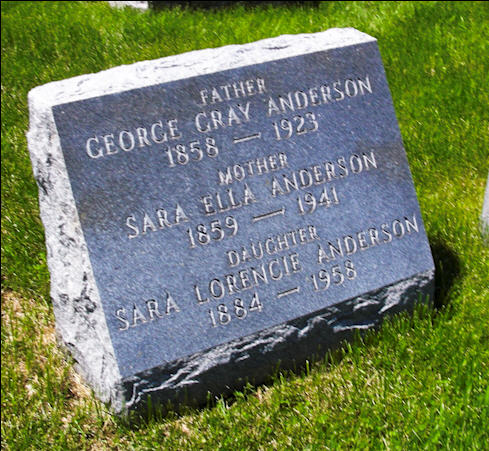
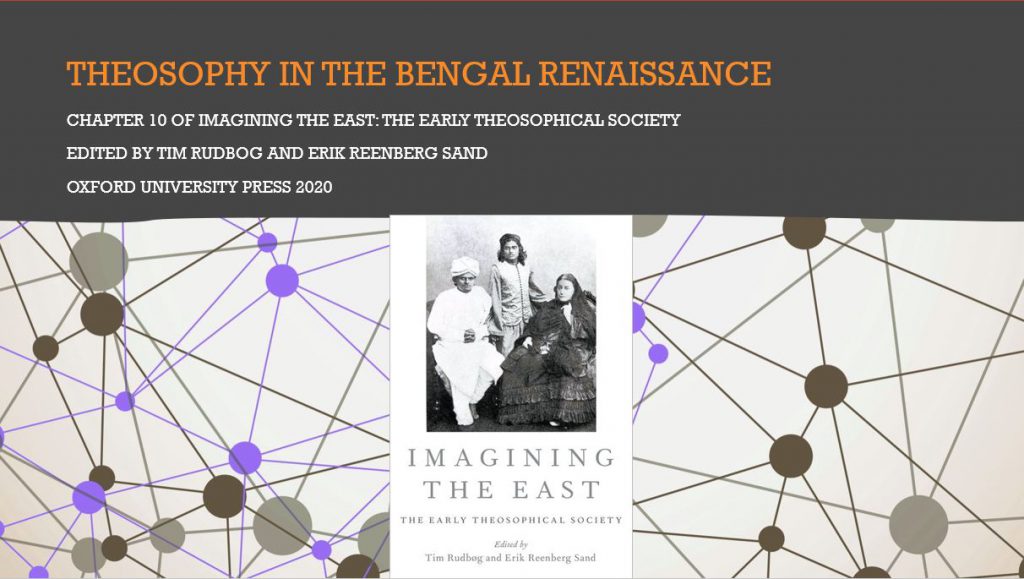




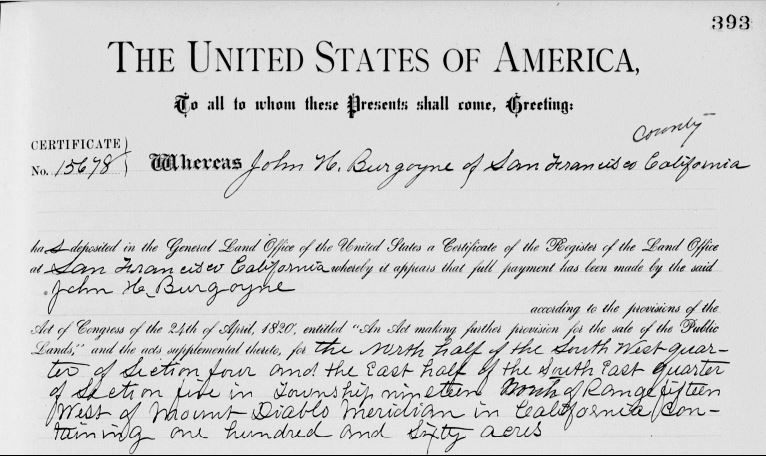


 3. Your Key Chart Points and General Characteristics


 1. Introduction