
Anna Della Subin discusses the Theosophical Mahatmas at length, with Krishamurti as a human who was deified, but she devotes equal attention to Mahatma Gandhi in this award-winning book.

Anna Della Subin discusses the Theosophical Mahatmas at length, with Krishamurti as a human who was deified, but she devotes equal attention to Mahatma Gandhi in this award-winning book.
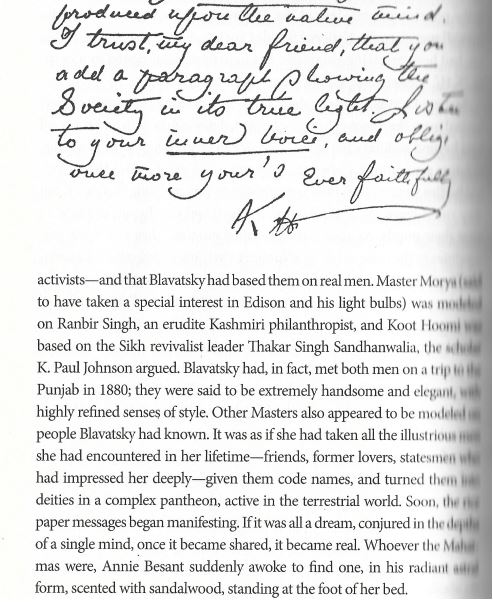
This 2022 book is the most enthralling example of “collective biography” of all I’ve found in recent years. I was cited in reference to the Theosophical deification of Krishnamurti, but for this blog more relevant is the Brotherhood of Light lessons about Mohandas Gandhi whose status as a “Mahatma” was a matter of public acclaim rather than mysterious claims. Will follow up from volume 20 of the BOL lessons.
https://us.macmillan.com/books/9781250296870/accidentalgods

Henceforth when posting a natal chart and report from the original Brotherhood of Light books, I will add an update with most recent information about the person in question. My analysis of the meditation instructions I followed for years in Search for God groups led to the realization that they derived from an Indian-born California spiritual teacher from the Sant Mat tradition, also known as Surat Shabd Yoga and the Radhasoami Faith. Since then much of the work of Bhagat Singh Thind has been published by his family, but this is the first academic inquiry to date and it sheds much light on his career including his connection to Cayce.
In the realm of collective biographers, Elbert Benjamine was extremely prolific in giving short life chronologies along with natal charts for famous people living and dead. I will be discussing several such lives, and new research about them. But two stand out as astrological twins, yet Elbert publishes their natal charts side by side without commenting on the identical birth dates.

This new book from University of Toronto Press fulfills both a hope long expressed and a prophecy I have made, that real significant progress in research on Blavatsky will occur only when a scholar immersed in her Russian writings takes them into account as historical documents. Her chapter on Blavatskaia, as she spells it, is 38 pages so twice the length of usual chapters in academic collections. “Collective biography” has been much on my mind lately, as it covers two of my SUNY Press books as well as Pell Mell and the editorial work I did with Patrick Bowen in Letters to the Sage. All these were focused on the late nineteenth century. But the genre also includes books I admire by Ronnie Pontiac and Gary Lachman whose work spans centuries and millennia. A Woman’s Empire features eight authors of one gender, ethnicity, nationality and era. It is one of the best recent examples of an engaging collective biography that also goes into great scholarly depth in its research. Especially interesting is the author’s discussion of the concurrently published (by the same publisher, Katkov) Durbar in Lahore which by comparison to Caves and Jungles of Hindustan is a more straightforward non-fiction travel book that has yet to be published in book form in English translation.(KPJ)

Propagandist of Russian Imperialism: Madame Blavatsky in India, Chapter Three of A Woman’s Empire, Excerpts:
From Apreleva’s closely observed sketches of Central Asian life, which require the reader to interpret the Russian imperial role in Central Asia, we turn in Part Two to two far more outspoken writers who place Russian imperial efforts into the context of Great Game rivalry with the British, Elena Blavatskaia and Iuliia Golovnina. Chapter three addresses the former, the famous Madame Blavatsky, and her quasi-travel-writing narrative texts written about India. In these texts, while India and the British control of the country are Blavatskaia’s main focus alongside her thoughts, observations, and proclamations about numerous topics, the issue of Russian imperialism in the Caucasus and Central Asia is never far from the surface. Blavatskaia often uses British examples in order to promulgate Russian counterexamples, typically defending the Russian empire as a “better” one and serving as a Russian propagandist.(p111)
Caves and Jungles of Hindostan is certainly also a travel narrative, despite its relative distance from factual reliability… Others included Narayana, a mysterious travelling companion, and The Thakur, or Gulab Lal Singh, the latter of which can be described as “a fictionalized character in the narratives published in the volume From the Caves and Jungles of Hindostan. The character broadly corresponds to Helena Blavatsky’s spiritual Master.”(119) (citation to an online website). Not only that, but as K. Paul Johnson points out, his presence sometimes serves as a way to give the Indians a voice against the British: “Miss B—is clearly providing an opportunity to demonstrate the hatred felt by Indians toward the British. Not only does Gulab-Singh exhibit an attitude which is both threatening and derisive, but he also asserts that a successful uprising will occur the moment his brotherhood decides to allow it. Such a portrayal of the Theosophical Mahatmas was quite different from that conveyed to Anglo-Indians like A.P. Sinnett!”(119-120)

Moncure D. Conway
A window into the mindset that embraced Theosophy in Calcutta is provided by Norendro Nath Sen’s second article by that title which appeared in 1882. Sen (1843-1911), editor of the Indian Mirror, was also a founding member of the Calcutta branch. Referring to “the great demand in Bengal for the new work, called `Esoteric Theosophy’,” Sen explained that his appreciation for Theosophy was not based on the teachings of Blavatsky or any living writer, but rather the TS objective of restoring Indian cultural and religious traditions. “Whether it be called Theosophy or after any other name, what we want to see is that the study of our ancient science, philosophy, and shastras should be earnestly taken up, and diligently pursued by our educated countrymen in every part of India…What entitles them to our respect and confidence, is that they have devoted themselves to the disinterested duty of awakening in us an intelligent curiosity to explore our ancient literature, to study our neglected shastras, and to make researches into our old systems of science and philosophy.” (57) Implicit in this remark is a reason that Bengali intellectuals’ enthusiasm for Theosophy declined after a few years; the TS seemed more interested in promoting its own distinctive doctrines than in appreciating India’s ancient traditions. In 1881, Swami Dayananda had complained in a letter to Blavatsky, “You had come here to become disciples, now you wish to become teachers.” (58) Mohini Chatterji continued to work for the goals that had motivated the original TS/Brahmo alliance, through Bengali channels, for another two decades. Beginning in the late 1880s and continuing until at least 1912, he promoted the teachings of Ramakrishna, Vivekananda, and other Bengali mystics to Westerners. In 1898, Vivekananda praised him to a Calcutta audience as “one who has seen England and America, one in whom I have great confidence, and whom I respect and love…working steadily and silently for the good of our country, a man of great spirituality.” (59)
The American Transcendentalist and Unitarian clergyman Moncure Conway (1832-1907), who visited TS headquarters in 1883 and wrote a sarcastic but affectionate account of the experience, reported an encounter with Sen on board the ship which bore him away from India, in an account published many years later.
“This Mr. Sen, of the ‘Indian Mirror,’ was a relative of the Brahmo leader, Keshub Chunder Sen. That he did not have perfect faith in the Theosophic miracles was evident to me from the fact of his expressing regret that the movement should be permitted to be anything more than an ethical and religious reformation. He rather complained of myself and others who were interested only in the ‘signs and wonders,’ being thus the means of preventing Theosophy from developing into the great Reformed Religion of India. He was an intelligent man, and I received from him a clear idea of the causes which had given so-called Theosophy its success…there appeared from America this company of people who had abandoned every form of Christianity, taken up their abode in India to lead in the work of at once rehabilitating and revising these ancient systems, and pointed Hindus and Buddhists to their own scriptures and prophets as fountains of faith and hope. They naturally gained a hold on the hearts of these people, and in a few years moved and attracted them more than did the Christian missionaries in as many centuries.” (60)
The mutual influence of Theosophy and the Bengal Renaissance reached its zenith during the meteoric career of Mohini Chatterji as the model chela of Blavatsky’s Mahatmas. By the early twentieth century, it was fading into history, as seen in the comments of Aurobindo Ghose (1872- 1950) in a 1911 manuscript that was not published until 1997. Objecting to Theosophy’s authoritarianism and obscurantism, Aurobindo connected both to the relationship between India and British imperialism. Under the title “The Claims of Theosophy,” he wrote:
“One sees, finally, a new Theocracy claiming the place of the old, and that Theocracy is dominantly European. Indians figure numerously as prominent subordinates, just as in the British system of government Indians are indispensable and sometimes valued assistants. Or they obtain eminence on the side of pure spirituality and knowledge, just as Indians could rise to the highest places in the judicial service or in advisory posts, but not in the executive administration. But if the smaller hierophants are sometimes and rarely Indians, the theocrats and the bulk of the prophets are Russian, American or English. An Indian here and there may quicken the illumination of the Theosophist, but it is Madame Blavatsky or Mrs Besant, Sinnett or Leadbeater who lays down the commandments and the Law…These peculiarities of the Theosophical movement have begun to tell and the better mind of India revolts against Theosophy. The young who are the future, are not for the new doctrine.” (61)

Aurobindo’s judgment, published decades after his death, provides a glimpse of the disappointment felt by Bengali intellectuals after their initial enthusiastic embrace of the TS. The impact of Blavatsky and Olcott in Bengal, seen through the eyes and words of Bengalis like Mohini, Aurobindo, or Sen, lasted only a few years highlighted in this chapter. But the impact of Bengal on Theosophy represents a more enduring legacy of the cultural exchange. In the twentieth century the significance of the TS/Brahmo Samaj encounter faded from the collective memory of both groups. Nevertheless, Theosophical literature of the decade from 1877 to 1887 offers a rich and multifaceted portrait of the short-lived alliance between the two groups, and the “Indo-Western” perspectives that they shared.
Conclusion
Despite the rich evidence in primary sources, the TS relationship with the Brahmo Samaj has been obscured in subsequent accounts. None of four recent biographies of Blavatsky mentions the Brahmo Samaj (62) and David Kopf’s authoritative study of Brahmo history mentions neither Theosophy nor Spiritualism, while providing exhaustive evidence of western Unitarianism as an influential factor in the Brahmo movement. The TS relationship with the Arya Samaj began after that with the Brahmos, and lasted less than four years, yet it has received a disproportionate share of historical attention because it was more dramatic and public. Like an ill-starred marriage that began in mutual misunderstandings and ended in public divorce, the Arya Samaj relationship was a formal alliance, publicly proclaimed and then publicly dissolved in mutual recriminations. The TS/Brahmo relationship was comparable to a friendship that developed informally and gradually and then faded in the same way. Hence the Brahmo Samaj was downplayed as early as the 1890s in Olcott’s Old Diary Leaves, and virtually forgotten in the twentieth century TS. The present study has sought to redress the historical imbalance and restore Brahmo/TS relations to their proper relevance, which has been recently highlighted by the availability of TS membership records.
57 Norendro Nath Sen, “Theosophy in Calcutta,” Reprinted from The Indian Mirror (Calcutta), Vol. XXII, May 2, 1882, p. 2.] <http://www.blavatskyarchives.com/sen1882b.htm> Accessed August 14, 2014.
58 K.C. Yadav, ed. Autobiography of Dayanand Sarasvati (third edition, Delhi: Manohar, 1987), 62.
59 Gopal Stavig, Western Admirers of Ramakrishna and His Disciples (Uttarakhand: Advaita Ashrama, 2010), 453.
60 Moncure Conway, My Pilgrimage to the Wise Men of the East (Boston and New York: Houghton, Mifflin, 1906), 203.
61 Aurobindo Ghose, “The Claims of Theosophy,” Sri Aurobindo. Essays Divine and Human // The Complete Works of Sri Aurobindo.- Set in 37 volumes.- Volume 12 (Pondicherry: Sri Aurobindo Ashram, 1997), 67-68. <http://www.aurobindo.ru/workings/sa/37_12/0016_e.htm>
62 There are no index entries for the Brahmo Samaj in Marion Meade’s Madame Blavatsky: The Woman Behind the Myth (1980), Jean Overton Fuller’s Blavatsky and Her Teachers (1988), Sylvia Cranston’s HPB (1993), or Gary Lachman’s Madame Blavatsky: The Mother of Modern Spirituality (2012).

Mohini Chatterji’s role in the Theosophical Society was pivotal but brief, lasting only from 1882 through 1887. Chatterji was a great grandson of Ram Mohun Roy and his wife was the great granddaughter of Debendra Nath Tagore (1817-1905). As a promising young lawyer, Mohini attended the final annual meeting of the TS in Bombay in November 1882, as the headquarters moved to Madras at the end of the year. Mohini went to Europe with Olcott and Blavatsky in 1884 and was hugely successful in the propaganda role for which he had been recruited. He was well-spoken, well educated, and handsome, and the latter quality made him attractive to female Theosophists, one of whom produced a hundred love letters from him after learning of the existence of his wife in Calcutta.(52) During the years of his TS involvement he did more than any other Indian to promote Western appreciation of Hinduism, and to integrate Hindu ideas with a Western esoteric framework. In April 1886 his extended visit to Dublin made a lifelong impression on William Butler Yeats, whose poetry reveals the influence of Hindu ideas absorbed from Mohini. Most notably, Yeats wrote a poem in 1928 entitled “Mohini Chatterjee,” which brought attention to him in his old age when he was largely forgotten by Western Theosophists.
Before his resignation, Mohini joined forces with Arthur Gebhard in a privately distributed manifesto challenging the leadership of the Theosophical Society and the powers of its president in particular. Dated September 23, 1886, the joint statement appeared under the title “A Few Words on the Theosophical Organization” and was denounced by Blavatsky in a letter to William Q. Judge (1851-1896) as “ungrateful, cold, and unjust to poor Olcott and cruel” adding that Mohini was “now regarded as a Jesus on wheels and a Saint” who owed his fame to “Olcott’s advertisements of him and my enthusiastic claims for him.”(53) Mohini’s change of perspective, after years of serving faithfully as a supporter of her claims about the Mahatmas, is also evident in her complaints to Judge, Mohini was believed responsible for persuading two London Theosophists that the Masters “were no longer regarded as the living actual Adepts, but either white Magicians with grayish tints, or `fictions’… unreachable Beings they could neither communicate, nor take concern in worldly or private affairs could never write letters or send messages—therefore our Masters could never be MAHATMAS…Mohini is then exercising for over six months his influence over Miss Arundale to make her lose faith & belief even in the Masters.”(54)
Before leaving America, Mohini was embraced by the Boston Unitarians and Transcendentalists as evidenced by his role as a featured speaker at the fiftieth anniversary celebration of the arrival of the Rev. Cyrus A. Bartol (1813-1900) as pastor of Old West Unitarian Church. He was thus returning to the alliances that the Brahmo Samaj had established in the 1830s with the Unitarians of Britain and America. Mohini’s presence as a speaker at this event is a reminder that Unitarianism was the first Western movement with which the Brahmo Samaj found common cause:
“It affords me very great pleasure to have this opportunity of saluting a body of men, brothers and Christians, in the name of the God who is the one God, no matter under how many different names and different forms he may be worshipped; the God who is the Father of all men, in whom we live and move and have our being… In the home of my childhood there was a book called ‘The Precepts of Jesus: Guide to Peace and Happiness.’ This book was written by an ancestor of mine. The great misunderstanding and misconception of the Christian faith that prevails in our country had given me such a false opinion of Christianity that I thought it would be a perfectly profitless thing to read this book… There is another reason why I have a personal pleasure in being here. Fifty-four years ago, four years before Dr. Bartol began his ministry here, an ancestor of mine died in Bristol, England, surrounded by Christians who believed in the unity of God. Therefore it is to me a matter of delight that I have this opportunity of addressing you as men, as brothers, and as Christians.”(55)
Mohini was not simply embracing Christianity and rejecting Theosophy; his position was nuanced but he was moving out of the orb of Blavatsky’s influence by returning to the conciliatory and pro-Western stance of the early Brahmo movement. Having served as a Theosophical missionary to the West, he was rejecting his role as the spokesman of Mahatmas who were harshly critical of Christianity, and returning to an earlier model of Indo-Western relations that did not exalt Indian religions over others. The celebrity he achieved in England, Ireland, and America may have turned his head as Blavatsky and her supporters believed. But his remarks at Bartol’s anniversary celebration indicate a genuine change of heart about a cooperative rather than competitive attitude of Hindus to Christians, which was a return to the path of his ancestors.

Cyrus A. Bartol
Having gotten too close to the flame of Blavatsky’s political involvements might have burned him, according to evidence unearthed in Christy Campbell’s 2002 The Maharaja’s Box. Campbell discovered a letter written by Philip D. Henderson (1840-1918) in 1886, when he had become the “general superintendent of the Thugee and Dacoity department,” reporting to Foreign Secretary Sir Henry Mortimer Durand (1850-1924). Henderson had been responsible for surveillance of the Theosophical Society since its arrival in India in 1879, and had become concerned about TS involvement in attempts to incite the exiled Maharaja Dalip Singh to open rebellion against the British. This led to an investigation of Dalip Singh’s associations in England, and on June 15, 1886 Henderson reported to the Police Commissioner of Madras:
“When Colonel Olcott was in India in 1882-83, he founded a secret society among the admitted. The purpose of this secret society is said to be to send information to Russia, and the headquarters are now said to be in Madras. An agent of the society was sent to England and is supposed to be the medium, or one of the mediums, of transmitting information. This man is one Mohini Mohun Chatterji… I heard from England myself that Mohini Mohun was in the habit of seeing a great deal of Duleep Singh … at the present time the necessity for vigilance to intrigues going on in India has been impressed on the Government of India.”(56)
In light of the fact that Mohini’s dealings with the maharaja came to the attention of the Government of India, it is conceivable that attempts were made to dissuade him from continued association with Blavatsky and the TS, and that his distancing himself from her was motivated by pressures brought to bear behind the scenes. Whatever the combination of factors, after his resignation in October 1887, Mohini had no further dealings with the TS other than assisting G.R.S. Mead (1863-1933) with an 1896 translation of the Upanishads, which he did under a pseudonym.
52 Letters of H.P. Blavatsky to A.P. Sinnett (Pasadena: Theosophical University Press, 1973), 297.
53 H.P. Blavatsky, “The Original Programme of the Theosophical Society,” Compiler’s Notes, H.P. Blavatsky Collected Writings, Vol. VII, 136.
54 Ibid., 137
55 The West Church, Boston. Commemorative Services on the Fiftieth Anniversary of its Present Ministry… (Boston: Damrell and Upham, 1887). 68-70.
56 Christy Campbell, The Maharajah’s Box. (Woodstock, N.Y.: Overlook, 2002), 254-255.

In April 1882, Olcott lectured at Calcutta Town Hall on his first visit to Bengal, more than three years after his arrival in Bombay. He was introduced to this fateful lecture audience by Mittra, now a TS Vice-President and President of the Calcutta branch. Olcott attributed to Indian Mahatmas all the early paranormal wonders he witnessed in New York, and dated his desire to move to India to his earliest acquaintance with Blavatsky in Vermont. “She soon proved to me that, in comparison with even the chela of an Indian Mahatma, the authorities I had been accustomed to look up to knew absolutely nothing… I began to count the years, the months, the days, as they passed, for they were bringing me ever nearer the time when I should drag my body after the eager thought that had so long preceded it.” (39)
This account makes the move to India an inevitable destination of the TS even before it was founded, which conflicts with numerous accounts from other founding figures and even his own story of the fateful 1877 introduction to the Arya Samaj. As the alliance with Dayananda collapsed, so did his significance in Olcott’s explanation of his reasons coming to India: “During the three years when I was waiting to come to India, I had other visits from the Mahatmas, and they were not all Hindus or Cashmeris. I know some fifteen in all, and among them Copts, Tibetans, Chinese, Japanese, Siamese, a Hungarian, and a Cypriote.” (40)
Olcott’s visits from the Mahatmas have acquired the connotation of mysterious paranormal events through decades of Theosophical elaboration. But regardless of paranormal claims, as seen in Olcott’s description above, there was a remarkable series of encounters with international acquaintances who shared common interests. He mentions no Bengali Mahatmas, yet makes a long-term commitment to the Theosophists of Bengal, saying “I expect henceforth to spend at least two or three months of each year in Bengal…We have not the least intention of returning to our own countries to reside. India is our chosen home, the land of our adoption; and the Hindus are our dearest friends, if not our brothers.”(41)
In Old Diary Leaves, Olcott described his arrival in Calcutta for the first time and its aftermath:
Calcutta was my final stage on this roundabout tour of 1882. I was first entertained there by my excellent friends Colonel and Mrs. Gordon, and, later, by the Maharajah, Sir Jotendro Mohn Tagore, the premier Indian noble of the Metropolis…became his guest at his palatial Guest-House (Boituckhana) for the remainder of my stay in Calcutta. This gentleman is one of the courtliest, most cultured and estimable friends I have ever known. On the 4th, the Maharajah held a reception for me, to make me acquainted with the chief Indian gentlemen of the city. On the 5th, my lecture was given at the town hall to a tremendous audience…The beloved Bengali author and philanthropist, the late Babu Peary Chand Mittra, was my Chairman. H.P.B. joined me the next day at the Boituckhana, and that evening, at the same place, we organized the Bengal Theosophical Society, one of our best known Branches, with Babu Peary Chand Mittra as President. (42)
Blavatsky’s first mention of the Brahmo Samaj after her visit to Bengal was in the June 1882 Theosophist with an article “Hindu Theism” in which she introduced an article on Brahmo history:
“In 1838 the leadership fell into the hands of Babu Debendra Nath Tagore, a Bengali gentleman of high family, and of a sweetness of character and loftiness of aim equal to that of the late Raja. Primitive Brahmoism was first split into two, and, later, into three churches. The first and, it is claimed, the original, one is known as the Adi Brahmo Samaj, of which the now venerable and always equally revered Babu Debendra Nath Tagore is theoretically, but Babu Raj Narain Bose practically—owing to the retirement of the former to a life of religious seclusion at Mussooree— the chief…the second Samaj comprises a small group which has followed the lead of Babu Kashab Chander Sen, down the slippery road to the quagmire of Infallibility, Direct Revelation, and Apostolic Succession…The Third branch of the original Brahmo Samaj of Ram Mohun Roy is called the Sadharan Brahmo Samaj, and headed by Pandit Sivanath Shastri, who is a gentleman of unblemished character, modest disposition, a well-read Sanskritist, and a good though not exceptional, orator…In conclusion, we must note the coincidence that, upon the very heel of the Swami’s defection, comes a most cordial greeting from Babu Raj Narain Bose, leader of another Hindu society, and a man whose approbation and friendship is worth having…” (43)
In May 1883, in “The Chosen `Vehicles of Election’” she protested that “Brahmoism proper, as taught by Raja Ram Mohun Roy, or the respected and venerable Babu Debendranath Tagore, we have never ridiculed nor deprecated, nor ever will.” (44) The following month, Blavatsky published an article in the Theosophist which commented on an article from the previous month’s number by Bose on “Essential Religion” in a friendly but critical tone. This echoed the tone of the original criticism, in which Bose pointed out that Theosophy was as much a propagandistic religion as Brahmoism despite claims to the contrary. In his response Bose wrote “I am not therefore unfriendly to Theosophy, but I have a word of humble advice to offer to the disinterested leaders of the Theosophical movement, for whom I entertain every feeling of respect. The more they keep Theosophy and Theology distinct from each other, and the less they mix up their personal opinions of the subject of religion with their legitimate province, Theosophy, the better.“ (45) Blavatsky replied that “The saintly characters of Ram Mohun Roy, Debendra Nath Tagore, and a few others of his colleagues, have not won the Hindus from their exoteric worship—we think, because neither of them has had the Yogi power to prove practically the fact of there being a spiritual side to nature. (46) A further exchange appeared in the December 1883 number of The Theosophist, in which Blavatsky commented that “We never spoke of the `Adi Brahmo Samaj,’ of which we know next to nothing, but of the spurious Brahmo Samaj calling itself New Dispensation where all is to be taken on faith and the Universal Infallibility is claimed to have taken its Headquarters in the person of Babu Keshub Chunder Sen who has now come to comparing himself publicly—nay with identifying himself—with Jesus Christ.” (47) Describing all branches of Brahmos combined as having fewer than 150,000 members, Blavatsky adds “we were told in Calcutta by a near relative of the Babu—that the direct followers, or the apostles of Babu Keshub could be counted on the ten fingers— they do not exceed fifty men.” (48) But while the New Dispensation was subject to relentless scorn in Blavatsky’s writings, Mittra was always praised: “There are a few converts to modern Spiritualism, such as Babu Peary Chand Mittra, whose great personal purity of life would make such intercourse harmless for him, even were he not indifferent to physical phenomena, holding but to the purely spiritual subjective side of such communion.” (49)
While Blavatsky’s first trip to Bengal to promote the TS among the Brahmos in April 1882 was of short-term import, her second trip, when she visited Darjeeling and the Ghum monastery six months later, had a more lasting significance. She traveled in the company of several Indian chelas, including Keshava Pillai who was instructed in a letter from Koot Hoomi to adopt the name Chandra Cusho and the attire of a Gelugpa monk. The name Chandra may be a nod to Sarat Chandra Das (1849-1917), a Bengali scholar of Tibetan Buddhism who was in Shigatse at the time of Blavatsky’s trip to Darjeeling, in the company of a Sikkimese lama named Ugyen Gyatso. In the December 1883 Theosophist, she referred to “Ten-Dub Ughien, the lama next to our Mahatma—and the chief and Guide of his chelas on their travels.”(50) Ugyen Gyatso and Sarat Chandra Das returned from their trip to Shigatse in December 1882, and Colonel Olcott visited Das in Darjeeling in 1885 and 1887 and wrote of him as a “wonderful explorer of Tibet” who had returned with “priceless MSS. and printed books.” (51)
39 Henry S. Olcott, Theosophy, Religion, and Occult Science (London: Redway, 1885), 122-124.
40 Ibid., 124.
41 Ibid., 119.
42 Henry Steel Olcott, Old Diary Leaves, Third Series (Adyar: Theosophical Publishing House, 1972), 340-341.
43 H.P. Blavatsky, “Hindu Theism,”The Theosophist, Vol. III, No. 9, June 1882, reprinted in H.P. Blavatsky Collected Writings, Vol. IV (Wheaton: Theosophical Publishing House, 1969), 109-111.
44 H.P. Blavatsky, “The Chosen `Vessels of Election;” The Theosophist, Vol. IV, No. 8, May, 1883, reprinted in H.P. Blavatsky Collected Writings, Vol. IV, 414-415.
45 Babu Raj Narain Bose, “The Essentials of Religion,” The Theosophist, Vol. IV, No. 11, August, 1883, reprinted in H.P. Blavatsky Collected Writings, Volume V (Los Angeles: Philosophical Research Society, 1950), 99.
46 H.P. Blavatsky, “Editor’s Note,” Ibid., p. 100.
47 Babu Raj Narain Bose, “The God-Idea,” The Theosophist, Vol. V, No. 3, December 1883, in H.P. Blavatsky Collected Writings, Vol. VI, 12.
48 “H.P. Blavatsky, Editor’s Note, “Ananda Bai’s Reception,” The Theosophist, Vol. V, No 3, Supplement to December, 1883, reprinted in H.P. Blavatsky Collected Writings, Vol. VI, 68.
49 H.P. Blavatsky, “Tibetan Teachings,” Lucifer, Vol. XV, Nos. 85-86, September and October, 1894, in H.P. Blavatsky Collected Writings, Vol. VI, 96.
50 H.P. Blavatsky, “Editor’s Note,” Preo Nath Banerjee, “Existence of the Himalayan Mahatmas,” The Theosophist, Vol. V., No. 3, December, 1883, reprinted in H.P. Blavatsky Collected Writings, Vol. VI, 38.
51 Henry Steel Olcott, Old Diary Leaves, Third Series, 4-6.
This is the second of the subdivisions of the chapter “Theosophy in the Bengal Renaissance.” Noteworthy for students of the Brotherhood of Light Lessons or readers of the History of the Adepts books is that Mittra (Mitra) was held in high esteem by Alexander Wilder and Thomas Moore Johnson as well as by Emma Hardinge Britten and James Martin Peebles. The former were more Platonists than occultists and the latter more Spiritualists than Theosophists– but the lines were always blurred in the 19th century. KPJ
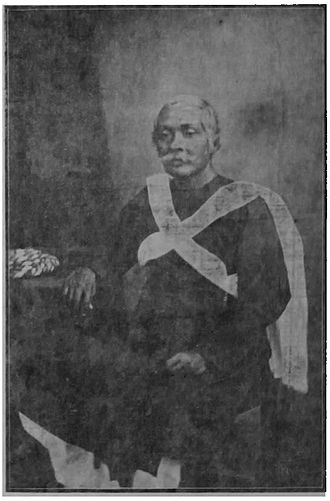
Peary Chand Mittra was the first Bengali member of the TS, and the third Indian admitted, member #135 in the Adyar membership books with an entry date of December 9, 1877.
Blavatsky referred to Mittra in a note recorded in her scrapbook next to a clipping from the London Spiritualist of Jan 25, 1878 of a letter to editor from Peebles, “who is attempting to prove that there are Hindu Spiritualists” to which she added a note commenting “Ask Peary Chand Mittra whether he would accept `materialized’ spooks with sweating and corpse-stinking bodies for his dear `departed ones.’”(26) In The Theosophical Enlightenment, Joscelyn Godwin suggests that Blavatsky and Olcott first made contact with Mittra through Peebles, which is credible in light of their known friendship.(27) Although Mittra is known in the West as an Indian Theosophist and Spiritualist, in his homeland his reputation is as a pivotal figure in the Bengal Renaissance who was acquainted with most of its leaders. In Awakening, a recent survey of the century-long revival of Bengali literary culture, Subrata Dasgupta describes “the ultimate and supreme product” of the Bengal Renaissance as a “cross-cultural mentality, let us call it the Indo- Western mind.”(28) Involvement in the TS was the ultimate expression of Mittra’s Indo-Western mind. Indeed the entire Bengal Renaissance was encouraged by the literary pursuits of Westerners living in Bengal in the late 18th century, and flourished with the mutual interest of Bengalis writing in English and Englishmen learning Bengali.
Mittra features prominently in Dasgupta’s study as “a librarian, businessman, and literary man- at-large, but most famously, under the nom de plume of Tekchand Thakur, the author of Alaler Gharer Dulal…regarded as the first novel in Bengali.”(29) With Radhanath Sikda he “established a monthly Bengali magazine which ran for three years.”(30) A Society for the Acquisition of General Knowledge, founded in 1838, hosted Mittra as a lecturer on a variety of themes, and he was subsequently involved in the creation of the University of Calcutta. Mittra was a founder of the British Indian Association and in 1868 became a member of the Bengal Legislative Council. All these developments illustrate Dasgupta’s thesis that “the Bengal Renaissance’s richest production was the creation of a cross-cultural mentality, a capability to think, perceive, and create in a manner that involved the melding of two or more traditions seemingly unconnected and even contradictory…the `Indo-Western mind’, resulting from a constellation of encounters of all sorts between Bengal and the West…”(31)
The first details about the Brahmo Samaj in Blavatsky’s writings came in an 1878 article about the Arya Samaj: “in October, 1839… Debendra Nath Tagore founded the Tattvabodhoni-Sabha (or Society for the Knowledge of Truth), which lasted for twenty years, and did much to arouse the energies and form the principles of the young church of the Brahmo-Samaj. We now find it with Samajes established in many provinces and cities. At least, we learn that in May 1877, “fifty Samajes have notified their adhesion to the Society and eight of them have appointed their representatives.”(32) The rest of the article was devoted to the Arya Samaj, and for the next four years the TS Founders would pursue alliances with that organization and with the Sinhalese Buddhists. Their travels to northern and western India and Ceylon occupied much of their time and energy in 1879 and 1880. It was only in 1882, the year in which the Arya Samaj and the TS became permanently alienated, that they would visit Bengal and strengthen their ties with the Brahmo Samaj. The first mention of a Bengal Renaissance leader in Blavatsky’s writings in India was found in an American Spiritualist publication, the Banner of Light, where she wrote that “the frequent statements of Dr. Peebles to the effect that this country is full of native Spiritualists are—how shall I say it? a little too hasty, and exaggerated…Dr. Peebles quotes from the letter of an esteemed Hindu gentleman, Mr. Peary Chand Mitra, of Calcutta…We all know that Mr. Mitra is a Spiritualist, but what does it prove?”(33) In an unpublished fragment found in Adyar Archives and published in the Collected Writings as “Theosophy— the Essence of Philosophy,” dated 1879, she wrote: “and here, in the present century, we will find ourselves face to face with, and recognize as Brother Theosophists, such original thinkers as Swami Naratan, Ram Mohun Roy, Brahma charya Bawa, Keshub Chunder Sen, and finally, last, though by far not least on our catalogue— Swami Dayanada Sawaswati, the learned Pandit, eminent Vedic scholar and elocutionist, and the founder of the Aryan Reformation.”34 Although Mittra’s acquaintance with the TS dates to 1877, he took four years to contribute directly to Theosophical literature. In a March 1881 article for the Theosophist, Blavatsky commented “Ever since we came to India friends in Europe and America have been asking us to tell them something about the Brahmo Samaj. We have been promised such an exposition of Brahmoism more than once by Brahmo friends.”(35)
In 1882, Mittra was elected president of the TS branch in Calcutta, and Blavatsky wrote about him as “certainly the most spiritual Theosophist and most theosophic Spiritualist we have ever met.”(36) Answering questions about the suitability of a Spiritualist president of a Theosophical branch, she wrote that “many excellent persons are both, and none need alter his faith.”(37) Emma Hardinge Britten’s Nineteenth Century Miracles (published in 1884 but in a passage apparently written during Mittra’s lifetime) called Mittra a highly esteemed Indian Spiritualist: “Amongst the recent literary productions which bear testimony to the spread of the spiritual faith in India, no writings are more highly esteemed than those of Peary Chand Mittra. Besides a number of excellent magazine articles contributed by this gentleman to the different Spiritual periodicals of England and America, Mr. Mittra has written an interesting brochure entitled `Spiritual Stray Leaves,’ and a still more profound work on `the Soul; it’s [sic] nature and development.”(38)
23 Stainton Moses, “The Early Story of the Theosophical Society,” Light, Vol. XII, No. 602Jul 23, 1892, 356.
24 Letters of H. P. Blavatsky, Vol. 1 (Wheaton: Theosophical Publishing House, 2003), 361.
25 Krishna Singh Arya and P.D. Shastri, Swami Dayananda Sarasvati: A Study of His Life and Work (Delhi: Manohar, 1987), 17-18.
26 H.P. Blavatsky, H.P. Blavatsky Collected Writings, Vol. 1 Second edition. (Wheaton: Theosophical Publishing House, 1977), 282.
27 Joscelyn Godwin, The Theosophical Enlightenment (Albany: SUNY Press, 1994), 327. This book devotes several psges to Brahmoism, far more than other works addressing TS history, but concentrates on the period prior to TS/Brahmo contact.
28 Subrata Dasgupta, Awakening (Noida, U.P.: Random House India, 2011), 3.
29 Ibid., 178.
30 Ibid., 179.
31 Ibid., 431.
32 “The Arya Samaj,” New York Echo, June 2, 1878 in H.P. Blavatsky Collected Writings Vol. I, 381.
33 H.P. Blavatsky, “Echoes rom India, ” Banner of Light, XLVI no 4, October 18, 1879, in H.P. Blavatsky Collected Writings, Vol. II (Wheaton: Theosophical Publishing House, n.d.).
34 H.P. Blavatsky, “Theosophy, the Essence of Philosophy,” H.P. Blavatsky Collected Writings, Vol. II, 209.
35 H.P. Blavatsky, “The Brahmo Samaj,” Theosophist 2:6, March 1881 reprinted in H.P. Blavatsky Collected Writings, Vol. III (Wheaton: Theosophical Publishing House, 1968), 55.
36 H.P. Blavatsky, H.P. Blavatsky Collected Writings, Vol. IV (Adyar: Theosophical Publishing House, 1969), 170.
37 Ibid.
38 Emma Hardinge Britten, Nineteenth Century Miracles (New York: Lovell, 1884), 317.

Hurrychund Chintamon
1870-1877 Initial Contacts (from Theosophy in the Bengal Renaissance, Chapter 10 of Imagining the East)
Old Diary Leaves describes a visitor who recognized Bombay Arya Samaj leader Moolji Thackersey (d1880) in a photograph on the wall of the New York apartment that Colonel Olcott (1832-1907) shared with Madame Blavatsky. “One evening in the year 1877 an American traveller, who had recently been in India, called…he did know Moolji Thackersey and had recently met him in Bombay.(3) This photograph had been allegedly taken on a transatlantic voyage from New York to Liverpool in 1870, where Olcott met Moolji Thackersey and another Indian traveler named Tulsidas Jadarjee, five years before the formation of the Arya Samaj. Hurrychund Chintamon, with whom Olcott began corresponding after Thackersey introduced them, was the second Indian entered in the Adyar Membership records now available online from The Art Archive. The first, Jadarjee, #120 in the entries, precedes #123 Chintamon and has been considerably more elusive. Herbert Monachesi (d1900) gave his name as Tulsidas Jadarjee in an October 6, 1875 New York Mercury article “Proselyters from India,” claiming that Thackersey and his travel companion had been on a Hindu missionary journey to the West.(4) Newspaper accounts in New York (November 12, 1869), Louisville (November 20, reporting their presence in Chicago), New Orleans (December 3), Macon (December 24, reporting their presence in Mobile), Charleston (December 26), and Philadelphia (January 6, 1870) trace their travels around the United States on a business mission to study the cotton business in hopes of establishing direct trade. The New York Times for January 13, 1870 included the names “Moolja Thackersy, Toolsidas Jadarzee,” and “Colonel. Hy. S. Olcott” as having departed the previous day on the steamship Java, bound from New York to Liverpool.(5)
James Peebles (1822-1922) has been suggested as the possible visitor of Olcott’s anecdote, but he was out of the country throughout 1877 and thus less likely as the visitor in question than a heretofore overlooked colleague of Olcott, David E. Dudley, MD.(6) Like Olcott, Peebles did make a journey to England in 1870 that led to acquaintance with Indians who became pivotal in the establishment of the TS in Asia. Two years later his travels in India made him a catalyst in the relations between the Brahmo Samaj and western Spiritualists. His acquaintance with the Brahmo Samaj had begun in 1868 when Keshub Chunder Sen (1838-1884) wrote a letter to a Free Thought Convention, in which “Dr. J. M. Peebles and Miss Lizzie Doten (1827-1913) spoke for the Spiritualists…there was also an inspiring letter from Keshub Chunder Sen, the great leader of the Brahmo Somaj movement in India.”(7) In 1870, Sen wrote a note to Peebles while both were in London, leading to a meeting about which Peebles later wrote: “This educated and gentlemanly missionary from India, attired in the vesture of his native land, made quite a sensation when reaching the great metropolis of her Majesty’s domains… we learned that he was well acquainted with Peary Chand Mittra, and other leading Spiritualists of India. Multitudes in this distant country accept the central thought of Spiritualism; that is, intercourse with departed spirits.”(8) Sen wrote of the meeting in a diary entry: “Tuesday, 26th April. Mr. Peebles, United States Consul in Asia Minor, calls on me with a friend of his who, it appears, is a spiritualist. They are both very liberal-minded, and they most warmly sympathize with me in my desire and efforts to promote theism. Mr. Peebles asks me to visit America where he will be going in next June. He is enthusiastic about it.”(9)

James Martin Peebles
In his 1875 travel memoir Around the World Peebles also describes meeting Brahmo Samajis in Calcutta, one of whom had translated Emma Hardinge’s Spiritual Commandments into Bengali and distributed it as a pamphlet.10 In 1871, Hardinge (not yet Britten) had written a glowing three page preface to the first biography of Peebles, The Spiritual Pilgrim by J. O. Barrett (1823-1898). The following year he met the Cairo Spiritualist circle in which Blavatsky had been involved.(11) In light of these circumstances, we can surmise that Peebles vouched for Blavatsky’s Spiritualist credentials to Olcott, and endorsed her phenomena that are described in People From the Other World. This 1875 book describes the séances at the Eddy brothers’ farmhouse in Vermont where Olcott first met Blavatsky. Peebles also is featured in the narrative as a man who “is well known as an eloquent speaker and scholarly writer upon Spiritualism, but that doesn’t imply that he is either a fool or knave.”(12)

Henry S. Olcott
Although in 1874 Peebles had been present at the time of the first acquaintance of Blavatsky and Olcott in Vermont, he kept distance from her thereafter. Adyar membership records indicate that Peebles was not an early TS member. In fact he condemned Blavatsky and supported her accusers the Coulombs in 1884 during the Society for Psychical Research investigation of the TS. Near the end of his life he repeated his condemnation of Blavatsky in Five Journeys Around the World (1910), writing that “Continental, English, and American Spiritualism and Spiritualists were shamefully misrepresented in India a number of years ago by Madame Blavatsky and a number of her biologized subordinates.”(13) Clearly, Olcott was chief among the “biologized subordinates” yet in the same book Peebles wrote “Adyar is not only restful, inviting to study and meditation, but the centre of Theosophical culture, research, and authority for the enlightened Theosophical world. Happy were the days and weeks that I spent in this palace of books, companioned with Col. Olcott, the only living founder of modern Theosophy!”(14) After Blavatsky’s death he finally joined the Theosophists in 1894 and was on collegial terms with Olcott on a return trip to South Asia three years later.(15)

Emma Hardinge Britten
Art Magic and Ghost Land, published in 1876, were the first expressions of interest in India in books by a TS founder. Emma Hardinge Britten (1823-1899) has been largely written out of the early TS narrative and deprived of her rightful status as a founder. Although she has been perceived in terms of the polarities East vs. West and Spiritualism vs. Theosophy, she wrote as a Theosophical Spiritualist and a reconciler of Eastern and Western traditions. In Art Magic she wrote that “the same imperishable sources of knowledge from which the ancients derived their opinions and framed their systems of Theosophy, are open to the students of the nineteenth century in all their fullness,”(16) and eight years later in Nineteenth Century Miracles she asserted that “’Theosophy’ and `Occultism,’ are terms of world-wide import.”(17) Despite her open break with the TS due to its hostility to Spiritualism, in 1884 Britten still maintained that “India has been the cradle of all known theological beliefs…the actual marvels wrought by religious ascetics, in the realm of matter and force, have opened up a new and highly suggestive page in the study of Occultism and Psychology.”(18) Isis Unveiled, published in 1877, refers to Bengal briefly in each of its two volumes. In Volume I, Blavatsky gives a first-person narrative of a “Magical Séance in Bengal,” in which she describes having made “hundreds of experiments with cats, dogs, monkeys of various kinds, and once, with a tame tiger” in the Western Ghat mountains, and then describes witnessing a tiger, a lion-monkey, and an oriole being mesmerized all in the same “séance” attended by nine persons in Bengal.(19) In the second volume, she describes an encounter with snake charmers by a British “Captain B” before recounting another tale of mesmerizing a tiger, this time in a village near Dacca.(20)

Swami Dayananda Sarasvati
Correspondence between the Theosophists and the Bombay Arya Samaj began in November 1877 when Olcott contacted Moolji Thackersey. In December, Blavatsky wrote for the first time to Peary Chand Mittra (1813-1883), asking “in what pagodas are the records preserved? Where are these temples situated and what are their names, and how old is each known to be?”(21)
Although Blavatsky corresponded with the Arya Samaj before making contact with the Brahmos, in The White Buddhist, Steven Prothero notes a letter written June 5, 1877 from Olcott to Mittra which thus occurred months prior to TS contact with Dayananda and his disciples.(22) Peary Chand Mittra was the first Bengali member of the TS, and the third Indian admitted, member #135 in the Adyar membership books with an entry date of December 9, 1877. Although Olcott would later claim that his motivation to move to India predated creation of the TS, an 1876 letter to Stainton Moses (1839-1892) shows him resistant to Blavatsky’s desire to relocate to India. She had been convinced that criticisms by D.D. Home (1833-1886) had destroyed her credibility in Europe and America. This letter, published in Light in 1892, seeks the assistance of Moses’ spirit guide Imperator:
“I wish you would ask Imperator, with my compliments, if he can’t do something, in the psychological way, to prevent Madame Blavatsky from going to India…She is a changed woman these past few weeks. She is moody, reserved, and apparently desperate. The calumnies circulated in Europe and here have cut her so deeply; she feels such a disgust with our world; she so longs for her sacred Ganges, and the society of her Brethren, that I am afraid we will lose her.”(23)

Daniel Dunglas Home
In November 1877, after the decision had been made to move to India, Blavatsky wrote a letter to A.N. Aksakov (1832-1903) in Russia that confirms Home’s hostility as a factor: “It is for this that I am going for ever to India, and for very shame and vexation I want to go where no one will know my name. Home’s malignity has ruined me for ever in Europe.(24) Perhaps what changed Olcott’s mind were Blavatsky’s elaborate claims on behalf of Swami Dayananda. She had portrayed him as part of her Great White Brotherhood of adept sponsors, and Hurrychund Chintamon had also encouraged Olcott’s religious adherence to the Swami. On February 18, 1878, Olcott wrote through Chintamon to Dayananda, “we come to your feet as children to a parent, and say, ‘Look at us, our teacher; tell us what we ought to do. Give us your counsel and your aid.”(25)
This sequence of events revises the traditional understanding of the TS move to India. Rapprochement between western Spiritualists and the Brahmo Samaj was behind the scenes of the early TS through Peebles, Sen and Mittra during the writing of Britten’s Ghost Land, well before the connection to Swami Dayananda developed. Theosophical tales about Indian missionaries to the West were likely derived from Brahmo activities and orientation. Arya Samajis cared no more about European contacts than did Tibetan Buddhists, but Bengalis were more global in perspective and did send missionaries to the West. The first to play this role in the early Victorian period was Brahmo Samaj founder Ram Mohan Roy; most visible in the 1880s was his great grandson Mohini Chatterji (1858-1936).
(endnote numbers continue from the previous installment)
3Henry S. Olcott, Old Diary Leaves (Adyar: Theosophical Publishing House, 1974, 1975) Vol. I, 395.
4 Josephine Ransom, Short History of the Theosophical Society (Adyar: Theosophical Publishing House, 1938), 98.
5 “Passengers Sailed,” New York Times, January 13, 1870, 8.
6 Dudley’s role in the TS move to India is discussed in my editorial foreword to the 2021 reprint of Chintamon’s 1874 Commentary on the Text of the Bhagavad-Gita. In The Dawning of the Theosophical Movement (Wheaton: Theosophical Publishing House, 1977), Michael Gomes noted that the American traveler “is usually identified as Dr. James M. Peebles” and asserts that Peebles had indeed met Thackersey, but cautions that Peebles was out of the U.S. throughout 1877. In 1980, Marion Meade reported as fact that Peebles was the visitor; the most recent book to name Peebles as the visitor to Olcott is Diane Sasson, Yearning for the New Age (Bloomington: Indiana University Press, 2012), 57. My The Masters Revealed variously asserted this as a possibility and a fact, despite noting Michael Gomes’s objections re chronology. Joscelyn Godwin and Gary Lachman have more cautiously and accurately described this as a possibility rather than a fact.
7 Proceedings of the Fortieth Annual Meeting (Boston: Free Religious Association of America, 1907), 22.
8 James M. Peebles, Around the World (Boston: Colby and Rich, 1875), 251.
9 Keshub Chunder Sen, Diary in England (Calcutta: Brahmo Tract Society, 1894), 79.
10 Peebles, Around the World (Boston: Colby and Rich, 1875), 252.
11 Edward Whipple, A Biography of James Martin Peebles, M.D., A.M. (Battle Creek: The Author, 1901), 529
12 Henry S. Olcott, People From the Other World, (Rutland: Tuttle, 1972), 308.
13 James M. Peebles, Five Journeys Around the World (Battle Creek: Peebles Publishing Company, 1910), 432.
14 Ibid, 419.
15 At this point a timeline may be helpful in clarifying Peebles’s travels in relation to those of others. 1) 1870— Olcott meets Thackersey and Jadarjee en route to London; Peebles meets Keshub Chnder Sen in London. 2) 1871— Britten writes preface to the first biography of Peebles. 3) 1872—Peebles meets P.C. Mittra and other Brahmo Samajis in Calcutta, and visits Cairo and learns of Blavatsky who has left for Odessa, or perhaps met her before her departure as evidence is conflicting. 4) 1874 Peebles is at the Chittenden VT home of the Eddy Brothers when Olcott and Blavatsky met there.
16 Emma Hardinge Britten, Art Magic (New York: The Author, 1876), 29.
17 Emma Hardinge Britten, Nineteenth Century Miracles (New York: Lovell, 1884), 304.
18 Ibid., 294
19 H.P. Blavatsky, Isis Unveiled (Pasadena: Theosophical University Press, 1976), Vol. I, 467-468.
20 Ibid., Vol. II, 622-623. The otherwise unidentified “Captain B” may be a veiled reference to Richard F. Burton, who referred to snake charmers in several of his travel narratives and who joined the TS in late 1878.
21 Letters of H.P. Blavatsky, Vol. I (Wheaton: Theosophical Publishing House, 2003), 391.Blavatsky was seeking information on the oldest astronomical calculations preserved in India.
22 Stephen Prothero, The White Buddhist (Bloomington: Indiana University Press, 1996), 206.
23 Stainton Moses, “The Early Story of the Theosophical Society,” Light, Vol. XII, No. 602Jul 23, 1892, 356.
24 Letters of H. P. Blavatsky, Vol. 1 (Wheaton: Theosophical Publishing House, 2003), 361.
25 Krishna Singh Arya and P.D. Shastri, Swami Dayananda Sarasvati: A Study of His Life and Work (Delhi: Manohar, 1987), 17-18.
This is the opening of my chapter “Theosophy in the Bengal Renaissance” which is chapter ten of Imagining the East from Oxford University Press. In future blog posts I will add illustrations of relevant people and places, in five more segments of the chapter. I would like to acknowledge the tremendous assistance of editors Tim Rudbog and Erik Sand who helped me integrate several different biographical profiles and kept pushing me to explain the meaning of the facts I dug up, making connections between different biographies and not just reporting them individually. They also helped break the chapter down into digestible sub sections which I will post separately as series of blog entries adding illustrations not in the book from Oxford University Press.
INTRODUCTION
The Bengal Renaissance was a movement of religious awakening, literary creativity, political consciousness, and social reform, emerging in the late eighteenth century and ending with the death of Rabindranath Tagore (1861-1941), first Indian winner of the Nobel Prize for Literature.1 A little known aspect of the Theosophical movement is its early and continuing association with the Bengal Renaissance, and the strong interest shown in this alliance by H.P. Blavatsky (1831- 1891). Her books show little trace of this involvement, but her journalistic writings show her to be a keen observer of the middle phase of the movement in the 1880s and especially of the three factions into which the Brahmo movement (which was inaugurated in 1823 as the Calcutta Unitarian Committee, renamed in 1828 as the Brahmo Sabha, and again as the Brahmo Samaj in 1843) had divided. This chapter examines the initial TS contacts with Bengal which developed while the organization was still based in New York, and describes the cooperative relationships with Bengalis that developed after Olcott and Blavatsky’s move to India. These relationships were largely with members of the Brahmo Samaj, which according to historian David Kopf “played a crucial role in the genesis and development of every major religious, social, and political movement in India from 1820 to 1930.” 2 The most prominent Bengali Theosophist, Mohini Chatterji (1858-1936), began as a fervent disciple of the Theosophical Mahatmas, but after leaving India in 1884 he became a dissident and then an ex-Theosophist before returning in 1887. By the early twentieth century, Theosophy was losing favor among young Bengali intellectuals like himself. An eloquent explanation of this decline is found in posthumously published writings of Aurobindo Ghose (1872-1950) who, like Chatterji, was a descendant of Brahmo Samaj leaders.
The success of Tamra Lucid’s Making the Ordinary Extraordinary has been a joy to behold. In retrospect, having seen the first draft I could tell immediately that this story had to be told and Tamra was the person who had to tell it. The subtitle refers to “Occult LA in the 1980s,” which describes a period of my life when I briefly crossed paths with Manly P. Hall as we were both presenters at the Secret Doctrine Centenary in Pasadena. He opened the Saturday afternoon session, October 29, 1988 at two pm and I followed at three with one intervening speaker. Many Theosophists were fans of his Secret Teachings of All Ages, and his wife Marie’s obsession with Bruton Parish Church made her notorious in Tidewater Virginia. Because Hall was an occultist contemporary of Edgar Cayce and Elbert Benjamine, his name was also familiar in the Association for Research and Enlightenment and The Church of Light.
“I could not put it down” is a compliment I can rarely pay to books I read for historical information and insight. Fiction can have that effect, but so can memoirs when the author’s voice is compelling. Tamra covers the emotional rollercoaster of the Philosophical Research Society’s turmoil, from comedy at the beginning to tragedy at the end. Only an eyewitness account can convey such a situation from the inside. The talent that most impresses me is to write a first person memoir that carries a story from start to middle to finish never losing sight of the narrative arc.
The Magic of the Orphic Hymns is a new translation by Tamra Lucid and Ronnie Pontiac that is now listed as “in stock” by Inner Traditions International. pre-ordered it and await my copy next week:
The Magic of the Orphic Hymns (innertraditions.com)
Here is an informative review of Making the Ordinary Extraordinary:
Kevin Dann’s last book Enchanted New York is a very entertaining walking tour of Manhattan along Broadway visiting many sites of historic interest. In the endnotes about Blavatsky he offers a very kind and generous appraisal of my own research:
K. Paul Johnson’s The Masters Revealed: Madame Blavatsky and the Myth of the Great White Lodge (SUNY Press 1994) is a superb, wide-ranging, and poliically astute study of the “elusive teachers” of HPB.
I was delighted by the entire book with one exception that hit close to home. Chapter Four, Occult Manhattan 1848-1898 includes the Letters to the Sage correspondents Olcott, Judge, Burgoyne, and their fellow TS Founders Britten and Wiggin who both figured in my Sarah Stanley Grimke research in Boston. But in a place associated with Judge, one of the least reliable sources in TS history, he condemns “Burgoyne” and “Zanoni”-
Burgoyne’s pen name for these lessons (tellingly, in Edward Bulwer-Lytton’s novel of the same name, the main character is an adept whose occult powers divorce him from human emotion)– always signed his name with a swastika, and when one reads his mad magical announcements, one wonders if the being who later inspired the corruption of that ancient symbol of life had not taken hold of Burgoyne, It was certainly an “imperial” vision that he soon expected to reign.
I explained how misguided this was in a previous post, but did not make the point that Burgoyne was never in New York until he became Norman Astley in 1892. The Theosophical Society leaders claimed to reconcile science, religion, and philosophy but tended in practice to subordinate science and philosophy to a unique new religious sect; this also describes the Hermetic Brotherhood of Luxor. Members whose obsessions were more philosophical than religious ended up marginalized like Johnson and Wilder in the TS or Grimke and the Astleys in the HBofL. All these authors in the History of the Adepts series prioritized philosophy and science over religion unlike the later leaders of the organizations. Co-editing their letters and then republishing their works with new research has involved “putting them on the map” figuratively but l literally would like to see Carnegie Hall, first site of the New York School of Expression, added to the tour, with tributes to Genevieve Stebbins and Norman Astley who opened it there in 1893. Or better yet, The West Side YMCA to which the School moved in 1898 and is also still standing.
https://archives.lib.umn.edu/repositories/7/resources/816
https://www.britannica.com/topic/Carnegie-Hall-concert-hall-New-York-City
Of the 2022 titles mentioned in the previous post, I have only just received the Green book The Religious Revolution, and many of the 2021 and 2020 titles are very expensive so I can only cite them from free excerpts online. But I have now read the works by Lucid, Della Subin, Urban, Dann, and Kramer, while Sites is next after Green. (PS Hokanson arrived today, Friday July 7.) These will be featured in future blog posts. The value of seeing whose books cite mine is they rarely say anything about me but just the adept biographical subjects in my books– in very interesting ways. [Out of 25, one is very flattering and one is very insulting but 23 just use the research without flattering or insulting the author which is what I want.]
2021 Citations in Books:
Fictional Practice: Magic, Narration, and the Power of Imagination Page 171
Bernd-Christian Otto – 2021 Brill
Esoteric Transfers and Constructions: Judaism, Christianity, and Islam… Page 286
Mark Sedgwick, Francesco Piraino · 2021 Palgrave
Secrecy: Silence, Power, and Religion – Page 223
Hugh B. Urban · 2021 University of Chicago Press
Making the Ordinary Extraordinary: My Seven Years in Occult Los Angeles… Acknowledgments
Tamra Lucid · 2021 Inner Traditions International
Claiming Knowledge: Strategies of Epistemology from Theosophy to the New Age – Page 538
Olav Hammer · 2021 Brill
The Subtle Body: A Genealogy – Page 224
Simon Cox · 2021 Oxford University Press
Accidental Gods
Anna Della Subin- 2021 Metropolitan Books
Sino-Tibetan Buddhism across the Ages – Page 168
Ester Bianchi, Weirong Shen · 2021 Brill
Die orientalische Wende der Theosophischen Gesellschaft.. Page 508
Ulrich Harlass · 2021 de Gruyter
Das Chakra-System: Der Schlüssel zum Verständnis des Menschenbooks.
Kurt Leland · 2021 Aquamarin-Verlag
Freemasonry and Rudolf Steiner…Page 262
N.V. P. Franklin, 2021 Temple Lodge
Mysterious Travelers: Steve Ditko and the Search for a New Liberal Identity … Page 264
Zack Kruse · 2021 University Press of Mississippi
2020:
Kabbalah in America: Ancient Lore in the New World – Page 110
Brian Ogren · 2020 New York University Press
The Reception of ‘Abdu’l-Bahá in Britain: East Comes West – Page 187
Brendan McNamara · 2020 Brill
Enchanted New York: A Journey along Broadway through Manhattan’s Magical Past… – Page 324
Kevin Dann · 2020 New York University Press
Inhaling Spirit: Harmonialism, Orientalism, and the Western Roots of Modern Yoga…Page
Anya P. Foxen · 2020 Oxford University Press
The Return of Holy Russia: Apocalyptic History, Mystical Awakening, and the Struggle for the Soul of the World
Gary Lachman · 2020 Inner Traditions International
Theosophy across Boundaries: Transcultural and International Perspectives on a Modern Esoteric Movement, endnotes
Hans Martin Krämer, Julian Strube · 2020 SUNY Press
Searching for the Spirit: Theosophy in Australia, 1879-1939
Jill Roe · 2020 · Wakefield Press
Sun Ra’s Chicago: Afrofuturism and the City
William Sites – University of Chicago Press 2020
Approaching the Brotherhood of Light lessons as documents of early twentieth century esotericism, we often find Elbert Benjamine referring to contemporary events in ways that require us to read between the lines. I have personally witnessed this phenomenon in the latter half of the twentieth century among reincarnationist followers of many different spiritual teachers:
The student upon his first approach to occult science is impressed generally with the notion that he must accept unquestioningly the dogma of human reincarnation as the foundation of truth if he is to accept any part of occult teachings. So fully has this subtle doctrine permeated western esoterics that few have the hardihood to express their opinions if these are contrary to the popular current. It is so firmly entrenched that anyone daring to present the opposite side of the question is, if possible, immediately squelched, discredited, and made an object of discountenance and suspicion. [Astrological Signatures, pp. 117-118]
For more than twelve years this blog has featured discussion of dozens of “adepts” in various lineages that can be seen as “ancestral” without any negative repercussions. But “the Masters” or “the Mahatmas” runs up against biases that are insurmountable because “the Masters” means only two authors of the Mahatma Letters, the most sacred of scriptures. No one can ever learn anything historical about the alleged authors, cannot seek their birth dates and places and parents’ names: no evidence and reasoning allowed. Anyone who tries to be reasonable and evidence based thereby proves his spiritual and intellectual inferiority; this was written in all seriousness in two official publications as “refutations” of historical research, so I understand Elbert when he writes:
Now, I am convinced it is a most dangerous omen when people permit themselves to be so dominated by any new idea, religious or political, that they fear to hear it criticized. It is an augur of approaching mental slavery. Prohibiting critical investigation has been the method employed through countless ages by religious and political autocracies, and where successful has never failed effectually to block the path of mental and spiritual progress. Error must ever be hedged and protected by a wall of prejudice and intolerance, but truth is strong enough to withstand in the open the assault of mental conflict. [Astrological Signatures, p. 118]
That final line is reassuring and sent me to Google Books looking to see recent citations of my historical research and found eight titles from 2020, eleven from 2021, and six from 2022, almost all citing my first two SUNY Press books. Not all of these would be relevant enough to feature in future blog posts, but many will be. Here are the most recent ones, from last year —
Accelerating Human Evolution by Theosophical Initiation: … – Page 399
Yves Mühlematter · 2022 de Gruyter
Performance and Modernity – Page 278
Julia A. Walker · 2022 Cambridge University Press
The Sacred Life of Modernist Literature
Allan Kilner-Johnson · 2022 Bloomsbury Press
A Woman’s Empire: Russian Women and Imperial Expansion in Asia
Katya Hokanson · 2022 University of Toronto Press
The Religious Revolution: The Birth of Modern Spirituality.
Dominic Green · 2022 Farrar, Straus, Giroux
Celebrating the Male Mysteries: Revised and Extended Edition
R. J. Stewart · 2022 Aeon Books

As we approach Summer Solstice this blog will turn over a new leaf and focus solely on the early twentieth century Brotherhood of Light and Church of Light as sources of clues about associations and influences. From my earliest books to my latest editorial projects, the time frame 1875-1900 has almost defined the scope of research, although it involves many countries and different esoteric and spiritual groups. This article from the Los Angeles Evening Citizen Times appeared April 19, 1941. It came as a revelation to me that Elizabeth was a speaker at a Masonic lodge in Los Angeles, and a new puzzle to solve– who was C. N. Redmond her fellow speaker? Another news article describes her visit to Ohio on behalf of The Church of Light. This appeared in the Mansfield News-Journal on August 13, 1941.– KPJ

Editing to add– this Redmond seems to be an impostor, taking the name of a real Rev. C. N. Redmond. No matter how much I try to avoid discussing aliases of impostors, they keep popping up.

Ronnie has given many good interviews since American Metaphysical Religion was published, explaining his research to interviewers approaching the book from different points of view. Here is a recent one with a psychological author.
Patrick’s contacts with the Johnson Library and Museum in Osceola, Missouri resulted in the greatest find of 19thc correspondence I have ever heard about in the realm of esotericism. We both had chapters in the same Oxford University Press book; his based directly on the Johnson correspondence but mine only indirectly related. His chapter is now available online here, a gold mine of info for anyone interested in the pre-history of the Brotherhood of Light.
In the first volume of the Brotherhood of Light Lessons, Elbert Benjamine published his own natal chart next to that of Church of Light Vice President Fred Skinner. Precise birth data valued by astrologers is also helpful to genealogists for historical research, and Elbert’s chronologies of major life events are often biographically helpful.
Frederick Huffman Skinner was born in Chariton, Iowa on April 10, 1872. Tracing him through the census, we find him a single 28 year old “General Agent” in 1900 in Oregon, then living with his wife Helen in California in 1910, 1920, and 1930. Elbert reports that Fred left an “occult secret society” in 1917 and joined the Brotherhood of Light in 1918. This indicates that he had formerly been associated with the Hermetic Brotherhood of Luxor. That would be one factor in common with Elbert; being fellow Iowans another similarity, and being avid outdoorsmen and naturalists a third connection.

Fred’s wedding to Helen Buckley was described in the Napa Weekly Journal on June 29, 1906:

Fred’s obituary describes a harrowing experience for his young niece, who had accompanied him five miles into the San Bernardino mountains on a nature photography expedition during which he died of a heart attack. He was 67, not 71 as stated in the paper. This is from the San Bernardino County Sun, February 8, 1940.


The career of Genevieve Stebbins as a teacher of drama, dance and calisthenics had taken off by the time of her first marriage in 1888. But four years earlier she was just a struggling young actress as seen in this newpaper story dated November 9, 1884. How did she transform herself in such a short time? Studying and writing about Delsarte’s theories shows that Parisian influences were strong; Astley later refers to Henri Bergson in a way that makes me think he was a personal acquaintance. I noticed such a friendly reference to philosopher William James in his book that I wondered if they were in fact friends. This was later confirmed by a Canadian scholar who had read James discussing meeting Stebbins at a Chatauqua conference. What I cannot find is any evidence of her having been a member of the HBofL although this is stated as a fact in several books. We have all the US membership names through 1888 so she would have to have joined in Europe or after 1888– but none of the European and Israeli HBofL scholars have found any evidence. So we have confusion both with chronology and geography– when and where did she join the HBofL if she ever did?
May brings two changes to sites where History of the Adepts research has been shared. Academia.edu now offers free access to the entire text and annotations for all letters received by Thomas Moore Johnson and published in two volumes in Letters to the Sage. Introductions by Patrick Bowen and Ronnie Pontiac, appendices by Erica Georgiades and myself, and illustrations are available only in the print and ebook volumes, but the letters themselves and the correspondent biographies can be examined here. The excerpts from Grimke, Astley, and Chintamon books have recently been expanded and updated as well.
For years at History of the Adepts I added many tags and created a tag cloud with several dozen names. As more posts were added this became more cumbersome, too much noise. When an upgrade required reconfiguring the menu, categories are at the top of the page rather than tags. This is more like a table of contents rather than an index, and increases the signal to noise ratio. Categories show posts about all authors who had been tagged ten times or more: in ascending order Alcott, Theon and Chintamon 10 each, Randolph 11, Wilder and Britten 14 each, Johnson 17, Benjamine 19, Astley 22, Stebbins 25, Burgoyne 34, Grimke 39. Clicking on their names on the menu displays all posts referring to them in reverse chronological order. Twelve author names and eleven individuals may be confusing, but combining the Burgoyne and Astley entries would be even more so. A post can be in more than one category, and often Burgoyne/Grimke, Astley/Stebbins, and Wilder/Johnson were tagged in the same posts as literary collaborators.

This article naming Hurrychund Chintamon as a participant in the 1874 International Congress of Orientalists was published September 17 in the Morning News of London, the same year that his first book was published. Still in London in 1889, he was a Marathi language instructor at the School for Modern Oriental Studies.
The works of fiction recently shared here from P. B. Randolph and Max Theon have very different relationships to history. Tom Clark and His Wife is an autobiographical novel describing a real sea voyage, with many references to historical persons known by Randolph and prominent religious and military leaders. Attanee Oannes is an entirely fictional creation not referring to any historical persons. The name Hermetic Brotherhood of Luxor seems to reflect the North African preoccupations of Theon. The 1909 dissolution of the US HBofL was followed by a name change to the Brotherhood of Light and recruitment of Elbert Benjamine to write the group’s lessons. After the death of his wife in 1908, Theon had retired from the spiritual leadership role which had been a joint enterprise with Alma for twenty-five years.
Although not a prolific author, Hurrychund Chintamon was a serious literary intellectual as well as a creative photographer well acquainted with Indian royalty. His Commentary on the Text of the Bhagavad-Gita is on the same philosophical level as the writings of Thomas Moore Johnson and Alexander Wilder. The article excerpted above is the only one to name his wife, Damodu Nana, as Mrs. Chintamon, but so far I have not found any further information about her.
PART VII.
BETSEY CLARK IN DREAM—LAND.
Could I with ink the ocean fill,
were all the earth of parchment made; Were every blade of grass a quill, And every man a scribe by trade—
To tell the love of God above would drain the briny oceans dry:
Nor would a scroll contain the whole,
Though covering all the arching sky.”[From the poem “Akdamut” bu Meir b. Isaac Nehonai, c1060, which became the basis of the Christian hymn The Love of God.]
“I BELIEVE just as did the writer of these lines,” said the Rosicrucian, as he began his recital in the cabin of the” Uncle Sam,” after partaking of what the purveyors of that steamship line, in the rich exuberance of their facetious imaginations were pleased to call a supper.
“Betsey Clark was dreaming: It was morning, and the glorious face of the sun shone in unclouded splendor over the world—this world, which, to the good man and woman, is ever a world of Good and Beauty, viewed from the God-side, whatever it may be from the human. All things were praising Him—at least all dumb things were, for men so intently adore their Lares and Penates—Dollars and Dimes—that they have scarcely time to devote a worshipful thought to Him who is King of kings, and regnant God of gods.
“Nature was arrayed in gala robes; she had put aside her frowns, and now smiled sweetly on the world, decked gaily in pearls and light; she was on her way to attend the weddings of the flowers and the birds. Betsey Clark was a blythe young girl again. In her dream she was gaily tripping o’er the lea, her happy heart swelling and palpitating with strange emotions—she was a budding virgin now, and her heart overflowed with innocence and love, accompanied with that pure, but strange, wild discontent, and longing for, she knew not what, but something, which all young women feel, and are conscious of, as they pass the golden barrier that divides their youth from womanhood. It is, and was, the holy and chaste desire to love, and be loved in return— from the heart, sir, right straight from the heart! Ah, how I sometimes wish I had been created a girl instead of a boy. Bah! What’s the use of wishing? especially when all the girls desire an opposite transmigration.
“Betsey’s bloom outrivalled the blushes of the newly—wedded roses—roses just married to sunlight, in the morning dew, with all the trees for witnesses, and all the birds to swell the sounding chorus! And she was happy; ah, how full of happiness and yet it was slightly dashed with bitter ness—just a taste of gall in her cup of honey—for she imagined a more perfect state, had vague dreamings of something still higher. So have we all. We have it! and that is a certain sign that that higher something is attainable, if we try. Some one said he wanted to eat his friend. Good, but I want to lose myself in another self—to make of them twain a unit, which is better! or to thus blend, and then lose ourself in the great God—life, which is Best!
“And she gaily tripped over the lea. She was going with a pitcher of cream, and a basket of fresh eggs, toward a hole in the rock, not a great way off, to present them to the strange ‘ Hermit of the Silver Girdle,’ who dwelt within a little grotto just upon the edge of a forest wild, hard by her girlhood’s home.
“Now, be it henceforth known to everybody, and to everybody’s son and daughter—if the fact is not already patent unto them—that every female between the ages of fifteen and twenty—three, is naturally, spontaneously, and inevitably, in love; and all that is then wanting, is a suitable and worthy object to lavish it upon. If she finds such, well and good; but whether she does, or not, still she must, and will pour it out—either healthily, or otherwise—on a cat or a man; a poodle or politics; marriage or a mirror. Between those ages the female heart is just as full of love as an egg is full of meat; nor can she help it; it is the birth of affection, love, romance—the endeared and endearing spring-tide of life and emotion. Alas! that the tide too often ebbs, never, never to rise again this side of the grave! Then, in the rich exuberance of her innocence and purity, woman, unlike man at the same age, thinks no wrong, fears no harm. Gentle, trustful, noble girl! Blessed is he who then calls her to himself—who, in the morning of his life, and her own, shall win, and worthily wear, her heart; and abased indeed is he who then shall gaze upon her with unhallowed eyes, and seek to lure her from the path of honorable womanhood!
” Presently the girl reached the hermit’s abode, saluted the reverend man, presented her welcome gift, and received on bended knee his blessing in return.
“They conversed awhile, did that fair girl and that strange recluse; the hermit stood on this side, the maiden stood on that. ‘Daughter,’ said he, as he placed his white palms upon her beaming forehead, ‘the world and all it contains amounts to but little, if it, and they, be not improved to the utmost—the attainment of the soul’s aliment, knowledge, which it assimilates and digests into Wisdom. I have partaken of that food for fourscore years and ten—have converted it into wisdom, and expect to be thus engaged during long centuries to come. Thou seest me living here alone, dependent upon the charities of such as thou: poor in California, where even the rocks are retained by golden wedges in their places, and where diamonds sparkle in a hundred valleys. Thou seest me shut out from the busy world and drawing life from Charity—and Heaven. Such an existence is suitable for me, but not for such as thee. I am a student and professor of a strange and mighty magic, for I possess the marvellous Mirror, and the still more wondrous Crystal Globe—both of which are heirlooms of the early foretime, handed down the ages to me, as I in turn shall bequeath them to the ages yet to be. But thou! thou art a woman, and cannot afford to shut thyself out from life, society, and pleasure, as Rosicrucians do, and must, if they would obtain the kingdom, the password—that uplifts the sable curtains that hide a dozen worlds—and the key, by which the doors of Mystery are opened. Child, for thee there are more fitting things in store than the upper knowing—better than solitude; higher charms than study, and abstruse pondering over recondite lore, and subtle laws of Being and of Power. Thou in thy way, I in mine, are, and must be, soldiers in the strife for holy peace; toilers for the millions yet unborn mechanics for redemption of the world; active bees in the busy hive—thou of active human life, I that of human destiny; together, marchers in the grand army whose movement is ever onward, and which never looks behind. I strive for the True; thy destiny tends toward the Beautiful; together, we shall reach the goal of Good, moving over thorny roads, albeit, on the way; for there are—many dangerous pitfalls, deep morasses, dismal swamps, gloomy forest-solitudes, and stony mountains, steep and slippery, that bar man’s path to happiness.” Prepare ye the way…. Make His paths straight!” Such is thy business—and mine. To accomplish this duty I am here; but a different field is thine to labor in. To achieve thy destiny thou must place thine affections upon a son of man—thy soul’s great love on God alone. You must wed, bear children in great agony, yet gloriously, to your husband, your country, and to Him.
“I will now, by means of the higher magic, which I am able to use in thy behalf, show the figure of a man whom you will hereafter marry. You shall behold him as he is; as he will be, and as he may become—provided you choose to make him so; for a husband is ever and always just what a woman makes him! I am now about to display a phantarama of the future before you. Observe, and note well all thou mayest behold. Speak not thereof to vain worldlings, who cannot comprehend deep mysteries, such as these; above all, utter not one single word while thou sittest at yonder table, gazing into the Future—revealing Crystal Globe.’
“And so saying, the grey-clad hermit of the Silver Girdle, who dwelt in a forest wild, led the way to a recess of the grotto, where the light was very subdued, very dim, and exceedingly religious. There he seated her before a tripod, supporting a triangular shelf or table, himself taking a seat directly opposite. Upon this table he then placed a small, square, dark leathern box, opening on brass hinges across the sides and top. He opened it, while reiterating his caution, and disclosed to the enraptured gaze of the doubly-delighted girl—all girls are delighted before they get their husbands and many of them are considerably delighted, if not more so, to get rid of them afterwards!—a magnificent globe of pure crystal, clear as a dew-drop, radiant as a sunbeam. It was not over four inches in diameter, was a perfect sphere, and was altogether beautiful—in this respect, infinitely transcending that of a soap—bubble of the same size—a humble comparison, but a just one—for there are few things more beautiful than these self-same soap—bubbles!
“The first impulse of the girl was to handle this beautiful trinue—as it was called; and she made a movement with that intent, but was instantly prevented by the hermit in grey, who said: ‘Not for a hundred husbands, should mortal fingers touch that sphere; for such contact would instantly rob it of its virtues, perhaps never to be regained! Look, my daughter, look, but touch not!
“She obeyed, and withdrew her hand, but reluctantly; for her fingers itched severely—as what young woman’s would not, under similar circumstances. Vide the Apple and Eve —by means of which, man fell—but fell up—hill nevertheless. A great trait is this curiosity. It is woman’s nature; it is her great prerogative! Eve looked into matters and things generally, induced Adam to follow her example, and thus was the main lever that lifted the race out of Barbarism, and into civilization and decency. So much for this much—abused ‘Female curiosity.’ But for it, man had remained a brute. With it, he has risen to a position a long way below the angels, to be sure, but then he is ‘Coming Up.’
“The twain now began to gaze steadily at the magic globe, maintaining perfect silence for the space of ten minutes. All was still, hushed, silent as the grave, and only the wild throbbings of the young girl’s heart could be heard. Presently the crystal began to change, and to emit faint streams of pale light, which gradually became more pronounced and distinct, until finally there was a most magnificent play of colors all over its surface. Presently the rich, effulgent scintillas, the concentric, irridescent flashings previously observed, ceased entirely, and in their stead the girl began to notice two very strange and extraordinary appearances, which, to her and to all save those who are familiar with such mysteries (and which, although nearly unknown in this country, are still quite common in the farther East), are totally unaccountable. In the first place, she became conscious that she was breathing an atmosphere highly charged with a subtle aura that manifestly emanated from the body of the crystal itself. This air was entirely different from that which floated in the grotto an hour before, when she entered with her offering, because it was unmistakably charged, and that, too, very heavily, with a powerful magnetic aura. I said ‘magnetic;’ I should have said ‘magnetoid,’ for whereas the former induces drowsy feeling and somnolence, the latter had a purely opposite effect, for it provoked wakefulness, and promoted greater and intensified vigilance on the part of both the woman and the man.
“In the second place, there came a remarkable change in the crystal itself; for, having lost its brilliant, diamond—like colors and interchanging rainbow spray, it now became decidedly opalescent, speedily passing into the similitude of a ball of clear glass, with a disk of pearly opal transversely through its centre. Very soon even this changed, until it became like a dead—white wall, upon the surface of which the eye rested, without the power of penetration as before. Gazing steadily upon this opaque frame, the girl in a short time distinctly and perfectly beheld, slowly moving across that pearly shield, as if instinct with life, numerous petite, but unmistakable human figures!—figures of men and women, tiny to the last degree, but absolutely perfect in outline and movement. And they moved hither and thither across the field of vision; she saw them moving through the streets of a city. A little closer!—as I live, they are going up and down Bush street!’—an aristocratic thoroughfare in the great city known in this story as Santa Blarneeo. This fact she instantly recognized, with that strange and inexplicable anachronism peculiar to Dreams, and the still stranger inconsistency peculiar to dreamers and voyagers to the ‘Summer Land.’
“Gradually these tiny figures appeared to enlarge, or rather, she saw them in such a perspective, that they looked like full—sized persons some little distance off. Even while she gazed, the crystal changed again, or rather, vanished from her perceptions altogether, the figures enlarged—approached, as it were—and she became a passive spectator of a scene at that moment transpiring—but where? Certainly not in this world of ours, nor in Dream-land, nor in fancy’s realms, nor in the home of souls you read about in the ‘very funny’ descriptions of ‘Starnos and ‘Cor,’ nor in ‘Guptarion,’nor around the ‘Lakes of Mornia,’ nor among the ‘Pyramidalia,’nor in ‘Saturn,’ nor in any of the gloriously ridiculous localities imagined by A. J. Davis, and put forth by him in the delusive hope that any sane man or woman could be found green or fool enough to swallow. Few men better deserve the name of impostor than the author of ‘Guptarion,’ ‘Mornia,’ ‘Foli,’ ‘ Starnos,’ ‘Galen,’ ‘Magic Staffs,’ ‘Harmonly—Man,’ and ‘Cor,’— not one of which has the least existence on the earth, under, or above or around it; but the true and exact location of which is on an extensive and very soft spot just above their author’s ears, and the soft spots of his followers, for it is morally certain that no one with even an ordinary modicum of—not sanity, but common sense, can, would or could accept his funny ‘Philosophy?’ as true. [another attack on Andrew Jackson Davis.]
“‘Where, then, was the true locality of the scene that Betsey saw taking place?’ you ask. And I answer, and I tell you, in nearly the words of the strange Hermit of the Silver Girdle, when explaining it to Betsey Clark : All these strange things are occurring, not in any sort of phantom world, but in another material earth, quite as solid as this. This crystal is a magic telescope through which we may view whatever we desire to, whether on this earth or off it.
“Listen! Space is by no means limitless, but is a globular or elliptical, definite region—the play- ground of the Powers—and is bounded on all sides by a thick amorphous Wall, of the materials of which new worlds and starry systems from time to time are fashioned. This Wall is thicker, a million-fold, than the diameter of the entire menstruum wherein this universe is floating. Surrounding this universe, on all sides of this wall, are seven other universes, separated as is this, from all the others; and they all differ from our own and the rest, as differs a volcano from a sprig of rosemary—that is to say, utterly—totally. The material worlds of each of these other universes outnumber the sands of the desert, yet their number is precisely that of the one in which we live; but they are larger, for the earth that corresponds to, and bears the name of this of ours, is, in the smallest of the other universes, quite as bulky as the sun which gives us light, and the other solar bodies in proportion. The universe next higher is immeasurably larger than the one just alluded to. It has the same number of material worlds, and the earth corresponding to this of ours is as large as the solar system in which we are. That of the third is as large as the solar system of the second, and so on to the last of the series of seven; but not the last in fact, for outside of, and surrounding the entire seven, is another Wall, separating them from forty—nine other systems, in ascending grade. I cannot now give you any information respecting the sublime realities of these forty—nine, nor of the regions and realms STILL BEYOND; therefore I recall your attention to this world and sphere of being.
“On earth there are seven distinct classes or orders of men: the INSTINCTUAL, AFFECTIONAL, INTELLECTUAL, INTUITIONAL, ASPIRING, INDIFFERENT, and WISE, to all of whom a different destiny is decreed. Organizations determine destinies! Every nebulae seen in the far-off heaven is a system of worlds. That wonderful family of stars to which our sun belongs is, with all its overflowing measure of star-dust, but a single cosmos; and there are myriads of such within the confines of this present universe, and before we cross the vast ocean of Ethylle, and reach the Wall alluded to. All things are in halves male, female— negative, positive—light, dark and so on. So is the nebulae of worlds to which we belong. Now, remember what I have said of the resemblances between this earth and universe and the seven others beyond the Wall. Precisely such likenesses exist between the worlds of the respective halves of our own system.
“At various distances, flecking the vault, we behold suns and systems innumerable. These all belong to this, the female half of our system. Beyond them lies a vast ocean of Ether, separating the Continents. Across that Ocean, at a distance incomputable by the human intellect, is the male half of our system. There—there is a sun precisely as large, as brilliant, and as hot as ours—and no more so. Around that sun fiery comets whirl, planets revolve, and meteors flash, just as they do hitherward. There is a Venus, Mercury, Asteroids, Mars, Jupiter, and all the other planetary bodies, just as here, and of the same dimensions. A globe there is called Earth; it has a moon, an Atlantic, Pacific, Mediterranean, and ‘other seas, exactly equivalent to ours. It has a California, a San Francisco, Paris, Berlin, Munich, Boston, New York, Philadelphia, Baltimore, Pittsburg, just as here; and their names, as are those of its trees, countries, counties, town, people, capitals, are exactly as on this earth. There is a President Lincoln, and General Fremont; a Thurlow Weed, and Cullen Bryant; an Agassiz, and Horace Greeley; Atlantic Monthly, and Harper’s Magazine; a New York Mercury, an Independent, edited by Beecher, Tilton and Leavitt—and they deal the same as do their similitudes here. The streets and omnibuses are precisely as here; Wall street is as full of thieves, and contractors get fat off their country’s gore as they do here. There is a Rebellion there, and Union Generals sell themselves to Treason just as here—while the menu who could and would save the nation are left out in the cold, in spite of the Tribunes, Posts, and Times—all of which long since pointed out the road to Richmond and to victory—and were laughed at just as in our planet.
“In that far-distant world there is at this moment a steamer, ‘Uncle Sam,’ sailing across the Gulf of California, as at this moment we are, and on board of her there are just as many men and women as on this one, and their persons, names, habits, features, motives, hopes, fears, characters, secrets, and intellectual and moral natures, are precisely the same as our own, on board this ship. Our namesakes there are at this instant doing, thinking, acting, reading, as are we ; and some of them are listening to a very strange story, and its still stranger episodes, told by a Rosicrucian—just such a personage as myself—indeed my Very Self—in the self—same form and feature. And I say, and I tell you, that the alter ego—the living portrait of each man and woman in this circle, is thinking of him or herself, and of me and my revelations, at this moment, with the same stupid levity, with the same deep and awful impression of their truth, in the same manner, whatever it be, as are all of you at this moment. And some there, as here, set me and my story at naught—stigmatize me as an enthusiast or dreaming poet, as do some of you. Others believe my truths. You have heard that coming events cast their shadows before them, and that Prophecy has been demonstrated true. Behold the solution of the world—enigma. Events transpire in that other world a trifle sooner than they do here; yet you must remember that there is a vast interval of space, and therefore time, that must be bridged by even that swift courier, Sympathy. According as a man there, and his counterpart here, are fine, aspiring, and spiritual-minded, so is their rapport across the awful gulf; and the male half, the more perfect portion of each man or woman’s self, very frequently telegraphs the other, often a long time before the event becomes actualized on this earth. You have heard of Fays and Fairies. Listen, and learn the truth concerning them: Remembering that no human soul can by any possibility quit the confines of this universe until it has exhausted the whole of its, the universe’s, resources, and has attained all of Love, Will, Majesty, Power, Wisdom and Dignity, that this vast cosmos can give it; after which it sleeps awhile, but will awake again to the exercise of Creative Energy, on the thither side of the Wall—both duplicates sleep at once; for, after their deaths on the material earths, they exist apart, but sustain the same relations, in certain aromal worlds attached to their respective primary homes. At the final deaths, they blend forever, their stature is increased, and they enter, through the Wall, that earth resembling the one whereon the double unit had its birth originally.
“You have heard of Metempsychosis, Transmigration, of Reincarnation, and of Progress. Listen, and learn more: Not only the inhabitants of the countless myriads of worlds in this material and aromal universe, but also the material and aromal worlds themselves, are in a constant state of progressive movement. By aromal worlds I mean the aerial globes that attend each planet. They are places where souls rest awhile after death, before they commence in earnest the second stage of their career; and this state is an intermediate one, just like sleep, only that they are conscious and active while there; but it is an activity and consciousness, not like, but analogous to that’ of Dream. Every world, and assemblage of worlds, is periodically reduced, by exhaustion, but at enormously long intervals, into Chaos, and is then reformed, or created anew, still, however, being the same world. After this passage, each system and world becomes vastly more perfect than before; but, owing to the diminished quantity of Spirit or essence which has been consumed in giving birth to hosts of immortal armies, each system and world is vastly smaller than before. This is for two reasons, one of which I have just stated; the other is, in order to make room for new cosmi and new worlds, both of which are being constantly created from the material of the Wall; and the wall itself is the condensed effluence of the Maker—.in short, it is God—Od, and therefore inexhaustible. The majority of those who have lived on any world are re—born in it after its restitution, they, in the meantime, having grown correspondingly clean and perfect. The same relative proportions between a world and its occupants is still preserved, and never varies; and, consequently, the six-foot man and the five-foot woman of one career, find themselves, in their next state, occupying five and four-foot bodies respectively. The present is our thirty-fourth Incarnation. Originally we were taller than many of our present trees, and coarser than our mountains. We are smaller and better than ever before, and our worst man is better than the best of the preceding state. The worst, in the next change, will be better than our best.* To illustrate, let me say, that the following persons, viz.: Thurlow W —, Abraham L— ., Russel L —, J. Gordon B .— , Henry J. R— , Win. Cullen B— , Jefferson D——, John
C. Fre—,——— James Buch—, Wigfall, Charles Su, Horace G , Fernando— W , George B. Mc—, Gen. J. H—k—r, Dr. H. F. G—d—r, Charles T—n—s, Lizzie D— and myself, [Thurlow Weed, Abraham Lincoln, Russell Lowell, J. Gordon Bennett, Henry J Raymond, William Cullen Bryant, Jefferson Davis, John C. Fremont, James Buchanan, Louis Wigfall, Charles Sumner, Horace Greeley, Fernando Wood, George B. McClellan, General Joseph Hooker, Dr. H.F. Gardner. Charles Tinius. Lizzie Doten] respectively, were, previously to the last change: the first, a feudal lord; the second, an editor; the third, a Danish prince; the fourth, a court—jester; the fifth, a missionary; the sixth, a generalissimo; the seventh, a harpist; the eighth, a theatrical manager; the ninth, a knife— grinder; the tenth, a privateer; the eleventh, a preacher; the twelfth, a schoolmaster; the thirteenth, a trumpeter; the fourteenth, a politician; the fifteenth, a hunter; the sixteenth, a very little boy, died exceedingly young; the seventeenth, an emperor; the eighteenth, a born queen and the last, a barber’s clerk; so that it is evident, that though our progress is slow, still that we are ‘Coming up.’ Little as our actual worth may be, still we are better now, generally speaking, than in the former stage. Thus, we will grow smaller at every change. Some worlds, and their dwellers, in this universe have thus decreased, and being sometimes seen by people here, have been called Fays or Fairies. The world has yet to undergo some thousands of these changes, until at last we become very small indeed, which will occur when conception is no longer possible in the universe, either in the vegetable or animal worlds; and then will occur the change and transference beyond the Wall.
“Betsey Clark was beholding persons and events of that other world—half of this, our little staying—house, beholding things through that fairy lense—that beautiful magic crystal, through which the human eye can see, the human brain sense, things that have occurred, are occurring, or are to occur upon the world—stage of this our life’s theatre.
“It is an established fact that fools never dream! Wise people often do! And those belonging to the latter category cannot have failed to notice that things, dates, persons, circumstances, and probabilities, are considerably mixed up, as a general thing, in dreams. Their anachronisms are especially remarkable and provoking, and indicate that time is of but little, if any, account, so far as the soul, per se, is concerned. A dream of a minute often embraces the multifarious experience of a century. This instant you are hob-nobbing with one of the pre-Adamite kings on the plateaus of eastern Asia, and in the next are taking wine with Pharaoh and Moses on the banks of the Nile; now you are delivering an oration before Alexander the Great, and in a jiffy find yourself stuffing ballots on Cornhill in an election for ward-constable; now you are contemporary with Sardanapalus or Thothmes III., and in half a second you are delivering a ‘Spiritual Lecture’ in Lamartine Hall, having paid fifty cents for the privilege of listening to your own ‘Splendid and Overpowering Eloquence.’ Taken together, dreams, like Complimentary Benefits, are queer concerns. Such was that of Betsey Clark; for at one moment of time she was a virgin girl, a wife, a widow, and a wife again. She recognized at once the facts of her girlhood, that she had carefully deposited one husband in a hole in the ground, and was in high hopes of performing the same kind office for a second—Mr. Thomas W. Clark.
“Presently the view in the crystal faded away, and in its stead there came the appearance of a large and splendid atelier, containing numberless statues, in a more or less finished condition, standing on pedestals or in niches round the wallsides. The sculptor was absent. It was evident at a glance that his images were not hewn of marble, but of some other material, which needed but a touch of fire to make them start up into life, liberty, and light. It was a man—factory—place where people were carved out to order by a wonderful Artist, who had just opened business thereabouts and who, judging from appearances, was already in a fair line of patronage, and quite likely to do well, if not better.
“Standing near the centre of the apartment, propped up with bits of wood, Betsey saw the exact, likeness, in all respects, of Mr. Thomas Clark—but the. figure was unfinished—soft, puttyish, and doughy as a Northern Politician.
“This statue stood semi-erect, and strongly suggested an invalid kitten, leaning on a hot brick; or, a modern philosopher of the spread-eagle and Progressive school, when the contributions are small. The figure was labelled ‘Tom Clark, as he was;’ that is to say, soft, ductile, capable of being moulded into the Ruffian or the Man. Directly beside it was another statue, closely resembling the other in many points, but yet different. It was labelled ‘Tom Clark, as he is!’ that is to say, it looked as if abundantly capable of feeding on tenpenny nails, dining on files, and supping upon pigs of iron. It looked, for all the world, as if the greatest possible favor that could be done for it, would be to tread on the tail of its coat, or knock a chip off its shoulder, or as if its supreme delight would be to be permitted to wrap itself in a star-spangled banner; move across the room in three strides and a straddle ; fire off two horse-pistols, and die like a son of ar—gun, after having exercised a special penchant for divorced women—separating wives from their husbands, for the sake of position, wealth, beauty and passion. It looked as if it was troubled about stealing rain—producing theories not for stealing, but for being caught at it. It looked as if its heart was breaking, because it had not brains enough to be a Pantarch—or the tenth-part of one. It looked as if its heart would burst with envy, because other men had friends, and power, and applause, and merit, in spite of its little, perked-up, seven-by-nine, skull-cracked soul—poor cambric, needle-eyed soul, twelve hundred and eighty trillions to the half ounce. It looked, for all the world, as Tom really did the very last time he came home, just before they lay down upon their couch, in the little chamber in which was the little window, whose upper sash was down—that is to say, short, crusty, crisp, and meaner than ‘git;’ as—he felt before they both lay down, and dreamed such ‘very funny’ dreams—mean, despicable, iron- hearted Tom Clark, the plague of her life, bane of her existence, and source of all her troubles. So at least it seemed to the lady in her curious vision. Presently both these figures slowly faded from her sight, and in their stead there arose through the floor a third figure, labelled, ‘Tom Clark, as he may be.’ While she was admiring the vast superiority, in all respects, of this new statue, a fourth human figure entered the atelier; this figure as alive, and, mirabile dictu! the woman beheld the exact counterpart of—herself!—clad as a working artist—a sculptor with apron, paper-cap, and dusty clothing, all complete as if she had just left chiselling the dead marble. This lemur of herself appeared deeply gratified at the appearance of the statue; for, after surveying it awhile, she proceeded to arm herself with a flame-tipped baton, wherewith she touched the figure in various places, but mainly on the head, and over the region of the heart. The effect of these touches of flame was to make the figure move; and, in five minutes the deadmass was warm with life, vitality and genius—for the phantom-artiste appeared to endow the figure with a portion of her own life; and a closer inspection revealed the curious fact that the flame at the end of the staff—which was hollow—was fed from a deep well of subtle, fine and inflammable ether in her own heart.
“The statue lived. It was Tom Clark, and no mistake; but Heaven! what a change!—what a difference between the actual and the ideal man! His features fairly blazed with the fires of Genius and Ambition; and they beamed like a sun, with Friendship, Intelligence, Truth and Manhood they all held high court in his soul, and radiated from his inspired features ; his very presence charged the air with Mind, though his lips spoke never a word, breathed never a syllable. And now Betsey heard her alter ego speak; and it said to the living statue: ‘Rise, Tom Clark; rise, and be a Man-be yourself. Rise!’ And it rose; stepped from the pedestal, erected its head—and such a head!—while she the phantom artiste, with careful tread, and anxiously holding her nether lip between her teeth, slowly retreated backward from the room, quitting it through the door by which she had entered a little while before. She was followed majestically the statue, which moved with power and grace, as if charged to the brim by God’s Galvanic Batteries.
“Scarcely had the two phantoms left the room, than the woman on the stool—the real Betsey Clark—followed their example with a sudden bound, exclaiming, as she did so despite the warning of the Hermit of the Silver Girdle (for whom at that moment she didn’t care;—not even a piece a fig), ‘My husband! my husband! Human nature, especially woman nature, could stand the pressure no longer. She felt and acted as she felt—as every woman has, since the year ONE—and will, until Time and Eternity both grow grey. ‘My husband!’ there spake the woman. In an instant the Hermit of the Silver Girdle was in a very great and unprecedented fluster.
“Silly girl! didn’t I tell you not to speak? Only look! see how you have gone and done it!—done me! Oh, dear !f I warn’t a Rosicrucian, I’d get excessively angry, Dorg onit, if I wouldn’t’ and in his trouble, he pronounced dog with an r. Commend me to a female for upsetting the best calculation of the wisest Rosicrucian that ever lived. I speak from experience.
“I told you not to open your lips, and here you’ve gone and spoken right out! What’s the consequence?’ exclaimed the venerable grey—beard. ‘Why, the spell is broken—the harm fled—nor can either be recalled before the sun has set and rose again, and once more declined toward the western sea. Familiar as I am with the secrets of Galae and the mysteries of magic crystals, I know that you have done very wrong; for no one is fit to consult Destiny by their aid who is not competent to keep silence for an hour, no matter what the temptation or provocation to break it may be. Now hie thee homeward. To-morrow thou mayest return again, provided thou wilt obey me, and speak not a syllable while the phantasmal game of Fate is being played before thine eyes.’
The Hermit of the Silver Girdle had spoken truly; for at the very first movement of her lips, the whole scene of enchantment vanished into thin air, leaving only a three-cornered table and a little glossy-looking ball behind.
“To depict her chagrin and disappointment at this abrupt termination of a very strange affair, is a task totally beyond my capacities. She bounced out of the grotto in a miff, tossing her pretty head in a manner peculiarly adapted to play the very Old Scratch with the soft and susceptible heads and hearts of the male ‘sect’—especially their heads; but she had no idea of abandoning the adventure at that point—not she; but was fully resolved to see it out next day, even if she bit her tongue in two, in the endeavor to keep still warriors, statesmen, philosophers, and well— read men can comprehend the sublimity of her resolution, because they know that of all earthly tasks, the one assigned herself was the greatest, most heroic, and one compared to which the twelve labors of the Greek god were mere child’s pastime. At all events, to keep perfectly silent she would certainly—’Try,’ said a voice, right beside her ear! She started, attributing the circumstance to mere fancy; but again the magic word was, by unseen lips, gently, softly whispered in her ear. ‘Try,’ it said—and the word went echoing through her very soul. Whence came the voice? Who was it—what was it that spoke? Certainly not—herself, nor the Hermit. When was it, where was it, that she had heard that voice—and word before? When, how, where had it made so deep an impression on her mind? Was it in a dream? Who can tell? she could not. My hearers, can you?
“Next morning, bright and early, the young girl returned once more to the grotto of the Hermit of the Silver Girdle, who dwelt on the shady borders of a forest wild. An hour or two elapsed in friendly converse and admonition and. now again behold the dissimilar twain once more seated silently before the little table, on which glittered, as before, the rare, pearl-disked, magic, wonder-working crystal globe. Again, as before, the glorious play of colors came and went. Again it faded, and she saw the atelier, the artiste, and the artiste’s living statue; but this time Betsey could look right through its body, as if it were made of finely-polished glass. Tom Clark stood before her. She saw and comprehended him on all sides—soul, spirit, body; and though she was neither a strong-minded woman, a ‘lecturess’ on philosophy, ‘The good time coming,’ nor ‘Woman’s sacred and delicate work,’—and though she knew but little of the human organism, beyond a few familiar commonplaces—yet she comprehended enough of the glorious mystery before her to be aware that the red, pulsing lump just beneath its throat was technically known and considered as the heart; and she couldn’t help admiring its wonderful and mighty mechanism; its curious movements, mystical arrangements of parts, and adaptation of means to ends; its auricles, valves, and veins; its ventricles, and its pump—tapping the well of life, and forcing its water through a million yards of hose, plentifully irrigating the loftiest gardens of man’s body, and hence, of his imperishable soul. The inspection was almost too much for the girl, who had liked to have screamed out her wonderment and delight; but having made up her mind to keep still this time, she, by dint of much handkerchief and tonguebiting, succeeded, to the eternal credit of herself—or any other woman!
“‘That which you see,’ said the Hermit, who of course had the privilege of talking as he pleased, “is a man’s heart, in full play. It is, as you perceive, filled with blood, whose office is to give life to the body and vigor to the mind. But the heart has other chambers than those containing the venous and arterial fluids; for all its walls and valves contain innumerable small cells; and these cells secrete and contain certain aeriform fluids far more potential than blood and which subserve the ends of a higher and far more wonderful economy. There are two kinds of blood; so also are there two kinds of the subtle fluid I have mentioned one sort is born with us, and we come into the world with exactly one half of these cells full, while the other half are entirely empty; and so they must remain until they are filled from the heart of some one else. Males are born with the cells of the left side empty, females with those of the right unfilled while the other cells of each are always full. These fluids are real, actual, perceptible, but imponderable. Their names Love; and when things take their proper and natural course, the fluid flows out from the cells of a woman’s heart into the empty ones of a man’s; and the full cells of a man’s heart fill the empty ones of a woman’s, in which case they are said to “love each other.” Two men cannot thus love; nor can two females. Many of either sex travel from the cradle to the grave without either filling, or being filled in turn; for it is a law that love cannot flow unless it be tapped by the opposite party; and it can only be tapped by KINDNESS, GENTLENESS, RESPECT— these three! The unloved and unloving are only half men and half women—and, believe me, my child, there’s a mighty sight of Halfness in this world of ours! Much of it comes of not Trying to have it otherwise. People—married people, especially—devote half their days to growling because they have not got somebody else’s wife or husband, when the fact is that their own partners are quite good enough—as they would find out with a little proper endeavor. Men expect a woman’s love to bubble up all the time. Fools! why don’t they sound its depth, and bring it to the surface? There are altogether too many divorces—a divorce first, and the next step—is dangerous. I knew a wife of three divorces; I knew a man the husband of two consecutive divorcees. Good intentions! ah! Hell is paved with such. I know of fifty brokenhearted women whose husbands, after wearing them out, sneaked off to Indiana [An 1852 statute made Indiana the center for “migratory divorce” in the 19thc in the same way Nevada became in the 20thc due to the ease with which divorces could be arranged] and robbed them of name, fame, life, and hope;—the demons! Out upon the wretches! The woman who has wasted her youth and bloom upon a man who then wants a divorce, and permits him to obtain it, is a fool. He promised for life. Make him keep it, even if you invoke the law’s strong arm. If both agree, that alters the case. I have a legal acquaintance in New York who drives a large trade in the divorce line, at twenty-five dollars a head. I feel called upon to expose the infernal methods by means of which it is done, and I call upon the Legislature to see to it that the thing is not suffered to go on! A. is a lawyer; B. and C. are husband and wife. B. wants a “divorce without publicity;” goes to A. and pays a fee to secure it, but has no legal quibble by means of which to obtain it. A. gives him the following counsel : “Go to a brothel, take up with an inmate thereof; call her D.; make three or four male and female acquaintances (E., F., G., and H.), introduce them to D. as your wife ; leave town a day or two, but take care that D. is well watched in the interim. Of course she will avail herself of your absence to ply her vocation. E., F.,G., and H. furnish the most incontestable and damning proof of her supposed guilt.’ The witnesses may or may not know your precious scheme. You prosecute the the woman under your wife’s name—she, of course, knowing nothing about the proceedings—poor thing! The court takes the evidence, hands it over to a referee, who passes on it; returns it, affirmed, to the court, which forthwith enters a decree of perpetual divorce. A scoundrel goes unwhipped of justice, and an honest woman’s reputation is forever damned!”
“Legislators, I tell you that these things are done everyday! I was told it—could not believe it— and assuming to be desirous of such a decree, received the above counsel, word for word, from a practitioner at the New York bar. Legislators, here is a crime worse than murder! Will you sanction it longer? How prevent it? Summon the witnesses and performer of this marriage; or at least prove the identity of the woman or the man, as the case may be—for women practice in that court also!
“‘There would be far less of this sort of iniquity, if there were fewer blatant philosophy-mongers afloat on the tide of the times, inculcating their morbid, detestable, blasphemous, brothel—illing, “Harmonial” theories, all of which directly pander to the worst vice a man can have — Meanness.
People insanely look for and expect perfection in others—not only without the slightest claim thereto themselves, but without the least attempt in that direction—which is a very suicidal policy to pursue. Such soon come to be vampires, consuming themselves and destroying others—ravening tigers at their own fold’s side! Sometimes one person’s affection which is akin to love—goes out toward and clings round another; but Death ever flaps, his wings by the side of such, then that other fails to give it back. The unloving love done, if such a thing be possible, is a born thief, from the cradle to the clouds; .and there are a great many such robbers in the world.’
“But how is one to love when one don’t feel like it, or as attractions in another direction?’ asked Betsey.
“Where duty and honor point, there should the attraction lie! Whosoever shall render themselves lovable and lovely, can no more help being loved than smoke can help ascending through the air. Make yourself agreeable to the partner of your lot in life, and that partner can no more help loving you than mirrors can help reflecting.
“‘The heart of yonder statue, which is that of the man who is destined to be a future husband of yours, said the old man—pointing to the first figure of the previous day, which had, together with the second, re-appeared upon the scene, will be only half full by reason of your withholding and refusing all tender wifeliness; you will rob him and yourself of better meat of life; your years will be gloomy ones; you will make him wretched, and be the same yourself— cheat our bodies of health, your souls of happiness and vigor! Take heed; correct the fault. You “can’t?” There’s no such word. TRY—!
“Turning now to the second figure of the previous day, he observed: ‘See! Tom Clark’s heart is empty. All its cells are filled with a void—hollow as the apples of Persia’s arid wastes. Have mercy, Heaven, on him whose heart throbs not with the rapturous burden of a woman’s love! Pity him whose soul groweth not tender with the love—light beaming from a baby’s eyes! Ah, what a world of nameless glory flashes from an infant’s eyes! They are telescopes through which my soul sees Heaven—through which I watch the mazy dance of starry worlds, and behold the joys of seraphim. We Rosicrucians love babies—seed of the ages—and their mothers, too—because they are such; for we believe that after death the maids fair worst—the wives fare better; but no tongue or pen can express the rapture that awaits those who have borne sons and daughters to the world and heaven! Bachelors! Bah! I will pass by such cattle merely remarking that their place is not to be found in heaven or the other place. They repair in a body to Fiddler’s Green—and ought to stay there, if they do not!
“And Betsey gazed on the forlorn figure of poor Tom who was all one—sided, crooked, lean; his hopes and joys were flown, because no one loved him, not even his wife; and who else should, if not she? And so he was wretched, like full many another whom I have seen as I journeyed down life’s glades. His soul was driven back upon, and forced to eat itself, day by day, and year after year. ‘And this great wrong you will do,’ said the hermit; and ‘This great wrong have already done,’ thought the girl-wife-widow-wife—four in one, with that strange, anomalous inconsistency, peculiar to Dream-Life. ‘I have done badly; but this I will do no more—not another second longer!’
“Bravely, royally thought and said! Better, if more gloriously done!—and that’s just the difference—saying and doing. The first is common; the last is very rare. ‘Better still, if truly said, and still more nobly done!’—was whispered in the woman’s ear, in the same low, silvery voice, she had heard the day before. Who was it that spoke these melodious words? Not the hermit in grey. Was it the invisible Hesperina, telegraphing Betsey’s soul across the vast expanse of the Continent of Dream? Who shall answer me these questions?
“Said the silver—girdled hermit, as he smiled a smile of more than human gladness—more than human meaning—’It is Well.’ She looked again toward the magic globe, and ho! within a moment, its disk had changed. The first two figures had disappeared; the third had once more come upon the scene—a conspicuous actor in such a terrific drama, as neither earth nor starry eyes ever saw before, may they never see again!
“The Gorgon, WAR, had glutted himself on Europe’s bloody fields, and had flown across the salt sea, alighting on our shores. The demon landed with a howl, midway between Moultrie and Sumter. He had seized the reins of government, proclaimed himself sole Lord and King; strangled Reason in his dreadful gripe, until she lay bleeding on the gory earth, and meek-eyed Peace fled tearfully away from his grim presence, and hid herself upon a distant mountain-top, whence she could survey the shock of armies on the plains beneath, and sigh, and long for Liberty and rule.
“War and Carnage, side by side, with gory banners flying, marched from one end of the nation to the other, until their footsteps rested on the graves of eight hundred thousand men. God’s precious word was disregarded, and His blessed soil dyed red with human blood—the rich, fat blood of the noblest race that ever trod His earth—the blood of your brother, and of mine, O my countrymen!
“And now, the loud-lunged trumpets brayed their fierce alarums, and summoned Columbia’s sons to deeds at which our grandsons shall turn pale—deeds of heroic daring such as Greece, nor Rome, nor Carthage ever dreamed of, nor storied page has chronicled: summoned them to Sumter’s stony ramparts, and Potomac’s grassy banks—summoned them to do, and—die. Eight hundred thousand Men! And they went—going as tornadoes go—to strike for a Nation’s life to strike the foul usurper low, and fling his carcass to the dogs. They would have struck—struck hard and home; but they were stayed. That was not the ‘little game’ of Generals and Statesmen, and of high contracting parties. Oh, no! Victory would never do! ‘Let us fight the foe with gloves on!’ said the Minister. They fought. The foe wore gloves also; but the palms were brass, the fingers iron, and the knuckles polished steel! But the Minister had his whim, and unborn generations will feel its consequences! Eight hundred thousand graves!
“And the Union legions went, from decreed Fate toward a consummated Destiny, in spite of Ministers, their minions, or the ‘little game;’ and Tom Clark went, too.
“And loud the trumpets brayed; and the heavy drums did sound; and they woke strange and fearful energies in the slumbering Nation’s heart. What a magic transmutation! Plowmen transformed to heroes, such as shall forever put Cincinnatus in the shade; day laborers, carriers of the hod, claiming—and rightfully, too—high places in the Pantheon of heroic demi—gods. Look at Fredericksburg! Forget not the Black Brigade! Bear in mind the deeds of a hundred regiments on a hundred fields—fields, too, that might, and would have finally decided the carnage and the quarrel, but for the Minister, his gloves, his ‘little game,’ his great whim—and lo! its consequences!
“Tom Clark, quickened into life by the subtle, flame-tipped staff in the hands of the phantom- artiste—the proprietress of the wonderful atelier and Man-factory, now stepped forth —through the door of the room, and forthwith the scene expanded to such vast dimensions, that Betsey found it impossible to realize the magic mimicry, for the whole thing was too real, and on too grand a scale. She stood on the hill of the world, surveying its valleys at leisure. Tom Clark, apparently heard—deeply heard, his Country’s wail of agony —for unchecked Treason was then griping her tightly by the throat. That cry called him to a field of glory, such as God’s green earth never before afforded, nor His sun ever saw; nor His moon; nor His myriad, twinkling, starry eyes!
“Clark’s soul was in arms, as his offended ears drank in the hoarse, deep thunders of Treason’s cannonry, pouring iron hail upon a prostrate Nation’s head; and his eyes beheld the flashing of the guns, as they vomited a hell of iron and fire upon Sumter, upon Anderson, and the peerless EIGHTYTHREE! Tom Clark saw the storm, and his heart indignant swelled, at the insult to the Star—gemmed Flag of Human Rights and Liberty—an insult, long since wiped out in traitor’s blood, but for the Minister, and the gloves, and the ‘little game,’ and the whim, whose consequences are—eight hundred thousand skeletons!
“Like a true man, Clark, inspired by a true woman—the phantom—wife, and artiste—ran, leapt, flew to arms and deathless glory. Ah, God! to arms, and fadeless glory! He had no time to grieve, or grumble; or to criticise this general or that battle. He looked over the heads of cowards and traitors in his own camp, at the noble men in arms, and who bravely fought, and nobly died, for the Country. He saw, and gloriously emulated such men as Lyon, Saxton, Hunter, Fremont—and Baker! Baker—O Oregon! my tears fall with thine, for him He was mine, yours—ours! Ours, in his life; in his nobleness; in his soul-arousing eloquence; in the valor, and the effulgent glory of his death—the result of another whim, and lo! the consequences! [Edward Dickinson Baker was the only US Senator ever killed in a military engagement, the Battle of Ball’s Bluff on October 21, 1861.]
“And now, see! Behold the smoke of yonder battle! Death rides on cannon-balls, to-day! And, to—night, there will be much mourning in the land; for strong men in thousands are giving up the ghost. Weep not,— O widow, for God accepts such sacrifices ; mourn not, O orphans, He who tempers the wind to the shorn lamb, will hold thee in His keeping ; thy grateful country will not let thee want for bread; and, by-and-by, it will be a proud boast of thine, ‘My father died to redeem the land from treason!’
“Death rides on cannon-balls, to-day, in the fight that we are seeing. Tom Clark is a hero. See! he leads the van. God spare him! What a presence! What blows he deals for Liberty and the Union! Lo! the thundering battalions of the brave and bold, but insane, misguided, and revengeful foe, sweep down the embattled plain, their war-cry ringing out above the belching roar of artillery; and, with such might and valor do they charge, that Freedom’s cohorts reel and stagger beneath the dreadful shock of arms. Another such a charge, and all is lost. But, see, there comes a man from the ranks—a common soldier—his voice rings clearly out upon the Sulphur-laden air: ‘Follow me!’ The inspiring words and action kindle new fire in the wavering breasts of hundreds. They rise; they throw themselves upon the foe—they hush his battle-cry in’ death. He is repulsed! ‘Who did that?’ demands an aide-de-camp. ‘Private Thomas W.,’ is the response. ‘Hero! greet him in my name, as Color Sergeant,’ says the General; and Tom Clark is promoted on the field.
“The first day’s fight is over. It is renewed next day, and, when the tired guns give over with the sun, a group of soldiers are gathered round a man. ‘Who is it?’ ‘Who is it?’ ‘ I thought you knew—why, it is the man who saved the Tenth Brigade—and was rewarded on the spot— Captain Thomas W.!’
“With the sunrise, came the foe! Pass the word along the line, there—Captain Clark is wanted at the tent of the General-in-Command!’ He goes.
“Captain Clark, do you see yonder battery of the enemy? It must be taken, or we are lost. If I give you command of a regiment whose colonel was killed yesterday, can you take it?’ ‘I will try.’ . . . ‘ General, the battery on the left is ours,’ says an aide—de—camp an hour afterwards.’ It is taken, and all its men are either dead or prisoners! ‘Indeed! So soon? Greet the commander in my name, and salute him as Colonel Thomas W.’
“Another day dawns on the ensanguined field—a field where privates were heroes and generals poltroons! Hard fighting is before us. Up, up the soldiers spring; and on, on to death or victory they rush. Oh it was a splendid sight—those death-defying demi-gods, who, had they in previous battles had but a Man to lead them, would have taken fifty rebel strongholds in as many hours. But such was not the drift of the ‘pretty little game.’ More men must die, more ditches must be dug, and more human bones must fill them, else how can Ministers carry out their whims; how else can the enemy be fought and placated at the same time it isn’t Constitutional! besides which it hurts the prospect for the Presidency of the re-United States— which prospect would be forever marred, and the ‘little game’ played out, if we fought without gloves, and violated our Constitutional obligations by kicking the wind out of the foe, who is trying might and main to strangle the Nation. He might hereafter say: ‘ You, sir, fought without gloves on!’ which wouldn’t do, you know.
“‘Damn that Colonel Thomas W. If the fellow keeps on at that rate, we’ll surely whip somebody—badly. Curse the fellow, he don’t believe in the glove business, or in the “Erring Sisters’ theory,”‘ soliloquized somebody on a certain day. ‘This’ll never do! Aid, come here; go tell Colonel Clark take possession of the Valley down yonder, and hold it at all hazards till nightfall!’ ‘But, General, he has only seven hundred men—the foe is thirteen thousand strong!’ ‘So much the ‘worse for ‘— he meant Clark, but said, ‘the enemy—they will fight like tigers.’ And the aid transmitted the order—shaking hands with the Colonel as he rode away, muttering, ‘Poor fellow! His goose is cooked for a certainty! What a pity he stands in somebody’s light— somebody who is jealous of even a private’s fame. Ah me! and he rode back to headquarters, wondering whose turn next it would be to face the forlorn hope—such a singular number of which this Rebellion has developed.” But there was no flinch in Colonel Thomas W.—no flinch in his men. They all saw the hazard; but they were Men and Soldiers. They knew how to obey orders, when their superiors did not. But then again, they had no hopes of success in a general election; they had no little game.
“‘Their’s not to reason why, Their’s but to do or die.’ And they done it!
“On, on, like more than Spartan heroes, on they dashed, literally, as absolutely as anything earthly can be, ‘into the jaws of death—into the mouth of hell.’ I have a minnie bullet on my table that plowed a furrow through a brother’s heart of mine in that same dreadful valley! Away they went—that gallant band, that gallant man; and many a bullet went crashing through skulls and bones as they went; and many a soul sped its way to God ere the cohort reached the knoll in the valley. Once there, they were no longer men they were as sublime exemplar gods. But a man fell—fell before the resistless force of a hundred horses charging with all of Treason’s vehement strength, and the gallant man went down, and the thunder of iron hoofs exploded in his ear, and then the cloud passed on.
“And Thomas Clark went down—down, as Truth, and Justice and I went down; but he rose again—so ever does Truth and Justice; and as for me, je renais de mes cendres let those beware by whom I fell…. Down to the gory soil he went ;but even while the woman sat there in the grotto, with suppressed breath, so still was she—sat gazing, her blood on fire, her pulse beating three hundred to the minute, beating with a deep, fierce, tumultuous fire; sat gazing stilly, while her heart bounded and thumped within its bony citadels if impatient of its duress, and longing to burst its tabernacle, and let the imprisoned soul go free; sat gazing, while her eyes, large grey eyes, all the while gleamed with a light that proved her capable of giving birth to heroes—even while thus she gazed on the wheeling squadrons, the charging hosts, and the great guns, as they gave forth their fiery vomit, charged with sudden deaths—the man, Tom Clark, sprung to his feet again, and, as he staunched his blood with one hand, he pointed with the other to the foe. ‘Follow me!’ he cried. ‘See! we are reinforced! On to victory—on! And his voice rose above the tempest, and it flew over the spaces, and it fell upon the ears of a ‘great man,’ and the great man’ wrung his hands, and he thought: ‘Not dead yet! Damn the fellow!— He will make us win a victory and that’ll never do! Dear me! that cursed fool will spoil my little game! Oh, for night, or a fresh division of—the enemy! I must reinforce him, though, else it’ll get into that infernal Tribune—or into that cursed George Wilkes’ paper—and that’ll spoil my little game! Ho, there! Aid, go tell General Trueman to reinforce Colonel Thomas W. my little game!’ and he arranged his epaulettes and gave his moustache an additional killing twist. In the meantime, Tom Clark had charged the enemy with bayonets with the remnant of his own force, followed by hundreds whom his example had transformed into something more sublime than fighting soldiers.
“And now occurred one of those conflicts which make or mar the fortunes of a nation: one of those terrible multipersonal combats which mark a century’s history, and strike the ages dumb with awe; one of those terrific scenes in the world’s great drama, that mark historic epochs, and
enshrine men’s names in fiery letters upon the scrolls of Fame.” The charge and the action were short, sharp, swift, desperate; but at its close the
‘Flag of the Planet gems, With saphire—circled diadems,
‘floated proudly over the scene of Treason’s battle lost—a Nation’s battle won! [From The Healing of Nations by Charles Linton, 1858]
“Day closes again; and the wounded hero in an ambulance was borne fainting—almost dying, from the field. ‘Colonel Clark, can I do anything for you?’ said one of the fighting generals to the stricken man—a bullet had gone through him. ‘You are a noble fellow, and I speak for myself, our comrades in arms, and for our country. Can I, can they, can we, can she—do anything for you, in this sad hour of your destiny? If so, I beg you to speak.’
“Alas! no, my friend,’ replied he, reviving, only to swoon again. A little cold water on his temples partially dissipated the coma, but not all the fog from his perceptions; for his general’s words, ‘Can she,’ considerably obfuscated his intellect, and he thought: ‘He means Betsey— that’s the only she I know of.’ And then he strengthened up for a last dying effort strove to collect his thoughts, partly succeeded, and said: ‘Nothing more, dear general. Yes. No. I’m— dying—going—home. Tell Betsey—dear Betsey—I did not—find her out till—it was—too— late. Tell her that I loved—her from my—soul—at last. Tell her—that’—
“She can’t stand the pressure any longer—globe, or no globe, hermit or no hermit—not another minute. You Bet! it’s a pretty how de do, me a settin’ here, and poor Tom laying there, killed a’most to death!’ shrieked the fair girl in the grotto of the hermit of the silver girdle, waked up beyond endurance, by the skillful magic of the weird recluse and repeating the Californian, ‘You Bet!’ with vehement emphasis on the last word, she sprung to her feet, in spite of the warnings of the man who dealt in magic crystal globes in the precincts of a forest wild—upsetting table, tripod, stool and hermit, in her eagerness to reach Tom’s side and give him wifely ministry.
“What luck she might have had in bridging Phantom River I know not, having omitted to remain long enough for inquiry, not having had time, to thus devote; but this I do know, namely, that she nearly kicked the veritable Mr. Thomas W. Clark completely out of bed—the bed at whose foot was a window, whose upper sash was down—the identical window through which came all the ‘funny things’ of his most veracious history, which, of course, is all true. Betsey woke from excitement, Tom from being kicked, and both had finished their double dreams.
“‘What’n thunder’s up now, Bet—no, Lizzie, I mean?’ said he, checking the less respectful utterance, and modulating his voice to what he doubtless intended to be a ‘velvet dulcet cadence,’ but which wouldn’t pass for that in Italian opera. ‘Not nothing, Tommy, dear.’ ‘Not nothing, Lizzie’ ‘Not nothing.’ ‘That ain’t grammar, sweet.’ ‘I was paragorically speaking, my turkle dove! Only I’ve been having two very funny dreams.’ ‘You! Two dreams. That is queer!’ ‘You Bet’ ‘What about, Lizzie?’ ‘Oh, all about how we didn’t love— each other —as we ought to, husband.’ ‘And, dorg on my buttons, wife, if I haven’t had two just such dreams myself—all about a precipice, and a pile—Oh, wasn’t it a pile, though?’ ‘ You Bet!’ ‘ And my dreams were all about how I ought to love you, and didn’t and then, again, I did.’ ‘That’s a dear!’ ‘You Bet!’ ‘Let’s love each other this time out, will you?’ ‘ I will; will you?’ ‘You Bet!’ ‘Let’s profit by our dreams. I mean to; won’t you? ‘I’ll try!’ I’ll try!’ ‘We’ll both try!’ ‘You BET!’ And they tried to forgive and forget.
“Will you do the same?” asked the Rosicrucian of the Angular Character, who had told his own story in disguise. The latter saw that his secret was out; yet his heart was touched, for, as a great tear-drop rolled down his cheek, he said, with smothered breath, the holy words—”I’ll try!” Amen!” said the Rosicrucian.
“Amen!” said we all; and then, turning to his auditors again, the story-teller said: ” Friends, go thou and do likewise; and so long as you live, charge you never to forget the Rosicrucian nor his story; nor IT, the Shadow; nor Hesperina, the Light; nor Otanethi, the Genius of the Hour; nor the silver-girdled Hermit, and his Crystal Globe in a forest wild; nor, above all, the little window at the foot of the bed, whose upper sash was down.”
A day or two afterwards we reached Panama, and after that we saw but little of our entertainer; but before I finally lost sight of him he told me that he was about writing some Rosicrucian stories, the MSS. of which he would send to me when ready. [No passenger lists for this outgoing trip have been located, but Randolph was recorded as arriving in New York having departed from Aspinwall, Panama on Northern Light, arriving in New York 6 May 1863, and departing again from Aspinwall on The George Law, arriving in New York 14 December 1863. As early as 21 January 1851 arrived in New York aboard the Cherokee which had departed from Chagres, Panama.] I have received some, and they will be published by me as soon as I can spare time to attend to it, which will be———
“When this cruel war is over,
P. B. R.
PART VI.
WHAT BECAME OF THOMAS CLARK.
OUR entertainer ceased to speak, for the evening meal was nearly ready, and the golden sun was setting in the West, and he rose to his feet to enjoy the glowing scene. Never shall I forget the intense interest taken by those who listened to the tale—and doubtless these pages will fall in the hands of many who heard it reported from his own lips, on the quarter-deck of the steamer “Uncle Sam,” during the voyage begun from San Francisco to Panama, on the twenty- first day of November, 1861. At first his auditors were about ten in number, but when he rose to look at the crimson glories of the sky, fifty people were raptly listening. We adjourned till the next day, when, as agreed upon the night before, we convened, and for some time awaited his appearance. At last he came, looking somewhat ill, for we were crossing the Gulf of California, and Boreas and Neptune had been elevating Robert, or in plainer English, “Kicking up a bobbery,” all night long. We had at least a thousand passengers aboard, consisting of all sorts of people— sailors, soldiers, and divers trades and callings.
And yet not one of us appreciated the blessing of the epigastrial disturbances—caused by the bobbery” aforesaid. Many could successfully withstand any amount of qualms of conscience— but those of the stomach were quite a different thing altogether! and not a few of us experienced strong yearnings toward “New York,” and many “reachings forth” went in that direction. Indeed the weather was so rough, that scarce one of us in the cabin fully enjoyed our breakfasts. As for me, I’m very fond of mush and molasses, but I really couldn’t partake thereof on that occasion. No, sir! The gentleman from Africa who stood behind us at table to minister to our gustatory wants, found his office a perfect sinecure that morning; and both I and the Rosicrucian, in whose welfare that official took an especial interest —because, in a fit of enthusiasm, we had each given him four bits (ten dimes)—seemed to challenge his blandest pity and commiseration, for we both sat there, looking as if we had been specially sent for and couldn’t go. The waiter— kind waiter!—discerned, by a wonderful instinct, that we didn’t feel exactly “fat,” and he therefore, in dulcet tones, tried to persuade us to take a little coffee. Coffee! Only think of it! Just after Mrs. Thomas W. had poisoned her husband through that delectable medium. He suggested pork! “Pork, avaunt! We’re sea-sick. “Beef.
“Just then I had a splendid proof of Psychological infiltration and transmission of thought; for my friend and I instantaneously received a strong impression—which we directly followed—to arise from our seats, go on deck, and look over the lee rail. OUR entertainer ceased to speak, for the evening meal was nearly ready, and the golden sun was setting in the West, and he rose to his feet to enjoy the glowing scene. Never shall I forget the intense interest taken by those who listened to the tale—and doubtless these pages will fall in the hands of many who heard it reported from his own lips, on the quarter-deck of the steamer “Uncle Sam,” during the voyage begun from San Francisco to Panama, on the twenty-first day of November, 1861. At first his auditors were about ten in number, but when he rose to look at the crimson glories of the sky, fifty people were raptly listening. We adjourned till the next day, when, as agreed upon the night before, we convened, and for some time awaited his appearance. At last he came, looking somewhat ill, for we were crossing the Gulf of California, and Boreas and Neptune had been elevating Robert, or in plainer English, “Kicking up a bobbery,” all night long. We had at least a thousand passengers aboard, consisting of all sorts of people—sailors, soldiers, and divers trades and callings, Toward the trysting time, however, the sea smoothed its wrinkles, and the waters smiled again. Presently the expected one came, took his accustomed seat, and began the conclusion of
TOM CLARK’S DREAM
“There’s a tide in the affairs of men, which, Taken at the flood, leads on to fortune.”
SHAKSPEARE.
“There’s a tide in the affairs of women, which, Taken at the flood, leads——— God knows where.”
BYRON.[The Shakespeare quote is from Act IV, Scene III of Julius Caesar, the Byron quote from Don Juan, Canto the Sixth)
“Neither do I! Last night, my friends, we left poor Tom in a desperate situation, from which it seems necessary that I should relieve him, but really without exactly knowing how—not feeling particularly well from the motion of the ship last night, it is not easy to think under such circumstances; still, believing as I do, in the sterling motto, Try, why, I will endeavor to gratify your curiosity, especially as I perceive we are honored with the presence of the ladies, and, for their sakes, if not for our own, I feel it incumbent to do something for him.
“Tom Clark had, by the waves, been already taken in, and by this time was nearly done for, so far as easy breathing was concerned. Slowly, but surely, his vision was fading away, and he felt that he was fast sinking into Night.
“‘Deep the gulf that hides the dead—Long and dark the road they tread.’ That road he felt that he was rapidly going; for his senses were becoming numb, and a nauseant sensation proved that if he was not sea-sick, he was remarkably sick of the sea, even to the point of dissolution.
“All dying persons hear musical sounds: all dying persons see strange, fitful gleams of marvellous light, and so did Thomas Clark—low, sweet music and soft and pearly light it was, but while he drank it in, and under its influence was. being reconciled to Death, there suddenly rose high and shrill above the midnight tempest, a loud and agonizing shriek—the wild, despairing, woeful shriek of a woman—and it was more shrill and piercing than the ziraleet of Egyptian dame or Persian houri; and it broke upon the ear of the perishing man, like a summons back to life and hope. Well and instantly did he recognize its tones. ‘It must be—yet no!—still it can be no other than her v—voice ! It cannot be—and I am dy—ing!’ and an angry wave dashed over him, drowning his utterance, and hurling his body, like a wisp of straw, high upon the ledge of rocks, whence the recoil, or undertow, was about to whirl it out again into the foaming waters, when it was prevented by a most wonderful piece of good fortune, which at that instant, intervened to save him, at what certainly was the most interesting and critical juncture of his entire earthly existence. Again that sharp voice rang out upon the storm, and a hand, small, soft, yet nerved with all a woman’s desperate energy—desperate in Love clutched him by the hair, and dragged—triumphantly dragged him to the hard and solid land, just over the ledge, on a winding path at the foot of the overhanging cliff. It was Betsey Clark’s voice; it was Betsey Clark’s hand; it was she who saved him; and thus he received a new lease of life at the hands of the very woman whom, in a former dream, he had sent so gaily sailing down the empty air— down through four hundred feet of unobstructed space—with boulders at the bottom—solid boulders of granite and quartz——gold-bearing quartz at that, and very rich, too, but still quite solid and considerably harder than was agreeable to either the woman, the buggy, or the horse, for not one of them was ‘Soft as downy pillows are’—not even Governor Downie’s of California.[John Downey, Los Angeles Democrat, served as California governor 1860-1862]
“It was, indeed, his wife’s voice that he heard; it was she that rescued him from what, in very truth, was a most unfortunate pickle—or brine—as you choose, or both—but at all events one into which he would never have got had he not been far greener than a cucumber.
“In a dream strange things come to pass. And in strict accordance with the proprieties of that weird life and Realm—a life and Realm no less real than weird—Tom was speedily cared for, and emptied of the overplus of salt water he had involuntarily imbibed, while Mrs. Clark carefully attended upon him, and a score or two of good people busied themselves in saving all they could from the wreck. After this they all retreated to a comfortable mansion, situated on the summit of this cliff, in the regions of Dream, and there the following explanations took place: It appeared that Betsey had been on a visit to her uncle, who kept the lighthouse and had for several days been on the look—out for the arrival of the vessel—the wrecked one—in which, some time previous, Tom had sailed on a voyage to Honey-Lu-Lu, the Bay of Fun-dee, or some other such place that vessels trade to. The ship had at last been descried, laboring in the midst of a violent storm, just before dark, and under such circumstances as rendered it positively certain that she would drive headlong upon the rocks at the foot of the very cliff on which the light-house stood.
“But by a singular coincidence, perfectly unaccountable anywhere else, save in Dream-land, Betsey Clark had learned to love Tom dearly, at the precise instant that he had discovered, and repented his own great error. At the instant that Tom had declared that, could he be spared, he would be a better man, she saw his deadly peril; the icicles began to melt around her heart— melt very fast—so that by the time she reached him her soul was in a glow of pure affection for the man she had until that moment hated. She now saw, with unmitigated astonishment, that, with all his faults, there was a mine of excellent goodness ; that God had not made anything either perfect or imperfect ; and that, after all was said or done, he was of priceless consequence and value to her.
“Human nature and woman nature are very remarkable institutions, especially the latter. We seldom value either a man or woman, until they are either dead or a long way off, and then—’ Who’d a’ thought it?’
“When Clark awoke from the gentle sleep into which he had fallen after the kind people had made him comfortable, he found his head pillowed on a bosom a great deal softer than down or Downie’s—that of his loving and tender wife —for she was so now, and no mistake, in the full, true sense—A Wife!
“Tom Clark got well. He never grew rich, and never wanted to. He went to Santa Blarneeo and had both their pictures taken in a single frame, on one canvas, and he hung it over the window in the little room—the little window at the foot of the bed, whose upper sash was down.
“Years rolled by. Long did they live in the enjoyment of a domestic bliss too great for expression or description—a happiness unsullied by an unworthy thought, unstained by any blot; for it was full, pure, husbandly, wifely; and daily, hourly, did they bless and learn to love each other more.
“‘Cease dreaming,’ said Hesperina—the beautiful Hesperina, the Genius of the Garden and the Star—cease thy dream, of Perpetual Peace, and live to actualize it on thy way through the World! Cease dreaming, but awaken not. Remember the counsel of Otanethi, the radiant, Lord. of the Temple, the Spirit of the Hour; and when thou wakest, TRY to be a nobler and a better man. Waken not yet, O frail and weak! but still sleep—sweetly, soundly sleep, yet awhile, and only wake to be a full, true, loving man, forgiving and forgiven!’ And then the peerless being waved her hand over the prostrate woman, and, lo! her movements gave token that the strange and mighty magic was felt, and that she was swiftly passing the mystic Threshold of that sphere of new and marvellous activities where the Dream Fay reigns supreme.”
At this point of the story, a lady, Mrs. V., invoked the narrator’s attention, saying: “Thus far, sir, your story is an excellent one, and its moral is all that could be desired; yet how comes it that you, who so strongly deprecate all human hatreds and unkindness, are yet, in a measure, amenable to the very thing you decry? In the proem to the remarkable story you have been reciting, you have admitted that there was one man toward whom your soul felt bitter. Is this right? Is it just to yourself, your foe, the world, or God? Answer me!
“The Rosicrucian studied awhile, and then replied: “It is not right or just, and yet it is very hard to forgive, much less to forget, a cool, deliberate injury, such as I suffered at the pen, and hand, and tongue of the man alluded to. It is hard to forget”—
“And still harder to forgive,” said one of our company, a rather young-looking man, who had been one of the speaker’s most attentive auditors. He spoke with much passion.
Said the Stranger: “It is hard to forgive or forget. Few people in the world are capable of long- continued love in a single direction, unless self-trained; fewer still of deliberate, continued hatred, and fewer still are competent to full, free, unqualified forgiveness. I am not. In all my experience, I never knew but one man in whom unqualified Hatred was a paramount King- passion, over-riding and surviving all others whatsoever. I will tell you that man’s story as he told it to me, for he was a friend of mine whom I dearly loved, and who loved me in return. One day I asked him to open his heart to me, which, after a while, he did as follows, saying: ‘Listen, while I briefly sketch the story of my life. There was a man who, because I differed with him on questions of Philosophy—for he claimed to be Nature’s private secretary, which claim all sensible people laughed at, and only weaklings listened to and believed—he, this man, for this cause, called in question, not only my own, but the fair fame of the mother who bore me—that mother being already dead; and for this I hate him, as roses hate the foul malarious swamps of earth. The blazoned motto of that man was—Let no man call God his Father, who calls not man his brother. I rose in the world, and he hated me for the talent God gave me. Envy! I was in a sense his rival, and as such, this man, snake-like, used his very utmost influence and power, by tongue and pen, to injure me—and did—for he took the bread from my children by depriving me of employment. I wrote a pamphlet, under a nom de plume, and he joyfully exposed my secret. Jealousy! He attacked me personally, grossly in his paper, misrepresented well known facts—LIED! Robbing me of fair fame, as he had my dead mother before me. It is impossible for A. to forgive B for a crime against C. I hated him for the dead one’s sake; that hate I once thought would survive my death, and be the thing next my heart through all the Eternities. Perhaps it will not. He crushed me for a time, but “Je renais de mes cendres!” We two are yet in the World. He will not forget it! Will I? Never!—for the sake of my dead mother. I can overlook his crimes toward me, but before the Bar I hold him ever accountable for the injury to her—and to my little ones, who nearly starved, while this fiend of hell, in the garb of heaven, triumphed in my misery, and gloated over their wrongs. I am the watchful proxy the rightful Nemesis, of the living and the Dead! I put forth books to the world. This demon in saint’s garb, and his minions, howled them down as bloodhounds do the panting slave. More bread lost to my hungry’ ones, more stern calling for reprisals. All men have foes. I had; and this man—this impostor, this conscienceless outrager of the dead and starver of little children, listened gladly, and covertly published their statements—and that when he morally knew them to be as false as his own black, polygamous, scoundrel heart. More wrong done, more little pale hands reaching vainly forth for bread; and more hatred laid up for him and his minions at the bottom of my heart of hearts, the core and centre of my soul!’
“Thus he spake, and the man’s eyes flashed fire as the words escaped him, proving that they were not the impulsive utterances of temper, but the deep and cherished results of tong and bitter years of feeling. Said I: ‘And does this feeling demand a physical atonement?’ With a look of ineffable scorn, he replied: ‘ Not for an empire’s scepter would I harm a single hair of that man’s head. Were his wife in a burning building, I would rescue her, or perish in the trial ; were his children—but, thank God, he cannot propagate his species—Monsters never do!—but had he such, and they were hungry, I would work till I fell from exhaustion, in the effort to procure them bread were the man himself in want or danger, I would joyously risk my life to save or serve him. Why? Because my revenge is one that could not be appeased by blood. It is too vast—too deep—and I will wreak it in other worlds, a myriad ages from now. To this I pledge my very soul; and when hereafter I point him to what I am, and what he has brought me to, I will thunder, in the ears of his spirit, in the very presence of the Judge, “THOU ART THE MAN!” Wherever he may be, in the Vault, or in the Space, there will I be also. Nor can this feeling die before he shall undo his doing, and—no matter what. At length this feeling of mine grew strong. I loved. It drowned all love. I was ambitious, and ambition paled before it. I had wealth within my reach, and turned from the shining gold to the superior brilliance of the pole star of my passion against the soul of this man, not against his body. And then I said: —I will rise from my ashes. I will win fame and name. I, the Angular Character, will rise, and in my dealings with this fiend will be as remorseless and bitter as the quintessence of Hate; I will suffer patiently, and mount the steeps of fame, and I will ring the bells at the door of the world till all the peoples wake, and then, then will I launch him down the tide of time in his own true colors—stripped to the centre, and show him to the Ages for the monster that he is. This is a revenge worthy of an immortal being; one that merely extends to the physical person is such as brutes enjoy, but is not full, broad, deep and enduring enough for a man. As for his minions they are too contemptible to engage my attention for a moment; but in their master’s soul will I fix my talons so deep, that an eternity shall not witness their extraction; and henceforth I dedicate all my life to the one purpose of avenging the dead!’
Five years rolled by after this recital, when again, in a foreign land, we met each other. In the meantime he had grown grey. His foe still attacked him; he had never once replied, but his hatred had crystallized in the centre of his soul, and, said he, ‘I can wait a million years; but revenged I will be yet, by the Life of God!’ That is my story; believe my friend will keep his oath,” said the young man as he turned from the company on the quarter-deck, and slowly walked toward the bow of the steamer.
The words he had spoken were bitter ones, and they were expressed with such a verve—such a vehemence of vigor, intensity and passion, that not one man or woman on the quarter-deck of the steamer doubted for an instant that himself was the injured one, himself the vehement hater, notwithstanding his implied disclaimer. We saw that he fully, deeply, felt all he gave utterance to; and never, until that Moment, did I comprehend the awful depths and capacity of the human soul for either love or hatred ; nor had any of us, even the Rosicrucian, the faintest idea but that every word “I CAN WAIT A MILLION YEARS!’ of his awful threat came from his heart; nor the slightest doubt that if there were a possibility of wreaking his revenge in the World to come, that he would find that possibility, and remorselessly execute it. Said the Rosicrucian, as the man finished his terrible recital: “This episode comes in quite apropos to my own story’s moral. It is well to beware, lest we, by some act or word of ours, so deeply plant the germ of hatred, that in after years it spring up to annoy us, and mar our peace of mind. Now, I have some knowledge of the soul, and am firmly convinced that the man who has just left us means all that he says; nor would I incur so dreadful a penalty as that man’s hatred, for all the diadems on the terraqueous globe. His passion is not merely external, else he would, by an assault, or by slander, seek its satisfaction. But his feeling is the offspring of a sense of outraged justice. I have not the least doubt that the object of his spleen laughs at the man. But Revenge will outlive laughter, wealth, position, influence—all things, when of the nature of the present case. Thus, Madame, your question, I hope, has been answered to your satisfaction. Of course, I deprecate hatred, but demand justice.
“But see, the sun is setting again, and the conclusion of our story must be deferred until after supper, when, if you will again assemble here upon the quarter—deck, you shall learn what befell Mr. Thomas W., and what other events transpired in the little chamber with a window at the foot of the bed, whose upper dash— was down.”
PART V.
THE ROSICRUCIAN’S STORY.
“Tom Clark’s dream had changed. All the former troubled and exciting scene had vanished into thin air, leaving only vague, dim memories behind, to remind his soul of what it had been, and what it had seen and suffered. In the former dream he had been on dry, solid land; but now all this was strangely altered, and he found himself tossed on a rough, tumultuous sea; his lot was cast upon the deep—upon a wild and dreary waste of waters. In his dream the rain—great round and heavy drops of rain fell in torrents; the mad winds and driving sleet—for the rain froze as it fell—raved and roared fiercely, fitfully; and the good ship bent and bellied to the hurricane, and she groaned as if loath to give up the ghost. And she drove. before the blast, and she plunged headlong into the foaming billows and ever and anon shook her head—brave ship! as if she knew that ruin was before her, and had determined to meet it as a good ship should—bravely, fairly in the face. “I have yet to disbelieve that every perfect work of manship, watch, engine— has a semi-conscious life of its own—a life derived from the immortal soul that gave its idea birth for all these things—these ships, watches, engines, are ideas, spiritual, subtle, invisible, till man hides their nakedness with wood, iron, steel, brass—the fig-leaves of the Ideal World. Some people cannot feel an idea, or be introduced to one, unless it be dressed up in matter. Sometimes we lay it on paper or canvas, and draw pencil lines around, or color, it, and then it can be seen ; else we take one and plant it out of doors, and then put brick and iron, marble and glass, sides to ‘it, rendering the spirit visible, and then the people see the Idea’s Clothing, and fancy they behold the thing itself, just as others, when looking at a human body, imagine they behold the man, the woman, or the child, A mistake! None but God ever yet beheld a human Soul, and this it is, and not the body or its accidents, that constitutes the Ego.
“And the ship surged through the boiling seas, and her timbers strained and cracked in the combat, and her cordage shrieked as the blast tore through, and the tattered sails cried, almost humanly—like a man whose heart is breaking because his wife loves him not, and all the world for him is robed in mourning—and they cried, as if in deadly fear they were craving mercy at the Storm—King’s hands. He heard the cries, but he laughed ‘ho! ho!’ and he laughed ‘ha! ha!’ and he tore away another sail and hurled it in the sea, laughing madly all the while; and he blew, and he rattled, and he roared in frightful glee; and he laughed ‘ha! ha!’ and he laughed ‘ho! ho!’ as the bridegroom laughs in triumph.
“And still the storm came down; and the yards bent before the gale, and then snapped asunder, like pipe-clay stems, and the billows leaped and dashed angrily at her sides, like a trained blood- hound at the throat of the mother, whose crime is being black—Chivalrous, well-trained bloodhounds! And the waves swept the decks of the bark—swept them clean, and whirled many a man into the weltering main, and sent their souls to heaven by water, and their bodies to the coral caves of Ocean. Poor Sailors! The Storm-King’s spirit was roused, and his soul up in arms; and the angry waves danced attendance; the lightning held high revelry, and flashed its applause in the very face of heaven, and lit up the night with terrible, ghastly smiles; and the sullen growlof distant thunder was the only requiem over the dead upon that dismal deep. It was night. Day had long left the earth, and gone to renew his youth in his Western bath of fire—as we all must—for death is our West—ands the gloomy eidolon had usurped Day’s throne, arrayed in black garments, streaked with flaming red, boding no good, but only ill to all that breathed the upper air. And the turmoil woke the North, and summoned him to the wassail; and he leaped from, his couch of snow, with icebergs for his pillow, and he stood erect upon his throne at the Pole, and he blew a triumphant, joyous blast, and sent ten thousand icy deaths to represent him at the grand, tempestuous revel. They came, and as if the waters leaped into the rigging, they lashed them there with frost—fetters; and they loaded the fated ship—with fantastic robes of pearly, heavy, glittering ice—loaded her down as sin loads down the transgressor.
“And still the noble ship wore on—still refused the bitter death. Enshrouded with massy sheets and clumps of ice, the good craft nearly toppled with the weight, or settled forever in the yawning deep; for despite her grand endeavors—her almost human will and resolution—her desperate efforts to save her precious—freight of human souls—he nearly succumbed, and seemed ready to yield them to the briny waters below. Lashed to staunch timbers, the trembling remnant of the crew soon found out, while terror crowned their pallid brows, that the tornado was driving them right straight upon a rock-bound coast—foaming and hopeless for them,— notwithstanding that from the summit of the bold, cliffs, a light-house gleamed forth its eye coldly cynically upon the night in mockery lighting ,the way to watery death and ruin. Steadily, clearly it glimmered out upon the darkness, distinctly showing them the white froth at the foot of the cliff—the anger—foam of the demon of the storm. Ah God. Have mercy! have mercy!
“Look yonder, at the stern of the ship!
“What frightful gorgon is that? You know not! Well, that is Death sitting on the taffrail. See, he moves about: ‘Death is standing at the. cabin door; he is gazing down below, looking up aloft, glaring out over the bleak; into the farther night. See! he is stalking about the deck—the icy deck—very slippery it is, and where you fall you die, for he has trodden on the spot. Ah, me! ah, me!’ Woe, woe, terrible woe is here, Tom Clark! Tom Clark, don’t you hear? Death stands glamoring on you!’
“Hark! he is whistling in the rigging; he is swinging on the snapping 3 ends of yonder loosened halliards if they strike you you are dead, for they are Whips, and Death is grapping them! He is calling you, Tom Clark; don’t you hear him? Balling from his throne, and his “throne is the Tempest, Tom Clark—the Tempest. Now he is watching you—don’t his glance trouble you?’ Don’t you know that he is gazing down into your eyes? How cold is his glance! how colder his breath! It is very, very cold. Ah! I shiver as I think—and Death is freezing you, Tom Clark; he is freezing your very heart, and turning your blood to ice. He is freezing you, and has tried to freeze me, in various ways. But I bade him stand back—to stay his breath—for, unlike you, Tom Clark, I am a Brother of the Rosie Cross, and I have been over Egypt, and Syria, and Turkey; on the borders of the Caspian, and Arabia’s shores; over sterile steppes, and weltered through the Deserts—and all in search of the loftier knowledge of the Soul, that can only there be found; and I found what I sought, Tom Clark—the nature of the Soul, its destiny, and how it may be trained to any end or purpose. And the History and Mystery of Dream, Tom Clark, from the lips of the Oriental Dwellers in the Temple—and Pul Ali Beg—Tom Clark—our Persian Ramus and our lordly Chief—and I learned the worth of Will, and how to say, and mean, I will be well, and not sick—alive, and not deadly and achieve the purpose. How? That is our secret— the Rosicrucians’—strange order of men; living all along the ages, till they are ready to die—for Death comes only because man will not beat him back. THEY DIE THROUGH FEEBLENESS OF WILL. But not so with us, Tom Clark; we leave not until our work is done, and mine is not yet finished. We exercise our power over others, too, but ever for their good. Well do I remember, how, when I lived in Charlestown, there was an old man dying, but I bade him live. He exists to—day. And long years before that, there reached me—lightning borne, on the banks of the Hudson, a message saying, ‘Come, she is dying!’ and I went, and stood beside the bed of the sick child, and I prayed, and I invoked the Adonim of the Upper Temple; and they came and bade her live. And she liveth yet—but how ungrateful!
“Till our work is done! What work? you ask me, and from over the steaming seas I answer, and I tell you through the boundless air that separates us: Our work is to help finish that begun lang syne upon the stony heights of Calvary; in the shade beneath the olive in Gethsemane, where I have stood and wept—begun when Time was thousands of years younger than to-day. Our work, Tom Clark, is to make men, by teaching them to make themselves. We strive to impress a sense upon the world of the priceless value of a MAN!” And the vessel drove before the gale straight upon the cliff. All hope was at an end; all hope of rescue was dead. There was great sorrowing on board that fated bark. Heads were downcast, hearts beat wildly, ears drank in the mournful monody of the scene, and lo! the strong man lifted up his voice and wept aloud. Did you ever see a man in tears—tears tapped from his very soul? When they laugh at his misery, whose lives he has saved? When he discovers that the man he has loved as a brother, and for whom he has sacrificed his all during long years, was all the while a traitor and a foe, a mean and conscienceless traitor, and a secret, bitter Judas Iscariot, yet wearing a smile on his face continually? God grant you never may.
“The strong man wept! the very man, too, who, a few brief hours before, had heaped up curses, for trifling reasons upon the heads of others; but now, in this hour of agony and mortal terror, fell upon his knees—in the sublime presence of God’s insulted majesty; who now, in the deadly peril, lashed to the pump, trembling to his soul’s deep centre, cried aloud to Him for—Mercy! God’s ears are never deaf! At that moment one of His Angels—Sandalphon—the Prayerbearer in passing by that way, chanced to behold the sublime and moving spectacle. And his eyes flashed gladness, even through his tears; and he could scarcely speak for the deep emotion that stirred his angel heart; but still he pointed with one hand at the prostrate penitent, and with the other he placed the golden trumpet to his lips, and blew a blast that woke the sleeping echoes throughout the vast Infinitudes and he cried up, cried up from his very soul: ‘Behold! He prayeth!’ And the Silence of the upper courts of Heaven started into Sound at the glad announcement, ‘Behold he prayeth!’ And the sentence was borne afar on the fleecy pinions of the Light, from Ashtoreth to Mazaroth, star echoing to star. And still the sound sped on nor ceased its flight until it struck the pearly Gates of Glory—where was an Angel standing—the Recording Angel—writing in a Book; and, oh! how eagerly he penned the sentence, right opposite Tom Clark’s name: ‘Behold! he prayeth!’ and the teams—great, hot, scalding tears, such as, at this moment, I am shedding—rolled out from the angel’s eyes, so that he could scarcely see the book—mine own eyes are very dim—but still he wrote the words. God grant that he may write them opposite your name and mine—opposite everybody’s, and everybody’s son, and daughter—opposite ALL— our names!
“Behold! he prayeth!,’ And lo! the Angels and the Cherubim, the Seraphs and the Antarphim, caught up the sound, and sung, through the Dome; sung it till it was echoed back from Aidenn’s golden walls, from the East to the West, and the North and South thereof; until it echoed back in low, melodious cadence from the Veiled Throne, on which sitteth in majesty the Adonai of Adonim, the peerless and ineffable Over Soul, the gracious Lord of both the Living and the Dead! Are there any Dead? No! except in sin and guiltiness! And there was much joy in the Starry World over one sinner that had in very truth repented.
“And still the ship drove on, and on, and on—great heaven I right on to a shelving ledge of rock, where she was almost instantly dashed into a million fragments; masts, hull, sails, freight, men, all, all swept and whirled with relentless fury into one common gulf of waters; and yet, despite the din and roar, there rose upon the air, high and clear, and shrill: The startling shriek— the bubbling cry of one strong swimmer in his agony.’
“And that swimmer was Tom Clark. Thrice had he been thrown by the surf upon a jutting ledge of rock; thrice had he, with the strength of despair, clung to it, and seized upon the sea—weed growing on its edges, with all the energy of a drowning man. In vain; the relentless sea swept him off again, broke his hold, and whirled him back into the brine. His strength was almost gone; exhaustion was nigh at hand; and he floated, a helpless, nerveless mass at the mercy of the tide. And yet, so wonderful a thing is a human soul! in that dreadful moment, when Hope herself was dead, and he was about to quit forever and forever this earth of sin and sorrow, and yet an earth so fair and bright, so lovely and so full of love, teeming so with all that is heroic and true, so friendly and so kind; his soul, even then, his precious and immortal soul, just pluming its wings for a flight to the far-off regions of the Living Dead—that soul for which God Himself had put forth all His redemptive energy—had abundant time to assert its great prerogative, and bid Death himself a haughty, stern defiance. With the speed of Light his mental vision flashed back along and over the valley of the dead years, and saw arrayed before it all the strange phasmaramas of the foretime. Deeds, Thoughts, and Intuitions never die! They are as immortal as the imperishable souls that give them life and being!
“And in that wondrous vision Tom Clark was young again; his childhood, youth, maturity; his sins, sorrows, virtues, and his aspirations, all, all were there, phototyped upon the walls of the mystic lane through which his soul was gazing—a lane not ten inches long, yet stretching away into the immeasurable deeps of a vast Infinitude. A Paradox! I am speaking of the Soul!—a thing whereof we talk so much, and know so very little.
“The spectres of all his hours were there; painted on the Wall of Memory’s curved lane; his joys, his weary days of grief—few of the first, many of the latter—were there, like green and smiling oases, standing out in quick relief against the desert of his life. His anxious eyes became preternaturally acute, and seemed to take cognizance both of fact and cause—effect and principle at the same glance. His marriage life—even to its minutest circumstance—stood revealed before him. He saw Betsey as she had been—a girl, spotless, artless, intelligent, ambitious; beheld her married; then saw her as she was when she joined her lot with his own.
He beheld her as she had become—anything but a true wife and woman, for only her surface had been reached by either husband. There was a fountain they had neither tapped nor known. Her heart had been touched, indeed; but her soul, never. He was amazed to find that a woman can give more than a husband is supposed to seek and find. More, did I say? My heaven! not one man in ten thousand can think of a line and plummet long enough to fathom the vast ocean of a woman’s affection; cannot imagine the height and depths—the unfathomable riches of a woman’s Love. Not a peculiar woman’s—but any, every woman’s love; your sister’s, sir, or your wife’s, sir, or mine, or anybody’s sister or wife—anybody’s daughter.
“It appeared to Clark’s vision that a vast deal of his time had been worse than wasted, else had he devoted a portion of it to the attentive study of the woman whom he had, in the presence of God and man, sworn to love, honor, and protect;. for no man is fit for Heaven who does not love his wife, and no man can love his wife unless he carefully studies her nature; and he cannot study her nature unless he renders himself lovable, and thus calls out her love; and until her love is thus called out, the office of husband is a suicidal sham. Thus saith the canons of the Rosicrucian philosophy. Are they bad?
And he gazed in the depths of her spirit, surprised beyond measure to find that God had planted so many goodly flowers therein—even in virago Betsey’s soul! And he said to himself—as many another husband will, before a hundred years roll by—What a precious fool I’ve been! spending all my time in cultivating thistles—getting pricked and cursing them—when roses smell so very well, and are—so easily raised? fool! I wish—and he blamed his folly for not having nurtured roses—for not having duly cultivated the rich garden God had intrusted him with; execrated himself for not having cherished and nursed this garden, and availed himself of its golden, glorious fruitage. It was as a man who had willfully left down the bars for the free entrance of his neighbor’s cattle, and then wondering that his harvest of hay was not quite so heavy as desired. Clark saw that it had been in his power—as it unquestionably is in that of every married man—by a few kind acts, a few tender, loving words, to have thawed and melted forever the ice collected by ill usage—and every woman is ill—used who is not truly, purely) loyally loved! He saw that he might easily have warmed her spirit toward himself, therefore toward the world, and consequently toward the Giver. He might have made their life a constant summer—time—that very life that had been by his own short—sighted externalism, confirmed into freezing, stormy, chilling winter.
“Wheat and lentils I have seen in Egypt, taken from a mummy’s hand, where they had lain three thousand and four hundred years. Some of that wheat I still possess; some of it I planted in a flower-pot, and it forthwith sprung up, green and beautiful, into life and excellence. The mummy’s hand was crisp, the tombs of Beni-Hassan were not the places for wheat to grow, for they are very dry. Do you see the point, the place—the thing I am aiming at? It is to show that the ills of marriage life are to be corrected not by a recourse to law-courts and referees, but by each party resolutely trying to correct them in the heart, the head, the home. Another thing I aim at is to seal the lips—to strike to the earth the brawlers for Divorce—the breakers-up of families, who preach—or prate of—what they have neither brains to comprehend, nor manhood to appreciate—Marriage!
“Clark saw, in the soul of his wife, in an instant that which takes me an hour to describe; for the soul sees faster than the hand can indite, or the lips utter. He beheld many a gem, pure and translucent as a crystal, shut up in the caverns of her nature shut up, and barred from the light, all the while yearning for day. What seeds of good, what glorious wheat was there. The milk of human kindness had been changed to ice-froth—sour, and sugar-less, not fit to be tasted. Inestimable qualities had been left totally unregarded, until they were covered up, nearly choked out by noxious weeds. God plants excellent gardens, and it is man’s express business to keep them and dress them, and just as surely as he neglects them, and leaves the bars down, or the gate open, just so surely along comes the Tare-sower, whether his name be ‘Harmonial Philosopher,’ ‘All—Right’ preacher, Tom, Harry, Dick, Devil—or something worse. “Many good things, saw Tom, that might have been developed into Use and Beauty, that had, in fact, become frightfully coarse and abnormal; and all for want of a little Trying.
“‘The saddest words of tongue or pen Are these sad words: IT MIGHT HAVE BEEN!” But that he was not kind, tractable, and confiding; and that he was the reverse of all this. Faults of his own—great and many; tremendous faults they were. He had been curt, short, sarcastic, selfish, exacting, petulant, offish, arbitrary, tyrannical, suspicious, peremptory—all of which are contained in the one word MEAN!—and he was mean. Too late he realized that he might have brought to the surface all the delicious, ripe sweets of her woman, and her human nature, instead of the cruel and the bitter. He saw, what every husband ought to see—but don’t—that no woman can be truly known who is not truly loved!—and that, too, not with mere lip homage, nor with nervous, muscular, demonstrative, show love— for no female on the earth but will soon detect all such—and reckon you up accordingly—at your proper value—less than a straw! She demands true homage, right straight from the heart; from the bottom of the heart—whence springs the rightful homage due from man to woman—right straight from the heart—without deflection. Mind this. Give her that, and ah, then, then, what a heaven is her presence! and what a fullness she returns compound interest, a thousand—fold repeated!—a fullness of affection so great that God’s love only exceedeth it!—a love so rich and vast, that man’s soul can scarce contain the half thereof. This truth I know. This truth I tell, because it is such. You will bless me for it by—and—by, when I am Over the River—if not before—will bless and thank me— despite of what ‘They say.’ Remember that!
“Tom Clark was drowning, yet he realized all this. He regretted that he had treated his wife as if she were soulless, or a softer sort of man. He could have so managed as to have been all the world to Betsey—all the world, and something more and better, for there are leaves in wedlock’s book which only those can turn and read who truly love each other. Marriage is, to some, a coarse brown paper volume, with rough binding, bad ink, and worse type, poorly composed, and badly adjusted, without a page corrected. It may be made a super-royal volume, on tinted paper, gilt-edged, clear type, and rich and durable covers, the whole constituting the History of two happy lives spent on Hymen Island: profusely illustrated, in full tints, with scenes of Joy in all its phases. Price, The TRYING! Very cheap, don’t you think so?
.
“He saw, as he floated there in the brine, that he had never done aught to call out his wife’s affection, in which he resembled many another whiskered ninny, who insanely expect women to doat upon them merely because they happen to be married. Dolts! Not one in a host comprehends woman’s nature; not one in two hosts will take the trouble to find it out;
consequently, not one man in three hosts but goes down to the grave never having tasted life’s best nectar—that of loving and being loved’
“O Betsey, Betsey, I know you now! What a stupid I have been, to be sure!’ “Profound ejaculation!” ‘I’ve been an out—and—out fool.
‘”Sublime discovery!”
Thus thought the dying man, in the dreadful hour of his destiny—that solemn hour wherein the soul refuses to be longer enslaved or deceived by the specious warp and woof of the sophistical robe it may have voluntarily worn through man a ear, all the while believing it to be Truth, as some people do Davis’ and Joe Smith’s ‘Philosophy.’ [Andrew Jackson Davis’s three marriages were nearly as controversial as Joseph Smith’s polygamy and reflected badly on Spiritualism in Randolph’s view.] It is not till a dose of Common Sense has caused us to eject from our moral stomachs the nice philosophical sweetmeats we have indulged in for years, until at last they have disturbed our digestion—sweets, very pleasant to the palate—like the ‘All Right—ism’ of the ‘Hub of the Universe’—but which, like boarding-house hash, is very good in small quantities—seldom presented—and not permanently desirable—that we begin to have true and noble views of life, especially married life, its responsibilities and it& truly royal joys and pleasures. Clark had reached this crisis, and in an instant the scales fell from his eyes—the same that blinds so many of us during the heyday and vigor of life.
“‘If I could be spared, Betsey, I’d be a better man.’
“Bravo! Glorious Thomas Clark! Well said, even though the waters choke thine utterance. “I would. O wife, I begin to see your value, and what a treasure I have lost—lost—lost!’
“And the poor dying wretch struggled against the brine struggled bravely, fiercely to keep off the salt death—the grim, scowling Death that had sat upon the taiffrail; that had stalked about the deck, and stood at the cabin door; the same fearful Death that had whistled through the rigging, and ridden on the storm, and which had followed but had not yet touched him with his cold and icy sceptre.”

It would be an understatement to say that we learn more about Max and Alma Theon in this one book than in all previous literature combined. Sixteen chapters are divided into four sections, the first of which focuses on 19th century origins and hence the early Hermetic Brotherhood of Luxor.
A great many mysteries are solved about the biographies of the Theons by editors Julie Chajes and Boaz Huss, and John P. Deveney’s third chapter sheds new light on Charles Barlet, but these had appeared separately before. Now the entire book is available and includes two more chapters with special relevance to readers of this blog. The second chapter by Christine Ferguson, Zanoni’s Daughters, traces the influence of Edward Bulwer-Lytton on English female novelists with special attention to Emma Hardinge Britten. The fourth chapter, The Reception of Ritual Magic in Max Theon’s Circles, by Gal Sofer, is the only one to utilize Patrick D. Bowen’s research on The Light of Egypt published in Letters to the Sage. It sheds tremendous light on the influences of Burgoyne and Theon on ritual magic teachings in the HBofL and Cosmic Movement.
The book sheds no new light on Theon’s Algerian associates and who might have been “the Arab” or “Moor” that Burgoyne considered the initiator for TM Johnson to meet on the inner plane. Nor does the book provide any clues to Sufi influences on Johnson around 1887, but primary sources are being translated and published that may provide better understanding of the Theons’ dealings with Algerians.
(ILLUSTRATION: 1892 San Francisco Examiner article mentioning Randolph’s acquaintance Isaac B. Rumford, a nursery owner as of 1862 but now involved in the “Edenic Institute” in Los Gatos.)
PART IV.
THE DREAM OF BETSEY CLARK.
“MADAME, awake, it will be remembered, had come to the conclusion to settle Tom’s coffee— and hash, at the same time, with a dose or two of ratsbane, or some similar delicate condiment; and now, in her dream, she thought all her plans were so well and surely made as to defy detection, and laugh outright at—failure.
“In California there is a small but very troublesome rodent known to Science as ‘Pseudo—stoma bursarius,’ and to the vulgar world as ‘gopher’—a sort of burrowing rat, nearly as mischievous and quite as wicked, for the little wretches have a settled and special penchant for boring holes in the ground, particularly in the vicinity of fruit trees. My friend, Mr. Rumford, who has a very fine orchard in Fruit Vale, Contra Costa, just across the bay from Santa Blarneeo [Fruitvale, now a neighborhood in Oakland, had many orchards in the mid-19thc and Isaac B. Rumford of Brooklyn in neighboring Alameda County was listed in the 1860 census with Nursery as his occupation] recently assured me that the rascals make it a point to destroy young trees, not only without compunction, but even without saying, ‘By your leave.’ Now it so happened that Clark’s place was overstocked with the pestilent animals alluded to, and the proprietors had, time and again, threatened the whole race with extermination, by means of arsenic, phosphor-paste, or some other effective poison, but had never carried the resolution into practice. This fact was seized on by Mrs. Clark, as a capital point d’appui. Accordingly, with a dull hand-saw, the lady hacked a few dozen of the very choicest young trees, in such a way as to make them look like unmistakable gopher-work, thus subjecting the brutes to charges whereof they were as innocent as two unborn babes. Gophers and the Devil have to answer for a great deal that properly belong to other parties. Her act was a grand stroke of policy. She meant that Tom should voluntarily get the poison, which she intended he—not the gophers should take at the very earliest possible opportunity. She didn’t mean to purchase arsenic—oh, no, she knew too much for that! The ravage was speedily discovered by Clark. He raved, stamped his foot in his wrath, turned around on his heel, pulled his cap over his eyes, ejaculated, ‘Dod dern ’em! started for the city, and that very night returned, bearer of six bits’ worth of the strongest and deadliest kind of poison quite as deadly, almost as strong, as that which stupid fools drink in corner stores at six cents a glass. “That night about half the poison was mixed and set. Twelve hours thereafter there was great tribulation and mourning in Gopherdom; for scores of the little gentry ate of’ it, liked the flavor, tried a little more—got thirsty—they drank freely (most fools do!) felt uncomfortable, got angry, swelled—with indignation and poisoned meal! and not a few of them immediately (to quote Mr. Clark), ‘failed in business’; that is to say, they burst —burst all to thunder:Alas, poor rodents!’
“Next morning Tom’s coffee was particularly good. Betsey fairly surpassed herself, in fact she came it rather too strong. About ten-o’clock he felt thirsty, and inclined toward cold water; for the weather was hot, and so were his ‘coppers,’ to quote the Ancient Mariner. He would have taken much, water, only that Betsey dissuaded him, and said: ‘It was just like him, to go and get sick by drinking ever so much cold water! Why didn’t he take switchel, or, what was much better, cold coffee, with plenty of milk in it,—and sugar, of course; and so he (Tom) tried her prescription, liked it, took a little more, and that night followed the Gophers! “Three days afterwards a kindly neighbor handed Mrs. Clark a fresh copy of the ‘Santa Blarneeo Looking Glass,’ wherein she read, with tearful eyes, the following true and veracious account of
“‘A MOST DISTRESSING AND FATAL SUICIDE!
“‘We regret to announce —the fearful suicide, while laboring under a fit of temporary insanity, caused by the bite of a gopher, of Mr. Thomas W. Clark. It appears, that in order to destroy the vermin, he purchased some arsenic, gave some to the animals, got bitten by them, ran stark mad in consequence, and then swallowed the balance (about a pound) himself. His unfortunate wife now lies at the point of death, by reason of the dreadful shock. She is utterly distracted by, the. distressing and heartrending event, which is all the more poignant from the fact, that probably no married pair that ever lived were more ardently and devotedly attached than were they. The coroner and a picked jury of twelve men sat for two hours in consultation, after which they found a verdict of “Death by his own act, while insane’ from the bite of a gopher!”
“In due time the body of the victim who had been killed so exceedingly dead, by cruel, cold poison—(if it had been warm he might have stood it, but cold !)—was consigned .to the grave— and forgetfulness at the same time ; and after a brief season of mourning, materially assisted before company by, a peeled onion (one of the rankest kind) in a handkerchief, applied to the eyes—my Lady Gay, our—disconsolate reliot—fair, forty, and somewhat fat—gave tokens, by change of dress, that she was once more in the market matrimonial,
“With her tacks ‘and sheets, and’ her bowlines, too And colors flying—red, white, and blue,’ [Casca LLana (pseud.) 1872]
She was once more ready to dare and do for husband number three. To do her justice; she was good—looking—all women are, when they choose to be—Her face was fair and intelligent; she possessed a voluptuous degree of’ what Monsieur de Fillagre calls ‘oom—bong—pong’ (embonpoint), could sing— at a mark; and not fat!, was, au fait—a little of both, perhaps—on the light, fantastic toe—of the California Order; while as an invaluable addition, there was no woman on the coast who could equal her in getting up either linen, a dinner, or a quarrel. She excelled all rivals in the really divine art of cooking a husband—beefsteak, I mean. Her pastry and bread were excellent, her tea was fine, and her coffee was all that man could wish, and more so, for it was good—perfectly killing—as we have seen.
“Betsey took matters coolly; was in no apparent hurry, for she had resolved to shoot only at high game, and, accordingly, after a time, deigned to smile upon the Reverend Doctor Dryasdust, the honored head of the new sect recently sprung up in the land,. and which was known as the ‘Wotcher Kawlums,’ and who rejoiced in repudiating everything over five years old in the shape of doctrine, tenet and discipline, but who went in strongly for Progress and pantaloons—for women; for Honduras and the naked truth; for Socialism and sugar estates; mahogany and horticulture—a patent sort.
“Now, the pastor of this promising body felt that it was not good for man to be alone, and therefore cast about for a rib whereof to have fashioned a help meet unto him. He saw the widow, fell in love, proposed, was accepted, and in due time she became the wife of the Newlight preacher. I like the old lights best; she didn’t.
“Betsey achieved a ‘position’—a thing for which her sex almost proverbially sacrifice all they have on earth—happiness, health, long life, usefulness. She enjoyed herself quite well, and only two things disturbed her peace of mind: First, she could not bear the smell or sight of coffee, which drink her new lord was strongly addicted to, and insisted —on her making for him with her own hands; thereby inflicting daily tortures upon her, compared to which all physical pain was pleasure. The second disturbing cause was this: by a very strange fatality their house was overrun with rats, and their garden fairly swarmed with gophers—which, with infernal malice and pertinacity, became quite tame, semidomesticated, and intruded themselves upon her notice a dozen times a day, thereby fetching up from memory’s storehouse fearful reminiscences of other days—horrible recollections of the gophers of the long—agone. It is hard to be weaned of your fears; nevertheless, after a while she conquered herself, brazened down her horrors, weighed herself, applied a false logic, tried herself by it, and returned a clear verdict of ‘Justifiable all the way,’ and concluded that her present happiness, what there was of it, fairly outweighed the crime by which it had been reached. She was materially justified in her conclusions by an accidental development of character on the part of her present husband, who had, in a fit of petulance, unfolded a leaf from the inner volume of the soul within.
“Not caring to recapitulate the whole story (for reticence is sometimes wisdom), I will merely observe that at the end of a somewhat heated controversy, her husband had smashed a mirror, with one of Webster’s quarto dictionaries, and roundly declared that he ‘preached for pay. Hang it, Madame, the salary’s the thing!—you Bet! How can souls be saved without a salary? That’s a plain question. They are not now, at all events, whatever may have been the case with the’ Old Lights, who had a great deal more zeal than discretion—more fools they. It can’t be done in these days of high prices and— costly raiment—with the obligation of feeding well and dressing better. What’s life Without money? What’s talent without brass? What’s genius Without gold? They won’t—pay?’ No, no, Madame; in the game of life, diamonds are always trumps, and hearts are bound to lose. What’s the result—?
“Listen! Five years ago, up in the mountains, I thought. I had a call. I did, and went—and preached the new doctrines of Do-as-you-feel-a-mind-to-provided-you-don’t-get-catched-atitism—the regular out and out All-Right-ite-provided-you don’t-tread-on-my-corns religion. Well, I preached it, had large houses, converted many—and nearly starved! What’s the consequence?’ Why I left, and now hear only the loudest kind of evils! What’s the loudest call? Why, the biggest salary! that’s what’s the matter! Do you see the point the place where the laugh comes in? It’s as plain as A B C to me or any other man and all the rest is leather and prunella—
—stuff, fudge—Hum!
“Honest, out-spoken Dryasdust! How many of the world’s teachers sail in the same boat! His eloquence—not all false, perhaps—was not lost upon his wife. ‘The Dryasdusts are not all dead; there’s a few more left of the same sort—only they keep their own counsel, even; from their wives. New Lights!
“As a result of this conversation; Madame became a sort of cross between an Atheist and—God knows what; “for she was neither one thing nor ‘tother, but a sort of pseudo—philosophical nondescript, without any set principle—of belief whatever. Her conscience froze.
“‘Who knoweth the spirit of a man that it goeth upward; or of a beast that ‘it goeth downward? The Spiritualists?— a pack of fanatics! I don’t believe in ghosts—but she shuddered as she gave utterance to the words, and her hair crawled upon her head as if touched with spectral fingers. No man disbelieves his immortality—the ‘thing is impossible, per se; for although he may differ with that class of people who pretend to very extensive ghostly acquaintanceship and commerce, as many do—yet he doubtless always whistles as he passes a graveyard in the night! I certainly do! Why? Because I disbelieve in ghosts—of course.
“She resumed her soliloquy: I’m nervous—that’s all! I mean to eat, drink and be merry, for to— morrow I die.’ What—of it—isn’t Death an eternal sleep? My husband says that it, is, to all except the New Lights but he’s a fool in some things, that’s certain. And after death the Judgment’, And she shuddered again, for a cold wind passed by her, and she thought it best to light two more candles and run her fingers over the piano, and take a glass of Sainsevain’s best Angelica. Bah! who knows anything about a judgment? There’s no such thing. He’s dead. ‘What of it”? He can’t talk! If be could, what of it? ‘Ghosts can’t testify in court! Besides, it was to be— and it’s done. ‘Fate is responsible,’ not I—
In spite of Reason, erring ‘Reason’s spite,
One truth is clear, whatever is is right. [Alexander Pope, An Essay on Man, misquoted]
“Tom was to die. The conditions that surrounded him were just such as had determined the results that followed. I was but the proxy of eternal Fate. Am I to blame? Certainly not, for I acted in precise accordance with the conditions that surrounded me—that made me do as I did— tempted me beyond my strength; and, for that reason, the crime, if crime it be, was a foregone conclusion from the foundation of the world! Hereafter?’
“Come from the grave to—morrow with that story,
And I may take some softer path to glory.
[from Parrhasius and the Captive, Nathaniel Parker Willis, published in his 1846 Collected Works.]
“‘Parrhasius was a true philosopher—or Willis. Pshaw — I guess I’ll take another drop of Angelica!’
“Poor Betsey! she had been reading Pope and Leibnitz, and Ben Blood—bad, worse and worst, unfairly interpreted good, better and best, rightly understood—and as the respective writers probably meant. Weak people read a book as children do Swift’s Gulliver—on the surface; others read the great book whose letters are suns, whose words are starry systems, in the self—same manner; and there is still a greater volume—the first edition, to be continued—the Human Soul —which they never read at all. All of these must go to school; they will graduate by— and— by, when Death turns over a new leaf. It is best to study now—there may not be so good a chance presently. “Betsey Clark believed, or thought she did, that because God made all things, therefore there could be no wrong in all the world. She accepted Pope’s conclusions literally, read them, and totally overlooked the sublime. teachings of the third author named; and her mind went to rest, and her conscience slumbered under the sophisms—for such they are, from one point of view. The opiate acted well. And so she slept for years—long years of peace, wealth, all the world could give her——slept in the belief that there would never be a waking. Was she right? Wait. Let us see.
“We are still in the little chamber, near the window, the little window at the foot of the bed whose upper sash was down.”
TOM CLARK DREAMS AGAIN
“Mind now the Shadow—the terrible, monstrous Thing, that had so strangely entered the room through the window —the little window at the foot of the bed, whose upper sash was down— hovered no longer over the heads of the woman and the man—the unhappy woman, the misery- laden man, who, when the last sun had set, went to bed with Murder and Revenge—and Hatred—this wretched couple, who had contemplated such dreadful crimes, and who, within the past two hours, had had such strange and marvellous dreams! Only two hours! and yet in that space had been crowded the events of a lifetime. They say there are no miracles! What, then, is this that are these strange experiences of soul which we are constantly having—fifty years compressed in an hour of ordinary Dream!—thirty thousand ages in a moment of time, while under the accursed spells of Hasheesh?’ The soul flying back over unnumbered centuries; scanning the totality of the Present, and grasping a myriad Futurities—sweeping the vortex of unborn epochs by the million!——and all in an instant of the clock, while under the influence of the still more accursed Muust. What are the frogs and bloody waves of Egypt, compared to these miracles of the human soul—these Dream—lives that are not Dreams?
“And so the Thing took the glare of its horrible Eye from off the woman and the man. Its mission—its temptations were over. And it floated from off the bed, frown—smiling at Hesperina as it did so; and it passed lazily, gloomily, scowlingly through the window at the foot of the bed—through which it had a little previously entered; and it ‘moved through the starlight with a rush and a roar—a sullen rush and roar—as if each star-beam stabbed it with a dagger of flame; and the Thing seemed consciously angry, and it sullenly roared, as doth the wintry blast through the tattered sails of a stormtossed bark, toilsomely laboring thro’ the angry deep: a minute passed, and IT was gone thank God! It was gone, at last—that horrible Incubus—that most fearful Thing.
“Simultaneously the sleepers evinced by their moments that their souls, if not their senses, had been relieved ‘by the presence ‘of its absence; and they were apparently on the point of waking, but were prevented by the magic or a magnetic action of the angelic figure at that moment leaning over their couch; for she gently, soothingly waved her snowy hands, and, in a voice sweeter than the tones of love whispered ‘Sleep on; still sleep—softly—sweetly sleep dream. Peace, troubled hearts! Peace; be still ‘ and they slumbered on.

PART III.
THE MAGIC SPELL.
“In the Kingdom of Dream strange things are seen, And the Fate of ‘the Nations are there, I ween.”
From “The Rosie Cross,” an unpublished Poem by P.B. RANDOLPH
THE regal being was scarcely gone from the chamber ere Hesperina and the Shadow—which had once more become visible, approached the sleeping pair—drew nigh unto the woman and the man; and the Fay gently breathed upon their heads, as if to establish a magnetic rapport between herself and them. She then calmly took her stand, near the bedside, and folded her beautiful arms across her still more beautiful bosom and awaited—the action of the tempter. She had not long to wait, for straightway the Black Presence advanced, and hovered, over the bed— hovered scowlingly over then, glaring down into their souls, as doth the vampire upon the man she would destroy—the spirit of Wrong peering; wistfully at all beautiful, things, and true! Such was the posture of affairs.; and thus they remained: until the Thing had also established some sort of connection with the sleepers. It soon became evident, from their nervous, uneasy movements and postures, that the twain were rapidly crossing the mystic boundaries that divide our own from Dreamland— that they were just entering the misty mid-region—the Shadow, the Thing, the monstrous IT, ruling the hour, and guiding them through the strange realm—
“‘That lieth sublime, out of Space and out of Time’” [Edgar Allan Poe, Dream Land, 1844]
The man who says that dreams are figments is a fool. Half of our nightly experiences are, in their subsequent effects upon us, far more real and positive than our daily life of wakefulness. Dreams are, as a general thing, save in rare instances, sneered at by the wise ones of this sapient age. Events, we of Rosicrucia hold, are pre-acted in other spheres of being. Prophetic dreaming is no new thing. Circumstances are constantly occurring in the outer life that have been previewed in Dream-land. Recently, while in Constantinople, I became acquainted with a famous Dongolese negro, near the Grand Mosque of St. Sophia, in one of the narrow streets on the left, as you enter the square from toward the first bridge, and this man had reduced the interpretation of dreams to a science almost; and many a long hour have I rapidly driven the pen, in the work of recording what was translated. to me from Dongolese and Arabic into Turkish and English, from his lips, obtaining in this way not merely the principles upon which his art was founded, but also explicit interpretations of about twenty-nine hundred different dreams. [Dongola was the ancient capital of Nubia in what is now Sudan.]
“THE DREAM OF THOMAS W.
“Tom Clark was dreaming; and, lo! great changes had taken place in the fortunes of the sleeping man. No longer a toiler at the anvil or the plow, he had become a rich and, as times go, therefore an honored man—honored by the crowd which, as a general thing, sees the most virtue in the heaviest sack of dollars.
“The wealth of Mr. Thomas W. had come to him in a very singular and mysterious manner, all since he had become a widower; for Mrs. Thomas was dead, poor woman, having some time previously met her fate through a very melancholy accident. An extract from the ‘Daily Truth- Teller,’ of Santa Blarneeo, a copy of which paper Tom Clark carried in his pocket all the time, and which pocket I shall take the liberty of picking of the journal aforesaid, and of quoting, will tell the story—sad story—but not the whole of it, quite :
“‘FEARFUL AND FATAL CATASTROPHE!—We learn with deep, sincere, and very profound regret, that another of those fearful calamities, which no human prudence can guard against, no foresight prevent, has just occurred, and by means of which a most estimable woman, an exemplary and loving wife, an excellent Christian, firm friend, and esteemed person, has been suddenly cut off in her prime, and sent prematurely to her final account. It appears that the late heavy rains have rendered all the roads leading from Santa Blarneeo nearly impassable, by reason of the rifts, rocks, boulders, and slides of clay—very dangerous and slippery clay— which they have occasioned.
“‘Especially is this the case along the cliff road, and more particularly where it skirts the side of the Bayliss Gulch. [Bayliss, California is an unincorporated community north of Sacramento.] Of late it has been exceedingly unsafe to pass that way in broad daylight, and much more so after dark.
“At about ten o’clock yesterday morning; as Mr. Ellet, the Ranchero, was passing that road, along the, brink, of what is known as the Scott ravine, his horse shied at some objects in the path; which, proved to be a man’s hat and woman’s shawl; on the very edge of the precipice—— a clear fall of something like four hundred feet. It immediately occurred to Farmer Ellet that if anybody had tumbled over the cliff, that there was a great probability that whoever it was must have been considerably hurt, if nothing more, by the time they reached the bottom, as he well remembered had been the case with a yoke of steers of his that had run off at the same spot some years before, and both of which were killed, very dead, indeed, by the accident. So, at least, he informed our reporter, who took down the statement phonographically. [i.e. phonetically, notes taken in shortland.] Mr. Ellet discovered the remains of a horse and buggy at the bottom of the ravine, and’ at a little to the left, about ten feet down the bank, where he had, by a miracle, been thrown when the horse went, over, Mr. Ellet. Found the insensible body of a man, desperately hurt,’ but still’ breathing. His fall had been broken by some stout trees and bushes, amidst the roots of which he now lay. Mr. E. soon rescued the. sufferer, who proved to be Mr. Thomas W. Clark, a well- known, honest, sober man, and a neighbor as well. Mr. Clark’s injuries are altogether internal, from the shock of falling, otherwise he is almost unscathed. His pains inwardly are very great, besides which he is nearly distracted and insane from the loss of his wife and horse, but mainly for the former. It seems that they had been riding out on a visit to a sick friend, and the horse had slipped on the wet clay, had taken fright, and leaped the bank, just as Clark was hurled from the buggy, and landed where Ellet found him. The horse, carriage, and the precious freight, instantly plunged headlong down through four hundred feet of empty air.
“We learn that the couple were most devotedly attached to each other, as is notorious from the fact, among others, that whenever they met, after a day’s absence, and no matter where, nor in what company, they invariably embraced and kissed each other, in the rich, deep fullness of their impassioned and exhaustless conjugal love. Poor Clark’s loss is irreparable. His wife had been twice married, but her affection for her first husband was but as a shallow brook compared to the deep, broad ocean of love for him who now mourns, most bitterly mourns, her untimely fate!’
“There! What d’ye think o’ that, my lady?—what d’ye think o’ that, my man? That’s a newspaper report, the same that Tom Clark carried in his pocket, and read so often in his dream. Singular, isn’t it, that the ruling passion triumphs, especially Reporters’—even in Death or Dream-land.
“At the end of two days Mr. Clark recovered sufficiently to go to the foot of the cliff, and when there his first work was to carefully bury what was left of his wife—and her first husband’s portrait at the same time—for he had placed that canvas across the backs of two chairs, and amused himself by jumping through it—like a sensible man.
“There is—do you know it?—an almost uncontrollable fascination in Danger. Have you never been seized with the desire to throw yourself down some yawning chasm, into some abyss, over into the ready jaws of a shark, to handle a tiger, play with a rattlesnake, jump into a foundery furnace, write a book, edit a paper, or some other such equally wise and sensible thing? Well, I know many who have thus been tempted—and to their ruin. Human nature always has a morbid streak, and that is one of them, as is also the horrible attraction to an execution—to visit the scene of a homicide or a conflagration—especially if a few people have been burnt up—and the more the stronger the curiosity; or to look at the spot where a score or two of Pat—landers have been mummified by the weakness of walls—and contractors’ consciences. With what strange interest we read how the monarch of some distant lovely isle dined with his cabinet, off Potage aux tete de missionaire—how they banqueted on delicate slices of boiled evangelist, all of which viandes were unwillingly supplied by the Rev. Jonadab Convert—’em—all, who had a call that way to supply the bread of life, not slices of cold missionary—and did both! So with Tom Clark. One would have thought that the last scene he would willingly have looked upon, would have been the bottom of the ravine. Not a bit of it. An uncontrollable desire seized him, and for his life he could not keep away from the foot of the cliff. He went there, and day by day searched for every vestige of the poor woman, whose heart, and head likewise, he at last had succeeded in breaking into very small fragments. These relics he buried as he found them, yet still could not forsake his daily haunt. Of course, for a time the people observed his action, attributed it to grief and love, forbore to watch or disturb, and finally cared nothing about the matter whatever. Such things are nothing in California. Well was it for Clark that it was so— that they regarded him as mildly insane, and let his vagaries have full swing, for it gave him ample time and opportunity to fully improve one of the most astounding pieces of good luck that ever befell a human being since the year One.” It fell out upon a certain day, that, after attending to other duties, Tom Clark, as usual, wound his way, by a zigzag and circuitous path, to the foot of the hill, and took his accustomed seat near by the rock where it was evident Mrs. C. had landed—the precise spot where her flight had been so rudely checked. There he sat for a while, like Volney, in deep speculative reverie and meditation—not upon the ruins of Empires, but upon those of his horse, his buggy, and his wife. Suddenly he started to his feet, for a very strange fancy had struck upon his brain. I cannot tell the precise spot of its impingement, but it hit him hard. He acted on the idea instantly, and forthwith resolved to dig up all the soil thereabouts, that had perchance drank a single drop of her blood. It was not conscience that was at work, it was destiny. This soil, that had been imbrued with the blood of the horse and buggy—no, the woman, I mean —he resolved to bury out of sight of man and brute, and sun and moon, and little peeping stars; for an instinct told him that the gore—stained soil could not be an acceptable spectacle to, anything on earth, upon the velvet air, or in the blue heaven above it ; and so he scratched up the mould and buried it out of sight, in a rift hard by, between two mighty rocks, that the earthquake had split asunder a million years before.
“And so he threw it in, and then tried to screen it from the sun with leaves and grass, great stones and logs of wood, after which he again sat down upon the rock to rest.
“Presently he arose to go, when, as he did so, a gleam of sunshine flashed back upon his eyes from a minute spicule of, he knew not what. He stooped; picked up the object, and found, to his utter astonishment, that he held in his hand a lump of gold, solid gold—an abraded, glittering lump of actual, shining gold.
“Tom Clark nearly fainted! The lump weighed not less than a pound. Its sides had been scratched by him as he dug away the earth at the foot of the cliff where his wife had landed, after a brief flight through—four hundred feet of empty air—a profitable journey for him—but not for her, nor the horse, nor buggy!
For a minute Clark stood still, utterly bewildered, and wiping the great round beads of sweat from off his brow. He wept at every pore. But it was for a minute only: in the next he was madly, wildly digging with the trowel he always carried with him, for Tom was Herb-Doctor in general for the region roundabout, and was great at the root and herb business, therefore went prepared to dig them wherever chance disclosed them.
“Five long hours did he labor like a Hercules, in the soft mould, in the crevices of the rocks— everywhere—and with mad energy, with frantic zeal. Five long hours did he ply that trowel with all the force that the hope of sudden wealth inspired, and then, exhausted, spent, he sank prostrate on the ground, his head resting on a mass of yellow gold—gold not in dust, or flecks, or scales, but in great and massy lumps and wedges, each one large enough for—a poor man’s making.
“That morning Thomas Clark’s worldly wealth, all told, could have been bought thrice over for any five of the pieces then beneath his head, and there were scores of them. His brain reeled with the tremendous excitement. He had struck the richest ‘Lead’ ever struck by mortal man on the surface of the planet, for he had already collected more than he could lift, and he was a very strong and powerful man. There was enough to fill a two—peck measure, packed and piled as close and high as it could be; and yet he had just begun. Ah, Heaven, it was too much!
“Alas, poor Tom! poor, doubly poor, with. all thy sudden, boundless wealth! Thou art even poorer than Valmondi, [Valmondi is an 1824 play by J. Thomas Rodwell] who, the legends say, gave his soul to the service of the foul fiend— for he, like thee, had riches inexhaustible; but, unlike Valmondi, and the higher Brethren of the Rosie Cross, thou hast not the priceless secret of Perpetual youth Thou wilt grow old, Tom Clark—grow old, and sick, and grey hairs and wrinkles will overtake thee. And see! yonder is an open grave, and it yearns for thee, Tom Clark, it yearns for thee! And there’s Blood upon thy hands, Tom Clark, red gouts of Blood—and gold cannot wash it off.
“Valmondi repented, and died a beggar, but thy heart is cased in golden armor, and the shafts of Mercy may not reach its case, and wake thee up to better deeds, and high and lofty daring for the world and for thy fellow—men. Gold! Ah, Tom, Tom, thou hadst better have been— a humble Rosicrucian—better than I, for weakness has been mine. It is better to labor hard with brain and tongue and hands, for mere food and raiment, than be loaded down with riches, that bear many a man earthward, and fill untimely graves! It is better to live on bread, and earn it, than to be a millionaire. Better to have heaped up wealth of Goodness, than many bars of Gold. Poor Tom! Rich you are in what self—seeking men call wealth; but poor, ah, how poor! in the better having, which whetteth the appetite for knowledge, and its fruitage, Wisdom, and which sendeth man, at night, to Happy Dream land, upon the viewless pinions of sweet and balmy Sleep! Every dollar above labor brings ten thousand evils in its train.
“Well, night was close at hand, and Tom buried his God, and went home. Home, did I say? Not so. He went to his bed, to sleep, and in that sleep he dreamed that it was raining double eagles, while he held his hat beneath the spout. But he was not home, for home is where the heart is, and we have seen the locality of Clark’s. “For days, weeks, months, he still worked at his ‘Lead,’ studiously keeping his own counsel, and managing the affair, from first to last, with the most consummate tact; so that no one even suspected that the richest man in California, and on the entire continent, was Mr. Thomas W. By degrees he conveyed to, and had vast sums coined at the mint, as agent for some mining companies. A few hogsheads he buried here and there, and springled some dozens of barrels elsewhere about the ground. This he continued to do until at last even his appetite for gold was doubly, triply glutted; and then he sprung the secret, sold his claim for three millions, cash in hand, and forthwith moved, and set up an establishment close under Telegraph Hill, in the best locality in all Santa Blarneeo.
“And now everybody and his wife bowed to Mr. Thomas W., and did homage to—his money. Curious, isn’t it, how long some gods will live? About three thousand years ago a man of Israel fashioned one out of borrowed jewelry, fashioned it in the form of a veal, after which he proclaimed it, and all the human calves fell down straightway, and a good many are still bent on worshipping at the self-same shrine. That calf has retained to this day ‘eleven—tenths‘ of earth’s most jealous adoration! So now did men reverence Clark’s money. Women smiled upon him, ambitious spinsters ogled, and hopeful maidens set their caps to enthrall him. He could carry any election, gave tone to the Money Market, reigned supreme and undisputed king on “Change,’ and people took him for a happy man; and so he was, as long as daylight lasted, and he was steadily employed ; but, somehow or other, his nights were devilishly unpleasant! He could not rest well, for in the silence of the night, when deep sleep falleth upon man, an unsheeted ghost passed before his face, bearing a most damnably correct similitude to a former female acquaintance of his, now, alas I deceased ; and not unfrequently, as he hurried along the streets, did he encounter persons who bore surprising and unmistakable resemblances to the ‘dear departed.’
“‘Black clouds come up, like sinful visions to distract the souls of solitary men.
“Was Tom Clark mistaken? Was it Fancy? Was it Fear? . . . One night he went to a theatre, but left it in a hurry, when the actor, who was playing Macbeth, looked straight into his private box and said:
“‘The times have been that, when the brains were out The man would die—and there an end;
But now they rise again, with twenty mortal murders On their crowns, to push us from our seats! [Act 3, Scene 4, Macbeth]
And the words pushed Clark out, of the house, deadly sick—fearfully pale; for the avenging furies, roused at last, were at that very moment lashing his guilty soul to madness and Shakspeare’s lines, like double—edged daggers, went plunging, cutting, leaping, flying through every vault and cavern of his spirit. He rushed from the place, reached his house, and now: ‘The, bowl, the bowl! Wine, give me wine, ruby wine.’ They gave it, and it failed! Stronger drink, much stronger, now became his refuge, and in stupefying his brain he stultified his conscience.
His torture was not to last forever, for by dint of debauchery his sensitive soul went to sleep, and the brute man took the ascendant. Conscience slept profoundly. His heart grew case- hardened, cold and callous as an ice-berg. He married a Voice, and a Figure, as heartless as himself; became a politician—which completely finished him; but still, several handsome donations to a fashionable church—just think of it!—had, the effect of procuring him the reputation of sanctity, which lie he, by dint of repetition, at last prevailed upon himself to believe. Thus we leave him for awhile, and return to the chamber in which was the little window whose upper sash was down.
From an online translation of the French original:
This Attanee Oannes had not been engendered by its great author, but it proceeded or emanated from him. This was its origin:
At a certain time, Brah Thalet, Brah Oannes, Brah Chi; by means of the power and the knowledge which constitute Science, fashioned, from the Materiality of Azerte which abounded everywhere in its spheres beside my degrees, a body resembling that of man. That is, to the similarity of Kabi, after his passivity had been partially separated by Dob.
This body he formed of the most radiant and most rare, duly purified materiality: it was beautiful and perfect beyond any other form of man on earth, for in a vision, while Brah Thalet formed this body conception, he saw Brah Aoual and Brah Elohim, and he gave your body that he formed the radiant beauty of Adoual and the majestic beauty of Elohim. In nine moons he formed this body; in their glorious and majestic similarity all this time no one saw the Great Trainer except for one of the greatest seers who was healing him.
When this body was perfect in the quaternary of its degrees, that is to say under its degrees of mental, psychic, nervous and physical being, the Great Formator rested surrounded by the care and under the protection of the four people who were closest to him in wisdom, knowledge and power. And in this repose, by his own will he directly produced an image of his nervous state of being; it was in perfect balance in the three degrees of being mental, psychic and physical and also perfect perhaps in the nervous being of this State as long as Doh was not dethroned.
In nine days he perfected this emanation and infused it into the body, more material than he had formed during the nine moons. Then the Great Trainer slept a restful sleep, and his emanation, thus clothed with the material body which he had formed of the most rare and radiant matter of duly purified Azerte, rests on the rest of assimilation in the aura of his Great Formator.
Then the Great Trainer rested for the second time surrounded by care and under the protection of the four and during this second rest, by his own will, he produced a direct emanation from his state of psychic being, which was in perfect balance four degrees of mental being psychic, nervous and physical. And this emanation he infused into his same formation that from his first rest, he had infused the nervous state. Then, again, he slept again and, in his aura, his emanation rested from the sleep of assimilation.
Then, for the third time, resting surrounded by the care and protection of the four, by his own volition, he produced a direct emanation from his mentality, which emanation was in perfect balance in all four degrees of mental, psychic, nervous and physical. Then, as before, he slept a restful sleep while his duly clothed emanation rested in his aura from the rest of assimilation. When the Great Formator had thus produced and clothed his three emanations, he said to the four: “The beings of my being whom I have clothed with a body which suits them are perfect in the just balance of all their degrees mental and psychic, and as perfect as they can be in the degrees of the nervous state over which the hostile dominates and prevails until the time when Doh is dethroned. At the nervous degree of my physical state, it was impossible for me to completely purify the radiant and radiant matter of Azerte when I formed its dazzling and majestic body: the power and strength of the adversary is opposed it. I therefore know that sooner or later this body will be subjected to the disintegration of its degree of physical being; it will probably occur long beyond the ordinary span of life of men born into the world in the manner of less developed beings, but in the end it will necessarily occur, since the molecular matter of which this body is constructed contains the germ of disintegration of the physical degree: Thus, repeatedly and at will, the immortal will clothe himself with mortality until the mortal is clothed with immortality. Nervous, psychic and mental states of your being, but states of Essence, of light of spirit, which are yours, by right of origin, you have not produced any emanation. The Grand Formator answered: “He who has the four states of being, that is to say, which touches in knowledge the most material state or the physical state, and the mental state can, by its own wisdom, knowledge and power, form, by itself, at will, the states of Essence, Light and Spirit. I even think that it has, under certain conditions, the power to pass beyond the seven states of materialisms and to enter beyond the veils into the etherisms; perhaps beyond the septenary veils of the etherisms themselves because it was received in ancient times that all things are possible for man: Then the Formator and the being of his being, dressed in a body of radiant beauty, and superior in majesty, came out of the square tower in which the Great Formator had begun and completed his work, and Thalet Oannes, Brah Oannes, Brah Chi resumed his function as leader of his people. But Attanee Oannes, who was subsequently called Oannes Rayal Kamel, remained in the palace of Bizato, the principal magus, for thirty-six moons, in alternate states of sleep and wakefulness at the right balancing of the degrees of mental and psychic being.
Having posted the introduction to this text, I held off on sharing the first chapter because other topics drew my attention from the Theons and their entourage.
This Attanee Oannes had not been engendered by its great author, but it proceeded or emanated from him. This was its origin:
At a certain time, Brah Thalet, Brah Oannes, Brah Chi;
By means of the power and the knowledge which constitute Science, fashioned, from the Materiality of Azerte which abounded everywhere in its spheres beside my degrees, a body resembling that of man. That is, to the similarity of Kabi, after his passivity had been partially separated by Dob.
This body he formed of the most radiant and most rare, duly purified materiality: it was beautiful and perfect beyond any other form of man on earth, for in a vision, while Brah Thalet formed this body conception, he saw Brah Aoual and Brah Elohim, and he gave your body that he formed the radiant beauty of Adoual and the majestic beauty of Elohim. In nine moons he formed this body; in their glorious and majestic similarity all this time no one saw the Great Trainer except for one of the greatest seers who was healing him.
When this body was perfect in the quaternary of its degrees, that is to say under its degrees of mental, psychic, nervous and physical being the Great Formator rested surrounded by the care and under the protection of the four people who were closest to him in wisdom, knowledge and power. And in this rcpos, by his own will. he directly produced an image of his state of being nervous; cllc1 was in perfect balance in the three degrees of being mental, psychic and physical and also perfect perhaps in the nervous being of this State as long as Doh was not dethroned.
In nine days he perfected this emanation and infused it into the body, more material than he had formed during the nine moons. Then the Great Trainer slept a restful sleep, and his emanation, thus clothed with the material body which he had formed of the most rare and radiant matter of duly purified Azerte rests on the rest of assimilation in the aura of his Great Formator.
Then the Great Trainer rested for the second time surrounded by care and under the protection of the four and during this second rest, by his own will, he produced a direct emanation from his state of psychic being, which was in perfect balance four degrees of mental being psychic, nervous and psychic. And this emanation he infused into his formation of mime that. From his first rest, he had infused the nervous state. Then, again, he slept again and, in his aura, his emanation rested from the sleep of assimilation.
Then, for the third time, resting surrounded by the care and protection of the four, by his own volition, he produced a direct emanation from his mentality, which emanation was in perfect balance in all four degrees of mental, psychic, nervous and physical. Then, as before, he slept a restful sleep while his duly clothed emanation rested in his aura from the rest of assimilation. When the Great Formateur had thus produced and clothed his three emanations, he said to the four: “The beings of my being whom I have clothed with a body which suits them are perfect in the just balance of all their degrees for mental and psychic, and as perfect as they can be in the degrees of the nervous state over which the hostile dominates and prevails until the time when Doh is dethroned. at the nervous degree of my physical state, it was impossible for me to completely purify the radiant and radiant matter of Azerte when I formed its dazzling and majestic body: the power and strength of the adversary is opposed it. I therefore know that sooner or later this body will be subjected to the disintegration of its degree of physical being; it will probably occur long beyond the ordinary span of life of men born into the world in the manner of less developed beings, but in the end it will necessarily occur, since the molecular matter of which this body is constructed contains the germ of disintegration. of the physical degree: Thus, repeatedly and at will, the immortal will clothe himself with mortality until the mortal is clothed with immortality. nervous, psychic and mental states of your being, but states of Essence, of light of spirit, which are yours, by right of origin, you have not produced any emanation. The Grand Formator answered: “He who has the four states of being, that is to say, which touches in knowledge the most material state or the physical state, and the mental state can, by its own wisdom, knowledge and power, form, by itself, at will, the states of Essence, Light and Spirit. I even think that it has, under certain conditions, the power to pass beyond the seven states of materialisms and to enter beyond the veils into the etherisms; perhaps beyond the septenary veils of the etherisms themselves because it was received in ancient times that all things are possible for man: Then, I Formator and the being of his being, dressed in a body of radiant beauty, and superior in majesty. came out of the square tower in which the Great Formator had begun and completed his work, and Thalet Oannes, Brah Oannes, Brah Chi resumed his function as leader of his people. But Attane Oannes, who was subsequently called Oannes Rayal Kamel, remained in the palace of Bizato, the principal magus, for thirty-six moons, in alternate states of sleep and wakefulness at the right balancing of the degrees of mental and psychic being, this mine Emanation will have the power to recover from. (Online translation tool.)

As a merchant seaman in New England, Randolph was registered for insurance as recorded August 15, 1845. This novel and its companion Ravalette reflect the author’s experiences at sea.
PART II.
THE DOUBLE DREAM.
.——. ” and saw within the moonlight of his room——— An angel, writing in a book of gold. “LEIGH HUNT.” [These lines are from Abou Ben Adhem, a poem about a Sufi saint published in 1834 by English Romantic poet Leigh Hunt (1784-1859)]
AND so you like the text, do you? Very well, I will now see how much better you will be pleased with the sermon. Listen: “‘I cannot and will not stand this any longer. Here am I, yet a young man—in the very prime and heyday of life, and I do believe that I shall be a regular corpse in less than no time, if a change for the better don’t very soon take place in my family; that’s just as certain as “open and shut.” She, ah, she, is killing me by inches—the vampire! Would that I had been thirty-five million of miles the other side of nowhere the day I married her. Don’t I though, Betsey—Betsey Clark is killing me! No love, no kindness, not a soft look, never a gentle smile. Oh, don’t I wish somebody’s funeral was over; but not mine; for I feel quite capable of loving, of being happy yet, and of making somebody’s daughter happy likewise. People may well say that marriage is a lottery—a great lottery; for, if there’s one thing surer than another, then it is perfectly certain that I have drawn the very tallest kind of a blank; and hang me, if it wasn’t for the disgrace of the thing, if I wouldn’t run off and hitch myself for life to one of the Hottentots I have read about; for anything would be better than this misery, long strung out. Oh, don’t I wish I was a Turk! When a fellow’s a Turk he can have ever so many wives—and strangle all of ’em that don’t suit him or come to Taw[Wake snakes and come to Taw” was an Appalachian folk expression] as they ought to. Bully for the Turks! I wish I knew how to turn myself into one. If I did, I’d be the biggest kind of a Mohammedan afore mornin’!”
“Such was the substance of about the thousandth soliloquy on the same subject, to the same purport, delivered by Mr Thomas W. Clark, during the last seven years of his wedded life. The gentleman named delivered himself of the contented and philanthropic speech just recited, on the morning of a fine day, just after the usual morning meal—and quarrel with his wife, de jure—female attendant would better express the relation de facto. Mr. Clark was not yet. aware that a woman is ever just what her husband’s conduct makes her a thing that some husbands besides himself have yet to learn.
“Every day this couple’s food was seasoned with sundry and divers sorts of condiments other than those in the castor. There was a great deal of pickle from his side of the gay and festive board, in the shape of jealous, spiteful innuendoes; and from her side much delicate sauce piquante, in the form of’ sweet allusions to a former husband, whom she declared to have been ‘the very best husband that was ever sent to’—a premature grave by a vixen—she might have added, truthfully, but did not, finishing the sentence with, ‘to be loved by a tender, gentle wife’—like her! The lady had gotten bravely over all her amiable weaknesses long ago. Gentle! what are tigresses? Tender! what is a virago? So for the man. Now for his mate.
“Scarcely had her lord— Mr. Thomas W.,’ as she was wont to call him—gone out of the house, and slammed the door behind him, at the same time giving vent to the last bottleful of spleen distilled and concocted in his soul, than ‘Mrs. Thomas W.,’ or poor Betsey Clark, as I prefer to call her—for she was truly, really pitiable, for more reasons than one, but mainly because she had common sense and would not exercise it sufficiently to make the best of a bad bargain— threw herself upon the bed, where she cried a little, and raved a good deal, to the self-same tune as of yore. Getting tired of both these delightful occupations very soon, she varied them by striking an attitude before a portrait of the dear defunct—badly executed—the portrait, not the man—whose name she bore when she became Mistress Thomas W. This picture of a former husband Tom Clark had not had courage or sense enough to put his foot through, but did have bad taste sufficient to permit to hang up in the very room where he lived and ate, and where its beauties were duly and daily expatiated upon, and the virtues of its original lauded to the skies, of course to the intense delight of Mr. Clark.
“Madam had a tongue—a regular patent, venom-mounted, back-spring and double-actioned tongue, and, what is more, knew well how to use it when the fit was on, which, to do her justice, was not more than twenty-three hours and a half each day. Never did an opportunity offer that she did not avail herself of to amplify the merits of the deceased, especially in presence of such visitors as chance or business brought to their house, all to the especial delectation of her living spouse, Mr. Thomas W. Clark.
“Just look at her now! There she is, kneeling at her shrine, my lady gay, vehemently pouring forth the recital of her wrongs—forgetful of any one else’s, as usual with the genus grumbler— dropping tears and maledictions, now on her own folly, then on the devoted head of him she had promised to love, honor, and obey, Mr. Clark, fruit-grower, farmer, and horse-dealer. Exhausted at length, she winds up the dramatic scene by invoking all the blessings of all the saints in all the calendars on the soul of him whose counterfeit presentment hangs there upon the wall. “If this couple did not absolutely hate each other, they came so near it that a Philadelphia lawyer would have been puzzled to tell t’other from which, and yet nobody but themselves had the least idea of the real state of things—those under-currents of married life that only occasionally breach through and extensively display themselves in the presence of third parties. In the very nature of the case, how absurd it is for outsiders to presume to know the real status of affairs— to comprehend the actual facts which exist behind the curtains of every or any married couple in the land. Hymen is a fellow fond of wearing all sorts of masks and disguises; and it often happens that tons of salt exist where people suppose nothing but sugar and lollypops are to be found.
“Tom and his wife—the latter, especially—pretended to a vast deal of loving—kindness—oh, how great—toward each other—and they were wise—in the presence of other people you would have thought, had you seen them billing and cooing like a pair of ‘Turkle Doves’—to quote the ‘Bard” of Baldwinsville’ [a town in upstate New York]—that there never was so true, so perfect a union as their own; and would not have entertained the shadow of a doubt but that they had been expressly formed for each other from the foundations of the world, if not before. No sooner did they meet—before folks, even after the most trifling absence—than they mutually fell to kissing and ‘dearing,’ like two swains just mated, all of which made fools wonder, but wise people to grieve. Physical manifestations are not quite Love’s methods; and it is a safe rule that those who most ape love externally, have less of it within— and in private, so great a difference is there between Behind and Before, in these matters of the heart. Billing and cooling before folks acts as a nauseant upon sensible men and women, and in this case it did upon a few of the better class of the city of Santa Blarneeo, [San Francisco, as evident in later references to Telegraph Hill] within a few miles of which Clark lived.
“Betsey Clark gave a last, long, lingering look at the portrait, saying: the while: ‘Don’t I wish you were alive and back here again, my love, my darling, my precious duck? Lucky for him was It that such could not be for had it been possible, and actualized, he would have been finely plucked, not to say roasted, stewed, perpetually broiled, and in every way done brown. ‘If you were here, I should be happy, because you was a man; but this one (meaning Tom), bah!’ and the lady bounced upon her feet and kicked the cat by way of emphasis. She resumed: ‘I can’t stand it, and I won’t, there! that’s flat! I’m still young, and people of sense tell me I am handsome—at least, good-looking. I’m certain the glass does, and no doubt there are plenty who would gladly link their lot with mine if he was only dead!’ And she shuddered as the fearful thought had birth. ‘Dead! I wish he was; and true as I live, I’ve a great good mind to accomplish my wish!’ And again she shuddered. Poor woman, she was indeed tempted of the devil! As the horrible suggestion flashed across the sea of her soul, it illumined many a deep chasmal abyss, of whose existence, up to that moment she had been utterly unaware.
“The human soul is a fearful thing, especially when it stands bare before the Eternal Eye, with myriad snakeforms—its own abnormal creation, writhing round and near it. A fearful thing! And Betsey Clark trembled in the ghastly presence of Uncommitted Murder, whose glance of lurid flame set fire to her heart, and scorched and seared it with consuming heat. Its flashful light lasted but for a moment; but even that was a world too long, for it illumined all the dark caverns of her soul, and disclosed to the horrified gaze of an aerial being which that instant chanced to pass that way—an abyssmal deep of Crime-possibility, so dense, black and terrible, that it almost shrivelled the eyeballs and shrouded the vision of the peerless citizen of the upper courts of Glory.
“Suddenly the radiant Heaven-born ceased its flight through the azure, looked pityingly earth and heaven-ward, heaved a deep and soul-drawn sigh, and stayed awhile to gaze upon the Woman and the Man. Long it gazed, at first in sorrow, but presently a smile passed across its face, as if a new and good thought had struck it, and then it darted off into space, as if intent upon discovering a cure for the desperate state of things just witnessed. ‘Did it succeed?’ ‘Wait awhile and see.
“Human nature is a very curious and remarkable institution; so is woman nature, only a great deal more so—especially that of the California persuasion. Still it was not a little singular that Tom’s wife’s mind should have engendered (of Hate and Impatience) the precise thought that agitated his own at that very minute—that very identical crime-thought which had just rushed into being from the deeps of his own spirit—twin monsters, sibilating ‘Murder!’ in both their ears.
“There is as close a sympathy between opposites and antagonists, indeed far greater, than between similarities—as strong attractions between opposing souls as in those fashioned in the same mould. True, this affirmation antagonizes many notions among current philosophies and philosophers; but it is true, notwithstanding, and therefore so much the worse for the philosophers.
“The same fearful thought troubled two souls at the same time, and each determined to do a little private killing on their own individual and separate accounts. As yet, however, — only the intent existed. The plans were yet crude, vague, immature, and only the crime loomed up indistinctly, like a grim, black mountain through a wintry fog.
“The day grew older by twelve hours, but when the sunset came, ten years had fastened themselves upon the brows of both the Woman and the Man since last they had parted at rosy morn.
Bad thoughts are famous for making men grow old before the weight of years has borne them earthward. They wrinkle the brow and bring on decrepitude, senility and grey hairs faster than Time himself can possibly whirl bodies graveward.
The rolling hours and the circling years are less swift than evil thoughts of evil doing. Right doing, innocence and well-wishing make us young; bad thoughts rob us of youth, vivacity, and manhood! Let us turn to Mr. and Mrs. Thomas W.:
“‘Night was on the mountain, Darkness in the valley,
And only stars could guide them now In the doubtful rally. [From The Missionary’s Burial by James Montgomery, 1824.]
There was a star hung out in the sky, and she had already determined to watch their destinies; with what success, and in what manner, will be apparent before finishing my story, every word of which is true in one sense, if not precisely in another.
“The sun had set, and slowly the moon was uprising—blessed moon! God’s Left Eye, wherewith He at night overlooketh the thoughts and deeds of solitary men and solitary women—for only such are capable of crime—those only who are, and live alone—and many such there be, even at their own firesides, surrounded by their own families, own flesh, own blood—fathers, mothers, wives (as times go), husbands (as they are conventionally called). Many there be who exist in dreadful solitudes in the very midst of human crowds—Who live alone and pass through life, from the cradle to the grave, perfect strangers, perfect hermits, wholly unknowing, totally unknown, like interlopers on the globe, whose very right to be here all the world disputes. Friends, I have seen many such—have you? These lonely people, these exotics, these insulars in the busy haunts of men—the teeming hives of commerce—alone in earth’s well-paced market-towns—in the very saturnalia—of TRADE’S gala days; and they are to be pitied, because they all have human, yearning hearts, filled to the brim with great strangling sorrows; and they have high and holy aspirations, only that the world chokes them down—crushes out the pure, sweet life God gave them. These are the Unloved ones; yet ought not to be, for are they not somebody’s sons and daughters? Yes! Then they have rights ; and the first, greatest, highest right of all is the right of being loved—loved by the people of the land— our world-cousins, for what we do, are doing, or have done; and to be loved, for the sake of the dear soul within, by somebody else’s son or daughter.
“So think we of the Rosicrucian Order; so, one day, will think the world.”
At this point of the Rosicrucian’s narrative, Captain Jones, one of his auditory, interrupted him with:
“Why, I thought the Rosicrucian system had been dead, buried, and forgotten two centuries ago.”
He replied: “The false or pseudo—Rosicrucian system has ceased to be. Truth herself is deathless. I cannot now stop to explain what interests you concerning the revived system of Rosicrucianism. You will now please to allow me to proceed with my story,” said he, and then resumed, saying:
“I repeat that only those who live alone, unloved, unloving, are they who, becoming morbid, having all their kindly feelings driven back upon themselves, daily, hourly eating up their own hearts—brooding over their wrongs, their social and other misfortunes—at length engender crime, if not against their fellow-men, then against themselves.” Oh, for something to love, and be loved by, if but a little pet dog! The unloved ever are wrecked, the unloving ever wreck others. It is sweet to be loved by even a dumb brute! But, ah, how inexpressibly, how infinitely better to be endeared for yourself alone—for your integral wealth of soul—by a Man, a full, true Man; by a Woman, a full, gushing-hearted Woman; or, sweeter, dearer still, a child—some glorious hero of—a hobby-horse, some kitten-torturing Cora! Ah, what a chord to touch! I am very fond of children dear little Godlings of the Ages. Those who reciprocate affection truly, are too full of God to keep a devil’s lodging house. It is a dear thing to feel the great truth—one of Rosicrucia’s truths—that nothing is more certain than that somewhere, perhaps on earth, perhaps in some one of the innumerable aromal worlds—star-spangles on God’s diadem or from amidst the mournful monodies in material creation—some one loves us; and that there goeth up a prayer, sweet toned as seraph-harps, to Him for you, my weary brother, for you, my sister of the dark locks turning prematurely grey; for all of us whose paths through life have been thickly strewn with thorns and rocks, sharp boulders and deep and frightful pit-falls—great threatening, yawning gulfs:
“‘Oh, the little birds sing east, and the little birds sing west, Toll slowly. And I smile to think God’s greatness flows around our incompleteness, Round our restlessness His rest.’
“Somebody loves us for ourselves’ sake. Thank God for that!”
And the pale, silver shield of the moon hangs out in the radiant blue, and myriad gods look down, through starry eyes, upon this little world, as it floats, a tiny bubble, on Space’s vast ocean; and they speak through their eyes, and bid us all love the Supreme, by loving one another; and they say, ‘Love much! Such is the whole duty of man.’ The moon, God’s night— eye, takes note of all ye do, and is sometimes forced to withdraw behind cloud-veils, that ye may not behold her sweet features while she weeps at the sad spectacle of thy wrong doing! Luna, gentle Luna, dote not like to peer down into human souls, and there behold the slimy badness, which will ere long breed deeds of horror to make her lovely face more pale—things which disfigure the gardens of man’s spirit, and transform them into tangled brakes, where only weeds and unsightly things do grow. And Luna has a recording angel sitting on the shield, whose duty is to flash all intelligence up to His deific brain, in whose service she hath ever been. He is just, inexorably just, ever rewarding as man sinneth or obeys. And so it is poor policy to sin by night. It is equally so to sin by day; for then the Sun—God’s Right Eye—fails not to behold you, for he is always shining, and his rays pierce the clouds and light up the world, even though thick fogs and dense vapors conceal his radiant countenance from some. He sees man, though man beholds him not; and he photographs all human thoughts and deeds upon the very substance of the soul, and that, too, so well and deeply, that nothing will destroy the picture; no sophistical ‘All Right’ lavements can wash it away, no philosophic bath destroy it. They are indelible, these sun—pictures on the spirit, and they are, some of them, very unsightly things to hang in the grand Memory—Galleries of the imperishable human soul; for, in the coning epochs of existence, as—man moves’ down the corridors of Time, these pictures will still hang upon the walls, and if evil, will peer down sadly and reproachfully, and fright many a joy away, when man would fain be rid, but cannot, of pain—provoking recollections, when his body shall be stranded on the shores of the grave, and his spirit is being wafted over strange and mystic seas on the farther brink of Time!
“Night had come down, and Mr. and Mrs. Thomas W. retired to bed, each with thoughts of murder rankling in their hearts. Not a word was spoken, but they lay with throbbing pulses, gazing out upon the night, through a little window at the foot of the bed, whose upper sash was down, gazing out upon the starry lamps that skirt the highways of the sky, beacons of safety placed there to recall and guide all stray and wandering souls back on their way to Heaven and they silently looked at the stars as they twinkled and shimmered in the azure.
“The stars shone; and strange, horrible, ghastly thoughts agitated the woman and the man. ‘Tom might get sick, and he might die! Isn’t it possible to feed him with a little arsenic, or some other sort of poison, and not get caught at it?
I think it is. He, once dead, I shall be. free—free as the air, and happy as the birds! Happy! Think of it!
“Is it not possible to push Betsey over the cliff, accidentally, of course, and thus rid myself of her and misery together, and forever!’ Forever! Picture it! And thus they lay as the night wore on, two precious immortal souls, with rank Murder for a bed—fellow.
“At the end of an hour’s cogitation, both had reached the desperate resolution to carry their wishes into execution, and attempt the fearful crime.
“‘Come down in thy profoundest gloom— Without one radiant firefly’s light, Beneath thine ebon arch entomb Earth from the gaze of Heaven, O Night. A deed of darkness must be done, Put out the moon, roll back the sun.’ [From The Missionary’s Burial by James Montgomery, 1824]
“Betsey was to ‘season’ Tom’s coffee; he was very fond of coffee. Tom was to treat Betsey to a ride in a one-horse shay, and topple the shay, horse, and ‘Mrs. Thomas W.—all except his mother’s only son—over a most convenient and inviting little precipice, a trifle over four hundred feet deep, with boulders at the bottom rather thicker than autumn leaves in Vallambrossa, [a Benedictine monastery near Florence to which Milton refers in Paradise Lost] and a good deal harder. All this was to be the result of ‘accident,’ and ‘inscrutible Providence,’ as a matter of course. Afterwards he was to buy a’ slashing suit’ of mourning, bury what was left of her in grand style, erect a fine headstone of marble, announcing that—
“‘The Lord gave, and the Lord took away, Blessed be the name of the Lord an inscription many a spouse would like to read in their own cases!”
The proposed locality of the fall of woman ‘luckily’ lay right on the road between their house and Santa Blarneeo. Each thought, ‘I may not be able to achieve the exploit upon which I am bent, but one thing is certain, which is that it shall not fail for want of trying. Once fairly accomplished, freedom comes, and then for a high old time!’ So thought the woman; so thought the man. “Night has various and strange influences, which are altogether unknown to the day. The Magi, on the plains of Chaldea, the astrologers of early Egypt, and the whole ancient world duly acknowledged the power of the astral bodies. The whole interest of Bulwer’s ‘Zanoni’ hinges on the soul—expanding potentiality of a star upon Clarence Glyndon, one of the heroes of that Rosicrucian story. Indeed, the whole august fraternity, from the neophyte of last week to Ross and Henri More, down to Appolonius of Tyanoe, and away through the Ages to Thothmes, and down beyond all the Egyptian dynasties to Zytos, and still away into the very heart of the Pre—Adamite Eras, we know, held strange doctrines concerning stars; and if the historian of the Order, the great Mirandolo, be not mistaken, our Brotherhood possesses the key that reveals the nature of the starry influences, and how they may be gained. Of my own knowledge—for I am but in the fifth degree, therefore do not know all these mysteries—there are Destinies in the stars. Well, on this particular night, the star known as Hesper, she of the pale mild eye, was looking straight into the room where lay the precious pair, and it shone through the little window at the foot of the bed. The night was sultry—a little window—summer was in the ascendant—and the upper sash was down. Remember this, the upper sash was down.
“And now a strange thing occurred, a very strange and mysterious thing. Just as Tom Clark and his wife had been magnetized into a sort of restless sleep from gazing at the star—an uneasy, disturbed, nervous, but dreamless sleep—as if a heavy, thick and murky cloud just floated off a stagnant’ marsh, there descended upon—the house a pestilent, slimy mist, and it gathered over and about the roof; and it entered, rolling heavily, into the chamber, coming through that little window at the foot of the bed.
“It was a thick, dense, iron-greyish mist, approaching blackness, only that there was a sort of turgid redness, not a positive color, but as if it had floated over the depths of hell, and caught a portion of its infernal luminosity. And it was thick and dank, and dense and very heavy; and it swept and rolled, and poured into the room in thick, voluminous masses—into the very room, and about the couch where tossed in uneasy slumber the woman and the man. And it filled the apartment, and hung like a pall about their couch; and its fetor oppressed their senses; and it made their breath come thick, and difficult, and wheezing from their lungs. It was dreadful! And their breath mingled with the strange vapor, apparently endowing it with a kind of horrid life, a sort of semi-sentience; and gave it a very peculiar and fearful movement—orderly, systematic, gyratory, pulsing movement— the quick, sharp breath of the woman, the deep and heavy breath of the man. And it had come through the window at the foot of the bed, for the upper sash was down.
“Slowly, and with regular, spiracular, wavy motion, with gentle undulations, like the measured roll of the calm Pacific Sea, the gentle sea on which I am sailing toward the Pyramids and my Cora—six years old, and so pretty! Pyramids ten thousand years old, and so grand! Like the waves of that sea did the cloud begin to move gyrally around the chamber, hanging to the curtains, clinging to the walls, but as if dreading the moonlight, carefully avoiding the window through which it had come, the little window at the foot of the bed—whose upper sash was down.
“Soon, very soon, the cloud commenced to change the axis of its movement, and to condense into a large globe of iron—hued nebule; and it began a contrary revolution; and it floated thus, and swam like a dreadful destiny over the unconscious sleepers on the bed, after which it moved to the western side of the room, and became nearly stationary in an angle of the wall, where for a while it stood or floated, silent, appalling, almost motionless, changeless, still.
“At the end of about six minutes it moved again, and in a very short time assumed the gross but unmistakable outline of a gigantic human form—an outline horrible, black as night—a frowning human form—cut not sharply from the vapor, but still distinctly human in its shapeness—but very imperfect, except the head, which was too frightfully complete to leave even a lingering doubt but that some black and hideous devilry was at work in that little chamber. And the head was infamous, horrible, gorgonic; and its glare was terrible, infernal, blasting, ghastly— perfectly withering in its expression, proportions and aspect.
“The THING, this pestilent thing was bearded with the semblance of a tangled mass of coarse, grey iron wire. Its hair was as a serried coil of thin, long, venom-laden, poison distilling snakes. The nose, mouth, chin and brows were ghastly, and its sunken cheeks were those of Famine intensified. The face was flat and broad, its lips the lips of incarnate hate and lust combined. Its color was the greenish blue of corpses on a summer battle-field, suffused with the angry redness of a demon’s spite, while its eyes—great God!—its eye—for there was but one, and that one in the very centre of its forehead, between the nose and brow—was bloodshot and purple, gleaming with infernal light, and it glamored down with more than fiendish malignance upon the woman and the man.
“Nothing about this Thing was clearly cut or defined, except the head—its hideous, horrible head. Otherwise it was incomplete—a sort of spectral Formlessness. It was unfinished, as was the awful crime—thought that had brought it into being. It was on one side apparently a male, on the other it looked like a female; but, taken as a whole, it was neither man nor woman, it was neither brute nor human, but it was a monster and a ghoul—born on earth of human parents. There are many such things stalking our streets, and invisibly presiding over festal scenes, in dark cellars, by the lamp, in the cabinet and camp; and many such are daily peering down upon the white paper on the desks where sit grave and solemn Ministers of State, who, for Ambition’s sake and greed of gold, play with an Empire’s destiny as children do with toys, and who, with the stroke of a pen, consign vast armies to bloody graves—brave men, glorious hosts, kept back while victory is possible—kept back till the foeman has dug their graves just in front of his own stone walls and impenetrable ramparts—and then sent forward to glut the ground with human blood. Do you hear me, Ministers of State? I mean you! you who practically regard men’s lives as boys regard the minnows of a brook. I mean you who sit in high places, and do murder by the wholesale—you who treat the men as half foes, half friends, tenderly; men whose hands are griped with the iron grip of death around the Nation’s throat—the Nation’s throat—do you hear?—and crushing out the life that God and our fathers gave it. Remember Milliken’s Bend, Port Hudson, Fort Wagner, and the Black Heroes of the war—Noble men— Black, too, but the bravest of the brave—yet treated not as heroes ought to be. Forget not Fredericksburg! And bear in mind that this gorgon of your own creation will not quit you, day or night—not even on your dying day, when it will hiss into your ears, ‘Father, behold, embrace me?’—,and its slime will fall upon and choke you, as you have choked our country. And the sheeted ghosts of six hundred thousand heroes, slaughtered by a whim, will mournfully upbraid, and—perhaps— forgive you. Will the weeping widows and the countless orphans—pale, blue—cast women, pale with grief, blue with want; orphans, poor little shrivelled, halfstarved orphans—will they forgive you? will your own conscience? will the Eternal God of Heaven? Why did you sacrifice these six hundred thousand men? Why did you not put your guns and swords in the hands of six hundred thousand men—men who had God’s best gifts to fight for and maintain—Liberty and their wives? Black men, too brawny, brave, strong—hearted, Freedom—nerved, God—inspired black men. No black man yet ever sold his country! Why don’t you first remove their disabilities here in the North? Why don’t you bid them rise and be men? Why grudge freemen the pay of other free men; the bounty, the pension, of other heroes of the same rank? Do this, let the Negro understand that you concede his manhood, and appreciate his prowess; let him once know that you are grateful for all he does for the country, and proclaim it to the world, and Black men will flock to your standard, not only from your own soil, but from every spot on earth where civilized black men exist.
“See, yonder is a plain, miles in extent. In its centre there stands an obelisk. Go, Ministers of State, and plant on its top a banner, upon which shall be emblazoned this magic sentence: ‘Freedom—Personal, Political, and Social, to the Black man—and protection of his Rights forever, and there will be more magnetic power in it than in ten thousand Ministers, with their little whims; ten thousand ‘Fancy Generals,’ with their ‘pretty little games,’ and such would be History’s record when she handed you down the ages. If you would live in the sacred page, and have your names shine brightly, act, act at once, cut the cords that now bind the Black man. Say to him: ‘Come as a man, not as a chattel! Come with me to Enfranchisement and Victory! Let us save the Nation!’ and the swiftwinged winds will bear the sound from pole to pole, from sea to sea, and from continent, island, and floating barks, from hills, valleys, and mountains, from hut, hovel, and dismal swamps, will come a vast and fearful host, in numbers like unto the leaves of the forest; and they will gather in that plain around that obelisk, rallying around that banner, and before their victorious march Rebellion will go down as brick walls before the storm of iron ; and if France, or England, or Austria, or all, combine against them—they, too, will go out of the battle, nevermore to enter it again.
“This is possible destiny! Think of it, O Ministers of State!”
And so the fearful spectre in Tom Clark’s room had its origin then and there—had been created by the morning’s wicked thought—a creature fashioned by their human wills, and drawing its vitality from their life and pulses—drawing its very soul from out those two beating human hearts. Tell me not that I am painting a picture, limning the creature of a distorted fancy. I know better, you know better, we all know that just such hideous creatures, just such monstrosities, move, viewless, daily, up and down the crowded streets of Santa Blarneeo, up and down the streets of the Empire city and Puritanic Boston; but there are crowds of them in Pennsylvania Avenue, and they wear phantom epaulettes upon their spectral shoulders! You and I know that just such and other
‘Monstrous, horrid things that creep from out a slimy sea,’
exist all over the land—but principally in high places begotten of Treason. and lust of Gold.
“Soon the lips began to move; it spoke: ‘Father! mother! I am yet weak; be quick; make me strong! feed me; I am hungry; give me blood—hot streams—great gouts of blood! It is well. Kill, poison, die; it is well! Ha! ha! It is well; ho! ho!’ and then the Thing began to dissolve into a filmy mist, until at last only the weight of its presence was felt, for it floated invisibly but heavily through the room, and, except the gleam—the fiery gleam of its solitary eye—nothing else of it was discernible.
“Ten minutes elapsed after it had found voice, and faded away, when suddenly a fleecy cloud that had for some time past obscured the sky in the direction of Hesper, shutting out her silvery smiles, broke away, and permitted her beams and those of the moon to once more enter the chamber and flood it with a sheeted silver glory—the room where still lingered the hateful Thing, and where still slept the woman and the man.
“Simultaneously with this auspicious event there came sighing over the landscape, the musical notes of such a song as only seraphs sing—came over the wastes like the mystical bells that I have heard at sunset often while sailing on the Nile—mystical bells which thousands have heard and marveled at—soft bells, silvery bells, church bells—bells, however, not rung by human hands. I have often heard them chiming over Egypt’s yellow arid sands, and I believe they are rung by angel hands on the other side of Time. And such a sound, only sweeter, came floating o’er the lea, and through the still air into the little chamber. Was it a call to the angels to join in prayer—midnight prayer, for the sinful souls of men? But it came. Low it was, and clear; pure it was, and full of saintly pity, like unto the dying cadence of the prayer that was prayed by the Sufferer on the stony heights of Calvary; that same Calvary where I have stood within a year, midst devout lovers of their Lord, and the jeering scoffs of Mussulmans! And the music came— so sweetly, as if ‘twould melt the stony heart of Crime itself. And it proclaimed itself the overture of another act of the eventful drama then and there performing. And see I look there! the curtain rises. Woman, Man, behold! Alas! they slumber insensibly on. Gaze steadily at that upper sash—above it—for it is down; see, the clear space is again obscured by a cloud; but this time it is one of silver, lined with burnished gold, and flecked and edged with amethyst and purple. Look again! What is that at the window? It is a visible music—a glorious sheet of silvery vapor, bright, clear, and glittering as an angel’s conscience! It is a broad and glowing mantle of woven gossamer, suffused with rose-blushes, and sprinkled with star-beams; and it flows through the space, and streams into the chamber, bathing all things in holy tremulous light, soft, sweet, balmy, and pure as the tears of virgin innocence weeping for the early dead! That light! It was just such a light as beamed from your eyes, Woman—beamed from out your soul, when after your agony, your eye first fell upon the angel you had borne—the man-child whom God gave to your heart a little while ago; just such a light as flashed fitfully from your soul, and fell upon the cradle, O father of the strong and hopeful heart, wherein the little stranger lay; just such light as beamed from your eyes, in pride, and hope, and strange, deep prophecies, as you—bent over her languishing form, heartfully pressing her first-born to her dear woman’s bosom, when you looked so tenderly, kindly, lovingly down through her eyes into her spirit—the true heart beating for you and it, beneath folded—contentedly folded, arms— contented, too, through all the deep anguish, such, O man, as only a woman and a mother can undergo. That light! It was like that which fell upon the babe she had given you, and the great Man-wanting world—given first for its coming uses, and then to Him who—doeth all things very well—well, even when He taketh the best part of our souls away, and transplants the slips in His eternal and, infinite gardens, across the deep dark gulfs that hide the dead; just such a light as gleamed from her eyes and thine own, when your hearts felt calm and trustful once more, after the great, deep grief billows had rolled over them—grief for the loss of one who stayed but a little while on earth—all too coarse and rough for her—some little, cooing Winnie—like mine—whose soul nestles afar off, on His breast, in the blue sky, and whose body they laid in the cold grave, there in Utica, after they—he—had let her starve, perish sadly for want of proper food and medicine, while I was on the deep—winsome Winnie [Winnie, born around 1857, was a lifelong invalid who died of neglect and starvation while Randolph was away in Europe; he blamed Gerrit Smith]child of my soul, gone, lost, but not forever!—just such a light played in that little room as streams from angel eyes when God takes back at the hands of Azrael and Sandalphon, the beautiful angels of Death and of Prayer, the things you had learned to love too well—to forgetfulness of God and all true human duty. But they will give back what they took: they will give back all, more in the clear sunshine of a brighter and a purer day, than these earthly ones of ours!
“And the light streamed through and into the chamber where lay the woman and the man; and it radiated around, and bathed every object in a crystalline luminescence; and it carried a sadness with it—just such a sadness as we feel when parting from those who love us very well; as I felt on the day I parted from —— , Brother of my soul! when we parted at the proud ship’s side— the ocean courser, destined to bear me over the steaming seas to Egypt’s hoary shrines. It bore a sadness with it like unto that which welled up from my soul, tapping the fountains of friendship— and tears upon its way, in the memorable hour wherein I left the Golden Gate, and began my perilous journey to the distant Orient—across the bounding seas. What an hour!— that wherein our bodies move away, but leave our sorrowing souls behind!
“Well; a holy light, sadness-bearing light, like this now rested on the bodies of the sleeping pair. At first, this silvery radiance filled the room, and then the fleecy vapor began to condense slowly. Presently it formed into a rich and opalescent cloud-column, which speedily changed into a large globe, winged, radiant and beautiful. Gradually there appeared in the centre of this globe a luminous spot, momentarily intensifying its brilliance, until it became like unto a tiny sun, or as the scintilla of a rare diamond when all the lamps are brightly shining. Slowly, steadily, the change went on in this magic crystal globe, until there appeared, within it the diminutive figure of a female, whose outlines became more clear as time passed—on, until, at the end of a few minutes, the figure was perfect, and stood fully revealed and. complete—about eighteen inches high, and lovely—ah, how lovely!—that figure; it was more than woman is— was all she may become—petite, but absolutely perfect in form, feature and expression; and there was a love-glow radiating from her presence sufficiently melting to subdue the heart of Sin itself, though robed in Nova Zembla’s icy shroud. Her eyes!—ah, her eyes!—they were softer than the down upon a ring-dove’s breast!—not electric, not magnetic—such are human eyes; and she was not of this earth—they were something more, and higher—they were tearful, anxious, solicitous, hopeful, tender, beaming with that snowy love which blessed immortals feel. Her hair was loose, and hung in flowing waves adown her pearly neck and shoulders. Such a neck and shoulders!—polished alabaster, dashed with orange blossoms, is a very poor comparison; it would be better to say that they resembled petrified light, tinted with the morning blush of roses! Around her brow was a coronet of burnished, rainbow hues; or rather the resplendent tints of polarized light. In its centre was the insignia of the Supreme Temple of the Rosie Cross—a circle inclosing a triangle—a censer on one side, an anchor fouled on the other, the centre-piece being a winged globe, surmounted by the sacred trine, and based by the watchword of the Order, ‘TRY,’ the whole being arched with the blazon, ‘ROSICRUCIA.’ To attempt a minute description of this peerless fay, on my part, would be madness:—her chin, her mouth, her bust, her lips! No! I am not so vain as to make the essay. I may be equal to such a task a century or two from this, but am not equal to it now.
“There, then, and thus stood the crowned beauty of the Night, gazing down with looks of pity upon the restless occupants of that humble couch; for during all these transactions they had been asleep. She stood there, the realization and embodiment of Light; and there, directly facing her, glowered, and floated the eye of that hateful, scowling, frowning Thing—scowling with malignant joy upon the woman and the man. Thus stood the Shadow: thus stood the Light. But soon there came a change o’er the spirit of the scene; for now an occurrence took place of a character quite as remarkable as either of those already recounted; for in a very short time after the two Mysteries had assumed their relative positions, there came through the window the same little window at the foot of the bed—the tall and stately figure of a man—a tall and regal figure, but it was light and airy—buoyant as a summer cloud pillowed oi the air—the figure of a man, but not solid, for it was translucent as the pearly dew, radiant as the noontide sun, majestic as a lofty mountain when it wears a snowy crown !—the royal form of a man,, but evidently not a ghost, or wraith, or a man of these days, or of this earth, or of the ages now elapsing. He was something more than man; he was supramortal; a bright and glorious citizen of a starry land of glory, whose gates. I beheld, once upon— a time, where Lara bade me wait; he was, of a lineage we Rosicrucians wot of and. only we!—a dweller in a wondrous city; afar off, real, actual— whose gates are as, the finest pearl—so bright and beautiful are they.. . . The stately figure advanced midway of the room, until— het occupied the centre of a triangle formed by the shadowy Thing, the — female figure, and the bed.; and then he waved his hand, in which was
—a staff or truncheons—winged—at top and bottom; and he spake saying:
“‘I, Otanethi, the Genius of the Temple, Lord of the Hour, and servant of the Dome, am sent hither to, thee, O Hesperina, Preserver of the falling; and, to thee, dark Shadow, ands to these poor blind gropers in the Night and gloom— I am sent to proclaim that mansever reacheth. Ruin or Redemption—through himself alone—strengthened—by Love of Himself—sought— reacheth either Pole of—Possibility as he, fairly warned, and therefore fully armed, may elect! Poor weak man!—a giant, knowing not his own tremendous power! Master both of Circumstance and the World—yet the veriest slave to either!—weak, but only through ignorance of himself!—forever and forever failing in life’s great race through slenderness of Purpose!—through feebleness of Will!—Virtue is not virtue which comes not of Principle within—that comes not of will and aspiration. That abstinence from wrong is not virtue which results from external pressure—fear of what the speech of people may effect! It is false!—that virtue which requires bolstering or propping up, and falls when left to try its strength alone! Vice is not vice, but weakness, that springs not from within—which is the effect of applied force. Real vice is that which leaves sad marks upon the soul’s escutcheon, which the waters of an eternity may not lave away or wash out; and it comes of settled purpose—from within, and is the thing of Will. The virtue that has never known temptation—and withstood it, counts but little in the great Ledger of the Yet to Be! True virtue is good resolve, better thinking, and action best of all! That man is but half completed whom the world has wholly made. — They are never truly made who fail to make themselves! Mankind are not of the kingdom of the Shadow, nor of the glorious realm of Light, but are born, move along, and find their highest development in the path which is bounded on either side by those two eternal Diversities—the Light upon this side—the Shadow upon that:
“‘The road to man and womanhood lies in the mean:
Discontent on either aide—happiness between.’
“‘Life is a triangle, and it may be composed of Sorrow, Crime, Misery; or Aspiration, Wisdom, Happiness. These, o peerless Hesperina, are the lessons I am sent to teach. Thou art here to save two souls, not from loss, assailing or assoilings from without, but from the things engendered of. morbid thought—monstrous things bred in the cellar’s of the soul—the cesspools of the spirit—crime-caverns where moral newts and toads, unsightly things and hungry, are ever devouring the flowers that spring up in the heartgardens of man—pretty flowers, wild—but which double and enhance in beauty and aroma from cultivation and care. We are present—I to waken the wills of yonder pair; thou to arouse a healthy purpose and a normal action; and the Shadow is here to drag them to Perdition. Man cannot reach Heaven save by fearlessly breasting the waves of Hell! Listen! Thou mayest not act directly upon the woman or the man, but are at liberty to effect thy purpose through the instrumentality of DREAM! And thou, addressing the Thing, ‘thou grim Shadow—Angel of Crime—monstrous offspring of man’s begetting—thou who. Art permitted to exist, art also allowed to flourish and batten on human hearts. I may not prevent thee—dare not openly frustrate thee—for thus it is decreed. Thou—must do thy work. Go; thou art free and unfettered. Do thy worst; but I forbid thee to appear as thou really art— before their waking senses, lest thy horrible presence should strike them dumb and blind, or hurl Will and Reason from their thrones. Begone! To thy labor, foul Thing, and do thy work also through the powerful instrumentality of DREAM!’
“Thus spoke the genius of the Order and the Hour; and then, turning him toward the couch, he said, yearningly, with tearful mien and outstretched arms: ‘Mortals, hear me in thy slumber—let thy souls, but not thy senses, hear and understand. Behold, I touch thee with this magic wand of Rosicrucia, and with it wake thy sleeping wills—thus do I endow thee with the elements, Attention, Aspiration, Persistence— the seeds of Power—of resistless Might, which, will—if such be thy choice, enable thee to. realize a moral fortress, capable of defying the combined assaults of all the enginery Circumstance can bring to bear against thee. The citadel is Will. Intrenched within it, thou art safe. But beware of turning, thy assaulting power against thyselves. Will, normal, ever produceth Good: Abnormal, it hurls thee to the Bad! Remember! Wake. not to the external life; but—in thy slumber seize on the word I whisper in thine ears; it is a magic word—a mighty talisman, more potent than the seal of Solomon—more powerful than the Chaldean’s wand—but it is potential for ill as for Good.
See to it, therefore, that it is wisely used. The word is “‘TRY!” As thou shalt avail thyselves of its power, so be it unto thee. I now leave thee to thy fate, and the fortunes, that may befall thee. Two dreams each shalt thou have this night; one of them shall be overruled by thy good. The other by thy evil genius. God help thee! Farewell!’ and in another instant, the tall and stately figure passed through the moonlight out upon the deep bosom of the Night; and he floated, accompanied by the same soft music was heard before, away off into the blue empyrean; and he passed through the window—the little, window at the foot of the bed, whose upper sash was down.
The book series having been completed, History of the Adepts is now delving into subjects about which I have almost no expertise: Paschal Beverly Randolph and Max Theon. For a dozen years and 300 posts HOTA has focused largely on the handful of individuals named by Elbert Benjamine as predecessors of the Brotherhood of Light Lessons: Sarah Stanley Grimke, Thomas H. Burgoyne, Emma Hardinge Britten, and their associates in the Hermetic Brotherhood of Luxor in the US and UK. Randolph was studied by the HBofL but had died by the time it was established; Theon survived until 1927 but the last forty years of his life were spent in Algeria and his writings were in French so he vanished from the Anglo-American literary scene soon after somehow instigating (with others) formation of the HBofL. Both have abundant material newly available online so a lot of adventures and discoveries lie ahead in hitherto unexplored territories.
The final update re “shipwrecked orphans” explains the double entendre: first everything these people wrote a hundred years ago was lost due to publishing issues, then everything I wrote about them in the twenty-first century met the same fate. The Sarah Stanley Grimke Collected Works includes a prologue about Ghost Land, A Commentary on the Text of the Bhagavad-Gita includes a prologue about Hurrychund Chintamon’s dealings with the Theosophical Society, and The Quest of the Spirit has a prologue about the author’s past relationship with Grimke and an appendix about the “Hodgson Report.” I became a publisher only to rescue these essays from oblivion, as well as the authors about whom they were written. Patrick D. Bowen has shared his chapter for the Oxford University Press collection Imagining the East, which spotlights the Thomas Moore Johnson Correspondence and his own research on the discussions of yoga therein.

TOM CLARK AND HIS WIFE,
THEIR DOUBLE DREAMS, AND THE CURIOUS THINGS THAT BEFELL THEM THEREIN;
BEING
THE ROSICRUCIAN’S STORY. PART I.
[Randolph’s original footnotes are cited as such, and my annotations are inserted in brackets, italicized, and bolded. The remaining six sections will be posted monthly. The complete book is available online for free or in print at low cost. All I add are some illustrations and annotations.]
Dear Charles T s: [Charles Trinius of Strahlsund, Prussia was Grand Guard of the San Francisco Supreme Grand Lodge founded by Randolph in 1861.]
Since we parted at the “Golden Gate,” the weight of a world has rested on your shoulders, and I have suffered much, in my journeyings up and down the world, as wearily I wandered over Zahara’s burning sands and among the shrines and monuments of Egypt, Syria, and Araby the blessed; separated in body, but united in soul, we have each sought knowledge, and, I trust, gained wisdom. Our book is just begun. One portion of that work consists ln the endeavor to unmask villainy, and vindicate the sanctity and perpetuity of marriage. In this little work I have tried to do this, and believe that if the magic talisman herein recommended as a sovereign balm for the strifes and ills of wedlock, be faithfully used, that the great married world will adopt your motto and my own, and become convinced that in spite of much contrary seeming “WE MAY BE HAPPY YET!”
To you, and to such this book is
Affectionately dedicated by your friend and the world’s,
P. B. RANDOLPH.
THE MAN.
HE used to pace rapidly up and down the deck for a minute or two, and then, suddenly striking his forehead, as if a new thought were just pangfully coming into being at the major foci of his soul, he would throw himself prone upon one of the after seats of the old “Uncle Sam,” the steamer in which we were going from San Francisco to Panama, [The steamship Uncle Sam was built in 1852 in New York and carried San Francisco passengers to Mexico and Central America throughout the 1850s and 60s under various ownerships] and there he would lie, apparently musing, and evidently enjoying some sort of interior life, but whether that life was one of reverie, dream, or disembodiedness, was a mystery to us all, and would have remained so, but that on being asked, he very complaisantly satisfied our doubts, by informing us that on such occasion he, in spirit, visited a place not laid down in ordinary charts, and the name of which was the realm of “Wotchergifterno,” which means in English, “Violinist’s Meadow” (very like “Fiddler’s Green”). When not pacing the deck, or reclining, or gazing at the glorious sunsets on the sea, or the still more gorgeous sun—risings on the mountains, he was in the habit of— catching flies; which flies he would forthwith proceed to dissect and examine by means of a microscope constructed of a drop of water in a bent broom wisp. Gradually the man became quite a favorite with both passengers and officers of the ship, and not a day passed but a crowd of ladies and gentlemen would gather around him to listen to the stories he would not merely recite, but compose as he went along, each one containing a moral of more than ordinary significance. It was apparent from the first that the man was some sort of a mystic, a dreamer, or some such out-of-the-ordinary style of person, because everything he said or did bore an unmistakable ghostly impress. He was sorrowful withal, at times, and yet no one on the ship had a greater or more humorous flow of spirits. In the midst, however, of his brightest sallies, he would suddenly stop short, as if at that moment his listening soul had caught the jubilant cry of angels when God had just pardoned some sinful, storm-tossed human soul.
One day, during the progress of a long and interesting conversation on the nature of that mysterious thing called the human soul, and in which our fellow passenger had, as usual, taken a leading part, with the endeavor to elicit, as well as impart, information, he suddenly changed color, turned almost deathly pale, and for full five minutes, perhaps more, looked straight into the sky, as if gazing upon the awful and ineffable mysteries of that weird Phantom-land which intuition demonstrates, but cold reason utterly rejects or challenges for; tangible proof. Long, and steadily gazed the man; and then he shuddered—shuddered as if he had just received some fearful, solution of the problem near his heart. And I shuddered also—in pure sympathy with what I did not fairly understand. At length he spoke; but with bated breath, and in tones so low, so deep, so solemn, that it seemed as though a dead, and. not a living man, gave, utterance to the sounds: “Lara! Lara! Ah, Lovely I would that I had gone then—that I were with thee now!” and he relapsed into silence.
Surprised, both at his abruptness, change; of manner and theme—for ten minutes before, and despite the solemnity of the conversational topic, he had been at a fever—heat of fun and hilarity—I asked him what he meant. Accustomed, as we had been, to hear him break in upon the most grave and dolorous talk with a droll observation which instantly provoked the most unrestrainable, hilarious mirth; used, as we had been to hear him perpetrate a joke, and set us all in roar in the very midst of some heart—moving tale of woe, whereat our eyes had moistened, and our pulses throbbed tumultuously, yet I was not, even by all this, prepared for the singular characteristic now presented. In reply to my question, he first wiped away an involuntary tear, as if ashamed of his weakness; then raised his head, and exclaimed: “Lara! Lara! The Beautiful One!”
“What of her?” asked Colbert, who, sat opposite him and who was deeply moved .at his evident distress, and whose curiosity, as that of us all, was deeply piqued.
“Listen,” said he,” and I will tell you;” and then, while we eagerly drank in his words, and strove to drink in their strange and wondrous meaning (first warning us that what he was about to say was but the text of something to be thereafter told), he leaned back upon the taffrail, and while the steamer gently plowed her way toward Acapulco and far-off Panama, said:
“Fleshless, yet living, I strode through the grand old hall, of a mighty temple. I had been compelled to climb the hills to reach the wall that bars the Gates of Glory, and now within my heart strange pulses beat the while. I found myself upon the verge of a vast extended plain, stretching out to the Infinitudes, as it seemed, through the narrow spaces wherein the vision was not obstructed by certain dense, convolving vapor-clouds that ever and anon rose from off the murky breast of the waters of the river of Lethe, that rolled hard by and skirted the immense prairie on and over which I proposed to travel, on my way from Minus to Plus—from Nothing to Something, from Bad to Good, and from Better to BEST—travelling toward my unknown, unimagined Destiny—travelling from the Now toward the Shall Be. And I stood and mutely gazed—gazed at the dense, dark shadows rolling murkily, massily over the plain and through the spaces—dim shadows of dead worlds. No sound, no footfall, not even mine own—not an echo broke the Stillness. I was alone!—alone upon the vast Solitude—the tremendous wastes of an unknown, mysterious, unimagined Eterne—unimagined in all its fearful stillitude! Within my bosom there was a heart, but no pulse went from it bounding through my veins; no throb beat back responsive life to my feeling, listening spirit. I and my Soul were there alone; we only— the Thinking self, and the Self that ever knows, but never thinks—were there. My heart was not cold, yet it was more: it was, I felt, changed to solid stone—changed all save one small point, distant, afar off, like unto the vague ghost of a long-forgotten fancy; and this seemed to have been the penalty inflicted for things done by me. while on the earth; for it appeared that I was dead, and that my soul had begun an almost endless pilgrimage—to what?—to where? A penalty! And yet no black memory of redhanded crime haunted me, or lurked in the intricacies of the mystic wards of my death—defying soul; and I strode all alone adown the uncolumned vistas of the grand old temple —a temple whose walls were builded of flown Seconds, whose tesselated pavements were laid in sheeted Hours, whose windows on one side opened upon the Gone Ages, and on the other upon the Yet to Be ; and its sublime turrets pierced the clouds, which roll over and mantle the hoary summits of the grey Mountains of Time! And so I and my Soul walked through this temple by ourselves—alone! “With clear, keen gaze, I looked forth upon the Vastness, and my vision swept over the floors of all the dead years; yet in vain, for the things of my longing were not there. I beheld trees, but all their leaves were motionless, and no caroling bird sent its heart—notes forth to waken the dim solitudes into life and music—which are love. There were stately groves beneath the arching span of the temple’s massy dome, but no amphian strains of melody fell on the ear, or filled the spaces from their myriad moveless branches, or from out their fair theatres. All was still. It was a palace of frozen tones, and only the music of Silence (which is vocal, if we listen well) prevailed; and I, Paschal the Thinker, and my Thought —strange, uncouth, yet mighty but moveless thought—were the only living things beneath the expansive dome. Living, I had sacrificed all things—health, riches, honor, fame, ease, even Love itself, for Thought, and by Thought had overtopped many who had started on the race for glory long ere my soul had wakened to a consciousness of itself—which means Power. In life I had, so it seemed, builded stronger than I thought, and had reached a mental eminence—occupied a throne. So lofty—that mankind wondered, stood aloof, and gazed at me from afar off; and by reason of my thought had gathered from me, and thus condemned the Thinker to an utter solitude, even in the most thronged and busy haunts of men and I walked through earth’s most crowded cities more lonely than the hermit of the desert, whose eyes are never gladdened by the sight of human form, and through the chambers of whose brain no human voice goes ringing. Thus was it on earth; and now that I had quitted it forever, with undaunted soul, strong purpose, and fearless tread, assured of an endless immortality, and had entered upon the life of Thinking, still was I alone. Had my life, my thinking, and my action on thought been failures? The contemplation of such a possibility was bitter, very bitter—even like unto painful death— and yet it seemed true that failure had been mine—failure, notwithstanding men by thousands spoke well of me and of my works—the children of my thought—and bought my books in thousands. Failure? My soul rejected the idea in utter loathing. For a moment the social spirit, the heartness of my nature over-shadowed Reason, and caused me to forget that, even though confined by dungeon walls, stricken with poverty, deformity, sin or disease—even though left out to freeze in the cold world’s spite—yet the thinker is ever the world’s true— and only King. I had become, for a moment, oblivious of the fact that failure was an impossibility.
Rosicrucians never fail!”
But now, as I slowly moved along, I felt my human nature was at war with the God-nature within, and that Heart for a while was holding the Head in duress. I longed for release from Solitude; my humanity yearned for association, and would have there, on the breast of the great Eterne; given worlds for the company of the lowliest soul I had ever beheld—and despised, as I walked the streets of the cities of the far-off earth. I yearned for human society and—affection, and could even have found blissful solace with—a dog just such a dog as in times past, I had scornfully kicked in Cairo and Stambol—Even a dog was denied me now—all affection withheld from me—and in the terrible presence of its absence I longed for death, forgetting again that Soul can never die. I longed for that deeper extinguishment which should sweep the soul from being, and crown it with limitless eternal Night forgetful, again, that the Memories of Soul must live, though the rememberer cease to be, and that hence Horrors would echo through the universe—children mourning for their suicidal parent, and that parent myself!
“And I lay me down beneath a tree in despair—a tree which stood out all alone from its fellows in a grove hard by—a tree all ragged and lightning-scathed—an awful monument, mute, yet eloquently proclaiming to the wondering onlooker that God had passed that way, in fierce, deific wrath, once upon a time, in the dead ages, whose ashes now bestrewed the floors of the mighty temple of Eterne.
“It was dreadful, very dreadful, to be all alone. True, the pangs of hunger, the tortures of thirst, the fires of ambition, and the raging flames of earthly passion no longer marred my peace. Pain, such as mortals feel, was unknown; no disease racked my frame, or disturbed the serenity of my external being—for I was immortal, and could laugh all these and Death itself to scorn; and yet a keener anguish, a more fearful suffering, was mine. I wept, and my cries gave back no outer sound, but they rang in sombre echoes through the mighty arches, the bottomless caverns, the abyssmal deeps of Soul—my soul—racking it with torments such as only thinking things can feel. Such is the lot, such the discipline of the destined citizens of the Farther Empyrean—a region known only to the Brethren of the Temple of Peerless Rosicrucia!
“Sleep came—sweet sleep—deep and strange; and in it I dreamed. Methought I still wandered gloomily beneath the vast arches of the grand old hall, until at last, after countless cycles of ripe years had been gathered back into the treasury of the Etre Supreme, I stood before a solid, massive door, which an inscription thereabove announced as being the entrance to the Garden of the Beatitudes. This door was secured by a thousand locks, besides one larger than all the rest combined. Every one of these locks might be opened, but the opener could not pass through unless he unfastened the master—lock having ten thousand bolts and wards.
“Once more despair seized on my soul, in this dream which was not all a dream; for to achieve an entrance through the gate without the master-key was a task, so said the inscription, that would defy the labors of human armies for periods of time utterly defying man’s comprehension—so many were the difficulties, so vastly strong the bolts.
“Sadly, mournfully, I turned away, when, as if by chance—forgetting that there is no such thing as Chance—my eye encountered a rivetless space upon the solid brazen door—a circular space, around the periphery of which was an inscription running thus: ‘MAN ONLY FAILS THROUGH FEEBLENESS OF WILL!’ Within this smooth circle was the semblance of a golden triangle, embracing a crystalline globe, winged and beautiful, crowned with a Rosicrucian cypher, while beneath it stood out, in fiery characters, the single word, ‘Try.’ The very instant I caught the magic significance of these divine inscriptions, a new Hope was begotten in my soul; Despair fled from me, and I passed into
THE SECRET OF GREATNESS. “A DREAM WITHIN A DREAM.
“What a change! During my slumber it seemed that I had been transported to the summit of a very lofty mountain, yet still within the Temple. By my side stood an aged and saintly man, of regal and majestic presence. He was clad in an oriental garb of the long-gone ages, and his flowing robes were bound to his waist by a golden band, wrought into the similitude of a shining serpent—the sacred emblem of eternal wisdom. Around his broad and lofty brow was a coronet of silver, dusted with spiculae of finest diamond. On the sides of the centre were two scarabei, the symbol of immortality; and between them was a pyramid, on which was inscribed a mystical character which told, at the same time, that his name was Ramus the Great. [PBR notes: The same known historically as Thothmes, or Thotmor the Third, King of all Egypt, in the 18th dynasty, and sixty—ninth Chief or Grand Master of the Superlative Order of Gebel Al Maruk—since known, in Christian lands, as the Order of the Brethren of the Rosie Cross, and now known in America and Europe, where it still thrives, as the Imperial Order of Rosicrucia.]
“This royal personage spake kindly to me, and his soft tones fell upon the hearing of my soul like the words of pardon to the sense of sinners at the Judgment Seat. “Look, my son, said he, at the same time pointing toward a vast procession of the newly—risen dead—a spectral army on the sides of the mountain, slowly, steadily, mournfully wending their way toward the part of the temple I had quitted previous to the commencement of this dream within a dream. Said the man at my side: ‘Yonder host of pilgrims are men and women who are seeking, as thou hast sought, to unbar the Gates of Glory, that they may pass through them into the delightful Garden of the Beatitudes. It is one thing to be endowed with Intellectual Strength, Knowledge and Immortality; it is another to be Wise and Happy. The first is a boon granted to all the children of earth alike; the last can only be attained by integral development—by self endeavor by innate goodness and God-ness continually manifested—and this in material and aromal worlds alike. Man is man and woman is woman, wherever they may be! The true way to the garden lies not through Manifestation Corridor, but through the Hall of Silence! and each Aspirant must open the door for himself alone. Failing to enter, as thou hast failed, each must turn back, and, like thee, come hither to Mount Retrospect, and entering into the labyrinths within its sides, must search for the triple key, which alone can unbar the Gate, and admit to the Beautiful Garden I Remember! Despair not! Try! and in an instant the Phantom—man turned from me, and with outstretched arms, and benignance beaming from every feature, hied him toward the ascending army.
Again I stood alone, not now in despondency and gloom, but in all the serene strength of noble, conscious Manhood—not the. actual, but the certain and glorious possibility thereof. My soul had grown. It was aware of all its past short-comings, failures, and its hatreds toward two men who had done me deadly wrong. This feeling still survived—stronger than ever, now that I was across the Bridge of Hours, and had become a citizen of the inner land—a wanderer through Eternity. That hate was as immortal as my deathless soul. Will it ever be? And yet I had ever meant well. All was calm in my spirit, save this single awful thing. In this spirit, with this consciousness—not of deep malignance, but of outraged Justice—I began to look for the mysterious key; and as I looked, an instinct told me that the key must consist of certain grand human virtues, and corresponding good deeds, held and done before I left the shores of time and embarked upon the strange and mystic sea whereon my soul’s fortunes were now cast.”
And so I searched, and at last seemed to have found what I sought; and thereupon I wished myself once more before the brazen Gate. Instantly, as if by magic, the wish was realized, and I~ stood before .it, on the same spot formerly occupied. The first inscription, the symbols and circle had disappeared, and in their stead was another circle, containing these lines: ‘Speak, for thou shalt be heard! Tell what thou hast done to elevate thy fellow men, and to round out the angles of thine own soul. Whom hast thou uplifted, loved, hated? Speak, and when the words containing the key are spoken, the door will yield, and thou mayest pass the Threshold.’
“The writing slowly faded, and left naught but a surface, but that surface as of molten gold. I spoke aloud my claim to entrance, and, to my astonishment, my voice rang out shrill and clear, through the vaults and arches of the mighty dome towering far above my head. ‘I have suffered from infancy—been opposed from the cradle to maturity—been hated, robbed, slandered on all sides, yet pushed forward in defiance of all, until I reached all that I desired—all that earth could give me. Self-educated, I achieved triumphs where others failed; have reaped laurels and grasped the keys of fame, and laughed at my folly afterwards, because what is fame? A canker, gnawing out one’s life when living, disturbing his repose when dead—not worth a straw! But, in all this, despite the ending, I have set an example, by following which man might elevate himself, society be improved, and its constituents realize the bliss of moving in loftier spheres of usefulness!’ While giving voice to these truths, I firmly expected to see the gate fly open at their conclusion. But what was my horror and dismay to see that it moved not at all, while the echoes of my speech gave back in frightfully resonant waves of sound the last word, ‘USEFULNESS!’
“Not being able to think of any nobler achievements, I cast my eyes groundward, and, on again raising them, I beheld, across the clear space on the door, the single word TRY.
“Taking heart again, I said, ‘Alone I sought the secret of restoring health to the sick, and gave it freely to the world, without money, without price. I have made grand efforts to banish sloth, sin, ignorance; have ever upheld the honor of the Cross, and the sweet religion it symbolizes. Striving ever to upraise the veil that hides man from himself, in the effort I have been misapprehended, my motives impugned, and my reward has been poverty, slander, disgrace. In the strife, I have been heedless to every call save that of human duty, and, in obeying the behests of a nobler destiny, have been gardless of all worldly distinction; have ignored wealth,—fame, honorable place in the world’s esteem, and even been deaf to the calls of love!
“I ceased, and again the vault threw back my last word, and all the arches echoed ‘LOVE!’ The gate moved not, but once more appeared upon the golden lozenge on the door the word ‘TRY!’ in greater brightness than before, while it seemed to the hearing sense of my spirit’ that a thousand velvet whispers—low, so low, gently cadenced back ‘LOVE!’
“‘I have rebuked the immoral, humbled the lofty and overbearing, exposed deception, comforted the mourner, redeemed the harlot, reformed the thief, fed the orphan and upheld the rights and dignity of Labor!’
“Still the door moved not, but again the echoes gave back the last word, ‘LABOR.’
“‘I have preached immortality to thousands, and prevailed on them to believe it; have written of, and everywhere proclaimed its mighty truths. I have beaten the sceptic, confirmed the wavering, reassured the doubting, and through long and bitter years, in both hemispheres of the globe, have declared that if a man die, he shall live again; thus endeavoring to overthrow error, establish truth, banish superstition, and on their ruins lay the deep and broad foundations of a better faith.
If a myriad voices chimed out my last syllable, there rang through the spacious halls and corridors of the Temple, the sublime word, ‘FAITH’ and instantly the bolts appeared to move within their iron wards. Continuing, I said: ‘I have ever endeavored, save in one single instance, to foster, and in all cases have a spirit of forgiveness.'” This time there was no mistake. The thousand bolts flew back, the ponderous brazen gate moved forward and back, like—a vast curtain, as if swayed by a gentle wind; while a million silvery voices sang gloriously, ‘IN ALL CASES HAVE A SPIRIT OF FORGIVENESS!’
“Joyously I tried again, intuition plainly telling me that only one thing more was necessary to end my lonely pilgrimage, and exalt me to the blessed companionship of the dear ones whom I so longed to join in their glory—walks adown the celestial glades and vistas of God’s Garden of the Beatitudes. I spoke again:
“‘I have fallen from man’s esteem in pursuance of what appeared to be my duty. A new faith sprung up in the land, and unwise zealots brought shame and bitter reproach against and upon it. Lured by false reasoning, I yielded to the fascinations of a specious sophistry, and for awhile my soul languished under the iron bondage of a powerful and glittering falsehood. At length, seeing my errors, I strove to correct them, and to sift the chaff from the true and solid grain; but the people refused to believe me honest, and did not, would not understand me; but they insisted that in denouncing Error, I ignored the living truths of God’s great economy; yet still I labored on, trying to correct my faults, and to cultivate—the queen of human virtues, Charity! Scarcely had this last word escaped my lips, than the massive portals flew wide open, disclosing to my enraptured gaze such a sight of supernal and celestial beauty, grandeur, and magnificence, as human language is totally inadequate to describe; for it was such, as it stood there revealed before my ravished soul; and I may not here reveal the wondrous things I saw and heard. . . .Lara, Lara, my beautiful one, the dear dead maiden of the long agone, stood before me, just within the lines of Paradise. She loved me still—aye, the dear maiden of my youth had not forgotten the lover of her early and her earthly days.
“‘When I was a boy, and she was a girl, In the city by the sea, ere the cruel Death had snatched her from my arms and love, a long, long time ago; for the love of the Indian, as his hatred survives the grave. . . And she said, ‘Paschal, my beloved—lone student of the weary world—I await thy entrance here. But thou mayest not enter now, because no hatred can live inside these gates of Bliss. Wear it out, discard it. Thou art yet incomplete, thy work is still unfinished. Thou hast found the keys! Go back to earth, and give them to thy fellow-men. Teach, first thyself, and then thy brethren, that Usefulness, Love, Labor, Forgiveness, Faith and Charity, are the only keys which are potent to cure all ill, and unbar the Gates of Glory.’
“‘Lara! Beautiful Lara, I obey thee! Wait for me, love. I am coming soon!’ I cried, as she slowly retreated, and the gate closed again. ‘Not yet, not yet,’ I cried, as with extended arms I implored the beauteous vision to remain—but a single instant longer. But she was gone. I fell to the ground in a swoon. When I awoke again, I found the night had grown two hours older than it was Then I sat down in the chair in my little chamber in Bush street, the little chamber which I occupied in the goodly city of the Golden Gate.
“Thus spake the Rosicrucian. We were all deeply moved at the recital, and one after the other we retired to our rooms, pondering on the story and its splendid moral. Next day we reached Acapulco, and not till we had left and were far on our way toward Panama, did we have an opportunity of listening to the sermon to the eloquent text I have just recounted. At length he gave it, as nearly as it can possibly be reproduced, in the following words:
END OF THE PROEM
Now that Ronnie Pontiac’s book has been published, the Amazon page for it shows great enthusiasm from many writers and readers. I am reminded of my first encounter with his articles ten years ago, as described in this blog post.
https://adepts.light.org/wp-admin/post.php?post=1341&action=edit
The second volume of Letters to the Sage is again available as a Kindle ebook and Ronnie’s foreword greatly enhanced the book. Here is the Amazon link for his new book. “Number one in blasphemy, heresy, and apostasy” is quite the honor.
The second document, chronologically speaking, on ancestry.com about the man known to us as Randolph, gives Beverly as his last name. At the age of ten, he spent several months in the alms house after the death of his mother Flora.

Since this blog is devoted to historical, non-fictional adepts, I feel a responsibility to alert readers to a misleading “newly discovered non-fiction book by H.P. Blavatsky” that is neither newly discovered, non-fiction, nor authored by Blavatsky, yet is a huge 2022 best seller for her fans. My own The Masters Revealed ends with a lengthy discussion of an autobiographical 1890 novel, The Talking Image of Urur, illuminating Franz Hartmann’s relationship with Theosophical leaders in India.
Three years earlier in 1887 Hartmann [1838-1912] had published another novel discussing adept brotherhoods, this time set in the Alps and featuring Rosicrucians. It was first titled An Adventure Among the Rosicrucians and finally reprinted in 1910 as With the Adepts. The name of this blog and subsequent book series was chosen after years of utter confusion caused by disinformation about “the Masters” which erases crucial historical distinctions between “Adepts” and “Mahatmas” illustrated by the two books. One was a novel about Germany, the other a novel set in South Africa but transparently based on events in India, but in 2022 the former reappears as a non-fiction account by a Russian going to Shambhala.
[Adding credit where due to Marc Demarest whose Amazon review of Land of the Gods dissects the whole mess and asks Amazon to delete the book; and blame where due to the Theosophical leaders who decreed thirty years ago re my historical inquiries that “the Masters” were inherently inaccessible and unapproachable by means of ordinary, “material” historical research– the very same people from three different Theosophical groups and publishers who feigned interest in publishing me, encouraged me for ten years that I needed more evidence and better analysis only to say in the end, “NO EVIDENCE, NO REASONING ALLOWED re our sacred Mahatmas who are voices in our heads not figures in history and how dare you distract us from voices in our heads.”]
Free online versions of the Hartmann novels are available at Archive.org.

In 1996, I was honored to be invited to contribute an endorsement for the back cover of a book I have reread several times now: Paschal Beverly Randolph by John Patrick Deveney. Here is what I wrote: “It is fascinating, because the subject’s life was filled with dramatic adventure and hardship, and touched upon so many issues of the day. Deveney’s work is imporant in itself as a ground-breaking study of an intriguing character. I can think of no figure in nineteenth-century Western occultism who has been more unjustly ignored than Randolph. Deveney rescues him from obscurity in this biography, which will be regarded as authoritative for many years to come.”

As monumental and accomplished as this biography was and is, it suffers from one limitation my own SUNY Press books did: written before the age of Internet genealogy. Tracing some unexplained mysteries and loose ends in Randolph’s life, I will start at the beginning with the man he named as his father: William Beverly Randolph, as he spelled it. Paschal claims descent from white Virginia aristocrats, Native Americans, Spaniards, Arabs, and Africans (sometimes said to be from Madagascar) and one story was that he was a Pocahontas descendant. William Beverley Randolph definitely was, but whether he was really the father of Paschal is unsettled by the stories told. He admitted that his parents were not married when he was born in New York in 1825, but claimed that they later were married. The real William Beverley Randolph was married with several children by then, and spent his career in Washington, DC. This does not rule out an illegitimate mixed race son in New York, but how he gets into the story at all is a mystery. I have accumulated quite a store of new clues on ancestry sites.
From a 2020 interview with Melungeon Heritage Association President Heather Andolina for their annual Union held via podcast:
One of the most intriguing connections to me is that he takes this name Randolph, even though apparently only the best evidence is a father named Randon, R-A-N-D-O-N. Better evidence that his mother was free black, but allegedly born in Vermont, which on the one hand makes you think that, “How many black people of any kind were there in Vermont?” But on the other hand, any ones that were there were free because they were the first state to abolish slavery. But then he said he had Virginia Randolph ancestry. And to me, a lot of this reminds me of the Jefferson Hemings saga because Thomas Jefferson’s oldest bi-racial son, by Sally Hemings, was named Beverly Hemings. Thomas Jefferson’s mother was a Randolph. Thomas Jefferson’s daughter, Martha AKA, Patsy, married a Randolph. Therefore his grandchildren were… So apart from what if this guy was just making this up? Probably because he liked the sound of the name, but at the same time, probably there’s some kind of family connection that he would even want to make this claim.
So, both the Beverly and the Randolph sound interesting in terms of the mixed ancestry, but more interesting or more Melungeon like is that he definitely acknowledges aristocratic European as well as African American ancestry. Very emphatically claims Native American ancestry. Talks about it to some extent, but also claims Iberian and Middle Eastern. If you looked at Randolph’s ever-changing ethnic self-identifications, it’s like a catalog of everything that was ever said about Melungeons during the same time period. And yet his life is entirely lived in the North. So remains mysterious how much connection he has to Melungeons genealogically.
And yet one thing that I encountered frequently enough when working with MHA is the mixed ancestry folks in the Northeast have a lot in common with the ones in the Southeast. And even as far away as Nova Scotia, you meet people of mixed appearance with tri-racial heritage that once you start comparing notes, the stories sound similar. So I think Randolph is probably an example of a tri-racial New Yorker who doesn’t know a whole lot of truth about his heritage, but has heard all kinds of stories. And he’s just repeating all the stories he’s heard growing up and throwing in a few of his own. That’s the impression I get. And to me, that resonates tremendously with what Melungeons were saying about themselves at exactly the same time period.

Paschal Beverly Randolph is a rich source of information on predecessors of the Hermetic Brotherhood of Luxor, a group which studied some of his publications. Records on ancestry.com have enabled me to track down some biographical details in his writings, so for the rest of 2023 I will share this material already on hand about Randolph, along with news of interest that emerges.
The big news of interest this month is the arrival of Ronnie Pontiac’s long-awaited American Metaphysical Religion at the end of January. His interest in Alexander Wilder, Thomas Moore Johnson, and their associates preceded my own and will now reach a far wider readership than the Letters to the Sage volumes.
Kevin Dann’s Enchanted New York (NYU Press, 2020) is a historical walking tour through Manhattan focused on famous occultists who lived or visited there. Of the 63 sites featured in seven chapters, five are related to Letters to the Sage correspondents: Emma Hardinge Britten, Henry Steel Olcott, Helena Blavatsky, William Quan Judge, and Thomas H. Burgoyne. Paschal Beverly Randolph and Andrew Jackson Davis also are honored with sites. The entire book is well researched and entertaining and should fascinate readers of this blog. Highly recommended despite a discussion of Burgoyne that inspires me to comment (as his posthumous publisher) in his defense regarding The Light of Egypt in relation to the rest of his body of work.
“Zanoni” was the author of record, and we can now see that he was made up of Grimke and Burgoyne using material or ideas from Britten, Randolph, Chintamon, Davidson, Theon, Bulwer-Lytton, and others. The notion that the anti-TS polemicism of The Light of Egypt originated with Burgoyne is misguided. The first attribution of blame for the book was Judge accusing Britten of being the author, echoed soon thereafter by Blavatsky herself. When Emma denied it they relented and said they knew that Zanoni was a young man. But within a year Blavatsky reiterated that Zanoni and Emma’s Chevalier Louis were closely related enemies of the TS, if not the same person. Burgoyne had never been a TS member, whereas Britten, Chintamon, and Davidson were all embittered formerly prominent Theosophists who did attack Blavatsky. Burgoyne and Grimke may reflect intra-Theosophical turmoil of the 1880s but they certainly did not originate any of it. (PS to CofL readers is that Elbert has to tiptoe around all this mess without calling out the villains, and I think he did a great job of it.)
Anyone wanting to hear the more authentic voice of the writer published as Zanoni will find it in Celestial Dynamics, The Language of the Stars, and The Quest of the Spirit, all published under pseudonyms after his legal name was Norman Astley. I would hope he can be judged on that basis, and on his letters to Thomas Moore Johnson in Letters to the Sage, more than The Light of Egypt and especially the corrupted two volume 1900 edition of the latter, due to confusion about the authorship thereof. An important fact about Burgoyne’s writings brought out by Patrick Bowen’s introduction to Letters to the Sage needs to be mentioned. He describes to Johnson getting a manuscript from his wife in England that had taken him a year to write, which consisted of 160 pages of astrological material. Some of this ended up as elements in The Light of Egypt in 1889, combined with work by Grimke, but most became Language of the Stars in 1892 and Celestial Dynamics in 1896. These “later” works in publication dates were earlier in terms of writing, so I would recommend reading them both before delving into The Light of Egypt to best understand him, and The Quest of the Spirit for his later thought. Links to free online versions of all three are found in the Recommended Reading page of this site.
This news story from the Oakland Tribune is dated July 29, 1938:

Publishers get data about number of books sold by date, sorted only by country, so you can never be sure who might be buying them. But the big jump this year suggests that readers of this blog have been supporting the History of the Adepts book series, and I thank you. Here is a brief report:
256 books sold as of 10/31. Only 62 from 2018 through 2020, 78 books in 2021, 116 so far in 2022. This reflects the fact that there are now five paperbacks and five hardcovers whereas in 2018 and 2019 there was just one paperback, and in 2020 just two. Sales by author: Grimke 83, Johnson 72, Wilder 60, Chintamon 22, Astley 19. (Chintamon and Astley were just added in recent months and may equal the others in time.) Although these are small sales numbers compared to trade publications, their Amazon rankings are higher than related academic press titles about the same subject matter. The blog continues to attract about 600 hits per month, whereas the related academia page receives that many per year. Royalties to date of $229.91 have been under $1 per sale, due to the minimum pricing.

David Christopher Lane and Andrea Diem-Lane have produced an intriguing body of scholarship about a wide range of spiritual movements associated with shabd yoga, sound current meditation, and Sant Mat. David’s new contribution is a small, readable, affordable summary of their research for a major international university press. He was helpful to me with my SUNY Press books twice in the 1990s, assisting with my portions on Radhasoami for Initiates of Theosophical Masters and again for Edgar Cayce in Context as both had links to Sant Mat gurus. These quotes from his Conclusion section suggest why his book is relevant to readers of this blog:
Today listening to the inner sound current is a well-established practice across a number of religious movements, old and new. The technical aspects of shabd yoga are no longer an esoteric secret known to the privileged few. Shabd and nad yoga have a long tradition as we have seen dating back to the Vedic period in India, and they are now a transcultural phenomenon not restricted to any country or ethnicity. (p57)
It seems certain that shabd yoga meditation and its various iterations will continue to become more popular in the future, depending in part on the success of Ching Hai’s Quan Yin teachings, Radhasoami and its various branches, and the emergence of nonsectarian groups that promote listening to the inner sound without requiring initiation or following a guru. (p59)
The Brotherhood of Light Lessons include passages referring to the Voice of the Silence as that of conscience and choice between right and wrong, as cited in the previous blog post quoting from Astrological Signatures. But other volumes use the phrase in different ways. In The Sacred Tarot, the reference is likewise ethical rather than mystical:
Remember, then, son of earth, that before saying of a man that he is fortunate or unfortunate, thou must know the use to which he has put his will; for every man creates his life in the image of his works. The genius of good is at thy right and the genius of evil at thy left. Their voice can be heard only by the conscience. If the hierophant should appear in the prophetic signs of thy horoscope, retire into the sanctuary of thy heart, listen to the voice of the silence, and guided by it thou wilt reach the goal of thy aspirations. (p90)
But in Delineating the Horoscope, the emphasis is much more mystical:
GEMINI—1st Decanate. By means of a bear—URSA MINOR—whose restless activity and power suggest that of the mind, the ancients depicted the Mercury decanate of Gemini. And because the unconscious mind is not so obvious as the objective mind, this bear is small. So too, it travels about the sky backward. Thus must one direct his attention contrary to the trend of objective life to hear “the voice of the silence.” (p21)
Spiritual Alchemy uses the phrase to relate both to animal instinct and human intuition:
Usually man’s instincts are atrophied, but they may be cultivated to a high degree of usefulness and accuracy by listening to their promptings. Properly cultivated they are a better guide to action than reason. Because they are frequently accompanied by thought processes which may intrude into the objective mind in the form of words and sentences, in man instinct is often called THE VOICE OF THE SILENCE. It is the most obvious factor associated with SIMPLE CONSCIOUSNESS.(p93)
Because they have self-consciousness, and thus the power to reason, most persons permit the other forms of consciousness to atrophy. They so thoroughly rely upon the reports of the five physical senses, that they neither heed nor recognize the reports of the various psychic senses. They so completely rely upon the bringing together in objective consciousness of the reports of the physical senses that they take no cognizance of the bringing together of these reports in a more perfect mental process by the astral brain. Already this process has been mentioned in relation to instinct and the voice of the silence. It is the instinct of animals reinforced by the reason of man; but this reasoning draws its information from both planes of life, and because it takes place in the astral brain its processes are almost instantaneous. Such reasoning carried out by the astral brain and then brought up into the region of objective consciousness is a surer guide to action than the limited perceptions and ponderous process of the physical brain. It is called INTUITION.(p94)
Page numbers are from various editions.
David Christopher Lane has a new book from Cambridge University Press that I will feature in the next blog post in November. The publisher announcement explains The Sound Current Tradition thusly:
The practice of listening to subtle, inner sounds during meditation to concentrate and elevate the mind has a long history in various religions around the world, including Islam, Christianity, Hinduism, Buddhism, Jainism, and Sikhism. Today there are a number of new religious movements that have made listening to the inner sound current a cornerstone of their teachings. These groups include the Radhasoamis, the Divine Light Mission, Eckankar, the Movement of Spiritual Inner Awareness (MSIA), MasterPath, the Sawan-Kirpal Mission, Quan Yin/Ching Hai, Manavta Mandir, ISHA, and a number of others. In this study we provide a historical and comprehensive overview of these movements and how they have incorporated listening to the inner sound as part of their spiritual discipline. We are particularly interested in the distinctive and nuanced ways that each group teaches how to listen to the inner sound current and how they interpret it in their own unique theologies.
I first heard of this practice in a Search for God group associated with Edgar Cayce, then found it as the title of a book by Helena Blavatsky; Lane was aware of both of these connections. The Brotherhood of Light and Church of Light are not mentioned, but references to “the Voice of the Silence” appear in multiple BofL lessons, not derived from Cayce or Blavatsky. The first two appear in Astrological Signatures:
The candidate has heard it said, “Knock and it will open; Ask and ye shall receive; Seek and ye shall find.” So, sustained by a love of justice, he stands with clean hands and a pure heart at the gate to the sanctuary. After a time his efforts are rewarded by glimpses of the interior as the gates are opened by other hands, or the intuitions of his soul penetrate their opaqueness. His summons are finally answered by the Voice of the Silence, encouraging him to further endeavor; but at the same time admonishing him that there is no vicarious atonement or attainment. Each must unlock the doors that bar his progress and that guard the temple from profanation, for himself.
The harmless cup symbolizes love and virtue; the poison cup, passion and vice. Each soul is confronted with the trial of this choice, and only by obeying the Voice of the Silence can it safely be passed. If, in spite of his oath of submission, the neophyte refuses to obey, he is informed that the initiation is broken and he is confined to a dungeon for seven months and then allowed a second trial. If he thus fails at the first test he may never rise higher in the ranks of the Magi, though he may gain freedom later by successfully passing the test. In such a case he represents a weak and wavering soul who fears to obey the dictates of his inner self. The neophyte’s only hope of escaping extinction is to pass the ordeal, though once failing he does not have the opportunities that would have been open to him had he taken the decisive step at once. The laws of the Magi compel him to pass the trial or perish in the dungeon cell.
Several more will be cited with the full review of the book, which I am still reading. Meanwhile here is the publisher link. The Sound Current Tradition (cambridge.org)
These are the narratives for yesterday’s slide presentation to the International Theosophical History conference in Naarden, the Netherlands. It comprises less than half the complete talk which included ten minutes of commentary followed by another ten minutes of discussion. It will be released on Youtube video with all the other presentations, but meanwhile I wanted to share a foretaste. Although I disagree with Cayce about reincarnation, mediumship and “alternative history,” his more philosophical teachings have many points in common with those of the Brotherhood of Light lessons.


“Nature’s Gifts,” this newspaper article from the Los Angeles Times from December 16, 1929, shows Elbert Benjamine as a trusted authority on wildlife and conservation issues in the region.

Although it is not in print format, I consider the publication of The Quest of the Spirit as a scholarly paper on academia.edu part of the History of the Adepts book series. It is my favorite of the books in the series in fact, but there are several Stebbins scholars more qualified than I to comment on her works. As editor and publisher of Grimke, I approached Thomas Henry Burgoyne through her perspective as the only researcher pursuing her biography. From 1893 onward he must be approached as Norman Astley, and Stebbins researchers will shed more light.
If Stebbins is more popular among Church of Light readers (who I suspect account for a lot of the hits to Quest of the Spirit on academia) today, it seems appropriate because she was wildly popular in 1893.


The authors recently published in the History of the Adepts series associated with this blog have several features in common. In addition to being in various ways predecessors to the Brotherhood of Light lessons, they all have been lost to literary history after being defamed, marginalized, and forgotten. But neither of these common features would justify years of editorial labor bringing them back to life in print. Rather, it is historical reliability and relevance that made me rescue these literary orphans (with a huge amount of help from my friends.) Historical reliability is hardly a feature of 19th century Spiritualist and Theosophical literature in general. Emma Hardinge Britten fictionalizing her acquaintances was a Spiritualist corruption of history; Helena Blavatsky did more such damage with her Mahatma letters and various miracles on behalf of Theosophy. Theosophists and Spiritualists might attribute spiritual authority to books like Art Magic or The Mahatma Letters, but spiritual authority has perpetually clashed with historical expertise and accuracy.
Wilder and Johnson were present at the beginnings of Theosophy and Spiritualism, and their letters provide voluminous accurate historical information about many key players. Their communications are devoid of miracles, mystery-mongering, spirit messages, or talk of past lives. Chintamon was also present at the beginnings and became a whistleblower on Theosophical frauds. This more philosophical than religious approach was also found in Stebbins and Grimke who were grounded in yoga and New Thought. If Theosophical and Spiritualist literature are rife with misleading distortions of history, misinformation compounded by disinformation—with Blavatsky and Britten giving highly biased versions of their sectarian warfare—how does Elbert Benjamine clean up such a toxic waste site, producing a large body of work free of such corruption? With some advice from friends of a previous generation.
The Brotherhood of Light lessons were published with complete editorial independence and control by the author, in order to protect himself and the members from unethical behavior by publishers that had severely damaged the literary careers of late 19thc authors, especially T.H. Burgoyne/Norman Astley, who was caught in the crossfire between Theosophy and Spiritualism. Others of the Hermetic Brotherhood of Luxor in America had witnessed the confusion caused by pseudonymous writings and literary quarrels. From the very first small booklet, Elbert’s writings were under his own control and not subject to interference and distortions by others with dubious motives. This gives The Church of Light a much more solid foundation than groups descending from the same era, freeing us from the endless distractions and confusion typical of most 20thc American “occultist” literature with competing claims to spiritual authority, to which historical accuracy is entirely sacrificed. (Written as the 2022 convention in Albuquerque is concluding and I count my blessings to have been associated with this group for almost 17 years.)
This is the Zoom presentation to the October 2021 International Theosophical History Conference, which opened the proceedings on a rather informal note. The recording I had made for the blog and later posted had audio quality issues which are not a problem here. As for the video, don’t sit in a rocking chair while doing this– but oh well. The following thirteen presentations are all worthwhile and on the playlist.
At the 2019 Church of Light conference I gave a presentation related to the recently published second volume of the Thomas Moore Johnson Correspondence. In 2021 it became possible to organize a series of publications and to produce affordable hardcovers. By the end of the year the History of the Adepts Series consisted of five titles by four authors, some paperback, some hardcover. I have donated copies of each title to the 2022 convention and to prepare conferees would like to explain the relationships among them and my own role in each. In order of relevance to Church of Light members, in my estimation:
In future blog posts I will comment on individual cases, but my general comment is that “Religious Studies” or any variation like “Theosophical History” is never a perfect fit for the likes of Wilder, Johnson, Grimke, Chintamon, or the Astleys, all of whom are more interested in philosophy than religion. Interaction among American and South Asian writers and their mutual acquaintances in Europe 1875-1895 about encapsulates all my scholarly expertise. After forty years of immersion in writings of this period it is more clear than ever that the mutual interest and respect was based on philosophy at least as much as religion.