Categories
Blog

Alexander Wilder, the Platonist at academia.edu

I have added a paper on Volume Two of Letters to the Sage to academia.edu, following up on co-editor Patrick D. Bowen’s paper on Volume One in 2016.  It contains the chronological introduction to the first five years of correspondence from Alexander Wilder to Thomas Moore Johnson from 1876 through 1880, and the first few 1876 letters.


Categories
Blog Sarah Stanley Grimké

Controversies

Part 4 of 5, Esoteric Lessons of Sarah Stanley Grimke

Controversies

James Henry Wiggin always gave frank advice to Eddy in his role as editor, after giving up the Unitarian ministry which he had long practiced in the Boston area.  He explained to her “If I see a rock ahead in a friend’s track, in one sense it is none of my business which way his craft takes; yet in another sense I feel constrained to speak: and that answering her critics would be beneath her dignity and that of the Journal.” Wiggin was editor of the Christian Science Journal from 1886 until 1889 and worked intermittently as an editor for Mrs. Eddy in the 1890s. He offered advice similar to that provided some years earlier by William Stuart, but perhaps older and wiser in the wake of negative publicity by 1888, she took his advice to heart when he cautioned against engaging in controversy with her enemies. For example, on July 1, 1888 he commented about two such proposed articles “Don’t allow yourself to be led into the printing of these articles. Yr cause can not afford it – There is trouble enough in yr camp, & unwisdom shd not be allowed to aggravate it. Such documents will make outsiders laugh, while yr judicious friends grieve.”[i] The Journal did however repudiate both Stuart and Grimké in 1887.

A debunking 1887 article in the Century entitled “Christian Science and Mind Cure” described the teachings of Stuart and Grimké as well as those of Edward Arens.  The author James Monroe Buckley quoted Stuart making extreme claims for her mental treatments, for example “A woman came to me who had suffered five years with what the doctors called rheumatism. I happened to know that the death of a child had caused this effect. By silently erasing that picture of death and holding in its place an image of Life, eternal Life, she was entirely cured in twenty minutes.”[ii]  In another quoted passage Buckley extends his ridicule of Stuart to her experiments with mental treatment of animals, a case of mange in a dog named Carlo.[iii] In August 1887, the Christian Science Journal (under Wiggin’s editorship) felt compelled to dissociate itself from both Stuart and Grimké in the wake of the critical article in the Century that used the term Christian Scientist to refer to various dissidents. It noted that “Mrs. Stuart studied at Metaphysical College, but also with Mr. Arens, and no longer affiliates with the College Association; and Miss Grimké was never in the Founder’s classes.”[iv]

The only other reference to Sarah in the Journal had appeared in a letter from “M.W.” of Columbus, Wisconsin in the January 1885 issue.  The writer dismissed an unnamed work by “S. S. Grimké,” which would be Personified Unthinkables, along with two other recent Mind Cure publications in which there is “nothing added to your first words which cover all the ground.”[v]  This contrasts sharply with elaborate praise directed at Sarah Moore Grimké and her sister Angelina, as well as the still-living Theodore Weld, in the April 1886 issue.  An unsigned article “Two Noble Sisters,” presumably written by Wiggin who had recently become editor, extolled them in the highest terms from the perspective of a personal acquaintance.

Eddy seems to have been deeply disappointed by Miranda Rice’s defection.  In October 1877 she had a vision of John the Revelator, in which “To Miranda he said, pointing her to me, ‘here is your first duty, to help her, to support her, and for this you have been set apart.’”[vi] Three years after her defection, Eddy forwarded some correspondence to Rice, adding a note which said “I whom you have so DEEPLY wronged can forgive you and rejoice in any good you may do for the cause for which I have laid dowall of earth that you and others might gain heaven.”[vii]   Forgiveness does not seem to have been Eddy’s attitude toward Elizabeth Stuart. The only instance of Eddy relating Stuart to themes in her classes is found in the Joshua Bailey’s notes of her Primary Class of March 1889. It consists of disconnected fragments that are hard to decipher, but the gist is that Stuart’s “cancer” had been caused by mental malpractice and that she “shut her heart against Mrs. Eddy.” She went on to discuss a case of Stuart having gotten a cinder in her eye, which was instantly cured in class when Mrs. Eddy spoke, but thereafter Stuart herself took credit for the healing. Somehow Cyrus Bartol was connected to this incident, and discussed it with Eddy, who told the class that a recent article in the Journal “showed reason of hating Mrs. Stewart, about rabbit, cats, birds…would take children next.”[viii] As extreme as this language seems, Archibald Grimké and his old friend and mentor Frances Pillsbury shared an equally negative view of Mrs. Stuart.

There is no return address on the April 25, 1887 letter in which Sarah announces to Archie that she is returning Angelina to him after two years of sole custody, on grounds of race. Another letter in the Moorland-Spingarn archives suggests that Sarah was in Kansas with Angelina that spring. Angelina received a letter from her former teacher Frances Morehead dated June 26, 1887: “I think you were a brave girl to take such a long trip alone. Did no one have the care of you all the way from Kansas to Boston?”[ix] Sarah wrote:

Within the past few weeks I have been obliged to suspend all work and I now realize that it is for the best good and happiness of little Nana that she should go to you at once. She is so very happy at the prospect of going to see her papa that – I am quite reconciled to resign her to you (at least for the present). She is really much more like you than myself and you can control her better than I have been able to do. In many ways I have been too strict – in others, not strict enough. But just now I am both physically and mentally unfit to have the care of her at all. She needs that love and sympathy of one of her own race which I am sure her father still has for her; but which it is impossible for others to give… I am in hopes to resume my work of teaching in the Fall and may visit Hartford, Ct. during the season still I leave the future to take care of itself, only trying to do the very best possible for the present.[x]

The only dated letter from this period was written July 15, 1887.  Sarah wrote that she was very happy to learn of the Fourth of July celebrations in Hartford where Angelina had been with Mrs. Tolles and friends, “A new doll, – a new dress and a glorious Fourth of July with fire crackers and torpedos etc. etc. makes me feel, too, as though I were having a good time with you in Hartford.  I know of No place which has such a hold upon me as Hartford. I expect I shall come there some time, but not yet. I do not know when.  It may be a long time.  There is some hard work for me to do first.”[xi]

Elizabeth Stuart proclaimed the mission of her new group on the final day of a historic conference that included Elizabeth Cady Stanton, Susan B. Anthony, and Frederick Douglass.  Her address was given April 1, 1888 at the International Council of Women convened in Boston by the National Woman Suffrage Association, under the title “The Power of Thought”:

The imaging faculty is the highest known to man; through it he expresses the ideal, and it is the means by which he expresses to the senses whatever intellect accepts, thus forming the relation between mind and body. Through that open door fear enters and stamps upon the body distorted, untrue mental images, which physicians name, then proceed to try to erase from the body….[xii]

It does not appear that Sarah was able to return to Hartford, and just over a year later she announced her intention to leave the United States.  On May 11, 1888 she wrote to Archie asking for a divorce, and informing him that she intended on reverting to her maiden name:

Our marriage relationship exists only in name, and can never be otherwise. These thoughts have recently assumed more definite shape owing to my having received very favorable offers of literary work abroad… In preparing to leave the U.S. I wish to reassume my maiden name, also to have this whole matter settled once and forever, and as promptly as possible…Should you refuse to grant so just a settlement of the inharmony existing between us, I can only say, that it will make no difference to my plans. I shall leave the U.S., and reassume my own name, just the same. Still I would prefer to have our separation made legal, so as to be on friendly terms with you, and to remain in communication with Nana.[xiii]

Sarah’s only book was published two years after her death, without a word of explanation about the author’s life and ideas. It includes two short works published during her lifetime, and one longer work that first appeared in Esoteric Lessons in 1900. Astro-Philosophical Publications of Denver was the publishing arm of the Hermetic Brotherhood of Luxor, and Esoteric Lessons was overshadowed by the organization’s major text, The Light of Egypt, published the same year in a newly expanded two volume edition. The 1889 one volume edition of The Light of Egypt was published under the pseudonym Zanoni, which in 1900 was linked to Thomas H. Burgoyne, alleged to have died in 1894. The publishers provided no more information about Burgoyne than about Grimké, and both have remained enigmatic ever since. For the historical detective Grimké is even more elusive in some ways than Burgoyne, and the circumstances of their collaboration remain mysterious despite years of research. Both of their lives during this period are shrouded in mystery, and their writings provide few clues to the historian. Published by a secret society, this book is also the work of a secretive author or authors.

Although Esoteric Lessons is written in the first person, its narrative is devoid of personal attributes and refers neither to individuals nor groups. The purely philosophical tone reveals its author only in terms of her abstract ideas. The Light of Egypt, by contrast, is somewhat more historically revealing about Burgoyne and his sources. Only with the 1995 publication of the compilation The Hermetic Brotherhood of Luxor was much known about the order’s founders in England and its history in France.  The recently published correspondence of Thomas M. Johnson, the Brotherhood’s Council President in the US during the mid-1880s, provides the first detailed portrait of its American membership.  A letter from Burgoyne to Johnson reveals that soon after Grimké joined the Brotherhood in 1886, her published works became required reading for all members. This was despite the fact that they are purely a product of her interests in Mind Cure and Transcendentalism prior to affiliation with the H.B. of L.; only the third treatise in this book was written during her neo-Hermeticist phase.

[i] James Henry Wiggin to Eddy, July 1, 1888, IC 349(a).

[ii] James Monroe Buckley, “Christian Science and Mind Cure,” Century Magazine, July 1887, 423.

[iii] Ibid., 426

[iv] “The Stir in the Century,” Christian Science Journal, August 1887.

[v] Letters, Christian Science Journal, January 1885.

[vi] Eddy to unknown recipient, accession #A10207.

[vii] Eddy to Miranda Rice, March 22, 1884, accesssion #V00809.

[viii] Joshua Bailey Class notes, March 5, 1889, Accession A12065.

[ix] Maureen Honey, Aphrodite’s Daughters (New Brunswick: Rutgers University Press, 2016), 76.

[x] Archibald H. Grimké papers, Series C, Box 39-3, Folder 79.

[xi] Ibid., 15 July 1887.

[xii] National Women’s Suffrage Association, Report of the International Council of Women (Washington, D.C.: Rufus H. Darby, 1888), 420.

[xiii] Archibald H. Grimké papers, Series C, Box 3, Folder 79.

Categories
Blog Sarah Stanley Grimké

First Lessons in Reality

This is the third consecutive excerpt from Letters to the Sage, Volume Two, from the appendix on the literary career and family history of Sarah Stanley Grimké

Personified Unthinkables, published in Detroit in 1884, reflects the influence of Cyrus Bartol and his doctrine of mental pictures. Sarah’s marriage to Archibald Grimké had brought her into the orbit of his Hyde Park relatives, who like Bartol were Unitarians with a sympathetic interest in Christian Science. Another Hyde Park resident adopted mental pictures as a key element in her own belief system. First Lessons in Reality, published two years later, reflects the influence of Mrs. Elizabeth Stuart, who had treated Sarah for heart disease and attributed her organic illness to her despairing husband. The dissolution of her marriage had begun when Personified Unthinkables was published and was complete by the time First Lessons in Reality appeared. Stuart was part of a group resignation from the Christian Scientist Association in 1881, and had formed an independent New Thought organization, named Light, Love, Truth, in the interval between Sarah’s two publications. J.F. Eby, Printer, of Detroit was the publisher of each, implying that these first two sections were self-published. Only in the final portion of Esoteric Lessons, A Tour Through the Zodiac, do we find evidence of association with the Hermetic Brotherhood of Luxor, whose leaders published the collection after Sarah’s death.

The entire record of Elizabeth’s Stuart’s affiliation with Mary Baker Eddy is dated in a single year. In her first letter dated January 25, 1881, Stuart referred to Eddy’s “visit to us and your words of encouragement” and expressed her “earnest desire to heal the sick through the Understanding of Truth” which had already “met with a good share of success” despite the fact that she had been unsuccessful in becoming “free from some old Beliefs.” This was as a result of having had surgery for removal of a fibroid tumor the previous winter, which had left her with residual symptoms that made her fear a recurrence. She asked Eddy for “seven or ten treatments or Lessons, for the unfolding of my spiritual perceptions” and asked the cost.[i]

Two months later, Stuart wrote again following a meeting of the Christian Scientist Association that Eddy had been unable to attend. She alluded to a suggestion by Eddy that Edward Arens was trying to deter her from embracing Christian Science, writing that “I am not easily moved from a firm determination, and I have not the slightest fear of Dr. Arens if my weapons are not stronger than his, then let me go down…we will return Good for Evil and thus disarm all enemies.”[ii] She closed with an expression of desire to take class instruction from Eddy, writing “I will wait with patience the summons to the feast.”[iii]  In April, she and Jane L. Straw addressed a formal joint request to Eddy: “Having become mystified, by one Edward Arens, with regard to the Science of Healing, we now come to you, to learn that which, we believe, him incapable of Teaching, namely, Metaphysics.”[iv] Stuart’s next, undated, letter was entirely focused on Eddy’s struggles with Arens over his plagiarism of Science and Health. She advised Eddy to let the matter “die a natural death,” arguing that “it is too low for your name to be associated with him in the Courts….work silently and we will work with you: vanquish him that way.”[v]  Stuart and Jane Straw issued an undated statement repudiating Arens: “We studied Mrs Eddy’s system of metaphysical healing of Edward J Arens but he did not teach it and we did not understand it as we have since learned. And we did not learn of him how to heal the sick according to metaphysics.”[vi] In June Stuart and Straw were among 22 signers of an affidavit defending Eddy against criticisms from her former students: The signers testified “that we have studied Mary M.B. Eddy’s system of metaphysics” and “know her to be a highly conscientious pure minded Christian woman.”[vii] The same week, Stuart and others personally appeared before a Justice of the Peace in Essex County, and swore under oath to the truth of the affidavit.[viii]

Although Eddy chose not to prosecute Arens for plagiarism, she did denounce him in a revised third edition of Science and Health, which Stuart had advised against doing.[ix] In a third, undated letter, Stuart addressed Eddy as “My Darling,” and explained that her wish to visit her in Lynn had been thwarted by her own health problems. On Monday October 15, she reported being better, able to go into the city by train to visit her own patients, and confident that “the dawn is breaking the clouds are tipped with roseate hues, and soon very soon our horizon will be cloudless. Their poisoned arrows can no more penetrate the armour of Truth than the worm which crawls at your feet can pluck the Stars from the firmament. Each arrow rebounds with double force upon its owner.”[x] Although Stuart had reported to the other students that Arens would “order his students to ‘take up’ Mrs. Eddy mentally,” she was disinclined to believe this had affected Eddy’s health.[xi] The last letter she wrote to Eddy was an undated note written later in October, which closed with assurance of support in the struggle with Arens, but her methods apparently were so repellent that Eddy never replied: “Mrs. S. – and – myself will fasten our fangs into them and Compel them to Stop, I will not leave you night nor day, but will employ my Thoughts like hot Shells unto their camp. God will help the Right and vanquish the foe.”[xii]

The group resignation from the Christian Scientist Association was dated October 21, only six days later. Stuart and seven others signed a proclamation to the effect that Eddy’s “frequent ebullitions of temper, love of money, and the appearance of hypocrisy” left them no choice but to “most respectfully withdraw our names from the Christian Science Association and Church of Christ (Scientist).”[xiii] Five days later on October 26, with Mrs. Eddy in the Chair, the CSA met at her home and unanimously passed a vote to the effect that “your unchristian communication of Oct. 21, 81, renders you liable to Church disipline” and that “You are hereby notified to appear before the Church of Christ (Scintist) at 8 Broad St. Lynn on Monday Oct 31 At 5 P.M. To answer for unjust proceeding.”[xiv] None of the dissidents attended, but ten days later the remaining members voted to expel Howard, Rice, and Rawson for conduct unbecoming a Christian Scientist.

On November 2, Eddy wrote to William Stuart, objecting to his “highly improper language and false statements” to an unnamed male disciple which revealed how he was influenced “by the silent arguments of those lying in wait to fulfill their threats to ruin my reputation and stop my labors for the uplifting of the race.” Eddy protested that she had refused to accept Mrs. Stuart as a patient but accepted her as a pupil after “ceaseless IMPORTUNITIES.”[xv] Less than week later, on November 8, Eddy wrote to Clara E. Choate blaming James E. Howard and Miranda Rice for swaying the other six to resign  “I have learned for a certainty that Howard and Mrs. Rice carried the other five by making you the issue.”[xvi]  When Howard, Rice, and others were subsequently expelled on October 31 for conduct unbecoming a Christian Scientist[xvii] Stuart was expelled on the lesser charge of unconstitutional conduct, yet she was singled out for more criticism in subsequent years than any of the others who resigned simultaneously.

The harshest criticism was made in an article that in its final version concealed the name of Elizabeth Stuart and the author of the piece. Edmund G. Hardy’s “Workings of Animal Magnetism,” published in August 1889 in the Christian Science Journal, was published after extensive editing by Calvin Frye.  The proofs of Hardy’s original text survive in the Mary Baker Eddy Library and are far more revealing than the final product.  Hardy had given a report of his acquaintance with Stuart and Eddy to a recent class instruction and was requested to repeat the information for the Journal.  He wrote:

Six years ago I went for healing to Mrs. William Stuart, then claiming to heal by Christian Science in Hyde Park, Mass. After receiving relief, and as I then believed healing, I sought to know the process by which she was enabled to do this work…This search led me to “SCIENCE AND HEALTH,” and then to Mrs. Eddy. Mrs. Eddy very kindly gave me nearly an entire evening, during which I related my experience. She spoke no word denouncing Mrs. Stuart, but did call to my attention the false and the true teaching, and said to me, “I hope, Mr. Hardy, that when you study you will get the truth.” I returned to Mrs. Stuart, joyful in the thought that I had met Mrs. Eddy, but imagine the confusion of mind when I was met by the one whom I believed to have healed me, with the declaration that Mrs. Eddy had departed from the path of Science, into selfishness, mesmerism, &c., and assured me that she had used this power on the very night of my call to make her sick; that she never was so sick in her life as at the very time I was in conversation with Mrs. Eddy.[xviii]

Hardy reveals Stuart in 1883 as intensely antagonistic and competitive towards Eddy, making accusations of mesmerism, just as she was gaining an unhealthy influence over Sarah, according to her husband and his family.

Theodore Weld had been present with his fellow Hyde Park Unitarian William Stuart at a May 25, 1881 meeting of the Christian Scientist Association, where they both were listed as “visiting friends” who participated in remarks about the “good of the order.”[xix] William Stuart was a pall bearer for Theodore Weld in 1895, but for much of the intervening period there was tenstion between the families. Although Weld was an early Mind Cure enthusiast, his only letter to Mrs. Eddy was a denunciation of gossip in which she had engaged with an unidentified “Mrs. S.,” probably Elizabeth Stuart. He wrote on November 21, 1881, complaining that his niece Mrs. Day had heard reports of gossip that she was regarded as “a perfect disgrace to the family” who “dressed herself as she did in order to attract the notice of gentlemen” and that the family “wished she would go back where she came from.” Weld indignantly denied all these charges, writing “To all of this I have only to say- that none of us ever had the least suspicion that Mrs. Day had in her styles…gait in walking & independent manner, expression of countenance, erect attitude & dignified…presence which distinguishes her the least thought of thereby attracting the notice of gentlemen or any others. That air manners &c were born with her & it is a personal idiosyncracy & nothing else. As to a disgraceful family history connected with her none of us ever heard or suspected the existence of any such thing…ever said that she was a disgrace to us—never thought…never known or heard that some one questioned her moral character in the least particular.  She has always moved in the most respectable circles of society & has always been well regarded & spoken of…entitled to distinguished consideration.”[xx]

Sarah’s involvement with Elizabeth Stuart would lead to the end of her marriage. At the time of her separation from Archibald, the response of Moses Stanley shows that he was no racist opponent of the marriage, but earnestly hoped to save it. In May 1883 Archie wrote to his father in law after Sarah had announced that she did not intend to return to Boston from a vacation she had taken with their daughter Angelina to Michigan:

She seemed unhappy – she was unwell.  I believed that much of her ill health was caused by the inactive & apathetic life she was living – but still I think we might have got from under the cloud but for the happening of one of the most important events in our marriage life.  It was Sarah’s treatment by Mrs. Stuart.  You know about Mrs. Stuart?  Well her theory is that every disease is produced by some fear.  Each patient she treats she endeavors to discover the cause of the disease.  It is no matter what cause she has fastened on as the pregnant one—if she could make Sarah believe it—it of course will produce some effect proportioned to the current of the belief of the patient.  She found the cause and occasion of Sarah’s ailments to be grounded in her relations to me.  What Sarah lacked was something positive—some active principle—Mrs. Stuart declared that Sarah’s relations to me had destroyed her will—her individuality—had reduced her to a state of mental and moral subjection. She held me up before Sarah in the character of an oppressor—a selfish & lordly man—mark you however this woman had never seen us together but once & knew nothing of us except what Sarah had told her & what she had added too by the aid of her imagination…. I felt that to be called an oppressor when I had not scrupled to do all the house work—such as washing dishes—emptying chamber pots—sweeping rooms—making beds—taking in the clothes—in short doing without a murmur every thing which women ordinarily were accustomed to do— & all to save my wife—yes sir to be called an oppressor & the author of my wife’s diseases—seemed more than I could or ought to bear. I called Sarah’s attention to the fact that she had been sick before she knew me at all—that Dr. Sofford [Daniel Spofford—ed] who treated her when a student in Boston University had told me that she was diseased + naturally delicate—that before she left home at all her life had been despaired of by her own statement the Drs. At Ann Arbor had pronounced her disease of the heart organic…[xxi]

Moses replied on May 22, 1883, from Mackinac Island, “You are both dear to me and I earnestly wish & desire to do what shall be for your mutual good. I think you are correct as to the cause of all—poor health & the most extremely sensitive organization.  She has never been well since she had the scarlet fever in her 4th year.  She went to Boston an invalid, & it is ungenerous as it is unjust, for Mrs. Stuart or Sarah or anyone to charge you with her poor health so please stick that arrow in the fire & never let it prick you again. You are conscious of having done what you could to make her happy— let that comfort you.”[xxii]

Archibald Grimké and his old friend and mentor Frances Pillsbury shared an equally negative view of Mrs. Stuart. Pillsbury had been headmaster of the Charleston school in which Archibald and his brothers were enrolled at the end of the Civil War, and was instrumental in arranging for them to study at Lincoln University in Pennsylvania. Her husband Gilbert, brother of famed abolitionist Parker Pillsbury, had been the Reconstruction mayor of Charleston for several years.  They returned to Massachusetts before Archie went there to study. In an 1873 letter written soon after his arrival at Harvard, Frances exulted in his good fortune to be embraced by his Grimké aunts and Theodore Weld, and recalled the last time she had seen him, sailing away from South Carolina:

Ah! Archie, when I think of you a halo of light and happiness seems to surround you, & a great happiness lightens my thoughts. That you are really at Cambridge drinking from the very fountain you desire, that you are so perfect yourself, winning love & respect from all—that you are beloved & cared for by the noblest and tenderest of families your uncle and aunt Weld is more than a satisfaction…Thank heaven for the flowery harbor into which the storms have driven you!”[xxiii]

Frances Pillsbury became Archie’s closest confidante after Sarah left, judging from his extant correspondence, and she shared his sense of outrage at the role of Elizabeth Stuart in inciting Sarah to end the marriage. The flowery harbor of life in Boston was to become stormy, and Archie blamed the Welds’ friends and neighbors the Stuarts more than he blamed Sarah. In an undated letter from 1883, Archie wrote to Moses Stanley blaming Elizabeth Stuart not just for instigating Sarah’s original departure, but also for undermining Stanley’s attempt to reconcile them. “I wrote Sarah in the terrible agony of my grief to have mercy on me- I prayed her forgiveness- I besought her save me with her love- the appeal touched her her love & tenderness & loyalty reasserted themselves for a moment—Mrs. Stuart hearing that Sarah was irresolute whether to go or return wrote her a pack of falsehoods—about what I had said to my uncle about her. And this the second opportunity slipped by me & was lost.”[xxiv]

In his first letter to Sarah after she announced that she would not return from Michigan, Archie made very clear that he considered the Stuarts to blame:

You are in no condition at present to view this matter dispassionately & fairly. You can only see your side – & your side as it has appeared to your friend Mrs. Stuart. I do verily believe that you are entirely under her control, & cannot think your own thoughts or do your own will if she interferes…Well then dear the morning that you intended to leave- you will remember that I asked you whether you intended to return & I then said that if you stayed in Mass. I would take Nana away from you- & Mrs. S? I had an indefinite apprehension that you & others were plotting against me- that your action for two months or six weeks was the result of some secret understanding between you & others, I felt that the Stuarts were in this – that morning when I said I would take Nana away from you it was because I somehow felt that you might go to live with the Stuarts & take Nana there & defy me to take her or to have any thing to do with her. [xxv]

Evidently Sarah had complained that Archie had induced the Welds to consider her insane, and Stuart had been the bearer of this message, as he continued:

Do not say that I have destroyed or shaken the trust of the Welds in your word or sanity—For Uncle Theodore discovered the above discrepancy between the statement which you made to Mrs. Stuart & the one which you afterwards made to him – & this my dear he volunteered to tell me. And as to the matter of your sanity- he said that he discovered something in your countenance which suggested possibilities in the direction of insanity long before he ever spoke to me about you.[xxvi]

Frances Pillsbury began to serve as a go-between, or informant, as soon as the bad news arrived.  On May 24, she wrote to Archie that she had received a letter from Sarah in Ann Arbor, in which “She said in the letter that I should be surprised to hear from her out West and also should be shocked if you “had written me any particulars,” as he obviously had done.[xxvii]  On June 27 she followed up with a report that she had written Sarah as Archie had desired: “Have written six pages—all about the farm & flowers & carriage house. I told her the carriage was newly painted and covered to be ready to carry Nana & Sarah to ride when they returned! I said not a syllable that would show that I knew anything about affairs.”[xxviii] Her next letter, written October 8, blames Moses Stanley for harboring Sarah rather than sending her home to Archie: “For it is in his power to send your wife & child back to you, if he chooses—Sarah would never stay away in this manner if her relatives showed her the wrong of it. Now Archie I have thought of one way to open the Reverend clergyman’s eyes. This is to write him an anonymous letter giving him an account of Mrs. Stewart’s witchcraft- of her ascribing demonic powers & acts to you – of her outrageous money making & promising patients to nine other weak women in the same village &c &c—I think that kind of ointment for Mr. Stanley’s eyes—would be equal to the clay that Jesus used in the blind man—it would cause him to SEE.”[xxix] It is unclear whether or not she did so, but in November she reported having gotten another letter from Sarah. The reply in question was enclosed and was a terse communication that opened a period of great stress over Angelina’s custody. “Thanks for your kind letter, enclosing one from Archie. In reply I have only to say that I do not intend to ever return to live with Archie….P/S/ I should be glad to know explicitly Archie’s wishes, or intentions in regard to the child, since she is legally his. S.S.G.”[xxx] Although there is no known connection between Gilbert and Frances Pillsbury and Christian Science, Parker was later to write very cordially to Eddy, whose sister had married a Pillsbury cousin in New Hampshire decades earlier.[xxxi] An April 3, 1891 letter from Eddy to Laura E. Sargent ends with a PS asking “How do you like Parker Pillsbury’s pamphlet? [xxxii]  A note in the files of J.C. Tomlinson’s 1907 reminiscences indicates some pride in the association with “the well known Pillsbury family the members of which have attained wide celebrity in business and in Reform movements”.[xxxiii]

Sarah sent Archie a mixed message about Angelina’s support on September 22, 1884, writing “I wish to be assured that you fully relinquish your claim to her person, and freely entrust her care and education in my hands. And, further, I wish to know whether in so doing you would still consider it a pleasure as well as a duty to assist in her maintenance.”[xxxiv] She also asked Archie how much he would be willing and able to contribute monthly or annually. His reply was dated September 26, and he assured her “that I consider your claim to Nana’s person higher than my own, that your wishes and interests in regard to her person and education to take precedence over mine in all respects when yours and mine are in non agreement” and also “that had I the moral right to decide as to her custody & education I know of no one to whom I would more fully & freely commit the dear little girl than to your mother love & dutiful care.” While considering it a duty and pleasure to provide financial support, he was unclear about Sarah’s remark about relinquishing his claims, asking if “in case of your death before me, I am not then to claim my child?” and concluding by asking for a suggested amount needed for Angelina’s support. Although his investments had failed and his income was meagre, he saw prospects for financial improvement in the “public position & reputation” he had recently attained. In a postscript he reminded Sarah of a life insurance policy of two thousand dollars which would be due to her in the event of his death.[xxxv] Four days later she wrote a reply, thanking him for his letter and the enclosed check and proposing two hundred dollars per year as a fair amount for child support. She assured him that “in case of my death before yours, no one will dispute your claim to your child. I only wish to be equally certain that I am not liable to have her taken from me at any moment- even if I should do so unlikely a thing as to visit Massachusetts again.”[xxxvi]

This arrangement was only to last three months, as on January 11, 1885 Sarah changed her mind and wrote to Archie that she had “come to realize that it is not for the best good & happiness of our little girl to be brought up under divided claims. As matters now stand, she is legally yours, and while you support her, you have claims, and also, she is yours in case of my death. But she ought to be either wholly yours or wholly mine. I therefore wish to assume, at once, her entire support & education, & in case of my death I wish her left free to choose between you & my people.” Thanking him for his past services, she concluded with an ominous remark that seems directed at his friendship with the Pillsburys: “And allow me, now, to most solemnly warn you that the one you call your good fairy is your evil genius, in that she prompts you to seek fame & power instead of Peace & Good-will. The Earthly, instead of the Celestial.”[xxxvii] On January 18 he replied that he was greatly surprised by her change of heart, having considered the recent agreement a final conclusion to discussion of competing claims. While he could not understand what motivated this sudden decision, he felt that he “must trust that you understand fully what you wish & that it is indeed for the best good & happiness of our little girl” but left the door open to further reconsideration on her part. Sarah’s change of heart seems to have coincided with a change in Elizabeth Stuart’s status, as she had decided to create her own independent Mind Cure group which would use Sarah’s lessons as part of its curriculum. In December 1884, Sarah H. Crosse wrote a letter to the Christian Science Journal addressed “To Whom it May Concern” warning that “An aggressive outside element of which the public should be informed is this: Many are assuming the name `Christian Scientist’ who never belonged to the Christian Scientist Association; some even who have been expelled from it. This mixes things. Long before the people in Hyde Park heard of metaphysical healing, or Mrs. Elizabeth Stuart was taught it by Mrs. Eddy in 1881, the name was given by Mrs. Eddy to this organization, and none but its members have any right to it.”[xxxviii] This implies that Stuart was seen by Christian Scientists as an unscrupulous usurper, but she seems to have abandoned use of the term “Christian Science” the following year.

In May 1885 Elizabeth Stuart taught a class in Hartford, Connecticut, which was followed in December by her student Leander Edmund Whipple becoming a mental healer there. This ultimately led to Hartford becoming the center for her group’s work, which had already been organized in Massachusetts and New York under the name “Light, Love, Truth.” The triangular symbol adopted by the group was interpreted to mean “Life cannot be manifested apart from Love and Truth. Love cannot be separated from Life and Truth. Without Truth there can be neither Life nor Love.”[xxxix] In August 1885, Sarah announced a correspondence class entitled “First Lessons in Reality, OR The Psychical Basis of Physical Health.”  Pupils were directed to write to her at 31 Milwaukee Avenue, Detroit, her parents’ address. The method of instruction was explained: “Each member will receive a list of questions, together with a copy of the lesson to be studied.  Answers are to be prepared by the student and forwarded for correction, explanation, etc., after which the MS. Of the student will be returned, and a second lesson and list of questions received for study.” The course consisted of thirteen lessons, with a tuition fee of $10.00, “students paying their own postage.”[xl]

At the beginning of 1886, Archie made one final effort to reconcile with Sarah, writing to her that “after two persons are married they should, where it is at all possible, endeavor to live together” and in light of Angelina’s welfare, “I therefore Sarah earnestly write you to return home so that together we may take up life’s duties until death do us part” which he signed “your husband.”[xli] Her reply does not survive and perhaps never was made directly, but that summer she wrote to their former landlady in Hyde Park, Mrs. Leverett. This letter apparently expressed another change of heart about Angelina in light of Archie’s next letter to her, dated July 12. He wrote: “Mrs. Leverett showed me your letter on Saturday morning in answer I desire to say to you that I would be very happy to take our dear little Nana & devote my life to her—You might then remain where you now are or if otherwise inclined return with the dear little one to the home which has had its door open to receive you every day & hour since you left it more than three years ago. My means do not allow me to discharge my duties to Nana by any other arrangement. Tell Nana that her dear Papa wants very much to see her tho.”[xlii]

During the first years of the group Light, Love, Truth, Sarah appears to have been the sole published author of lessons.  Neither Mrs. Stuart nor her close colleague Emma Austin Tolles of Hartford became published authors, but the Grimké correspondence affords several clues to her role as amanuensis for their group.  Most of her letters to Angelina from the period are undated and lack return addresses, but internal evidence shows their sequence. References to Elizabeth Stuart and Emma Tolles are abundant.  In summer 1887 Sarah wrote to Angelina, “My dear little Girl; Your good letters have reached me safely with Mrs. Tolles letters” asking later “Have you been away any where with Mrs. Stuart.”[xliii] Angelina was evidently in the company of both Tolles and Stuart during her years at school in Hyde Park, where the Weld family had apparently reconciled with the Stuarts. Sarah’s initial move to California might have been influenced by the presence in San Francisco of Miranda R. Rice, a former colleague of Mrs. Eddy who had seceded from Christian Science ranks the same day as her sister Dorcas Rawson and Elizabeth Stuart. Sarah did not remain in the Bay Area; although First Lessons in Reality was published in Detroit, its foreword was signed Los Angeles, California, June 1886. Weeks earlier, on April 3, Sarah had signed her pledge in Los Angeles as a member of the Hermetic Brotherhood of Luxor. While in California, Sarah wrote to her daughter indicating that her friend Mrs. Rice had seen Angelina at Mrs. Stuart’s: “I have just had a letter from Mrs. Rice and she tells me she saw you one day at Mrs. Stuarts.”[xliv] Emma Austin Tolles evidently was concerned that Angelina have proper clothing, as shown by another 1887 letter from Sarah: “If you like the things Mrs. Tolles sent I wish you would write and thank her. She tells me she has some new shoes for you and some other things almost ready to send – you know her address –“[xlv] following up in her next letter:

I most sincerely hope that you can go and see Mrs. Tolles some time in Hartford. She has been a very good friend to you in the past, and will be in the future. You can depend on it…Your good letter made mamma very happy.  I want you to improve in your writing as fast as you can, so as to write lessons and books when you get older, just as mamma does.  Then, you know, you can go to California, or Detroit, or any where in the world you wish. I am glad the things from Mrs. Tolles reached you all right.  Has she sent you shoes yet? I am glad you have such jolly times at Mrs. Stuart’s, with Mr. Stuart, and with Maggie…Mamma is very much better now, and has already gone to writing on the lessons again and hopes to finish them this time.  I hope my little girl is both good and happy in Hyde Park.[xlvi]

[i] Elizabeth G. Stuart to Eddy, January 25, 1881, IC 507.

[ii] Elizabeth G. Stuart to Eddy, March 24, 1881, IC 507.

[iii] Ibid.

[iv] Elizabeth G. Stuart and Jane L. Straw to Eddy, April 16, 1881, SF-Arens.

[v] Elizabeth G. Stuart to Eddy, undated, IC  507.

[vi] Elizabeth G. Stuart and Jane L Straw to Eddy, undated, SF-Arens.

[vii] James C. Howard to Eddy, June 6, 1881, Accession L09059.

[viii] Ibid, Accession L09059.

[ix] Robert Peel, Mary Baker Eddy: The Years of Trial (New York: Holt, Rinehart, and Winston, 1971), 87.

[x] Elizabeth G. Stuart to Eddy, October 15, 1881, IC 507.

[xi] Peel, Years of Trial, 93.

[xii] Elizabeth G. Stuart to Eddy, undated, IC 507.

[xiii] James Henry Snowden, The Truth About Christian Science (Philadelphia: Westminster Press, 1920), 179.

[xiv] Author A.A. Draper, Hanover P. Smith/Mary Baker Eddy, October 26, 1881, Accession L09677.

[xv] Eddy to William Stuart, November 2, 1881, V0071.

[xvi] Eddy to Clara Choate, November 8, 1881, Accession L02492.

[xvii] Early Organizational Records, EOR 10.3.

[xviii] “Workings of Animal Magnetism,” undated corrected proof, Accession A10422.001.

[xix] Early Organizational Records, EOR 10.01.

[xx] Theodore Weld to Eddy, November 21, 1881; IC 722a, Mary Baker Eddy Library.

[xxi] Ibid., Series C, Box 3, Folder 82.

[xxii] Ibid., Series C, Box 3, Folder 74.

[xxiii] Ibid., Series D, Box 5, Folder 101, Manuscript Division, Moorland Spingarn Research Center, Howard University.

[xxiv] Ibid., Series C, Box 3, Folder 74.

[xxv] Archibald H. Grimké papers, Series C, Box 3, Folder 81, Manuscript Division, Moorland Spingarn Research Center, Howard University.

[xxvi] Ibid.

[xxvii] Archibald H. Grimké papers, Series 5, Box 5, Folder 101, Manuscript Division, Moorland Spingarn Research Center, Howard University.

[xxviii] Ibid.

[xxix] Ibid.

[xxx] Ibid.

[xxxi] On March 14, 1893, he wrote from Concord a friendly message about a recent magazine article, concluding “With sentiments of sincere respect and esteem, I am My dear friend, Faithfully & fraternally yours” adding as a postscript “your work on Science and Health is indeed a treasure.” Parker Pillsbury to Eddy, March 14, 1893, Item 111.22.003.

[xxxii] Eddy to Laura Sargent, April 3, 1891. Accession L0598.

[xxxiii] J.C. Tomlinson Reminiscences, note dated April 29, 1907, accession #A11876.

[xxxiv]Archibald H. Grimké papers, Series C, Box 3, Folder 78, Manuscript Division, Moorland Spingarn Research Center, Howard University.

[xxxv]Archibald H. Grimké papers, Series C, Box 3, Folder 81, Manuscript Division, Moorland Spingarn Research Center, Howard University.

[xxxvi] Archibald H. Grimké papers, Series C, Box 3, Folder 78, Manuscript Division, Moorland Spingarn Research Center, Howard University.

[xxxvii]Archibald H. Grimké papers, Series C, Box 3, Folder 78, Manuscript Division, Moorland Spingarn Research Center, Howard University.

[xxxviii] Sarah H. Crosse, “To Whom it May Concern,” Christian Science Journal, December 1884.

[xxxix] Ibid, 139.

[xl] Archibald H. Grimké papers, Series C, Box 3, Folder 79.

[xli] Archibald H. Grimké papers, Series C, Box 3, Folder 81.

[xlii] Ibid.

[xliii]Angelina Weld Grimké papers, Box 5, Folder 92, Manuscript Division, Moorland-Spingarn Research Center, Howard University.

[xliv] Ibid.

[xlv] Ibid.

[xlvi] Ibid.

Categories
Blog Sarah Stanley Grimké

Personified Unthinkables

Personified Unthinkables: The Pupil (excerpted from Letters to the Sage, Volume Two.)

Bronson Alcott’s acquaintance with Mary Baker Glover (who would become Mrs. Eddy in 1878) began when he read Science and Health in January 1876 and wrote to her in very admiring terms: “The sacred truths which you announce sustained by facts of the Immortal Life, give to your work the seal of inspiration – reaffirm, in modern phrase, the Christian revelations.” [i] On January 30, after meeting Mrs. Glover, he wanted to meet her circle.  He had already promoted her book among Transcendentalist colleagues and was planning to do so among future Unitarian clergy, writing “Last Sunday evening I met a pleasant circle at Mr Emersons and took occasion to speak of yourself, your Science and disciples…Next Wednesday evening, I am to meet the Divinity students at Cambridge for Conversation on Divine Ideas and methods. I think you may safely trust my commendations of your faith and methods anywhere.”[ii] After meeting her circle in Lynn, Alcott continued to be supportive. Three diary entries indicate the rise and fall of Alcott’s enthusiasm for Christian Science. On January 20, 1876 he wrote “I find her one of the fair saints.”[iii] More than two years later, following the death of Mrs. Alcott and the remarriage of Mrs. Glover to Asa Gilbert Eddy, he became involved in a court case involving Christian Science, sometimes called the “Salem witch trial” of Daniel Spofford. Alcott’s diary entry for May 14, 1878 notes that he accompanied Mr. and Mrs. Eddy to Salem for the trial in which Lucretia Brown claimed to have suffered mesmeric attacks from Spofford.[iv] Three weeks later, on June 5, his first reservations about her appear in his diary: “There is perhaps a touch of fanaticism, though of a genial quality, interposed into her faith, which a deeper insight into the mysteries of life may ultimately remove.”[v]

One sermon at Old West Church in which Cyrus Bartol endorsed Eddy’s beliefs was entitled “Mind Cure.”  An excerpt was published in the Christian Science Journal, which included these passages: “A wrong thought disturbs right thinking. Rectify the system with right thoughts. That is the medicine to be taken internally…let us change the thought to faith, confidence in God, and in each other! Take down the upholstery of the pit. In a picture gallery we uncover our heads and are lifted above base longing. Can we not have an art museum in our mind? And spiritual uncovering.”[vi] At the Massachusetts Metaphysical College, May 7, 1884, the Christian Scientist Association members passed a resolution tendering “heartfelt thanks” to “this eminent divine” for having “nobly defended” Christian Science, concluding “as a true watchman on the tower of the world’s progress who sends forth no uncertain sound do we thank him.” [vii]

References to Sarah in the literature of the time are rare, but in 1919 Horatio Dresser recorded her as “one of the earliest of the mental science writers” whose “Personified Unthinkables, 1884, interpreted the practical idealism with special reference to mental pictures and their influence…Quimby sometimes described the mental part of his treatment with reference to the pictures he discerned intuitively in the patient’s mind…”[viii] The influence from Quimby on Grimké’s writings may be minor, however, in light of the insistence of Cyrus Bartol on the same theme of mental pictures. Bartol became but the most visible friend of Christian Science in the Unitarian clergy. Stephen Gottschalk describes his interest in Eddy as based on “his feeling that the new movement represented a recrudescence of the Transcendentalist revolt against materialism.”[ix] He was not Mrs. Eddy’s first Unitarian clerical admirer, a role played by Andrew Ralston Peabody, a Harvard professor affiliated with the orthodox Unitarians. Bartol was by contrast affiliated with the radical wing of the movement, in which “his liberalism partook not of the rationalism of Peabody’s orthodoxy but of the warmth of transcendentalist faith.”[x] Robert Peel notes an intriguing quote from Bartol, who allegedly “listened to Mrs. Eddy’s explanations and declared, ‘I have preached the living God for forty years, but never felt his presence and power as you do.’”[xi] Historian of Transcendentalism Philip Gura describes Bartol as “as a voice of postwar Transcendentalism” who was such “in good measure because of his continuing advocacy of intuitionist beliefs… became a major voice among radical Unitarians.”[xii]

An undated note by Calvin Frye of a recollection by Mary Baker Eddy, headed “Dr. Bartol- 1868,” quotes him as telling her “Well dear sister I can see that you are inspired and your talk about God is beautiful but I cannot <quite>understand it I am afraid others will not I would not try to talk it for people will think you are insane.”[xiii] This indicates that their acquaintance predated her first meeting with Bronson Alcott by eight years. Despite Eddy’s early and lasting esteem for Bartol, the Christian Science Journal in December 1884 rejected his pleas for harmonious cooperation among various branches of the fractious Mind Cure movement. “Observer” commented that “There is no occupant of a Boston pulpit broader in his religious sympathies, or more sensitive in his spiritual fellowship, than the Rev. Dr. C.A. Bartol” who “has always been foremost in the recognition of ecclesiastical progress” and goes on to praise the way “every topic he touches receives from his thought a touch of its own poetic sweetness and light, yet not in such a way as to conceal or warp, in the least degree, the objects upon which he bids us look.” Nevertheless, in a recent sermon Bartol went too far, when he classed Christian Science “with Mesmerism, Mind cure, Spiritualism, as parts of one and the same great movement…When Dr. Bartol, in his kindly way, bids Christian Scientists live in friendly unity with these isms, he asks the impossible.”[xiv]

The mental pictures theme found in Grimké’s writing, as well as her literary style, may owe more to Bartol than to Christian Science. His 1855 collection of sermons, Pictures of Europe, Framed in Ideas, combined travel writing and Transcendentalism. Sally M. Promey describes the book as “inviting ‘pilgrims’ to the ‘shrine,’ the ‘splendid temple of art’” and recommending “what he called ‘picture-language’ as superior to text for its presumed universal legibility.”[xv] The Columbia Literary History of the United States describes Bartol’s style as “strongly didactic, much given to reflection on moral and spiritual truths, aphoristic, dependent on example and analogy rather than on sequential arguments, fond of paradox, highly reiterative yet sometimes compressed to the point of mysteriousness.” [xvi] The Esoteric Lessons of his disciple are equally well described by this summary. The Cambridge American Companion to Travel Writing describes his 1855 book as “affirming the value of a universal religious reverence inherent in human nature and expressed in religious art and architecture.”[xvii] The Sunday school lesson and sermon topics of Old West Church preserved at the Andover Theological Seminary library reveal Bartol emphasizing such visual themes as “The Beauty of Flowers” or “Light” as often as traditional Biblical topics or contemporary political issues.

One early critical Eddy biography describes her as presenting theology “warmer than the Unitarianism which it faintly resembled, less vague than the Transcendentalism with which it was affiliated.”[xviii] Unitarian clergyman Samuel B. Stewart performed the marriage ceremony of Asa Eddy and Mary Baker Glover, who had attended his services with her former colleague Richard Kennedy.[xix] Near the end of her long life, several pieces of evidence suggest that Eddy’s early esteem for Unitarianism was undiminished.  In November 1897, in response to an interview request from a Unitarian minister, she commented that “to my apprehension unity and love are the exemplification of Unitarianism, even as the Christ healing is the demonstration of Christian Science,” adding “My acquaintance with Unitarians has been of a happy sort for their lives have illustrated their religion.”[xx] Six months later, she followed up with another letter praising several Unitarian clergymen by name, writing that “Theodore Parker, Dr. Peabody, Dr. Bartol, Wm. R. Alger, etc. were my model men. They did much towards unchaining the limbs of Love and giving freedom to its footsteps.”[xxi] In recognition of years of friendly relations with the Unitarian Church in Concord, New Hampshire, Eddy left them $5000 in her will.[xxii]

Two points in Unitarian theology are identified by Catherine Tumber as foundational to Christian Science, New Thought, and ultimately the New Age. Drawing on a philosophical tradition of perfectionism, “Unitarianism compelled its followers to achieve ‘likeness to God’ through self-development and social reform” which was combined with a “precarious dualism between the higher and lower faculties, between the spiritual and the corporeal” which “could easily elide from respect for material claims, if legitimate in their proper inferior place, to active disparagement and even contempt.”[xxiii]


[i] Bronson Alcott to Eddy, January 17, 1876 (SF-Alcott, Bronson).

[ii] Bronson Alcott to Eddy, January 30, 1876 (SF Alcott, Bronson).

[iii] Journals of Bronson Alcott, Odell Shepard, ed. (Boston: Little, Brown, 1938), 465.

[iv] Ibid., 487.

[v] Ibid., 489-90.

[vi] C.A. Bartol, “Mind Cure,” Christian Science Journal, December 1884.

[vii] Early Organizational Records, Christian Scientist Association, Mary Baker Eddy Library, EOR 10.03.

[viii] Horatio Dresser, History of the New Thought Movement (New York: Crowell), 138.

[ix] Stephen Gottschalk, Emergence of Christian Science in American Religious Life (Berkeley, University of California Press, 1973), 208.

[x] Ibid.

[xi] Robert Peel, Christian Science: Its Encounter with American Culture (Harrington Park, NJ: R.H. Sommer, 1980), 105.

[xii] Philip Gura, American Transcendentalism (New York: Hill and Wang, 2007), 274.

[xiii] Calvin Frye, Undated note, Accession A11065.

[xiv] “A Late Letter,” Christian Science Journal, December 1884.

[xv] American Religious Liberalism, Leigh E. Schmidt and Sally M. Promey, eds. (Bloomington, Indiana University Press, 2012), 82.

[xvi] Columbia Literary History of the United States, Emory Elliott, gen. ed. (New York: Columbia University Press, 1988), 374.

[xvii] Cambridge American Companion to Travel Writing, Alfred Bendixen and Judith Hamera, eds. (Cambridge: Cambridge University Press, 2009), 119.

[xviii] Sutherland Bates and John V. Dittemore, Mary Baker Eddy (New York: Knopf, 1932), 153.

[xix] Sybil Wilbur, Life of Mary Baker Eddy (New York: Concord, 1907), 223.

[xx] Eddy to Frank L. Phalen, November 27, 1897, L13282.

[xxi] Eddy to Frank L. Phalen, May 13, 1898, L132880.

[xxii] Eddy to unknown recipient, September 13, 1907, “for MY WILL” L09844.

[xxiii] Katherine Tumber, American Feminism and the Birth of New Age Spirituality (Lanham, Md.: Rowman & Littlefield, 2002), 117-118.

Categories
Blog Sarah Stanley Grimké

Sarah Stanley Grimké’s Esoteric Lessons

Starting in December 2018 and continuing through June 2019 this blog will serialize the bio-bibliographical appendix of Letters to the Sage, Volume Two on the posthumously published author who was the only collaborator of Thomas H. Burgoyne. Burgoyne’s later career is the topic of my upcoming presentation at the preconference intensive duringthe biennial Church of Light convention.

Sarah Eliza Stanley was born in Scriba, Oswego County, New York in April 1850, the first year of her father’s career as a Free Baptist clergyman.  The following year Moses Stanley became pastor of a Free Baptist church in Fond du Lac, Wisconsin; in 1855 he returned to New England to another Free Baptist church in Farmington, Maine, a few miles from Wilton where his wife Sarah Pease Stanley had been born in 1827.  In 1859 Moses was in Two Rivers, Wisconsin as pastor of a Congregational church, and beginning in 1860 he served Episcopal churches in Michigan and Indiana.   In the first ten years of her life, Sarah thus lived in four states with a father affiliated with three denominations. Throughout her life, she formed no stable attachments to any place she could call home nor any Christian denomination, which was foreshadowed in her early childhood. The geographical and spiritual mobility of Moses Stanley’s clerical career was reflected in his daughter’s career as a writer. Another connecting thread for decades was abolitionism. The Free Baptist movement had begun in 1780 in New Hampshire, with the name referring to belief in free will as opposed to determinism. By the 1850s, “Free” for northern Baptists also referred to the divine imperative to end slavery.  This denomination in which Sarah Stanley spent her early childhood had been strongly abolitionist, and Moses Stanley’s commitment to the abolitionist cause continued into his Congregational and Episcopal pastorates. Sarah by marriage became a part of the most renowned abolitionist family of the 19th century.

Sarah Stanley graduated from Boston University with a PhB awarded by the College of Liberal Arts.  Her Senior class of 1878 included twelve women and fifteen men. The “Philosophical course” leading to the PhB was discontinued upon their graduation of the class of 1880. Admission requirements for the College of Liberal Arts were daunting by modern standards, with preliminary examinations involving Greek and Latin Grammar and literature, Arithmetic, Algebra, English Grammar and Rhetoric, Modern History and Geography. Required philosophy courses for all students included Theistic Philosophy, Ethical Philosophy, Evidences of Christianity, and History of Philosophy. Electives in Philosophy included Metaphysics, Logic and Theory of Knowledge, and Aesthetics. All philosophy courses were taught by Borden P. Bowne, remembered today as one of the foremost proponents of Personalism, a theistic Christian philosophy emphasizing the immanence of God. Bowne identified himself as a Berkeleyan idealist modified by Kantian epistemology. He taught psychology as well as philosophy, and published books on all major branches of philosophy as well as on theology.[i] In an obituary for the American Journal of Theology, John Alfred Faulkner lamented Bowne as a “severe loss not only to Boston University and American Methodism…but to American philosophy and theology and well” whose “writings cover almost every important branch of philosophy.”[ii]

Sarah converted to Unitarianism in Boston and was strongly influenced by the Transcendentalist Unitarian clergyman Cyrus Augustus Bartol. In April 1879 Bartol presided at her wedding ceremony when she married Archibald Henry Grimké, a native South Carolinian and the eldest of three sons of a white plantation owner and his enslaved mistress. Sarah’s letters home announcing her engagement have not survived, but her father’s reply dated February 21, 1879 is preserved in the Moorland-Spingarn Center at Howard University. He blamed both Bartol and her prospective in-laws for the engagement:

There is not one of us who finds any pleasure in what seems to elate you.  It may be a source of fun to the Unitarians of Boston but it has filled our hearts with mourning. You speak of the delight of Dr. Bartol and others. Do you think they would find the same delight if it were one of their daughters? We look upon it as a sad day when you went to Boston and especially when you associated yourself with the deniers of Christ and the insane theorizers of that infidel city. Boston will nevermore have any charms for me. We have always prided ourselves in you, but we are sorely, sorely disappointed.  You seem to have lost your reason—deceived by the Weld[s] and the delusive theorizers of the sickly and pestilent sentimentality of Boston. They are not your true friends who urge you on to this cause.[iii]

Moses Stanley’s dismay at his daughter’s associates in Boston might be explained as a consequence of his earlier faith that she was in respectable company there in terms of Christian orthodoxy. Boston University’s philosophy program was strongly theistic and influenced by the Methodist affiliation of the institution. Sarah’s first year of philosophy education at the University of Michigan, in 1872-73 prior to her transfer to BU, was in a department led by another Methodist theologian, Benjamin Franklin Crocker. Hence her conversion to Unitarianism and abandonment of orthodox Christian theism would have been as shocking to her father as her interracial marriage.

Cyrus Bartol was one of the founding teachers of the Concord School of Philosophy. As pastor of West Church in Boston from 1837, and sole pastor from 1861 through retirement in 1889, he was the most visible exponent of Transcendentalism in the city in a career spanning five decades. Although Archibald Grimké was a resident of Boston and recent graduate of Harvard Law School, his aunt, uncle and cousins lived in Hyde Park where they were founding members of the Unitarian congregation. By referring to “the Weld,” Moses Stanley accused his future son-in-law’s white relatives of encouraging the marriage for ideological reasons. When Sarah Stanley married Archibald Grimké she took the surname of the most celebrated abolitionist women of the 19th century. Theodore Weld, like his wife Angelina Grimké Weld and her sister Sarah Moore Grimké, had begun as a traditional Protestant and passed through many phases of belief before finding a spiritual home among Unitarians in Hyde Park. The Grimké sisters’ spiritual beliefs had inspired their long careers as abolitionist speakers and writers. Sarah Moore Grimké’s dedication to the anti-slavery cause emerged after an 1823 conversion to Quakerism following several visits to Philadelphia.  Angelina followed suit eight years later, both in joining the Friends and in support for abolitionists. Later they both developed an interest in Spiritualism, but ended life as Unitarians as did Theodore, who also in his final years embraced “mind cure.”

Sarah Moore Grimké died in 1873 before Sarah Stanley went to Boston University; Angelina Grimké Weld had suffered a stroke the same year and died in 1879. They had discovered their biracial nephews Archibald and Francis, sons of their brother Henry, in 1871, and assisted their educational advancement in Massachusetts. Neither of the famed sisters could have been a direct influence on young Sarah, but Angelina’s husband Theodore Weld was a definite presence in her family life.  In his twenties, Theodore became a fervent apostle of the abolitionist cause, and early in his career he encountered the accusation that abolition of slavery would lead to race mixing, described by his biographer Robert Abzug as “one word, amalgamation, which was code for the mixing of the races.”[iv] Thinking of himself “as the John the Baptist of the antislavery movement,” Weld had worked closely with free blacks for decades.[v] When young Archibald first encountered his aunts Sarah and Angelina, Weld fully supported their embrace of him and his brothers as family members. Abzug writes that Theodore “viewed the discovery of Archibald and Francis as the completion of the fateful union he had entered into so many years before with Angelina, coupling the destiny of the Weld family forever with that of the Grimkés—the black Grimkés—of Charleston…a chance, finally, to put into practice what they had all been preaching for so long.”[vi]

After the death of his wife, Theodore Weld, head of the extended Weld-Grimké clan, was a respected figure in his community. Mark Perry’s history of the family depicts him in the early 1880s “walking slowly, on the arm of Sarah Stanley Grimké, through the streets of Hyde Park, where he had once jogged.”[vii] A 1925 biography of Archibald by his daughter describes the thrilling social network into which he was introduced by his aunts and Theodore Weld: “He met the Fosters, Lucy Stone, the famous Miss Elizabeth Peabody, his old friends the Pillsburys, Judge Sewell, Dr. Bartol, Garrison, Sumner and Phillips, prominent and great men of his own race, such as Lewis Auden and Frederick Douglass.”[viii]

This was the world into which Sarah married in 1879. Child of an abolitionist minister, Sarah Stanley was fifteen years old at the end of the Civil War, and at twenty-nine she married a former slave. Themes of warfare and freeing slaves feature in her lessons written in the postwar era. Although her father Moses Stanley appears as her adversary at the time of her marriage, his moral evolution is apparent in his letters over the next two decades. He immediately saw “amalgamation” as an inevitable consequence, as Theodore Weld had insisted for decades, of abolishing slavery:

It is what has been flung at me scores & perhaps hundreds of times in years past when I have advocated the rights of the colored race but little did I dream it was an arrow that would pierce my heart.  I have advocated every measure for their full enfranchisement to civil & religious liberty & the opening of our schools & colleges for their education & culture, but amalgamation always seemed unnatural & revolting. Toward them I cherish none but philanthropic feelings but to give them my beautiful & accomplished daughter seems perfectly abhorrent, and that they should be willing to throw themselves into their arms for husbands is an infinite surprise & grief.  The very thought of it is withering to all the love, the charm, the ambition, the aspiration of life.  Death seems the only relief. I am ready to welcome death.[ix]

Despite the hard feelings Moses Stanley expressed towards Sarah’s conversion to Unitarianism in Boston and her marriage to Archibald, her geographical and spiritual mobility seems to follow his example.  She moved from Transcendentalism to New Thought to Hermetic astrology, from Massachusetts to Michigan to California, with the same freedom that Moses had demonstrated in his life. Religious and geographical mobility is thus a theme connecting the Stanley and Weld/Grimké families.

The marriage had begun with a great intensity of feeling on both sides, as evident from this May 29, 1879 letter from Sarah to Archibald:

“Love! Lord! ay===Husband!

Art thou gone so?”  And where am I? – I cannot tell who I am, nor what I should be doing here. I no longer have a separate being. My soul has gone and only a dull machine moves about – these rooms or the streets and commons of Boston.  All is an unmeaning haze until my Prince return and revivify with his breath and magic touch…The Moral Education Society meeting this morning was very interesting indeed.  Mrs. Woolson presided, and made a speech. Among the other speakers were Dr. Bartol, Rev. Mr. Withers, Mr. Allcott, &c – I met Miss Eddy on my way there so we were together.[x] (Allcott is Bronson Alcott; “Miss” Eddy is Mary Baker Eddy- ed.)

In this passage we find the best available clue in her letters to the combination of influences behind Sarah’s earliest writings. Her correspondence only refers once to Bronson Alcott and Mary Baker Eddy, but many times to Cyrus Bartol, a recurring presence throughout her married life. Moses Stanley, in response to Sarah’s announcement of her impending marriage, denounced Bartol’s “delight” at the prospect of her marrying Archie. After leaving him in 1883, Sarah mentioned Bartol and his wife as the only Boston acquaintances with whom she wished to remain in contact. The triangular configuration of Alcott, Eddy, and Bartol provides the context in which Sarah, a Unitarian, became a Mind Cure author and later an exponent of Hermetic and Neoplatonic esotericism.


[i] President’s Annual Report, 1878, Boston University.

[ii] John Alfred Faulkner, American Journal of Theology, July 1, 1910, 422-425.

[iii] Archibald H. Grimké papers, Series A, Box 1, Folder 5, Manuscript Division, Moorland Spingarn Research Center, Howard University.

[iv] Robert Abzug, Passionate Liberator (New York and Oxford: Oxford University Press, 1980), 103.

[v] Ibid., 154, 137.

[vi] Ibid., 230

[vii] Mark Perry, Lift Up thy Voice (New York, Viking, 2001), 26.

[viii] Angelina Weld Grimké, “Biographical of Archibald H. Grimké,” Collected Works (New York: Oxford University Press, 1991), 431

[ix] Archibald H. Grimké papers, Series A, Box 39-1, Folder 5, Manuscript Division, Moorland-Spingarn Research Center, Howard University.

[x] Ibid., Series C, Box 39-3, Folder 76.

Categories
Blog Sarah Stanley Grimké

Sarah in Boston– 2017 convention presentation updated

sarahinboston

Just as Letters to the Sage Volume Two was published I had the opportunity to talk about Sarah Stanley Grimke to a local audience, sharing the same slides as I had presented to the preconference before the 2017 Church of Light convention but adding a few new ones highlighting the contributors to the new volume.

Categories
Blog

November 11, 1918

While the world honors the hundredth anniversary of the end of World War I, I am thinking of the fact that the Brotherhood of Light was officially inaugurated on the date of the armistice that brought peace.  After fourteen years it changed its name to The Church of Light, but Elbert Benjamine’s lessons continued to be published as the Brotherhood of Light lessons.

Next summer at the biennial convention of The Church of Light we will have a preconference intensive focused on the mysteries surrounding authorship of The Light of Egypt, which was regarded as source material from Brotherhood teachings.  The return of Norman and Genevieve Astley to California from England the previous year seems related to the public emergence of the Brotherhood of Light, as Benjamine/Zain later described them as his mentors.  The attached notice is taken from the church website’s description of events planned for 2019.

Categories
Blog

Kabbalah in the Ozarks by Vadim Putzu at Rice University conference 10/28-30

In recent months I have become aware of developments in Kabbalah scholarship that augur well for publications discussing the Hermetic Brotherhood of Luxor and Max Theon by Israeli scholars.  Knowing that Vadim Putzu is now in Springfield at Missouri State University where the Johnson correspondence is archived is especially encouraging. Readers of Letters to the Sage will be pleased to know that Thomas Moore Johnson is his subject at the Kabbalah in America conference, which is preceded by a presentation by Julie Chajes of Tel Aviv University on Seth Pancoast, one of Johnson’s correspondents in Volume One. I look forward to learning more about the conference presentations after the fact, and hope to share updates on developments.  Boaz Huss of Ben Gurion University is working on multiple projects involving Max Theon, and is participating at the Rice conference delivering the keynote address featuring another individual of interest, Isaac Myer, who corresponded with Johnson.


Categories
Blog

Alexander Wilder, the Platonist

Letters to the Sage, Volume Two is now available for order on Amazon.  Almost all the letters in this 438p volume are from Wilder to Thomas Moore Johnson; thirteen additional correspondents write letters to Wilder who then forwarded them to Johnson. This marks the end of a long journey of five and a half years, through more than 1300 pages of handwritten letters from 60 individuals. Contributors to the second volume include introduction author Ronnie Pontiac, glossary author Erica Georgiades, and co-editor Patrick Bowen.

Upcoming blog posts starting in December will excerpt the 25-page chronology I created to give context to the correspondence, but the next one will describe a late October conference of major significance to putting Thomas Moore Johnson and the Hermetic Brotherhood of Luxor on the “radar screen” of academic scholars of religion.


Categories
Blog Genevieve Stebbins

Blowing Rock Commemorates Genevieve Stebbins

As publication date approached for the Alexander Wilder letters, I began anticipating new directions for research once this multi-year project was completed.  High on my to-do list was getting down to Blowing Rock, North Carolina, to pursue traces of the part time residence there of Genevieve Stebbins and Norman Astley around the turn of the twentieth century.  Unexpectedly in late July I learned of an upcoming presentation by an academic scholar, Carrie Streeter at the Blowing Rock Art and History Museum (BRAHM). Her topic Genevieve Stebbins was described in the attached notice on the website of the Museum.

On a weeknight it was encouraging to see 49 in attendance for an event that required an admission fee for non-members of the museum.  Carrie’s presentation was intriguing, and very well received.  I learned much more about Stebbins’s early life than I had known, and some details about her time in Blowing Rock that were completely new.

Publication date for the Wilder Letters is expected to be later this month and will be announced here and on the Letters to the Sage Facebook page.  The second print proofs are now in the mail, so final revisions should be finished by the last week of September. Streeter’s academic CV is found on her website carriestreeter.com


Categories
Blog

Letters to the Sage, Volume Two goes to press

For the second volume, Alexander Wilder, the Platonist, I have been lead editor and as it goes to press this month the many contributors to the series are constantly in my thoughts.  The two volumes total 952 pages, with 60 correspondents, 465 letters, and 1038 footnotes and endnotes.  We started with 1318 pages of scanned handwriting.

Here is the section of the acknowledgments that tells something of how the series came to be.

The acknowledgments in Volume One of Letters to the Sage are reproduced here because everyone who assisted with that volume has also thereby assisted with the second, which relies on the same collection of letters, the same two libraries in Missouri, and the same research grants and support cited by the co-editors.  We would be remiss in not adding mentions of three individuals whose writing and editorial endeavors were independent of this project but which nonetheless deserve our gratitude. First and foremost is Ronnie Pontiac, whose introduction to the current volume builds on a series written for Newtopia Magazine in early 2013, just around the time when both co-editors of this volume were approaching the T.M Johnson correspondence. I had become interested in the Johnson Library and Museum the previous summer, after a research visit to Howard University’s Moorland-Spingarn Center in pursuit of information on Sarah Stanley Grimké; I hoped to consult the JLM to learn more about her connection to the Hermetic Brotherhood of Luxor. Around the same time, Patrick Bowen’s Ph.D. dissertation research was leading him to Springfield, where the Missouri State University Library had recently obtained temporary custody of the Thomas M. Johnson correspondence in order to make digital copies. Patrick and I thus approached the same correspondence with different research objectives unknown to each other, and Ronnie’s articles on Johnson and friends approached them from yet another angle, serendipitously at the same time.   Erica Georgiades’s studies in both Theosophical history and Greek philosophy contributed from yet another direction of expertise, without which the editors would have be unable to discuss Wilder’s Greek scholarship.

The epilogue on Sarah Stanley Grimké draws on research at the Moorland-Spingarn Research Center at Howard University, which holds a large collection of the correspondence of her husband and daughter, including the only known letters from Sarah and several about her from her father Moses Stanley and family friends Frances Pillsbury and Emma Austin Tolles. I am very grateful to my friend Marvin T. Jones for his hospitality in Washington and for accompanying me to Howard in 2012 and 2014, where we were welcomed by Chief Librarian and Curator JoEllen el-Bashir, Senior Archivist Ida E. Jones, and Library Technician Richard Jenkins.  In two visits to the Center we found the staff well informed and helpful about the Grimkés, which complemented research in the Mary Baker Eddy Library. My research for this project thus began with Grimké family correspondence at Howard in 2012, proceeded with the Johnson correspondence from Osceola in 2013, and concluded with three weeks of intense focus on the Eddy correspondence in 2014.  Successive immersion in three different sets of letters from the same period enriched my appreciation and understanding of all three.

My first acquaintance with the writings of Sarah Stanley Grimké resulted from a suggestion made by John Patrick Deveney, after I developed an interest in Thomas H. Burgoyne’s literary collaborators in 2011. During research for The Hermetic Brotherhood of Luxor (1995) he had encountered a rumor about a romantic and literary partnership between Burgoyne and Grimké. Marc Demarest acquired a rare copy of Esoteric Lessons which I scanned for IAPSOP.com, and after reading it encouraged me to pursue biographical research on its author which is reported in the epilogue to this volume.


Categories
Blog

Occult Paris: The Lost Magic of the Belle Epoque

Tobias Churton is described by his current publisher as “Britain’s leader scholar of Western Esotericism, a world authority on Gnosticism, Hermeticism, and Rosicrucianism.” His 2016 study Occult Paris is therefore based on many years of study and wide reading. This makes it uniquely valuable as a source of information on individuals in that city who contributed to the esoteric milieu of the late 19th and early 20th centuries.  Although there was little known contact between the French and American members of the Hermetic Brotherhood of Luxor after Max Theon relocated to Paris in 1886, two Parisians were especially significant among the spiritual ancestors of The Church of Light. Marie, Countess of Caithness, was associated with Emma Hardinge Britten during the 1870s and 80s and influenced Britten’s books Art Magic and Ghost Land.  Gerard Encausse, best known as Papus, was the most influential individual ever involved with the French HBofL,  although his greatest fame was as the chief proponent of Martinism.  Churton’s expertise on the esoteric subculture of fin-de-siecle Paris makes him a reliable guide to the labyrinth of orders and magi that flourished therein: Rosicrucians, Freemasons, Martinists all being relevant to the ancestry of the HBofL. From the publisher’s web page for the book:

Exploring the magical, artistic, and intellectual world of the Belle Époque, Tobias Churton shows how a wide variety of Theosophists, Rosicrucians, Martinists, Freemasons, Gnostics, and neo-Cathars called fin-de-siècle Paris home. He examines the precise interplay of occultists Joséphin Peladan, Papus, Stanislas de Guaïta, and founder of the modern Gnostic Church Jules Doinel, along with lesser known figures such as Saint-Yves d’Alveydre, Paul Sédir, Charles Barlet, Edmond Bailly, Albert Jounet, Abbé Lacuria, and Lady Caithness. 

The book is so information dense that it reads almost as a reference work rather than a narrative written for popular audiences, but in that role it has great value for filling in many blanks in my own understanding of the era and that of comparable readers. Churton’s subsequent book, Deconstructing Gurdjieff, is more chronological and less thematic, hence more fun to read.  I am pleased that he found useful and cited my own research relating Gurdjieff to Mme. Blavatsky. But for readers of this blog interested in getting deeper into the French background and associates of the spiritual ancestors of the CofL, Occult Paris provides a wealth of relevant and useful background that no other book to my knowledge offers, and perhaps no other author could. .

Categories
Blog

Anthony Hern– Acknowledgment and Gratitude

As we complete the second volume of Letters to the Sage, one enjoyable task has been writing additional acknowledgments for individuals and institutions whose assistance was crucial to research on the letters.  In this volume, there are twenty individuals and five institutions or organizations to thank, which is roughly average for my own books and the first volume of LTS.  In all the books I’ve authored or coedited, there are a total of 148 individuals and 58 institutions and organizations thanked in acknowledgments. Many of these were people I knew, and others communicated by correspondence or email. But the person who was my greatest literary benefactor was a man I never met, spoke to on the telephone, or communicated with by email, Anthony Hern of London, England. In 2000 he wrote a report of how his research at the Indian Office Library ended up being published in my book The Masters Revealed.

This research, undertaken in 1993, seems with hindsight to have been destined to occur. I live on the same street as the IOL building then was, and my long time friend Leslie Price had asked if I would do some research for him at the IOL, to follow up a lead he had been given in 1983 by Peter Hopkirk, author of a number of very readable books (‘The Great Game’ and ‘Silk Road to China’ etc.), that there may be records relating to Blavatsky in the IOL. I looked for and found the secret records of the British Government in India relating to HPB and Col Olcott’s visit to India in 1888/89 [sic-typo, 1878-9. KPJ.]

In addition K. Paul Johnson, who has known Leslie since 1986, was keen to see if there were any records in the IOL that would be relevant to his own research for his then forthcoming book ‘The Masters Revealed’ (SUNY Press 1994 ISBN 0791420639). Therefore, it was serendipity that we were also able to offer him the results of the main research that I had done at the IOL and it subsequently formed the basis of the third section of his book. Leslie Price and I considered that by allowing him to make use of the material we had found relating to HPB and Col. Olcott’s visit to India in 1888 [1878-9], we would be able to make the information widely available in the shortest possible time. We were also aware that we did not have the time, resources or enough subject matter to be able to produce a full blown book project. We also thought that, as K. Paul Johnson’s book dealt with the topic of likely candidates for HPB’s Masters, the information of the British India Government records relating to her travels in India at an important time, would be relevant to the theme of Paul’s book. Happily, Paul was amenable to our suggestion.

See the Blavatsky Archives for the full report by Hern.

Working on the acknowledgments for the Alexander Wilder letters has got me thinking about gratitude for decades of assistance from people all around the world.  At the time I wrote the various acknowledgments, I was grateful to the series of individuals who helped with individual projects. Now after decades of such help, I’m deeply thankful not just for the series of individuals who helped me, but for the fact that there were so many with such diverse expert knowledge. As stated in The Masters Revealed, first and foremost thanks for that book went to Mr. Hern and Leslie Price for adding the international diplomatic correspondence that was the core of the third section of the book.  Leslie continues to be a friend and benefactor to whom I can regularly give thanks. I am unable to thank Tony Hern personally as he died in 2008, but owe it to his memory to state that his research added enormously to the value of my SUNY Press books on Theosophy.  Since he wrote no other material on Theosophical history, his contribution is in danger of being forgotten so I want to make it clear that a treasure trove of 19th century letters was both “manna from heaven” for my research in the 1990s and an omen of the same kind of unexpected primary source discovery with Patrick Bowen and the Thomas Moore Johnson correspondence.

Categories
Blog

New and Forthcoming Publications by Patrick D. Bowen

Collaborating with Patrick Bowen on Letters to the Sage has been a five year investment of time and energy, which we both look forward to completing this year. Meanwhile, he has two other recent publications in 2017 and another forthcoming in 2018. In Victorian Muslim Patrick addresses the milieu that led him to be interested in Thomas Moore Johnson: late 19th century Western converts to Islam.  Abdullah Quilliam, the most prominent figure in early British Muslim history, is the subject of a scholarly collection published by Hurst Publishing in England, and distributed internationally by Oxford University Press.  From the publisher’s description:

In this timely book, leading experts of the religion, history and politics of Islam offer new perspectives and shed fresh light on Quilliam’s life and work. Through a series of original essays, the authors critically examine Quilliam’s influences, philosophy and outlook, the significance of his work for Islam, his position in the Muslim world and his legacy. Collectively, the authors ask pertinent questions about how conversion to Islam was viewed and received historically, and how a zealous convert like Quilliam negotiated his religious and national identities and sought to indigenise Islam in a non-Muslim country.

Patrick’s chapter, “Abdullah Quilliam and the Rise of International Esoteric-Masonic Islamophilia,” identifies Quilliam as a member of more than a dozen fringe Masonic groups, most of them associated with John Yarker. This connects him to Letters to the Sage through Yarker’s correspondence with Johnson and their shared interest in Sufism (although Johnson was not a Mason.)

The second of three volumes of Patrick’s History of Conversion to Islam in the United States is subtitled: The African American Islamic Renaissance, 1920-1975.  Published by Brill Publications in the Netherlands, the book (in the words of the publisher’s website)

offers an in-depth account of African American Islam as it developed in the United States during the fifty-five years that followed World War I. Having been shaped by a wide variety of intellectual and social influences, the ‘African American Islamic Renaissance’ appears here as a movement that was characterized by both great complexity and diversity. Drawing from a wide variety of sources—including dozens of FBI files, rare books and periodicals, little-known archives and interviews, and even folktale collections—Patrick D. Bowen disentangles the myriad social and religious factors that produced this unprecedented period of religious transformation.

More directly relevant to Letters to the Sage is a chapter Patrick contributed to a forthcoming 2018 publication from Oxford University Press, Imagining the East: the Early Theosophical Society.  The chapter title, `”The real pure Yog”: Yoga in the Early TS and H.B. of L.’ is taken from a question asked by  Josephine Cables in one of her letters to Thomas Moore Johnson. Here is a summary by the author:

This chapter argues two main points: First, that the H.B. of L., the Western occult order that was the main competitor of the TS in the 1880s, obtained an interest in yoga directly from its being promoted in the Theosophist magazine in the early 1880s. Second, that, as a result of this Theosophical influence, in 1885 the H.B. of L. became possibly the first Western organization to require the study and practice yoga for all of its members. Using previously unmined letters of early members of the TS and the H.B. of L., this chapter traces the history of yoga in these organizations. Yoga was introduced into the Western organized occult community in the early 1880s when considerable attention was paid to it in the pages of the Theosophist. This led to some English and American readers of the journal to start independently studying yoga. Then, in 1885, the newly-formed H.B. of L., a Theosophist-heavy organization that focused on practical occultism, began instructing members to read about and practice Theosophy-connected forms of yoga as a way to prepare for occult initiation. After 1885, the order ceased explicitly recommending yoga, but it retained some of the practices and ideas that it had originally gained from yoga, incorporating them into its revised teachings. Meanwhile, when some of the early members of the H.B. of L. left the group, such as Rev. William Ayton, they continued to take an interest in yoga and encourage others to study and practice it. In fact, it appears that it was primarily through Ayton that Aleister Crowley and other British occultists became interested in yoga.  

I will also have a chapter in the same collection, “Theosophy in the Bengal Renaissance,” which relates to the second volume of LTS through Alexander Wilder’s admiration for Peary Chand Mitra which features in several of his letters.


Categories
Blog

The Most Valuable Five Pages I Ever Wrote


This week a random thought led me to look on Amazon for a four volume reference book to which I contributed a biographical entry in 2005. The Dictionary of Modern American Philosophers, published by Thoemmes Press in Bristol, England, contains 2698 pages of which my entry on Helena Blavatsky occupies just under five. It was extremely encouraging to be invited to contribute in such august company, as almost all the 500+ contributors were academicians. But the official price for a new copy from Bloomsbury Publishing (which succeeds Thoemmes in a merger) is $1620.00, while the 2010 online edition, published after Bloomsbury was included under the Oxford University Press online imprimatur, is $975.99.

Just knowing I’d contributed one among 1086 entries made me want to see the physical book or the electronic version someday but the prices were well beyond anything I’d consider. However, I found a used copy for $58 and ordered it as a resource for the final annotations to the Letters to the Sage volume 2, written by Alexander Wilder. Wilder does not appear in the entries, but seven people of major interest in the forthcoming Wilder collection do: Bronson Alcott, Borden P. Bowne, Moncure Conway (of special interest to me as the only Transcendentalist Virginian of note), Mary Baker Eddy, Ralph Waldo Emerson, William Torrey Harris, and William James.

I expected it to be a USED copy but it was totally pristine and unused so it is especially pleasant to handle while checking for details to add to the footnotes of the Wilder letters about people he mentions. All of his acquaintances mentioned in the letters fall into the 1860-1960 time frame of the Dictionary and many were “modern American philosophers” so it could be a gold mine of information for a lot of minor characters. I will be writing future blog entries about some of the seven figures of special interest, but for a month will be diving into this treasure trove for background on our entire cast of correspondents.


Categories
Blog

Alexander Wilder on the Rosicrucians

(Slides shown below are taken from the June 2017 pre-conference presentation on Letters the Sage in Albuquerque.) One of the last articles to appear under the name of Alexander Wilder was published in the July 1907 number of The Rosicrucian Brotherhood, edited by Sylvester C. Gould. Gould was allied with Thomas Moore Johnson at the time in a neo-Sufi group that is discussed in the introduction to Letters to the Sage, Volume 1.

Johnson had first encountered Rosicrucianism in St. Louis in the 1870s:

The first known Rosicrucian order in the U.S. had been established by Paschal Beverly Randolph:

The man to whom Randolph left his group, Freeman B. Dowd, joined the Hermetic Brotherhood of Luxor during Johnson’s tenure as council president.

Wilder’s article provides a detailed summary of what was known and speculated about Rosicrucian history. Even though he was writing for Gould’s allegedly Rosicrucian Brotherhood’s journal, he concluded with a note of utter skepticism about contemporary claimants:

There have been secret fraternities as far back as the history of mankind. All the ancient priesthoods in every country had mysteries and a secret society among themselves. Ancient science was kept carefully hidden. It may have been necessary; some, like swine, tread all learning under foot; others, like dogs, tear the teacher.

The Pagans, who after Theodosius, adhered to their worship, hid their secrets, their initiation, and their mystic jargon. I conjecture the magic and witchcraft of the Middle Ages to have been the Mithraic Institute which had been disseminated through the Roman empire. I suppose that the Rosicrucians have existed; I doubt whether there are any now. All of whom I knew that pretended to be such were charlatans. None of our present secret societies antedate that Order; certainly they do not come up to its sublime ideal. There may be something of the kind in the East, but the Moslems have pretty effectually annihilated the most of them. The communes of later date can hardly be considered as heirs or successors of the old brotherhoods. If any test was required to show this it would be found in their love of display, their meritricious exhibitions, and their assiduous endeavors to become notorious.

Categories
Blog

Alexander Wilder in a new series edited by Mark Jaqua

The first time I heard the phrase “bridge to nowhere” was in my first semester of college in Louisiana. Also called the “Sunshine Bridge,” this crossing of the Mississippi became the punchline of a joke because it was built before there were highway connections to it on both banks of the river. The allegation was that Governor Jimmie “You are my Sunshine” Davis had put the bridge where it would financially benefit his political allies rather than best serve the people of Louisiana. The phrase reappeared in recent years as description of a boondoggle public works project in Alaska. But for me, working with the letters of Alexander Wilder to Thomas Moore Johnson, I’ve wondered if this correspondence is a “bridge to nowhere” in terms of potential readership, since both Wilder and Johnson have been out of print for a century– so no one will care about their relationship. But in 2015, publication of the Collected Works of Thomas Moore Johnson, the Great American Platonist by Prometheus Trust brought back one of our heroes to print for the first time in a century. Important and valuable as that project was, it is equaled by Mark Jaqua’s bringing Alexander Wilder back into print in 2016 and 2017, which amounts to four volumes of about 400 pages each.  The editorial contributions are worthy of the texts and add to the reader’s enjoyment.

While editing the letters of Wilder to Johnson, which are almost entirely from the 1880s, I felt that both these men were erudite and honorable, but perhaps so focused on highly technical questions of Greek philosophy that modern readers couldn’t relate. The striking revelation of Jaqua’s series for me is that what I considered a sequel to Wilder’s literary career is actually more of a prequel. Even though he was over 60 in 1886 when his correspondence with Johnson nearly stopped, Wilder’s literary productivity was just beginning. The majority of the longer articles in Jaqua’s four volume reprint series were written in Wilder’s 70s and 80s. And instead of the stale preaching on behalf of this or that belief system we might expect from a man of this age, Wilder has a voice that is fresh, accessible, wide-ranging in explorations, and most of all RELIABLE. Although his writings for Johnson’s publication in the 1880s are as challenging and specialized as his letters of the period, in the 1890s and 1900s Wilder became a much more popularly-accessible author both in subject matter and style.

Although as a historical researcher I’d have preferred a chronological arrangement of the articles rather than by subject, as a spiritual seeker I commend Mark Jaqua for bringing back into print a 19thc writer whose voice is more fresh and compelling than any of his “movement leader” contemporaries in Theosophy, Spiritualism, New Thought or Christian Science.  My tribute to Jaqua’s labors will be to quote his Wilder series in future blog posts.  Meanwhile, and for what it is worth, my opinion as an individual is that Wilder deserves appreciation in the 21st century more than all those who were promoting idiosyncratic 19th century belief systems that exalted themselves as spiritual authorities.  Wilder didn’t care about competing 19thc belief systems nearly as much as he cared about ancient wisdom. Nor did he evince any “I’m the world’s greatest authority” egomania. That makes him, for this 21st century seeker, a far more reliable and unbiased guide than any of his contemporaries. Of course he had his biases, as we all do. But in his letters to Johnson he consistently comes across as the best friend an esoteric scholar and seeker could have wished for, someone spotlessly honest and sincere and generous in all his dealings.  This makes me welcome publication of his writings in this new series, as a rare combination of historical significance, spiritual inspiration, and engaging readability.


Categories
Blog

Rainbow Body by Kurt Leland

The most educational reading experience for me is a book that includes a large amount of information with which I am already familiar, illuminated by a larger amount of new information which provides new context that makes it more meaningful. If most of the information in a book is familiar already, I’m bored, and if none is familiar I’m lost. Reading Kurt Leland’s Rainbow Body, I never felt for a moment bored nor lost. The concept of the book is inspired and the author’s voice engaging. Most impressively, the research connects what for most readers are heretofore scattered and unrelated fragments of knowledge, making a coherent historical narrative that brings order to seeming chaos. The author’s website provides a chapter outline.

The back cover copy summarizes the book:

Based on the teachings of Indian Tantra, the chakras have been used for centuries as focal points for healing, meditation, and achieving a gamut of physical, emotional, and spiritual benefits, from improved health to ultimate enlightenment. Contemporary yoga teachers, energy healers, psychics, and self-help devotees think of the chakra system as thousands of years old. Yet the most common version in use in the West today came together as recently as 1977.

Never before has the story been told of how the Western chakra system developed from its roots in Indian Tantra, through Blavatsky to Leadbeater, Steiner to Alice Bailey, Jung to Joseph Campbell, Ramakrishna to Aurobindo, and Esalen to Shirley MacLaine and Barbara Brennan.

Almost all of my experience with group meditation has involved Search for God groups sponsored by the Association for Research and Enlightenment, which use guidelines involving the Lord’s Prayer and the chakras. Familiar with the concept in Theosophical books and the Radhasoami Tradition, I had noticed some connections between the Cayce readings’ meditation technique and each of those source lineages and mentioned them in my book on Cayce in 1998.  After having not given thought to the subject in two decades, I was pleased to learn of Kurt Leland’s new book about various chakra systems, which can be fairly described as exhaustively thorough. I hoped it would deliver a lot of new information that would help contextualize what I already knew, and was more than satisfied on that score. But the book delivers far more than I had hoped for, being not just a catalog of all the different teachings on chakras from various sources but a masterpiece of detective work tracing all their intricate links. This is evident throughout the book but hit home for me with Leland’s discussion of Cayce’s role in the developments he surveys.

Leland notes that the Glad Helpers healing prayer group, which met from 1931 through 1944, presented various ideas and diagrams to the entranced Cayce, including a “correlation of churches with spiritual centers…identical to that in Pryse’s Apocalypse Unveiled.” Links of chakras to the endocrine glands, planets, and colors were also presented to Cayce for approval in trance. One chart approved in a reading had “correspondences between specific words of the Lord’s Prayer and the seven spiritual centers and glands. All were confirmed.” Leland notes that this derives from a diagram from the Rosicrucian Cosmo-Conception by Max Heindel which was slightly modified by Cayce after being presented to him by the Glad Helpers. These parallels are relevant to readers of Letters to the Sage for two reasons. Pryse was one of Thomas M. Johnson’s most intriguing correspondents, if not one of the more prolific, and addressed issues in his letters that foreshadow  those he wrote about years later in his books.  Letters to the Sage includes three letters from Pryse to Johnson, the first of which is the longest, dated November 20, 1887. Unlike most letters in the collection, this one goes into detail about occult physiology, the astral light, magnetism, and meditation techniques. Although Heindel is not mentioned in the correspondence, there is a neo-Rosicrucian subtext to the emergence of the Hermetic Brotherhood of Luxor (through literary links to Emma Hardinge Britten and Edward Bulwer-Lytton) which makes him a figure of interest to my research.

In his discussion of Cayce, Leland applies a typology of different types of teachers about chakras:

He was apparently not an innovator, consolidator, or disseminator. As a medium working with spiritual contacts, he could perhaps be called a validator– which was exactly his role in relation to the lists brought to him by the Glad Helpers. The Glad Helpers themselves played the role of consolidators in their synthesis of information from Pryse and Heindel, which was innovative in its application of the endocrine glands and the chakras to the Lord’s Prayer and Revelation.

The typology of innovator, consolidator, disseminator, validator used by Leland helps him trace the multiple lines of transmission of various models of the chakras from Blavatsky to the present. Although I was aware of the influence of Bhagat Singh Thind, a disseminator in Leland’s typology, on the Cayce readings, the book’s information on the influence of James Pryse and Max Heindel reveals them to be of equal or greater significance.

Rainbow Body provides a felicitous combination of thorough research, engaging narrative, and illuminating explanation. It deserves to reach a wide audience of readers approaching the topic from different backgrounds.


Categories
Blog Norman Astley

G.R.S. Mead on The Light of Egypt


One pleasure of working with the T.M Johnson correspondence is that the most prolific writers of letters to Johnson– Alexander Wilder, Silas Randall, and Elliott Page– were also the most eloquent and judicious. Wilder, Randall, and Page were sympathetic and cooperative friends in their letters, but only Wilder remained a lifelong friend after the demise of The Platonist in 1888. I have just completed a preliminary step in creating a personal name index for the Wilder letters, and found 248 individuals mentioned therein. Only two are sharply criticized, a Christian clergyman and a high-ranking British Theosophist, for the same offense–unfriendly treatment of Wilder inspired by sectarian fanaticism. The Reverend Holland’s antipathy disrupted Wilder’s enjoyment of the Concord School of Philosophy and the American Akademe of Philosophy. G.R.S. Mead exemplified the rivalry among various Theosophical factions, leading Wilder to conclude:

The fact, I apprehend is that with “Brotherhood” this resembles the Parisians of 1792 when the demand was to be a brother or be killed. I always found Mr. Mead a very instructive writer. Every man has a niche in which he is valuable, and so I thought of him. But with factional bickerings I will have nothing to do.

It was most encouraging to see a review of LTS Volume I in the blog Blavatsky News, in which Mark Casady accurately notes that the heart of the book is the letters from Randall and Page, each of whom provides something of a spiritual autobiography unfolding over a few years of correspondence. Although the review mistakenly classifies Randall as a Theosophist, if this incites Theosophical readers to examine his letters they will not be disappointed; he is very critical of the TS but never mean-spirited in his remarks. Page likewise was invariably civil and engaging in his letters, up to the point where he broke with Johnson and the HBofL around the same time that Randall left the Brotherhood for family reasons.

Mead is an opposite case from Page and Randall in that his epistolary friendship with Johnson developed seven years after his bitter attacks on the HBofL. Casady’s blog post gave a link to Mead’s scathing review of The Light of Egypt, whose primary but not sole author was Thomas H. Burgoyne. Burgoyne and Mead were polar opposites in several dimensions. The former, a “smart, cute adventurer” from working class origins in the North, devoted his pen to writing for the HBofL, while the latter was a well-educated, upper middle class Londoner whose early writings were almost entirely Theosophical in nature. Both were highly partisan against various perceived enemies– based more on the mutual grudges of Emma Hardinge Britten and HPB than on their personal interests.  The harsh and unfair quality of Mead’s attack on Burgoyne and associates was a reflection of Burgoyne’s rhetoric against Theosophists. But in 1909 both men repudiated the organizations for which they had gone into battle against eacb other, and never sank to the depths of sectarian propaganda again. (While Burgoyne stopped being Burgoyne in the early 1890s, his subsequent persona entailed a burying of hatchets about which I have much more to say in upcoming posts.) In an effort to understand how Mead changed over time, I acquired a collection of his works with a very informative introduction by Clare Goodrick-Clarke. He was both an employee of the TS and a personal disciple of Blavatsky sworn to obedience, in 1889 when the TLOE review came out. The introduction explains:

In addition to handling all Blavatsky’s correspondence and working daily with her on her books and articles, Mead soon assumed further organizational responsibilities. In 1889 he was appointed, together with Bertram Keightley, joint-secretary of the Esoteric Section (E.S.) of the Theosophical Society, which Blavatsky founded in October 1888 for more advanced students. (p3)

The E.S. was founded at the suggestion of W.Q. Judge, who had recognized that 5 of 7 members of the TS  Board of Control were also involved in the HBofL, including Johnson. These prominent American Theosophists were targeted as “the enemy” against whom a rival secret society needed to be created as a bulwark. But the American HBofL dissolved in 1909 and was replaced by a public successor group, the Brotherhood of Light, nine years later. By contrast the E.S. that Judge suggested to unite Blavatsky loyalists against the HBofL renegades became within a few years the means whereby the TS broke up into multiple hostile factions most of which still survive.

What seems most tragic in hindsight is that Mead had more in common with Johnson and Wilder than he did with anyone else in the TS, and yet he targeted them as “enemies of the Faith” while embroiling himself in controversies that were beneath his dignity as a scholar. While in 1889 he had sided with Judge against the HBofL, in the 1890s he was literally inquisitorial in his fury at the TS Vice-President, demanding Judge’s resignation from office, and interrogating him at length for what amounted to a heresy trial.  He had formerly issued strong public criticism of Olcott in the Judge affair. He was equally public in his ultimate split with the TS over the autocracy of Annie Besant, but had been devoting his scholarship in Hermetic directions for several years:

From 1898 Mead extended his Theosophical studies to the Hermetic literature, named after its supposed authorship by Hermes Trismegistus or Thrice-Great. Like other currents of Hellenistic spirituality, the Hermetica had its origin in the interaction between Greek and Eastern ideas, and myths and religious beliefs at Alexandria in the first centuries A.D. (p. 16)

In February 1909 Mead resigned from the Theosophical Society…Mead and some seven hundred members of the British Section resigned in protest. While repelled by Leadbeater’s conduct, Mead felt that the case highlighted a more fundamental flaw in the mission and constitution of the Society. Mead particularly objected to the invocation of the Mahatmas’ authority concerning the internal affairs and governance of the society. He prized Theosophy as a quest for divine wisdom and a love of truth, with the aids of study, reason, and gnosis. He could not reconcile this search for divine wisdom with blind obedience to the Mahatmas’ supposed dogmas and directives…He intended this new association to be “genuinely undogmatic, unpretentious, claiming no pseudo-revelations, and truly honest inside and out.”(pp. 20-22)

He was one of the first Theosophists to articulate a Western theosophy rooted in Orphism and Neo-Platonism, which he then related to the Valentinian, Basilidean, and other Gnostic texts, and the Corpus Hermeticum. In this respect his path reflects that of other Theosophists such as Rudolf Steiner, Anna Kingsford, W.B. Yeats, and Dion Fortune, who each embraced Western esoteric sources after an experiment with the Orientalism of modern Theosophy.(p.32)

The evidence suggests to me that Mead and Johnson were excellent role models in their burying of the TS vs. HBofL hatchet by becoming friendly correspondents as each distanced himself from organizational responsibilities in the respective groups.  Had Wilder survived a few more years, Mead might well have patched up their relationship and welcomed him as a friend of the Quest Society, an organization that would have appealed to Wilder more than any of the competing Theosophical groups. 

Categories
Blog

“The British Birth of the Occult Revival, 1869-1875” by Patrick D. Bowen

A groundbreaking article appeared in Theosophical History Vol. XIX Issue 1, January 2017, pp. 5-37. Co-editor of Letters to the Sage Patrick D. Bowen has analyzed the careers of Kenneth Mackenzie and associates and discovered evidence suggesting intertwined roots of many post-1875 occult groups in the work of a group of British Freemasons. He writes:

By 1875, this group of British Masons [i.e. Robert Wentworth Little, John Yarker, Kenneth R.H. Mackenzie, Richard Morrison (Zadkiel), and Francis George Irwin] and their ideas had instigated a chain reaction that ultimately resulted in a wide variety of occult groups springing up in England, the U.S., and many other Western countries over the next thirty years, some of which, such as the Theosophical Society and the Hermetic Order of the Golden Dawn, went on to become incredibly influential in Western religious culture…Most of the individuals connected to this were Masons who were members of the Masonic research group known as the Societas Rosicruciana in Anglia (SRIA).(p5)…The present paper offers an explanation for not only why these particular men started producing new “occult” doctrines and orders, but also why these had the impact that they did on the ensuing florescence of the occult revival. (p6)

Patrick focuses on one book as especially influential. This is particularly important to the history of the Hermetic Brotherhood of Luxor because its name seems to be derived from two orders described in the Royal Masonic Cyclopedia.

Mackenzie in particular looms especially large in the story of the early stage of the occult revival. Although he did not have the reigns of a truly influential “fringe” Masonic organization like Yarker, he provided two significant intellectual resources for the revival: 1) a publicly available practical justification for creating new occult orders, which was accompanied by a model of an ideal occult order that many of the subsequent occult orders would share several similarities with; and 2) his Royal Masonic Cyclopedia (1875-77), a book that compiled the period’s occult ideas and information about the new orders in a single, easy-to-read work.(p.7)

Although Freemasonry was the shared affiliation of Mackenzie and his closest associates, a Rosicrucian theme is also prominent in the particular Masonic group that was most influential in what Patrick calls the “British birth of the occult revival”:

From 1869 through 1875, the English Masonic community was suddenly exposed to a relatively high concentration of new occult doctrines. Virtually all of the individuals responsible for this were members of a recently formed Masonic group SRIA, created to study Masonic history and esotericism… While we cannot say for certain how much these men believed in the historicity of their occult claims, we know that one of them, Kenneth R.H. Mackenzie, publicly acknowledged that inventing occult groups and doctrines was necessary if the world was to achieve true peace, unity, and justice.(p32)

Categories
Blog

First academic review of Letters to the Sage

“Johnson has been a neglected figure, known only to scholars of Neoplatonism and esotericism. This most useful, well produced volume—and forthcoming volumes—will provide new source material for scholars and introduce him to a wider public.”– Jay Bregman, University of Maine, Magic, Ritual, and Witchcraft, Vol. 12, No. 2, Summer 2017, pp. 250-253

https://muse.jhu.edu/article/668578/summary

Jay Bregman is Professor of History at the University of Maine. A preview is available through Project Muse that includes the entire first page, which covers the overall gist of the book. The review runs almost four pages. Later pages go into detail about specific correspondents in the collection, and provide more depth about their importance, but these first three paragraphs assess Johnson and his networks of acquaintances:

Letters to the Sage comprises the first volume of correspondence to the nineteenth-century American Platonist Thomas M. Johnson (TMJ), who was also active in the contemporary occult revival. The volume consists of letters from occultists, American and foreign, some of them famous. It also provides some clues to the status and nature of his Platonic activities, and recounts conversions from orthodox Christian denominations to religious syncretism, occult thought, and Neoplatonism (e.g. “I finally exchanged my faith in Jesus Christ for … spiritualist freethinking,” S. H. Randall, Oct. 29, 1883, 371).

Bowen’s introduction and notes provide a useful overview of the occult revival and the individuals corresponding with TMJ (including useful comparative schematic diagrams of courses of study and texts). The Introduction attempts to make sense of the maze of relationships, and helps out by highlighting some important passages in the letters, with some analysis. It presents “the sage of the Osage” not only as the translator and missionary of Neoplatonism who edited the Platonist and an American Thomas Taylor (the great English Neoplatonist, who most influenced him), but also as a person of “many hats” (9): attorney, mayor, school board president of Osceola, Missouri, and a leader in the American esoteric community. There are two hundred eighty-six letters from forty-eight correspondents (most of them to Johnson). 1 Collectively they offer “a clear glimpse into the previously little understood rebirth of organized American esotericism in the 1880’s” (10). The letters are organized by correspondent to better highlight insight into specific developments.

Some letters provide an intimate look into the dynamics of the 1880s US rebirth of Theosophy; others from obscure figures help fill in the in gaps of the spread of esoteric movements and their offshoots nationwide. Thus they advance our knowledge of “American Metaphysical Religion.” The correspondence with the first American Muslim convert, A. R. Webb, involved with Johnson’s Theosophical Society Lodge, speaks to the history of Islam in America. In one letter from an Indian Muslim Sufi, “Ruswa” correctly states that Ishraq (“Illuminationism”) is the Persian form of Neoplatonism. TMJ also published Sufi material in the Platonist.

(see linked article for footnotes and the rest of page 1)https://muse.jhu.edu/article/668578/summary

Categories
Blog

Abijah Alley of Long Holler, Virginia

Barns at Union Village, 1916

The July 2017 edition of the American Communal Societies Quarterly  features a 40 page article which is the first investigation by academic scholars of a remarkable 19th century Virginian, Abijah Alley (1791-1866) of Long Hollow (aka holler) in Scott County. When I first learned of the research of Nancy Gray Schoonmaker on Alley’s role as a pioneer southern mystic, a Scott County connection jumped out at me: Abijah’s father Thomas Alley in the early 19thc had belonged to the Stony Creek Primitive Baptist Church, which is best known for its place in Melungeon history. The first known written appearance of the word Melungeon is in 1813 records of this church, and some families from the church soon migrated to what would become the 20th century “Melungeon heartland,” Blackwater Valley and Newman’s Ridge in nearby Hancock County, Tennessee. Joined by Shaker historian Christian Goodwillie, Dr. Schoonmaker tells Alley’s story in this new study. It opens with this description of its subject:

Abijah Alley had the gift of prophecy. He also wrote, painted, farmed, and traveled. Sources tell us his peregrinations took him to the Shaker community at Union Village, Ohio; later in Cincinnati and across the Ohio River to Covington, Kentucky; to visit the president in Washington; to Europe; in the Holy Land; to Texas. And that when he returned to his family’s Appalachian property he constructed a replica of King Solomon’s temple for his home.

A mercurial religious visionary, Alley blazed an irregular trail through the first half of nineteenth-century America. Despite his remarkable life he has thus far eluded biographers. This article attempts to bind together the disparate threads of his pilgrimage into a narrative telling of his spiritual journey.

Abijah Alley, with his claims to spirit communication, is a rare example of this phenomenon reaching the rural South, but the research of Schoonmaker and Goodwillie connect this to his long and complicated tenure among the Shakers of Union Village, Ohio. Prior to the new publication, all that was known of Abijah Alley involved his life in Scott County, where he built a replica of Solomon’s Temple in logs as his home, wrote a book containing the revelations from his visits to the spirit world, and acquired a group of followers called the “Little Band.” Abijah’s book, home, and followers are all now lost to history, making him a vivid example of what a 2011 book defines as “Lost Communities of Virginia.” I am currently preparing for a series of historic walks through lost communities in my own region a hundred miles east of Abijah’s family holdings. We have five Virginia destinations which range from “still there but totally transformed” to “gone but we know where it was located.” However, Abijah’s lost community of believers, his lost sacred book, and his lost homesite make his “Little Band” even more quintessentially an example of the phenomenon, since even their locations are yet to be determined.

The fact that the Cincinnati region was home to Shaker communities in an era when spirit communication was thriving is testimony to the pattern seen in Letters to the Sage, in which western migration in the mid-19thc produced a wild proliferation of “alternative spiritualities” such as Mormonism in Missouri and Utah.  Briefly, the Hermetic Brotherhood of Luxor tried to exemplify the communal impulse in 1886 but within weeks the scheme to form a colony in north Georgia collapsed. Two of the most prolific and significant of Moore Johnson’s correspondents (J.D. Buck and Silas Randall) were in the Cincinnati area, and a third (Helen Sumner) had spent the 1850s in northern Kentucky. Johnson’s most prolific and influential correspondent of all, Alexander Wilder, had spent several years of his youth in the now-lost spiritual community of John Humphrey Noyes in Oneida, NY.  Johnson and Wilder were both deeply influenced by Bronson Alcott whose own failed communal experiment is now memorialized in the Fruitlands Museum.

The most important message for me is that the southwestern VA mountains, despite their seeming isolation from national and international currents of religious change, were home to a man like Abijah Alley. A man whose (quoting Schoonmaker and Goodwillie)

charisma and religious fervor secured the attention and devotion of followers who recognized something of the prophet in him. Finally, Abijah Alley’s visionary work planted seeds of the nascent Spiritualist movement in the American South. They grew and bore fruit, just as the seeds Alley retrieved from the Holy Land bloomed for a time around his temple at Long Holler.

The July 2017 issue is Vol 11, no 3, published by Richard W. Couper Press, available for $10 per issue or $35 annually to: American Communal Societies Quarterly, Hamilton College Library, 198 College Hill Rd., Clinton NY, 13323, checks payable to Trustees of Hamilton College.

Categories
Blog

Alice Barr Johnson in the Journal of the Johnson Library and Museum

Categories
Blog

Troubled Emissaries

In 2016, Alexandria West, a non-profit based in Turlock, California, published Troubled Emissaries: How H.P. Blavatsky’s Successors Transformed the Theosophical Society from 1891 to 1895 by Brett Forray. The conflicts over spiritual authority leading to eventual breakup of the Theosophical Society discussed in this book shed light on Letters to the Sage and vice versa. In discussing the 1895 convention of U.S. Theosophists in Boston that formalized the secession of the former American Section, Forray quotes “Jasper Niemand,” pen name of Julia Keightley, arguing that this was the fourth transformation the organization had undergone in the U.S. in twenty years:

The T.S. took on a third form, and passed out of the Board of Control stage into that of the late American Section, and the fourth stage was reached at Boston Convention, 1895, when the original parent body [Aryan Lodge in New York City] and branches voted autonomy and became the Theosophical Society in America by an overwhelming majority. In each instance the society outgrew the old form and reincarnated anew in conditions more favorable to the work. (p. 289)

Here Niemand describes the original Theosophical Society of the 1870s as the first form or stage, the 1884-6 Board of Control as the second, the American Section established in 1886 as the third, and the 1895 autonomous Theosophical Society in America as the fourth. This helps to explain why both Alexander Wilder and Thomas Moore Johnson were much less involved in the TS in the 1890s than they had been in the 1870s and 1880s. Wilder was a very prominent figure in the first 1870s “incarnation,” having edited and written the introduction to Blavatsky’s Isis Unveiled and becoming a Vice President of the Society for a time. As part of the Board of Control, Johnson was deeply involved in the Society during the second phase which coincided with the rise of the Hermetic Brotherhood of Luxor in the mid-1880s.   During this phase, five of the seven original members of the T.S. American Board of Control (Buck, Cables, Johnson, Page, and Shelley) were also members of the HBofL.

Forray quotes a Canadian Theosophical editor, A.E.S. Smythe, in a 1939 explanation of why there was still a need to delve into the painful sectarian splits of the 1890s TS:

I have been arraigned from time to time for ever alluding to some of these past incidents. I have done so without malice and only as historically necessary in order to explain why some things are as they are. But if we import personal prejudices and hostile sentiment into historical study it will never get anywhere. Why mention these matters at all? I am asked. The psycho-analysts will tell you that as long as they lie concealed in the mind there can never be peace. Let us not be afraid to face either the past or the future in our present consideration of the life before and around us. Otherwise we may continue to make the same old mistakes that our predecessors made, and what is often worst of all, be proud to make them. (A.E.S. Smythe, Digging Up Old Bones, The Canadian Theosophist, Oct. 15, 1939)

Forray’s 2016 statement about the present need for a fresh consideration of the period suggests that little progress has been made in understanding the bitter controversies of the 1890s between partisans of Annie Besant and William Q. Judge:

What is especially missing in a discussion about the relationship between Judge and Besant is an objectivity to closely review and analyze, for example, their explanations about Mahatmic messages that is detached from the ideologies and apologies professed by the remaining Theosophical groups favoring either protagonist. It is one thing to recognize a person’s achievements; it is another as an extension of those achievements to idolize that person beyond the possibility of examination.(pp. 352-3)

By the early twentieth century, this tendency to idolize Theosophical leaders and engage in conflict over their competing claims was apparent to Alexander Wilder and became a source of frustration for him. Three letters from Wilder to Johnson in the forthcoming second volume of Letters to the Sage show that by the twentieth century the divisions among Theosophists had created a mine field for him as a writer and editor. On September 20, 1900, he wrote to Johnson about the fate of a translation he was working on:

Another matter is that of possible publication.  On that I am at sea. Col. Olcott of The Theosophist a year or more ago offered to print it at Madras and furnish me 500 copies. That was quite generous. Yet I apprehend it would appear in an unattractive form.

Mr. J.B. Fussell now of Point Loma (San Diego, California) wrote me that may be Mrs. Tingly, of the American Theosophists (illegible) might be induced to publish it; allowing me nothing for my work. As I have not undertaken it with any expectation of pay, that consideration does not influence me. Whether it would be advisable to publish it under these auspices is worth considering. I wish it to stand on its own merits, and not to entangle myself with any class of individuals.

On February 22, 1906, Wilder reported to Johnson that he had met H.W. Percival in October 1904, when he stated the intention to start a new magazine for which he wanted a series of papers on Plato’s dialogues, which Wilder agreed to provide. The new magazine, The Word, described itself as “Theosophical” but Wilder was unenthusiastic about the label.

Since the establishment of the Theosophical Society in 1875, it has split into several minor rival bodies. The American Society divided from those of the Eastern Continent; then the friends of Dr. Buck divided from those of Mrs. Tingley, and I apprehend that those at 244 Lennox Avenue [headquarters for Percival] are separate and apart from the others. I have taken no pains to ascertain, and I wish to hold aloof from their quarrels.

Two later letters indicate that the Plato series Wilder wrote for Percival’s Word continued until his death in 1908. In one of his last letters, dated August 1, 1907, he wrote to Johnson about his frustrations with G.R.S. Mead:

He visited me once, some 15 or more years ago. I was much pleased with him. But I have been diverted by his curious treatment of myself. When Lucifer was published and Theosophical Review, they sent me several volumes. But Mr. Hargrove desired me to write articles in the Later Platonists, etc. So the London men cut me off. Some seasons after, I was reinstated, and then again discarded. The fact, I apprehend is that with “Brotherhood” this resembles the Parisians of 1792 when the demand was to be a brother or be killed. I always found Mr. Mead a very instructive writer. Every man has a niche in which he is valuable, and so I thought of him. But with factional bickerings I will have nothing to do.

Several correspondents who appear in Volume I of Letters to the Sage figure prominently in Forray’s new book. Dr. J.D. Buck appears as a fanatical proponent of American secession from Adyar, and G.R.S. Mead as a passionate opponent thereof. James Pryse also plays a prominent role in pivotal events both in London and in the U.S.  Any readers of Letters to the Sage will find Troubled Emissaries a reliable, well-researched, and instructive guide to the 1890s experiences of American Theosophists.  As the above excerpts reveal, in the forthcoming second volume, Wilder’s last letters to Johnson give a twentieth century retrospective glance at the effects of the 1890s disruptions within the Theosophical Society.


Categories
Blog

At Long Last Osceola

More than four years have elapsed since I began collaborating with Patrick Bowen on the transcription, annotation, and biographical sketches for Letters to the Sage. But only last week did I finally get to Osceola, Missouri where Thomas Moore Johnson, Sage of the Osage, was born and spent most of his life. This visit followed the biennial convention of the Church of Light in Albuquerque, where a three hour preconference was devoted to Johnson and his correspondents. That presentation will be the source of several future updates to this blog. After the conference and before the visit to Osceola, I was able to meet Patrick Bowen at last after four years of collaboration, while visiting friends in Colorado.

I am very grateful to Mary Ann Johnson Arnett, a great-granddaughter of Thomas Moore Johnson, and her husband Jim Arnett for welcoming me to their Kansas home where they have collected memorabilia of the Johnson family and St. Clair County that whetted my appetite for the next day’s visit to Osceola. Before visiting the Johnson Library and Museum, the Arnetts took me to the St. Clair County Historical Society Museum just off the quaint town square. Welcoming us to the museum was Osceola resident and author Meredith Anderson, who with his wife Linda has written more than a dozen books many of which focus on 19th century Missouri. Downstairs exhibit space is broken up into several rooms, one of which is devoted to the Johnson family of Osceola, which include the wedding dress of Alice Barr Johnson, wife of TMJ, and a top hat that he wore. The upstairs of the former church building contains a large meeting hall, and the picture above shows Jim Arnett in the meeting hall. On the way to the Johnson Library and Museum, we stopped at the cemetery where Thomas and Alice Johnson are buried, next to the gravesite of their son and his wife.

We then proceeded to the Johnson Library and Museum which overlooks the former Osage River which is now a branch of Truman Lake. I have previously posted a YouTube video of Tom Johnson’s tour of the building, but having him lead me through the buildings in person was a great honor and a memory I will keep the rest of my life. At the end of the tour we all had an unexpected surprise from Larry Lewis, whose collateral ancestor Edwin Lewis is mentioned in the Letters as the only Osceola friend of TMJ to follow him into both the Theosophical Society and the Hermetic Brotherhood of Luxor. Larry is author of a new history of Osceola, and just that morning he had learned by email that his book had been nominated to the State Historical Society of Missouri for best book of the year on Missouri history. I have just gotten back home and not yet begun the book, but Larry pointed out to me on page 90 he mentions Letters to the Sage, names Patrick and me as coeditors, and gives publishing information. This is a big milestone for us, the first new book in which LTS is mentioned. I would have expected it to be in some academic tome but being mentioned in a book about Osceola from someone intimately acquainted with the TM Johnson descendants is ten times more gratifying. Before heading back home I enjoyed lunch with Larry and his wife Ruth and the Arnetts within sight of Osceola’s town square, and learned even more about the town’s history. Here is a review of the new book.

Part 2: after arriving back in Virginia I read Larry Lewis’s book and added the following remarks:

Any small county seat would be fortunate to have its stories told by a native with Mr. Lewis’s qualifications. A descendant of the earliest settlers of St. Clair County, he spent ten years of childhood there before being relocated by his father’s wartime employment in Connecticut, and then spent most of his adult life elsewhere. Returning for good after retirement from the Episcopal ministry in 1997, he has been involved in many aspects of town life, including becoming a founding board member of the Johnson Library and Museum established in 1999. His accounts combine the nostalgic glow of family memories and objective description of disasters and decline following the 1861 burning of the town by Kansas Jayhawks and the creation of Truman Lake in the 1970s which ruined what had once been a lively waterfront district on the Osage River.

Chapter 6, “Emily’s Cat,” opens with a description of his first cousin Emily Johnson’s pet Iamblichius, a name with which Lewis was unfamiliar until decades later when he developed an interest in her grandfather Thomas Moore Johnson. Although TMJ was long gone by the time Larry arrived on the scene, “Miz Moore Johnson,” his widow Alice, survived until 1948 and is fondly remembered to this day. The chapter focuses largely on the life and work of TMJ, and includes a description of the varied scholars and writers who have taken an interest in him in recent years. These passages are excerpted from pages 89 and 90:

Word about Thomas Moore Johnson is getting around. Scholars on the east and west coasts and parts between are seeking information with a view to writing about the mystical phase of Johnson’s thinking. The scholar K. Paul Johnson in Virginia has documented Moore Johnson’s 1880s relation to the Hermetic Brotherhood of Luxor [in this blog-KPJ]…Far to the west, in southern California, poet and musician Ronnie Pontiac published a novella-length study of Thomas M. Johnson in the March 19, 2013 issue of Newtopia Magazine…Johnson is cast as a hero in an article by Patrick D. Bowen published the following year…for the journal Theosophical History…Here’s the opening sentence of Bowen’s conclusion: “This article has, hopefully, demonstrated that a number of key developments in American esotericism can be traced to Missouri in the 1880s and that Thomas M. Johnson was a key player in all of these.” Classicist Jay Bregman at the University of Maine, a specialist in the influence of Neoplatonism on the thought of New England Transcendentalism and its offshoots, in his article “Thomas M. Johnson the Platonist” explains the attraction of devotees of the esoteric for Johnson and his Neoplatonist friends…across the Atlantic in Great Britain..the Prometheus Trust published in 2015 the Collected Works of Thomas M. Johnson, the Great American Platonist…Near the beginning of 2016, Patrick Bowen and K. Paul Johnson published Letters to the Sage

In his book published later in 2016, Mr. Lewis brings the unique perspective of an Osceola resident with family lies to the Johnsons to his own work which combines memoir, Civil War history, ecological commentary, and thoughts about the present and future of his home town. I highly recommend the book to anyone who has taken an interest in Thomas Moore Johnson.

Categories
Blog

Hermeticism in Expect Great Things by Kevin Dann


A new study of Henry David Thoreau sheds more light on the Hermetic underpinnings of Transcendentalism. In Expect Great Things, Kevin Dann notes that the figure in the Concord milieu most influential in promoting Hermetic ideas was Bronson Alcott, who was clearly the transcendentalist held in greatest esteem by Alexander Wilder– who in turn was the strongest influence on Thomas Moore Johnson. In the book’s second chapter, “Seeing the Unseen,” Dann writes:

Alcott’s Hermeticism today seems aberrant, but the esteem with which he was held by Thoreau, Emerson, and others suggests that behind the transcendentalist’s principal initiative of working out a practical ethos for living in the modern world was a vast cosmos of esoteric thought. (p67)

In the same chapter, Dann comments that

Whenever Thoreau turned his thoughts explicitly toward the question of destiny, stars appeared. “My fate is in some sense linked with that of the stars, and if they are to persevere to a great end, shall I die who could conjecture it? It surely is some encouragement to know that the stars are my fellow creatures, for I do not suspect but they are reserved for a high destiny.”(p82)

Reviewers have widely agreed that Dann brings a new and fresh perspective to Thoreau and finds esoteric themes throughout his life and work. The book was edited by the estimable Mitch Horowitz and published by Penguin/Random House late last year. The New York Times Book Review commented:

Far from the well-worn paths of academic scholarship, Dann acquaints his reader with a protagonist who is an American mystic, a new-age prophet, a cosmic explorer … Dann takes the road less traveled, leading a reader into out-of-the-way places, through hidden passages in Thoreau’s personal life … Expect Great Things is eccentric, strange, even far-fetched, but nonetheless admirable — a bit like Henry David Thoreau.” –John Kaag, New York Times Book Review

Categories
Blog Sarah Stanley Grimké

Aphrodite's Daughters by Maureen Honey

This new study from Rutgers University Press provides the longest and most informative publication to date about Angelina Weld Grimké, one of three Harlem Renaissance poets discussed by Maureen Honey. Here is the summary from the publisher’s website:

The Harlem Renaissance was a watershed moment for racial uplift, poetic innovation, sexual liberation, and female empowerment. Aphrodite’s Daughters introduces us to three amazing women who were at the forefront of all these developments, poetic iconoclasts who pioneered new and candidly erotic forms of female self-expression.

Maureen Honey paints a vivid portrait of three African American women—Angelina Weld Grimké, Gwendolyn B. Bennett, and Mae V. Cowdery—who came from very different backgrounds but converged in late 1920s Harlem to leave a major mark on the literary landscape. She examines the varied ways these poets articulated female sexual desire, ranging from Grimké’s invocation of a Sapphic goddess figure to Cowdery’s frank depiction of bisexual erotics to Bennett’s risky exploration of the borders between sexual pleasure and pain. Yet Honey also considers how they were united in their commitment to the female body as a primary source of meaning, strength, and transcendence.

The product of extensive archival research, Aphrodite’s Daughters draws from Grimké, Bennett, and Cowdery’s published and unpublished poetry, along with rare periodicals and biographical materials, to immerse us in the lives of these remarkable women and the world in which they lived. It thus not only shows us how their artistic contributions and cultural interventions were vital to their own era, but also demonstrates how the poetic heart of their work keeps on beating.

Although it provides little new information about Angelina’s mother Sarah, it provides the most insightful discussion available about the impact of her abandonment of Angelina and her father Archibald.

The devastating effect on Archibald of Sarah’s abandonment and his inability to fashion another intimate relationship perhaps became for Angelina a model of failed lasting romance and a foundational template of unrequited love. Although Grimke’s poetry reflects failed relationships in her own life, the examples of her father’s romantic disappointments and her mother’s inability to form a stable intimate bond after she left her husband undoubtedly lurked at the back of her mind when as a young adult she contemplated the likelihood of ever establishing a permanent tie with anyone.

Five years ago when Marc Demarest and I first encountered Sarah’s only book, Esoteric Lessons, we contemplated publishing a reprint with scholarly annotations and a biographical introduction. But last year a photographic reprint was published without any new content, and I concluded that it would be best to publish my own edition as an IAPSOP monograph like those already available from John B. Buescher and John Patrick Deveney. I had considered it complete but find much new material about Angelina’s relationship with Sarah in Daughters of Aphrodite, so will revise the ending. The monograph will be a companion volume of sorts to the Typhon Press publication Letters to the Sage, the second volume of which should be completed next year.

Categories
Blog

Fruitlands by Richard Francis

Bronson Alcott seems to lurk around every corner in my research into the New England Transcendentalist background of the Thomas Moore Johnson correspondence. His “Western tours” to Missouri and Illinois lit the flame of the movement called the “Missouri Platonists” in recent historical works, and Johnson met him in this context. Alexander Wilder, Johnson’s chief advisor during publication of his journal The Platonist (1881-1888), mentioned Alcott more frequently and admiringly than any other colleagues in the Concord School of Philosophy. Alcott met Sarah Stanley shortly before her marriage to Archibald Grimke, and both were admirers and acquaintances of Mary Baker Glover, soon to become Mrs. Eddy. The Alcotts’ family life was filled with twists and turns as Bronson’s idealism and enthusiasm led him into many far fetched schemes and failed projects. His family’s stay of less than one year at the Harvard, MA farm which is now the Fruitlands Museum was satirized in daughter Louisa’s 1873 semi-fictional Transcendental Wild Oats. In 2010 Yale University Press published a book by historian Richard Francis, author of previous studies of communities like Fruitlands, entirely devoted to that single failed venture.

The author’s blog provides this summary of what made the short-lived experiment so memorable and so worthy of a book length study:

The intention was no less than to create paradise on earth. The members believed that this would be achievable as long as they established the appropriate relationship with the environment. They were what we would call vegans, making no use of animal products and wearing only linen (cotton was forbidden because it was the product of slavery). Samuel Bower went one step further, advocating nudity as the way to be at one with your surroundings rather than insulated from them.

What makes the Fruitlanders’ ideas fascinating is their combination of anachronistic and forward-looking ways of thinking. They had a literal interpretation of the story of the Garden of Eden in Genesis; at the same time they were concerned with issues that worry us today – the exploitation of the natural world, the problem of pollution (and even climate change), the shortcomings of city life, the duty of civil disobedience. In some respects they were grim fundamentalists; in others, the ancestors of twentieth century hippies; and, even more relevantly, the precursors of today’s environmental activists.

The story of Fruitlands revolves round the conflict between family loyalty and social responsibility, the tension between the individual and the community. It is a tragic-comic tale of hapless blundering and high idealism, and my book tries to do justice to the strange texture of life in the community, its jealousies, antagonism and comedy, the austere values, the intellectual daring, and the glaring incompetence of the participants.

Categories
Blog

Quest Magazine Review of Letters to the Sage vol. 1


The Winter 2017 issue of Quest, published by the Theosophical Society in America, includes a substantial review of Letters to the Sage by Jay Kinney. Full issues become available online after a year, but for now only subscribers can read the entire 12-paragraph review. Following guidelines for Fair Use, I share four paragraphs below:

One might think that at this late date the history of both the Theosophical Society and the wider milieu of the esoterically inclined during the late nineteenth century have been pretty well picked over. But new evidence keeps emerging that this is hardly the case. The book in hand, Letters to the Sage, offers remarkable evidence that there is still plenty to be dug up about this significant era.

Patrick Bowen’s 75-page introduction ably establishes Johnson’s significance: he edited and published The Platonist, a groundbreaking philosophical journal for a general, not academic, readership; he was a member of the Board of Control of the American TS in the wake of HPB and Olcott’s departure for India, establishing the first TS branch beyond New York at a time when the American survival of the TS was up in the air. In the pursuit of “practical occultism” he joined the HBL, [Hermetic Brotherhood of Luxor– KPJ] became for a time its leader in the U.S., and assisted in the spread of interest in Tarot and astrology.

Letters to the Sage is an important contribution to our understanding of the early years of the TS and the HBL. Many of the correspondents collected here were members of both, hedging their bets on which group might deliver the most insightful goods. (The HBL soon faded from the scene, reincarnating later as C.C. Zain’s Church of Light, which survives to this day.)

Books such as Letters to the Sage are clearly the beneficiaries of the recent revolution in print on demand publishing, which allows small publishers such as Typhon Press to issue books for highly specialized audiences without having to commit to the expense of initial print runs in the thousands. This work may be of primary interest to students of Theosophical and occult history, but the fact that this material is now able to see the light of day is a gift to everyone who has even the slightest interest in the roots of modern esotericism.

Categories
Blog

Deterritorialization and Reterritorialization

While working on the Alexander Wilder letters to Thomas Johnson, I was struck by a common trait the two men shared in the 1880s which reminds me of the New Age scene of the 1980s. In each case, deterritorialization beginning in the 70s accelerated in the 80s but was countered by reterritorialization trends in the 90s. Wilder and Johnson were both exemplars of deterritorialization who found themselves sidelined by the reterritorialization trends that inevitably ensued.

In A History of Conversion to Islam in the United States, Volume I, Patrick D. Bowen draws on the twin concepts of deterritorialization and reterritorialization as developed in the writings of Gilles Deleuze and Felix Guattari, who “conceptualize the modern era as being fundamentally characterized by its relative lack of traditional boundaries or `territories’– be they physical, political, cultural, intellectual, spiritual, and psychological. Deterritorialization does not imply, of course, that boundaries no longer exist; indeed, Deleuze and Guattari propose that the modern world is constantly undergoing both deterritorialization and reterritorialization. Nevertheless, reterritorialization is itself shaped by the same globalizing historical processes–such as the emergence of both modern commercial and print technology–that are responsible for deterritorialization.”

After citing Unitarian Transcendentalism as the most potent factor in mid-19th century deterritorialization of religion, Patrick comments about Spiritualism as another standard bearer of the same process: “The radically deterritorialized approach to religion of spiritualism, while immensely important for liberalizing US religious sentiment and allowing Americans to briefly take on non-Christian identities, because it was so strongly committed to the notion that religious truth can be observed in all religions and throughout the world, was necessarily going to preclude conversion to a single non-Christian religion.” Applying these concepts to Islamic conversion in the U.S., Bowen analyzes factors that also shed light on Alexander Wilder’s and Thomas Johnson’s embrace of Platonism in the 1880s, a decade when “the American occult revival diversified in various ways, but it was through Johnson’s efforts that one of the most important diversifying currents was able to flourish”– the Hermetic Brotherhood of Luxor.

Volume I of Letters to the Sage reveals the border between the American Theosophical Society and the Hermetic Brotherhood of Luxor as open and undefended until TS leaders, alarmed about subversion, treated all HBofL leaders as persona non grata by 1886. Wilder, never associated with the HBofL, maintained more Theosophical ties than Johnson but was ever more marginalized thereafter. In Boston I found comparable evidence of an open border between Christian Science and Unitarianism in the late 1870s and early 1880s, followed by increasing exclusivism within Christian Science and a more critical attitude by Unitarians. More surprising in the Johnson letters were the revelations of intertwined roots and open borders among Rosicrucianism, Sufism, Hermeticism, and Baha’i, with people wandering freely across vaguely defined boundaries in the 19th century that by the early 20thc were hardening into institutional enclaves. Spiritualism was perhaps the most amorphous of all such groups in the 19th century, but during the 20th became a distinct small sect without much cultural interchange compared to its origins.

Continued musings about the Wilder-Johnson correspondence…still in flux

Categories
Blog

The Solitaire Platonist

The second volume of Letters to the Sage is a step nearer completion as of the beginning of 2017. Last month I completed a first draft of a chronology of the letters. This year, I will be completing the editing of the text of Wilder’s letters with assistance of academic specialists in Greek and Hebrew respectively, finishing up the transcription, transliteration, and translation of the terms in those languages. Publication is planned for early 2019; there are two related publications that will appear in 2017 and 2018 that I’ll post about when they are formally announced. The rest of this year’s blog entries will relate to the first volume of Letters to the Sage. But this month, fresh from completing a round of work on the Wilder letters, I would like to comment on the one that is by far most revealing of Wilder’s innermost thoughts and feelings and perhaps even Johnson’s. Normally the Wilder/Johnson letters refer constantly to publications, current events, acquaintances, etc.– events in the “outer” world. But occasionally Wilder reveals a deeper layer of himself, and in no letter more than that of October 20, 1888.

In May 1882, Wilder wrote to Johnson:

About that word solitaire. The real fact is, we want a word which shall denote a person still living among men yet not of them. I would have kept the French word gladly, if it would have been so understood. Emerson says: “It is easy to live after the world’s opinion, it is easy in solitude to live after your own; but the great man is he who, in the midst of the crowd, keeps with perfect sweetness the independence of solitude.” I apprehend that this “great man” is the solitaire of the Monist philosopher. I guess “individual” comes as near as any word.

The quote is from Emerson’s essay “Self-Reliance,” and was introduced by Wilder to refer to editorial matters in The Platonist, but it also describes both Wilder and Johnson in their relationships to their public roles as doctor, lawyer, mayor, editor, Theosophist, member of the American Akademe of Philosophy, etc. Each was enmeshed in practical life and pursuing organizational alliances to promote their interests, and yet totally resistant to any curtailment of their individual freedom of thought and expression. Wilder was friendly with Spiritualists, Theosophists, Christian Platonists, and New Thought promoters, but his objective was always and forever the promotion of Plato not simply as a historic philosopher but as a pivotal figure in the spiritual evolution of humanity. In October 1888 he wrote to Johnson:

Whether we construe literally the old notion that souls live in the empyraeum beyond the orbit of Saturn, and descend thence by the Galaxy or sea of milk into the cosmos within that circle, _ or read the matter more esoterically as a passing from the interior world to the physical, we must realize that the advent of the great Sage was in some way a katabasis for him, while showing a way of emergence for us. Before him the Hellenic world, or rather the Ionic, aided by Magi and Egyptian hierophants had begun to guess at and explore the unseen and bring it to the scope of contemplation. Platô gave these surmises their true meaning and opened to our vision the concept of the One, the real, that which truly is. He made complete the work of those who preceded, he became the model, the quarry for those who came after. Hence, Emerson’s declaration: “We are all his men.”

This man knew the Perfective Rite as an hierophantes without the necessity for a formal esoteric initiation. He perceived what all symbology denoted; and the year of his birth ought to be made the Era of Philosophic Calendars. The Romans date their years from the supposed building of their city; and Christians make their enumeration from the suppositious reckoning of the birth of Jesus. Our Sage was “real man”, savant, stateman, idealist – or Divine Man. We may commensurate his appearance in this mundane region but in the true being we do more. He thus lives still.

In his lumen we see the Phôs. The Broad Philosopher made the Western world suitable for men to breathe in. He has given us a glint from the everlasting Home. In handling him we testify our own worth. We exhibit our own share in that epistemê or over-knowledge which interpenetrates all real science, and shows our human participation of the mind and intellect of God.

(to be continued)

Categories
Blog

Western Sufism: From the Abbasids to the New Age

Oxford University Press consistently publishes cutting edge scholarship on esotericism and related movements and is the gold standard of academic writing in religious studies. November 16 was publication date for this book covering nearly two thousand years of history. As described by the publisher:

Sedgwick starts with the earliest origins of Western Sufism in late antique Neoplatonism and early Arab philosophy, and traces later origins in repeated intercultural transfers from the Muslim world to the West, in the thought of the European Renaissance and Enlightenment, and in the intellectual and religious ferment of the nineteenth century. He then follows the development of organized Sufism in the West from 1915 until 1968, the year in which the first Western Sufi order based on purely Islamic models was founded.

Highly relevant to my ongoing research is much of the material in chapter 8, “Transcendentalism, Theosophy, and Sufism.”  Three sections relate to the Thomas Moore Johnson correspondence.  “Transcendentalism and the Missouri Platonists” identifies Transcendentalism as a small intellectual movement of which the Missouri Platonists, were successors, another small intellectual movement. “Both the Transcendentalists and the Missouri Platonists were Neoplatonists, and both were universalists. Neoplatonism was more important to them than Sufism, but both included Sufism in their universalism.” Over two pages are devoted to a section on Thomas Moore Johnson and The Platonist, and Sedgwick draws on the research of Patrick Bowen about the Sufic Circle within the Hermetic Brotherhood of Luxor, first reported in his first volume of A History of Conversion to Islam in the U.S., and further developed in his introduction to Letters to the Sage on the connection between Johnson’s circle of acquaintances and Sufism. Other than Johnson, the person most discussed by Sedgwick and relevant to the Letters project is Carl-Henrik Bjerregaard, who belonged to both the Hermetic Brotherhood and the Theosophical Society and was later instrumental in the first Western Sufi movement focused on the teachings of Hazrat Inayat Khan.

This book is a mental feast for anyone with an interest in the diffusion of Sufism in the West. On subjects where I had a modest amount of knowledge, like Idries Shah, I found Sedgwick the fairest-minded commentor to date. It was most encouraging to see his judicious appraisal of Thomas Johnson and the Missouri Platonists, in whose world I am currently immersed.  In the first half of the book, the review of neoplatonic and myriad other influences on Sufism is thorough and engaging.  But my favorite parts of the book were the material almost completely new to me, concerning the Sufi Order in the West and Meher Baba’s Sufism Reoriented.  The intricate “family tree” relationships of these groups connect to both the Theosophical Society and the Hermetic Brotherhood of Luxor and hence to the Johnson letters.

Categories
Blog

Letters to the Sage, first Amazon review

It will probably be 2017 before any print reviews appear, but we now have our first Amazon review and it is very gratifying.  One correction: much as I would like to share credit for Patrick Bowen’s excellent introduction to Volume I, it is entirely his own work.  Hope that idealistreader will be pleased by Volume II which is almost entirely letters from Alexander Wilder and much more focused on Platonism than the first volume.

The “Sage” Thomas Moore Johnson truly was a giant in the field of Platonic thought and research in the midwest in the late 1880’s and early 1900’s. I learned about Johnson by reading Paul Anderson’s book Platonism in the Midwest and also Katherine Raine and George Mills Harper’s book on Thomas Taylor (the English Translator of Plato). I have also read several issues of Johnson’s journal The Platonist. So naturally, when I learned that a book with Thomas Moore Johnson’s correspondence was coming out I considered purchasing it. However, initially, I was reluctant because I noticed the first volume did not contain correspondence with such friends as William T. Harris, Alexander Wilder and Bronson Alcott. But despite my reservations, I made the purchase and I am very glad I did. Some of the correspondents are better known (G.R.S. Mead, Anna Kingsford) others obscure, but all the letters contain very interesting thoughts and observations of truth seekers.To think so much esoteric thought was going on over 100 years ago. Bowen and Johnson provide the reader with extremely well researched biographical sketches and in some cases pictures of Johnson’s correspondents. I am in awe at how they gathered all the biographical information. In addition, they give a very thorough biography of Thomas Moore Johnson in the introduction. I commend Patrick Bowen and K. Paul Johnson for the voluminous research they conducted to generate this book and I look forward to purchasing future volumes in this series.

Categories
Blog Norman Astley

Norman Astley Handwriting

Five years ago, I gave a presentation to the biennial Church of Light convention in which I suggested that Norman Astley, who married Genevieve Stebbins in 1892 and with her was a major influence on Elbert Benjamine until her death in 1933, had been born as Thomas Henry D’Alton and then known as Thomas Henry Burgoyne from 1883 until becoming Astley and claiming that Burgoyne had died. We have found no photographs of Astley to compare with those of Burgoyne. But thanks to Ancestry.com, a North Carolina researcher made contact with Marc Demarest, publisher of the Typhon Press and IAPSOP.com, after discovering some letters from Norman Astley written in his time as a landowner in the mountains of Burke and Watauga counties. Having no expertise in forensic handwriting analysis, I am now reading a couple of textbooks to get background on the subject prior to contacting any specialists. When looking at entire letters, the general appearance of the Astley and Burgoyne handwritings seems similar, in terms of slant, size, and writing style, but this can be deceiving in that nineteenth century handwritings are often identifiable as specific styles taught by different penmanship methods.  Comparing specific words is the first step I have taken, as the formation of the most common word “the” seems similar in the Astley and Burgoyne handwritings.
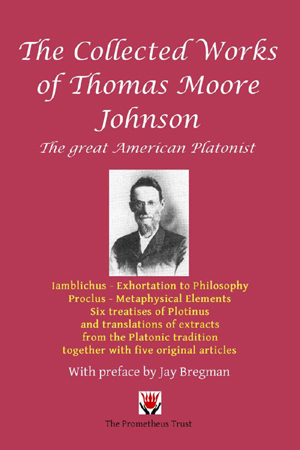
More complicated is the similarity of words that I found in Astley’s letters and the same or similar words in Burgoyne’s. The examples I searched for were second, accepted, received, and number.  As with the examples of “the” the sepia writing is Burgoyne and the black and white is Astley; sometimes I could only find a similar word in Burgoyne. The results are below.

Categories
Blog

Alexander Wilder's Credo, 1882

The second volume of Letters to the Sage has reached a milestone this week with the completion of two arduous years of transcription and annotation. Almost all the letters in this volume are from Alexander Wilder (1823-1908) to Thomas Moore Johnson, and the majority of them deal with scholarly and publishing matters.Detailed discussions of the content, style, expense, etc. of The Platonist take up much of the period from 1881 through 1885, after which the letters become more sporadic. For the next task of writing a detailed chronological introduction to the letters, I will need to become thoroughly familiar with each issue of The Platonist, which was published in three and a half volumes over seven years. Explaining Wilder’s many asides referring to his medical career will require learning about the Eclectic school of medicine and the legal challenges it faced before becoming extinct in the 20th century. Wilder’s frequent references to the Concord School of Philosophy and the surviving Transcendentalists of the 1870s and 1880s bring in many names already encountered in my research on Sarah Stanley Grimke, but about whom much more will have to be learned to provide context for the letters. These two social networks– of Platonists/Transcendentalists, and Eclectic physicians– are all very long term involvements for Wilder, and understanding them more thoroughly is a necessary condition for writing an introduction of comparable quality to Patrick Bowen’s exemplary work for Volume I.

However, these networks do not provide a sufficient background for understanding Wilder. More continuity with the letters in Volume I is found in the frequent references to Spiritualism and Theosophy, about which he was far more ambivalent than he was about Platonism or Eclectic medicine. A striking change from Volume I is that the Wilder letters do not refer to the Hermetic Brotherhood of Luxor at all, and begin to decline in frequency just as Johnson was devoting vast energy to HBofL correspondence in 1885-6.

Wilder’s references to Theosophy are so voluminous that they will be covered in a subsequent blog post.  Here are excerpts giving his attitudes toward Spiritualism and mainstream Christianity:

So, therefore phenomena = seeking Spiritualism fails us. I have always fought shy of it. I was once duped & swindled, & held aloof.

The common Spiritualist notion is that old things are inferior & to be discarded.  Some believe in re-incarnation but are unwillling to read The Republic. Some weeks ago Dr. Buchanan denounced Plato. (2/4/1882)


I am lecturing hotly on psychical evolution. I insist on the emanation & divinity, & deny that man emerged from the creatures below.

Next Monday I speak in A.J. Davis’ Harmonial Association on the office of the Imagination.

I am inclined to train in that alliance. He is clean from the moonshine of mediumship &c &c. – only likes R.P. Journal qualifiedly & the Banner not at all.

I spoke yesterday on the Evolution of Morality – that it was service to God & love to the neighbor; but that immortality is the absolute condition.  If no immortality there is no standard of morality; we are beasts & love no neighbors more than wild beasts. (3/2/82)


I am rather chary in speaking much of the Christian question. I doubt whether such a man as Jesus ever existed. The Old-Testament Canon was established by the Pharisees [ Greek], under the Asmanean priest=kings, B. C. 180. The Sadducees or Sadokim — the sacerdotal party were like the men who put Sokrates to death.

The Essenes did not accept the Canon but had prophets & Scriptures of their own. The gospels of Matthew & Mark were from their Evangelion. Doubtless they used the name Jesus with “Je” being a prefix to denote a man’s name & [Greek – ESO] or [Greek-ASA] meaning Essene. A personification, not a person. The Essenes were Mithraists of the stricter order.

The Eleusinian (Greek, from, beggars, Jacquenè) were a sect of them. Twelve Apostles mean 12 signs of the Zodiac, Jesus being Mithras the Sun crucified every equinox. Procure & read the Keys of the Greeks (Putnam’s Sons.) Paul set out in his own bark. He studied this Gnôsîs, not with James, Kephas or John — but in Arabia with the Essenes. He preached Jesus not as a man but as the Dunamis and Sophia of God. That is Gnostic — not Christian. He also taught the anástasis – nirvana.

Now I have more than ever called myself pagan. I am as I understand it a Platonist, but I “call no man Master.”(4/4/82)


I believe in a “Personal God” as I understand it. Permanent Individual Identity a Will rather than a Law to uphold the Universe– charity as the Highest Good, & knowledge to be supreme as it is the kenosis with the highest.

I care little for their names & forms: then I should, seeking to enclose the Eternal Ideas in me & to approximate the Highest. (7/10/82)


Categories
Blog

Collected Works of Thomas Moore Johnson

Wonderful news from the UK in the form of a publication of the works of TMJ by The Prometheus Trust with a scholarly introduction by Jay Bregman of the University of Maine.  This will be very helpful in editing the correspondence of Johnson with Alexander Wilder, as the discussions are largely about Platonism and related subjects.

The publisher’s website contains this summary of the book and table of contents.

The Collected Works of Thomas Moore Johnson

The Great American Platonist

With a Preface by Jay Bregman

Thomas Moore Johnson (1851-1919) can rightly be said to be a great American Platonist: he was one of a number of men and women of that period who sought to promulgate the philosophy of the Platonic tradition as a spiritual and intellectual discipline. Had not the tide of rationalist and sceptical thinking run so strongly in the last one hundred years, Johnson – along with his fellow philosophers such as Hiram K Jones, William Torrey Harris and Bronson Alcott – would today be recognised as a great contributor to the cause of true philosophy in the modern west.

Johnson edited two journals, The Platonist and Bibliotheca Platonica, between 1880 and 1890, as well as publishing three books in the following years. This book presents much of Johnson’s work during this time – translations of Iamblichus’ Exhortation to Philosophy, Proclus’ Elements of Metaphysics, many of his translations of the treatises of Plotinus (including three which had never before been translated into English), as well as several smaller translations of important Platonic fragments and many of his original writings.

Contents:

Iamblichus’ Exhortation to Philosophy (or Protrepticus), 9781898910824fc2
Proclus’ Elements of Theology (or Metaphysics)
Fragments from the Epistles of Iamblichus
Fragments of Ammonias Saccas
Proclus on the Chaldean Oracles
Two Hymns of Synesius
Six treatises from Plotinus’ Enneads:-
On the Nature of Living Itself & on the Nature of Man I, i
On the Essence of the Soul (1) IV, i
On the Essence of the Soul (2) IV, ii
On the Descent into Body  IV, viii
Intelligibles not external to Mind, and on the Good V, v
Diverse Cogitations  III, ix
Original Writings:-
Plato’s Basic Concepts
Plato and his Writings
The Platonic Theory of Education
Plato and his Philosophy
Three Fundamental Ideas of the Human Mind

432pp Hardback £18  ISBN: 978-1898910-824

Categories
Blog

Private Lessons and Teachings Archive expansion

The latest major expansion of the holdings of IAPSOP, the International Association for the Preservation of Spiritualist and Occult Periodicals, was announced by founder Marc Demarest this month.  He wrote:

Private lessons and teachings boomed after the mail order revolution of the 1880s and 1890s, but were related to far older practices like phrenological, astrological and psychometric readings-by-mail. Private lessons and teachings allowed a mage to develop an apparently more intimate relationship with his or her students, to reach sparse markets of students scattered, literally, all over the globe, and to monetize his or her teachings more effectively, by selling the same material, over and over again, in dozens, hundreds or thousands of transactions. Private lessons and teachings also had other beneficial effects, for the mage and the movement, promoting regular interchange between a student and the movement’s leader or headquarters, and reducing the cost of the production of materials (little more than paper, a typewriter and a method of duplication was required to produce lessons). Occult lessons-by-mail also opened up new suppression mechanisms for the State, making occult teachers subject to postal fraud regulations, and served as further evidence, in the hands of mail-order detractors, that the mail-order business model was a serious social ill that needed to be legislated out of existence.

This provides context for the authorial partnership that I was investigating when I learned of the Thomas Moore Johnson correspondence, the still-mysterious collaboration of Thomas H. Burgoyne and Sarah Stanley Grimke.  The Johnson letters reveal that within a few months of publishing her First Lessons in Reality and joining the Hermetic Brotherhood of Luxor in 1886, Grimke was being promoted by Burgoyne as required reading material for HBofL initiates.   Although details of their subsequent collaboration are unknown, it was plausibly reported by Elbert Benjamine that they were co-authors of The Light of Egypt, first published pseudonymously as the work of “Zanoni” in 1889.  Few of the 48 teachers included in the Private Lessons archive are remembered today, even to the small extent that Burgoyne and Grimke have been.  But the expanded holdings of IAPSOP may eventually change that, as increased accessibility of occult and Spiritiualist books and periodicals has already been useful to many scholars around the world.


Categories
Blog

Kenneth R.H. Mackenzie

In The British Birth of the Occult Revival, 1869-1875, an article which he has posted on academia.edu, Patrick D. Bowen analyzes the implications of an 1869 series of articles by Kenneth R.H. Mackenzie, one of the correspondents of Thomas M. Johnson appearing in the new collection Letters to the Sage.

As a participant in the Societas Rosicruciana in Anglia (SRIA) Mackenzie wrote  a series of “Papers on Masonry” for the newly-created Freemason magazine. About the series of articles, Bowen writes:

He explains, firstly, that myths and symbols are important, as they help convey deep truths that scientific language cannot. Next, he says that Masonry has worn out its usefulness in the world, and that the only way the Masonic ideals of world peace, justice, and equality (for all religions and races, by the way) can be achieved in the world is by introducing a new set of myths and symbols, one that embraces the teachings of both the East and West and scientific and ‘occult’ thought. Furthermore, he continues, a new prophet—a man who understands the truths of all the world’s sciences and knows how to communicate them via myths and symbols—must offer this new set of myths and symbols to the world. While he is explaining this, Mackenzie starts dropping clues that he is aware of a number of other Masonic-like orders in the world… ‘Papers’ is, basically, a rational justification for the invention of new occult doctrines. It seems that, after studying myths, religions, and cultures in the 1860s, Mackenzie had come to the conclusion that he might actually create the open and free world he had been envisioning since the 1850s by using Masonry as his organizational blueprint and Masons as the initial proselytes…

This is relevant to the origins of both the Theosophical Society and the Hermetic Brotherhood of Luxor, both of which used terminology from Mackenzie’s masterpiece:

At least partially driven by this view, between 1875 and 1877 Mackenzie published a multi-part work, the Royal Masonic Cyclopaedia, which presented as fact all the occult claims made by the SRIA members. This book quickly became seen by other influential Western occultists as an important sourcebook for modern occult ideas, thereby giving these individuals intellectual legitimization to start their own groups, some of which became extremely popular themselves.

Patrick’s blog includes this useful summary of highlights of Letters to the Sage:

Some highlights of the book’s contents:
  • Details about the organizational development of the TS and HB of L in the U.S.
  • The 1887 ‘ordinance’ Johnson sent out to establish the ‘Sufic Circle’ as a branch of the Hermetic Brotherhood.
  • Evidence for the earliest known organized practice of Yoga in the United States.
  • Information about previously unknown Rosicrucian groups and teachers in 19th c. America.
  • A full list of the HB of L’s teaching materials and details of the process of the distribution of the materials.
  • Letters from H.S. Olcott and Thomas Burgoyne.
  • 1880s discussions of the Tarot and Eliphas Levi.
  • Previously unknown HB of L practical occult teachings.
  • The names of dozens of HB of L members and their ‘pledge’ dates.
Categories
Blog

Letters to the Sage published this week

Although my copy has not arrived yet, the book is available now in paperback on Amazon and will be out on Kindle by the end of the month.  I created a Facebook page for the book which includes several pages of previews and ordering information and does not require a Facebook account to read.

Patrick Bowen has posted longer excerpts on academia.edu, which does require an account to access but which is free of charge.  Another article posted there by Patrick features one of Thomas M. Johnson’s British correspondents and sheds new light on the Masonic roots of the the Hermetic Brotherhood of Luxor, Theosophical Society, and related groups.  It will be the focus on next month’s blog post.

Meanwhile, for the astrologically inclined here is the natal chart for the book:

Categories
Blog

Letters to the Sage, a preview


As publication date approaches, I will share some general information about the forthcoming book from Typhon Press, the first of two volumes of the selected correspondence of Thomas Moore Johnson, the “Sage of the Osage.” The correspondence begins in the 1870s and continues into the twentieth century, but most of the letters were written during the short life of Johnson’s journal The Platonist in the 1880s. Over half the book consists of letters associated with the Hermetic Brotherhood of Luxor during Johnson’s brief period as its leader in the US. Three of the 48 authors shed more light on the HBofL than any of the rest: 1) Thomas H. Burgoyne, whose esoteric lessons are illuminated by his correspondence with Johnson, 2) Henry Wagner, who succeeded Johnson as leader and who became Burgoyne’s publisher, and 3) Silas H. Randall, a Cincinnati inventor who was Johnson’s chief assistant in management of HBofL affairs and wrote far more letters than any other correspondent. Randall is not only the most prolific of the letter writers, but in my judgment the most interesting and engaging. He was extremely well-read and an avid student of both philosophy and religion, sharing personal views and experiences with Johnson and commenting insightfully on the Brotherhood as well as the Theosophical Society.

The most prolific correspondent associated with the TS was Elliott B. Page of St. Louis, almost as closely involved with Johnson as Randall but writing largely about Theosophy rather than Hermeticism. More familiar names to Theosophists are those of Abner Doubleday, G.R.S. Mead, Henry S. Olcott, William Q. Judge, and Dr. J.D. Buck, each of whom wrote several detailed letters to Johnson. The world of Freemasonry is represented by letters from Kenneth Mackenzie and John Yarker, while Rosicrucianism was the preoccupation of Freeman B. Dowd and Richard Goodwin. Neo-Hermeticists unaffiliated with the HBofL are represented by letters from Anna Kingsford and Edward Maitland.

In conversations with Church of Light members, I have referred to the Nag Hammadi Library and Dead Sea Scrolls discoveries as akin to the finding of the Johnson letters by his descendants three years ago– completely unanticipated primary source material that drastically revises what we know of our origins. Working with these letters has pushed other projects into the background, and another volume of transcriptions and annotations lies ahead. Although I have two chapters in forthcoming multi-author collections, and two introductory essays for future reprints of 19th-century authors, the focus of this blog will be on the Johnson letters over the next two years. With 88 US members of the HBofL named in Johnson’s records, and 48 correspondents whose letters survive, there will be abundant opportunities to feature various of the little-known as well as the more famous of Johnson’s associates.

As a postscript to my series of posts about Chevalier Louis de B, I need to mention yet another candidate noticed by Marc Demarest who has written a blog post about the French Comte de Bullet. As for my promised comment on pseudonymity in the occult literature, suffice it to say that Britten is like a “stone rejected by the builders,” whose fictionalization of various acquaintances was an example followed by many after her, none of whom gave her any credit or respect as far as I can determine.

Categories
Blog

Burton the Adept

Part II of Ghost Land, provocatively titled “The Adept,” opens twenty years after the close of Part I with “autobiographical sketches of the Chevalier de B___ continued”:

To traverse many lands, sound the heart-throbs, listen to the inner revealings, and learn the life mysteries of many a strange people…I have something that has followed me, or rather infilled my soul, through every changing scene, in every wild mutation of fortune—on the battle-field, in the dungeon, in the cabinet of princes, in the hut of the charcoal-burner, in the deep crypts of Central India, and amidst the awful rites of Oriental mysticism, in the paradises of love, and the shipwreck of every hope—something which has never forsaken or left me alone; something which stands by me now, as I write in my sea-girst island dwelling, on the shores of the blue Mediterranean (pp.; 233-234)

This passage describes neither Emma Hardinge Britten, Prince Salm-Salm, the Baron de Palm, the Duc de Pomar, the Countess of Caithness, Ernest de Bunsen, nor Emil Wittgenstein. But it perfectly describes an early member of the Theosophical Society with apparent links to both Britten and Mme. Blavatsky.

Sir Richard Francis Burton (1821-1890) had been deeply involved in occult circles during his time at Oxford in the early 1840s– the same circles in which Emma Floyd was moving at the time, in which the central figure was Edward Bulwer-Lytton. By 1860 he had become the most celebrated British explorer of the mid-19th century. Burton first met Helena Blavatsky in Cairo in 1853 as he was preparing for his great trip to Mecca; this at least is the claim made by Albert Rawson in a colorful memoir written on the occasion of Burton’s death. In his youth, Burton was a soldier renowned for his mastery of languages, 29 according to one count. In the 1850s his expeditions to Mecca and the source of the Nile produced popular books about his adventures, and he continued to produce vivid travel narratives for the rest of his life, while a British diplomat serving in Asia, Africa, South America, and Europe. More relevantly to Chevalier Louis, Burton was a lifelong enthusiast of astrology and occult lore. Burton, like Emil Wittgenstein, was an honorary founding member of the British Spiritualist Association in 1873, and joined the Theosophical Society later in the decade. Both had provided testimony to the 1869 London Dialectical Society, which also recorded Lady Caithness and Bulwer-Lytton as witnesses. While there is no evidence of collaboration between Britten and Burton, Blavatsky’s connection with the explorer was documented by one of her closest associates. Albert Rawson, who introduced Burton to Blavatsky, claimed to have made four extensive journeys to the Middle East.

Ghost Land appears to consist of three authorial voices each with a different relationship to Emma Hardinge Britten. Louis in Part One is a continental male version of Emma and the narrative rests on her own extensive experience in the occult milieu. Here Britten loses control of her narrative by sometimes forgetting whether she is herself or Louis. Louis in Part Two has matured into a much more masculine character, whose adventures and traits reflect those of Richard Francis Burton. In this section, Emma reveals herself to have only secondhand and vague ideas about India, and writes with the same combination of enthusiasm and misinformation that characterizes Blavatsky on India before 1878. It is therefore unlikely that either was directly assisted by anyone as well-informed as Burton; yet they were both acquainted with him and no other mutual acquaintance emerges as an inspiration for the Indian Louis. Blavatsky, however, is clearly implicated in the character Madame Helene Laval, a dangerous sorceress who attempts to seduce Louis and later becomes involved with a new sect in India.

next month: thoughts on adepts and pseudonyms

Categories
Blog

Prince Emil Wittgenstein and Ghost Land

Among the settings of Ghost Land, India and Russia stand out as places of which Britten had no personal, and little general, knowledge. Mme. Blavatsky must figure among the influences on the depiction of both countries, since she was in very regular contact with Britten during the simultaneous writing of Ghost Land and her Isis Unveiled. Blavatsky appears in Part Two of Volume One of Ghost Land disguised however not as Louis but as Madame Helene Laval, an evil sorceress and seductress. A Russian subplot involving Professor von Marx and John Cavendish Dudley suggests another influence that led Britten to include this digression. While Blavatsky was the only Russian in personal contact with Britten during the writing of Ghost Land, an eminent German/Russian Spiritualist was in regular correspondence with both during this period. The jovial family man and ardent Spiritualist John Cavendish Dudley, who accounts for the Russian content of Ghost Land, might reflect Britten’s correspondence with Prince Emil Wittgenstein.

The prince is described by Britten as “Prince Emil Sayn Wittgenstein (late aide de camp, and trusted friend to the Emperor Alexander II)” who in “a private letter to Mrs. Hardinge Britten, dated 1876,” wrote: “The Emperor and most of his household…. are not only Spiritualists in belief, but they would be partisans of the faith, did circumstances permit…although Spiritualism is known and believed in, alike by peer and peasant, it must be believed in against authority, — and be assured, my friend, it has a warm place in the hearts of thousands who dare not openly avow their convictions.” She continues, “from similar friendly communications from Prince Emil Wittgenstein, the author learned that the late Emperor of Russia possessed the most complete library of Spiritual works that the literature of many nations could supply. This noble gentleman was one of the earliest subscribers to a work translated and edited by the author, entitled `Art Magic,’ and in an autograph letter addressed to the writer of that work, he declared, “that he esteemed it as his most sacred authority, and carried it everywhere with him.”

Born in Darmstadt, Wittenstein had served Prince Alexander of Hesse in the Caucasus from 1845 through 1847 and then fought in Denmark, but returned to the Caucasus in service to Russia as aide-de-camp to Prince Vorontzov, Viceroy. There he remained until 1862 when he became Attache to Grand Duke Konstantin in Warsaw. Wittgenstein was part of the Emperor’s suite during the 1877-78 war with Turkey. Another passage from Nineteenth Century Miracles gives a fuller account of her communications with Wittgenstein, and claims to have predicted his demise and that of the Emperor:

This noble gentleman not only held high rank in the Russian army and served as aide-de-camp to the Emperor during the unhappy war with Turkey, but few of those who approached His Imperial Majesty’s person, enjoyed the royal confidence in the same degree. In a correspondence maintained during some years with the author of this volume, Prince Emil asked for and obtained a number of volumes of the best American literature for the Emperor’s library. Previous to the fatal war with Turkey the Emperor and Prince Wittgenstein both received assurances through Mrs. Britten’s Mediumship that their lives would be spared during the conflict, but be sacrificed—the one to the insurrectionary spirit at home, the other to the feverish effects of the deadly campaign, into which he was about the plunge. Both these gentlemen placed implicit faith in these prophecies…

This direct testimony of personal involvement with a source exceeds Britten’s remarks about any other possible models for Louis or Dudley. A correspondence lasting several years with a Spiritualist member of the nobility could be as important an influence on the Russian content of Ghost Land as the author’s acquaintance with Blavatsky. Britten’s emphatic name dropping in Nineteenth Century Miracles continues with the last passage about the prince the most striking of all:“Prince Emil Wittgenstein, who was one of the Russian Emperor’s lieutenant generals in the late unhappy Turkish war, wrote to Mrs. Britten that he regarded that book [Art Magic– ed.] as his `bible,’ carried it with him wherever he went, and had “often derived consolation and harmony of spirit from its noble teachings in moments embittered by the fever of war, and the cares of State.”

Categories
Blog

The Baron de Palm, Ernest de Bunsen, the Duc de Pomar

The candidates for Louis suggested within Emma’s lifetime were augmented by only one addition in the twentieth century. In the 1970 edition of Modern American Spiritualism, editor E.J. Dingwall proposed the Baron de Palm as the prototype for Louis. Joseph Henry Louis de Palm (1809-1876) is mentioned in Nineteenth Century Miracles as a “distinguished supporter of the movement in Germany.” Chicago journalist Melville Stone included de Palm in his memoirs:

I made the acquaintance of a remarkable character, one Baron de Palm. At first sight one would recognize him as a decayed voluptuary,
of the sort that frequent the Continental watering places of Europe in the season. Habited faultlessly, with hair and beard carefully dressed, washed-out face and eyes, shaky on his legs…He was a Bavarian. He was Baron Johan Heinrich Ludwig de Palm; had descended from a line of German barons running back ten centuries. He was Grand Cross Commander of the Order of the Holy Sepulchre. His father was a prince of the Holy Roman Empire, and his mother a notable Countess of Thunefeldt. Born at Augsburg in 1809, he was educated for a diplomatic career, and served his king with distinction at almost every capital.


(See this earlier blog post for the story of his alleged involvement with Lola Montez.)
After recounting a 1861 human levitation in a Vienna church in Nineteenth Century Miracles, Britten adds “This remarkable occurrence was also testified of by the late Baron de Palm, who was present on the occasion, and himself related it to the author.”

Dingwall comments that some had suggested William Britten as the author of the works attributed to Louis, but concludes “that both Art Magic and Ghost Land may have been the work of Baron Joseph Henry Louis de Palm, a very odd character with pronounced Theosophical and occult interests, whose funeral Mrs. Britten attended in 1876, and over whose body she pronounced an oration calling him `friend and companion..’” Although “Colonel Olcott thought that Baron de Palm was not capable of writing anything serious, and he may well have been right,” Dingwall suggests that “the Baron concealed his gifts with a view of preventing others from knowing what he was compiling under Mrs. Britten’s editorship.”

No one is on record proposing William Britten as the author of Art Magic and Ghost Land, or the basis for Louis as written by Emma, but we note Dingwall’s mention of unnamed adherents of this theory. Unnoticed by Dingwall but important to consider is that Louis is one of the names de Palm used in America (changed from the original Ludwig), making him the only suggested prototype with whom the name can be linked.

In a 2001 monograph, Robert Matthiessen nominated the German-British philologist Ernest de Bunsen as a prototype, which was analyzed by Marc Demarest in his 2011 edition of Art Magic. At the 2011 biennial convention of the Church of Light, Marc gave a presentation about Britten which went into detail about his reasons for nominating the Duke of Pomar, son of the Countess of Caithness, as a more plausible Louis prototype than any of those heretofore suggested. His blog provides this summary of the evidence.

Without criticizing any of the identifications to date, in November and December I will point out two aspects of the plot of Ghost Land that indicate yet more Louis prototypes. Emma had never traveled to India or Russia, but extensive subplots deal with each of those countries. Her acquaintance with two early TS members who did have great familiarity with each of those countries will be the topic of the last two blog posts of 2015.

This month marks the fifth anniversary of the opening of this blog, and December will be my tenth anniversary as a Church of Light member. In light of current developments, History of the Adepts will take an entirely new focus beginning in January 2016. Publication of the first volume of Letters to the Sage: Thomas Moore Johnson Selected Correspondence will provide detailed membership information on the early Hermetic Brotherhood of Luxor in the U.S. Henceforth, for the foreseeable future, the 48 individuals who corresponded with Thomas M. Johnson, and several dozen additional HBofL members named in the correspondence, will provide abundant material for all further investigations and reports.

Immersed for more than two years in hundreds of pages of this 19th century correspondence, I have felt blessed to experience the world of the HBofL members in a much more direct way than through their few published writings or official documents. In my books on Theosophy, letters and documents were important, but subordinate to a primary reliance on publications as historical evidence. With Edgar Cayce and Pell Mellers, publications receded to a more subordinate status, with documents and correspondence assuming a larger role in historical interpretation. But now, with the correspondence of HBofL members, publications are literally mere footnotes to the more immediate and vital encounter with the past found in handwritten letters.

For an online course in historiography, Steven Stowe, Ph.D. writes:

Few historical texts seem as familiar – or as compelling to read – as personal letters and diaries. They are plain-spoken, lively, and full of details. Both letters and diaries seem to emerge directly from the writer, fresh and intimate, bringing us close to who that person was. Both satisfy us by showing how people in the past shared many of our hopes, worries, and common sense. At the same time, both fascinate us by revealing differences between times past and our own time. They make us curious to explore differences in language and expressive styles, in what people felt needed saying and what did not. These differences in turn point to historical changes and continuities in self, social relations, work, and values, which personal letters and diaries capture with special sharpness.

Categories
Blog

Chevalier Louis de B_: How Many Prototypes?

Ghost Land is foundational to the Theosophical literature, chronologically and thematically, introducing adept brotherhoods further elaborated in later writings. Presented as a translation by Emma Hardinge Britten of an original text by the pseudonymous Chevalier Louis de B_, the book has inspired multiple guesses about the Chevalier’s identity. A companion volume to Art Magic, Ghost Land was published the same year, 1876, in the form of a memoir. The book’s authorship spans the early period of the Theosophical Society, with its first sketches appearing in 1872 before Blavatsky’s arrival in New York and its final section published in 1892 after her death. Chevalier Louis has never inspired a personality cult, and no one has ever claimed to speak on behalf of his Berlin, Orphic, or Ellora brotherhoods. Nevertheless Ghost Land is clearly a historical prerequisite for the full blown Theosophical (and post-Theosophical) elaboration of the Masters. Despite the fact that Britten later was a critic and opponent of the TS, Art Magic and Ghost Land both relied upon a network of support that included many early Theosophists as well as Spiritualists. Several Theosophical Spiritualists in Europe contributed to the character of Chevalier Louis de B_, in my considered opinion.

Eight years after Ghost Land, in Nineteenth Century Miracles (1884) Britten expressed second thoughts about aristocratic Spiritualists asking her to write about them using pseudonyms.

Since then Spiritualism in Europe takes the deepest hold of those whose rank and station induces them to shrink from subjecting their personal experiences to public criticism, the author too frequently becomes the recipient of valuable testimony which cannot be made available, because the communicants insist on withholding their true names and addresses. “Miss E.” and “Mrs. D.;” “Captain A.” and “My Lord X.Y.Z.” are impersonals, whom no one places any confidence in. There is no satisfaction in offering such shadowy testimony to those who are asked to believe in occurrences of an unprecedented and often startling character. Resolving as we have done, not to demand credence for phenomenal incidents upon any testimony open to the charge of unreliability, we feel obliged to relegate an immense mass of interesting matter of this kind to the obscurity which unauthorized statements justly incur.

Her former enthusiasm for pseudonymous collaborators seems completely absent in this 1884 book, but in 1892 Britten is once again writing on behalf of Chevalier Louis in Book II of Ghost Land.

Shortly after Art Magic was published, Emma was accused of being its sole author. Incredulity at her descriptions of Louis was expressed publicly, although anonymously, by a fellow Founder of the Theosophical Society. Charles Sotheran, in a review for Woodhull and Claflin’s Weekly, [July 6, 1876] called it “simply a rehash of books readily available…wretched compilation which is full of bad grammar and worse assumptions.” The judgment by a personal acquaintance, published so soon after publication, condemned Louis as a fictional mouthpiece for Emma herself.

Emma as sole author of Ghost Land was also the conclusion reached by Arthur Edward Waite, who discussed Louis in his memoir Shadows of Life and Thought:

Mrs. Britten has told us, in her preface to Ghostland (1) that its autobiographical sketches were “written originally in German”, but as she did now know that language, the Chevalier put them for her benefit into “rough English”; and (2) that they were written, like Art Magic, partly in French, and partly in English, for the same reason. In the dilemma of this lapsus memoriae I am content to leave the question whether the Chevalier lived only in the second-rate and typically feminine imagination of Emma Harding because, in the universe of evidential things, there was no room for him anywhere else.

Despite all the subsequent proposals, the conclusion that Ghost Land was predominantly written by Emma herself is inescapable in light of bibliographic evidence, and her authorship of its companion volume Art Magic. (Marc Demarest’s 2011 edition of Art Magic presents detailed analysis of the text leading to this conclusion.) The conflicting personal details about Louis noted by Waite confound any attempt to identify him solely with any one prototype. Nevertheless, rather than concluding that there were no real prototypes for Louis, I conclude that there were several, which accounts for the conflicting information provided by Britten. She first alleges that the manuscript was in German, which she had translated by an Americanized German, and a few pages later writes that Ghost Land and Art Magic were both written in French and English. In the 1876 manuscript Louis is the son of a Hungarian nobleman and his Italian wife, but in the 1872 sketches his father is English and his mother Austrian. Such inconsistencies suggest that Louis is an invention of his alleged editor, but if Louis is primarily Emma Hardinge Britten, the sole author of Art Magic and Ghost Land, the question remains of Chevalier Louis as a character related to figures in her past and then-present social networks.

Other than Emma, only one person was publicly suggested during her lifetime. The first suggestion of a Louis other than Britten came in the December 7, 1876 Spiritual Scientist, in which editor Gerry Brown’s review of Ghost Land included opening remarks suggesting “It is a singular coincidence that the circumstances therein narrated should correspond so closely to the historical facts concerning the Prince Salm-Salm, a person who has visited this country, is well known in England, and a profound occultist. If he is numbered among Mrs. Britten’s friends we name him as the author of `Ghost Land’ and `Art Magic.’” The Springfield Republican for December 19, 1876 repeated the Salm-Salm identification of Louis: “We suppose the editor, Ms. Emma Hardinge Britten, would object to having the book classed among works of fiction, but it certainly will not be received as a record of fact by the reading world…. Mrs. Britten describes the autobiographer as now living, and her personal friend, yet we have seen the late Prince Salm-Salm named as the original; he was a noted occultist.”

Felix Constantin Alexander Nepomuk, Prince de Salm-Salm (1828-1870) was a Prussian military officer who studied at a military school in Berlin before serving successively in the Prussian, Austrian, and United States armies. While in the United States he married a Vermonter, Agnes Joy, who accompanied him on the Civil War battlefields. After the war they returned to his estate in Germany. He was killed in battle in 1870 during the Franco-Prussian war. Nepomuk’s career in the Prussian military and later association with Austria fits some elements of Louis’s persona, but there is no evidence that he was an occultist. He could not have collaborated in the writing of Ghost Land because he died in 1870. His American wife Agnes had a connection to Cuba, and a recorded interest in Spiritualism, both of which are relevant to Louis. Salm-Salm left us a book, My Diary in Mexico in1867, Including the Last Days of the Emperor Maximilian; with Leaves from the Diary of the Princess Salm-Salm, etc., Agnes also left a memoir of her own, Ten Years of My Life, in which she describes the couple’s dabbling in Spiritualism in 1863:

Though I, as I said before, resisted this epidemic on the ground of religion and common sense, I could not help becoming interested in this strange aberration, and feeling tempted to witness some manifestations of spiritualism. The Prince, however, tried to dissuade me from such an attempt, as he was afraid that the excitement would act too strongly on my imagination. I therefore abstained from visiting some of those public exhibitions of professional spiritualists, but did not resist the entreaties of Mrs. Speirs to have some spiritual entertainment at home, against which good Salm had no objection…

10/16/2015– adding this segment about Edward Bulwer-Lytton as it fits better chronologically here than with the next several prototypes:

The second suggested male prototype for Louis came from G.R.S. Mead, prominent Theosophist and secretary to Blavatsky in her London years, who was quoted by A.E. Waite that Louis was the “inner life” of Edward Bulwer Lytton (1803-1873). The prolific novelist had attained great success by the early 1830s, and his Godolphin (1833) was translated into Russian by Helena Pavlovna Hahn, mother of Madame Blavatsky. Lytton wrote poetry and plays as well as dozens of novels, and was prominent in political and diplomatic life, serving as Secretary for the Colonies in the late 1850s. His obsession with occultism and Rosicrucian lore is most apparent in Zanoni (1842) and A Strange Story (1870), and Britten named him first among the participants in what she called the Orphic Circle. His interest in practical occult experimentation was unrivaled in Victorian England, which lends credibility to Britten’s late-in-life revelation of his name.

Waite gives no citation, but had aligned himself with Sotheran’s position that Britten herself was Louis.  In Old Diary Leaves, begun in 1895 while Emma was still alive, Col. Olcott hinted at agreement with both the Britten and Bulwer-Lytton theories., writing that Sotheran in Woodhull and Claflin’s Weekly “Uses very severe language in regard to the reputed Author, whom he indentifies [sic], whether justly or unjustly, I cannot say, with Mrs. Britten…This is exaggerated censure, for the book does contain passages worthy of Bulwer-Lytton; in fact, one would say they were written by him”…[i Stylistically, Ghost Land echoes Bulwer-Lytton more than any other novelist. Bulwer-Lytton, among Emma’s claimed acquaintances, was well connected in continental occult milieu, and might have inspired her treatment of this aspect of her story. His influence on Blavatsky’s Isis Unveiled is relevant to Ghost Land.

In a 1957 study, Sten Liljegren analyzed the influence of Bulwer-Lytton’s novels on Isis Unveiled, and more broadly on Blavatsky’s development of Theosophy. Without mentioning Britten, he notes a characteristic of Zanoni that also is found in Ghost Land, which is that after publication, the author “kept up the fiction that he was not the author of Zanoni but only the editor of papers which were left to him by a Rosicrucian, which formed the novel in question.” Disclaiming authorship of parts of one’s body of work became a theme for both of Bulwer-Lytton’s Theosophical disciples. In the 1870s, Britten took the strategy to greater extremes than Blavatsky, since Isis is portrayed as the latter’s work regardless of tales of adept collaborators, while Art Magic and Ghost Land are attributed entirely to Louis. Ghost Land and Isis Unveiled are equally indebted to Bulwer-Lytton’s portrayals of adeptship and initiation. In an 1877 letter to Stainton Moses Blavatsky wrote of Bulwer-Lytton that “He was an adept and kept it secret – first for fear [of] ridicule—for it seems that [is] the most dreaded weapon in your 19th century—and then because his vows would not allow him to express himself plainer than he did…”

(the above is a modified excerpt from an essay for a future new edition of Ghost Land)

Categories
Blog

The First American Sufis

This week marks the publication of the first volume of Patrick D. Bowen’s three volume series A History of Conversion to Islam in the United States. The publisher’s website provides this description of the book’s contents:

A History of Conversion to Islam in the United States, Volume 1: White American Muslims before 1975 is the first in-depth study of the thousands of white Americans who embraced Islam between 1800 and 1975. Drawing from little-known archives, interviews, and rare books and periodicals, Patrick D. Bowen unravels the complex social and religious factors that led to the emergence of a wide variety of American Muslim and Sufi conversion movements.

While some of the more prominent Muslim and Sufi converts—including Alexander Webb, Maryam Jameelah, and Samuel Lewis—have received attention in previous studies, White American Muslims before 1975 is the first book to highlight previously unknown but important figures, including Thomas M. Johnson, Louis Glick, Nadirah Osman, and T.B. Irving.

The publication date is September 14, but Google Books has had excerpts available online for several weeks. Fortunately for readers of this blog, large portions of the chapters discussing Thomas M. Johnson are available in previews. Here is a link to Johnson as a search term in the text. The second and third chapters provide more new information about the Hermetic Brotherhood of Luxor and the early Theosophical Society in US history than has been published in two decades. There is such a wealth of information that the book provides fodder for many possible blog posts.  Here I will highlight only the discovery that was most unexpected and was made by Patrick after we had already completed a first draft of Letters to the Sage: Thomas M. Johnson Selected Correspondence, The Esotericists. Although almost all the letters come from the Johnson family archives in Osceola, Missouri, the ones revealing the existence of a secret Sufic Circle  were written to and by Jonathan S. McDonald of Lockport, Illinois and were located by Patrick in the collections of the Archives of American Art at the Smithsonian Institution. This group operated as a secret society within the secret society of the HBofL, and is the first known Sufi-identified group in the US.  As described in the book’s third chapter, on March 16, 1887:

Johnson, acting in his capacity as president of the H.B. of L.’s American Central Council, sent out an “ordinance” to six leading American members of the occult order, asking them to vote on the establishment of this organization…the objects of the circle were “the systematic study of Sufism, the practical application and realization of its teachings, and the dissemination of its precepts and doctrines.”

The group appears to have been short-lived and there is evidence that it immediately created dissension in the HBofL. But the timing of its creation is especially significant in relation to two other events that occurred in 1887. Thomas H. Burgoyne, Secretary of the HBofL, corresponded with Johnson about spiritual practices and initiatory rites of the Brotherhood, and mentioned that he had an inner-plane encounter with a man to whom he referred as “the Arabian,” suggesting that Johnson also might have such an experience during his initiation. 1887 was also the year that Max and Alma Theon moved from England to France and then to Algeria. Burgoyne refers to Theon and “the Arabian” as separate individuals and gives no details about the latter’s existence on the physical plane. But even though layers of mystery surround Burgoyne, the Theons, and Johnson, this new book sheds more light on the beginnings of the HBofL in America than has been available since the groundbreaking 1995 publication of many of its teachings as The Hermetic Brotherhood of Luxor: Initiatic and Historical Documents of an Order of Practical Occultism.

Categories
Blog Sarah Stanley Grimké

All Roads Lead to Concord

One strange synchronicity is enough to make me say “hmm, wow” to myself; another involving the same subject is enough to make me write about it. Although my past pattern has been to devote years of concentrated effort to a single subject, and move on to another only after publication, lately I’ve been juggling multiple projects involving three publishers as a chapter author or co-editor rather than as sole author. The advantage of this situation is that I never get bored; the disadvantage is that I stay perpetually disoriented and confused. But sometimes a connection among multiple projects appears which tends to reduce the confusion and help me see them all as part of a larger whole.

Two weeks ago I finished revision of a chapter on the Bengal Renaissance for a forthcoming collection. At nine in the morning I thought to myself, “At last I have the free time to read something for pleasure; surely there must be a new biography of some Transcendentalist to enjoy.” So I went to Amazon and looked around a bit, but didn’t see anything that jumped out at me. At eleven, I heard a thunk and went to the front door where I found a box from a Church of Light friend in California with a letter enclosed along with several books she “thought I might enjoy.” Including, to my pleased consternation, The Lives of Margaret Fuller by John Matteson, whose previous joint biography of Bronson and Louisa May Alcott had given me great pleasure a few years ago. (No more or less than Eve LaPlante’s subsequent joint bio of Louisa and her mother Abigail May Alcott, which was also subject of a previous blog post.) Like many readers and as noted in Matteson’s introduction, most of what I knew about Fuller involved her tragic death. Now halfway through the biography, I find it as absorbing as his previous book, and even more enlightening about possible role models for Sarah Stanley Grimke who was born the year that Fuller died, 1850.

Synchronicity number two occurred this morning as I got in my car after hiking at the lovely Lauren Mountain Preserve in Bassett, Virginia. Just as I was leaving, on the radio Scott Simon of Weekend Edition welcomed author A.J. Jacobs, who electrified me with the opening line “My favorite teacher is Bronson Alcott.” Jacobs went on to joke that Alcott was really his children’s favorite teacher, and then discussed other pedagogical subjects. One reason I was intrigued by this line was that Fuller’s first real job was as a teacher in Alcott’s short-lived, ill-fated, but fascinating Temple School in Boston. But in addition to tying into my current reading, Alcott also figures in three different writing projects in which I’m involved. He was an acquaintance of both Sarah Stanley Grimke and Mary Baker Eddy, and hence figured in my research last year in Boston for a future reprint of Grimke’s Esoteric Lessons. But more immediately, he was a major influence on both Thomas Moore Johnson and Alexander Wilder. The first volume of Johnson’s incoming correspondence is now in the hands of the publisher and represents 48 authors who wrote to Johnson in the 1880s; the second volume is almost entirely letters to Johnson from Wilder and the editorial team has at least a year ahead of us working on annotations, introductions, appendices, etc. But we just finished the first arduous round of transcriptions, a relief because Wilder’s handwriting was more inscrutable than any of the 48 correspondents of volume I.

Johnson was inspired to create his journal The Platonist by acquaintance with Alcott during one of his “Western tours” and traveled to Concord to pursue the relationship and meet other Transcendentalists like Ralph Waldo Emerson. Wilder was one of the lecturers at Alcott’s Concord School of Philosophy, to which he regularly refers in his letters. The Bengal Renaissance chapter I just finished also ended up with a focus on Boston during the twilight of Transcendentalism, due to the connection between the Brahmo Samaj and Unitarians.

When I read about  Spiritualism, Theosophy, Christian Science, or New Thought my enthusiasm is purely that of a historical researcher. Duty rather than pleasure calls me to pursue those branches of literature. But the Transcendentalists, to my reading tastes, transcend the bounds of time and space and speak with voices as fresh today as in the mid-19th century. Not just their words, but biographies about them, inspire me with a sentiment akin to what Alfred North Whitehead said about Plato. If the history of Western philosophy is a “succession of footnotes to Plato”—which Wilder and Johnson would surely applaud—then the history of late-19th century American spiritual movements is a succession of footnotes to Transcendentalism.

The legacy of the Transcendentalists is apparent in New Thought, Theosophy, Christian Science, and of course Unitarian Universalism. But the Hermetic Brotherhood of Luxor and its modern heir The Church of Light are arguably even more profoundly indebted to this movement—which I hope to explain further in future blog posts. (post edited, 9/11/15.)

Photo of Hillside Chapel, Concord, Massachusetts, from Wikipedia

Categories
Blog Genevieve Stebbins

Genevieve Stebbins in Poetics of Dance by Gabriele Brandstetter

For each of the past few years there has been a scholarly book or two discussing the unique role of Genevieve Stebbins promoting fresh ideas about the meaning of dance and exercise in the late 19th and early 20th centuries.Newly available in English from Oxford University Press is Poetics of Dance by Gabriele Brandstetter. First published in German in 1995, the book is described on the publisher’s website as a “classic text in dance studies” which had been a “path-breaking publication, the first to explore the relationships between the birth of modern dance, new developments in the visual arts, and the renewal of literature and drama in the form of avant-garde theatrical and movement productions of the early twentieth-century.”

The section on Stebbins begins on page 46 and runs through page 52, and is viewable through Google Books.

Brandstetter writes that “Stebbins’s main contribution to modern dance– her emphasis on the dynamics of dance movement– is still underestimated even today. She was the first to no longer regard dance from the perspective of dance technique, muscular training, or the systematic development of articulation, emphasizing instead its energetic principles. Stebbins’s elaboration of the Delsarte system heralded a paradigm shift in modern dance in an attempt to redefine dance movement on the basis of a vitalist understanding of dynamics.” (p. 46)

While the impact of Stebbins’s life and work is increasingly recognized, the roots of her ideas in her early experiences with the Hermetic Brotherhood of Luxor are yet to be explored in depth.  We can hope that she will eventually be the subject of a full biography in which this influence will be discussed at length.

Categories
Blog

Upstate Cauldron by Joscelyn Godwin

Joscelyn Godwin’s new book is so entertaining and informative that I didn’t want to put it down and didn’t want it to end. With those conflicting desires, I read it slowly to savor all the wonderful eccentric characters and groups he describes in Upstate Cauldron. There are more than 40 according to the back cover, which includes a quotable endorsement from Mitch Horowitz who calls Godwin the “dean of alternative spiritual history” and concludes “This is both splendid history and a book of wonders in uncovering lost fragments of our world. Throw away your highlighter—because you won’t know where to stop.” The book succeeds equally as testimony to Godwin’s mastery of “alternative spirituality” chronicles and as a work of state and regional history. With abundant maps and photographs, and a gazetteer of sites of interest, it deserves a place on the bookshelves of history enthusiasts throughout the upstate region.

Two chapters are of particular interest to the Hermetic Brotherhood of Luxor. In chapter 14 Godwin gives an engaging summary of the life and works of Paschal Beverly Randolph, who influenced the HBofL teachings posthumously. Chapter 18 describes Josephine Cables Aldrich’s role in Rochester formation of both the first Theosophical Society branch in America and the first HBofL group.

At the end of the book I was left wishing for 49 more like it, one on each remaining state. But there is no other state like New York in terms of eccentric 19th century spiritual movements. In his thoughtful concluding chapter, Godwin calls on Charles Fort’s observation that “anomalous phenomena tend to cluster in time and place.” As one eerie example of this, he explains the geographical clustering of the origins of Mormonism, Spiritualism, and Adventism within a few square miles of Upstate New York:

Hiram Edson’s vision of Christ in the cornfield in 1844 (see chapter 8), which became the theological foundation of Adventism, happened between Clifton Springs and Port Gibson. That is about five miles from the Sacred Grove outside Palmyra, where in 1820 Joseph Smith met God the Father and Jesus Christ, and about four miles from Hydesville, where in 1848 the Fox sisters started talking to the dead. So three lasting religious movements—Adventism, Mormonism, and spiritualism, were all sparked off in that little triangle.

Categories
Blog

Major Expansion of IAPSOP Holdings

The International Association for the Preservation of Spiritualist and Occult Periodicals has just announced the addition of many new periodical titles, and additional volumes of its previous holdings, amounting to 330 new items in all.  Marc Demarest’s blog post describes the great collaborative effort involved with many colleagues for several months.

Among the very rare titles newly added in IAPSOP is The Occult Word, edited by Josephine Cables, one the founding figures of the Hermetic Brotherhood of Luxor in America.  Another title of special interest in the history of the HBofL/CofL is Thomas M. Johnson’s The Platonist, of which IAPSOP holdings are expanded with additional volumes.  Cables, who was also a founding member of the Rochester, NY lodge of the Theosophical Society, is featured in one chapter of Joscelyn Godwin’s new book Upstate Cauldron, which I am now reading and which will be reviewed in my June blog post.

Categories
Blog

Heirs to Forgotten Kingdoms

The quest which led to this book developed over more than a decade during which Gerard Russell worked as a British and UN diplomat in some of the most difficult postings imaginable, including Baghdad, Cairo, Cabul, and Jerusalem. His intellectual adventure, exploring the surviving remnants of religious groups that are secretive and little-known, engages the reader with a sense of constant discovery. The physical courage involved in some of his travels is inspiring and reminiscent of a 19th century British diplomat, Richard Francis Burton, who combined travel adventure and spiritual exploration in his writings. Each of Russell’s chapters is devoted to a different group: Mandaeans, Yezidi, Zoroastrians, Druze, Copts, Samaritans, and Kalasha. The largest of these groups, the Copts, number several million, while the smallest, the Samaritans, are estimated to number 750. Every chapter is intriguing but I will limit my comments to the two which are of special relevance to the idea of the “Religion of the Stars.” We tend to think of this in terms of Hermeticism and modern astrology, but Russell’s investigations include groups of ancient origin but still surviving, almost unknown in the Western world and little understood in their homelands, that offer another angle on the subject..

The first chapter describes the Mandaeans who “believe in a heaven, but it is called the Light-World” and think their secret wisdom originated with Adam. Their earliest texts have been dated to 300-500 AD, and show some influence by Judaism. They honor John the Baptist but not Jesus, and practice baptism. Russell writes: “Mandaeans believe themselves to be sparks of the cosmic light that have detached themselves from it and become trapped in a material home. When liberated by death from their bodily prisons, these sparks of light can ascend back to the great light from which they came.” The Mandaeans, historically rooted in southern Iraq, now number fewer than 100,000 in total membership. Heirs of Babylonian astrology, Mandaeans use the terms “the Seven” and “the Twelve” to refer “to the stars and planets as supernatural, quasi-divine beings.” Sadly, in the wake of the 2003 invasion and subsequent civil war, “More than 90% of the Mandaean population of Iraq has emigrated or been killed. It is only in southern Iran that one can find their communities intact.”

My greatest interest was in the chapter on the Druze which emphasizes their Pythagorean roots. Russell quotes Najla-Abu Izzeddin describing their beliefs: “The Druze Faith reaches beyond the traditionally recognized monotheisms to earlier expressions of man’s search for communion with the One. Hence its reverence for Hermes, the bearer of a divine message, for Pythagoras…for the divine Plato and for Plotinus.” Half of the world’s one million Druze live in Syria,with most of the rest in Lebanon and Israel. After noting that Blavatsky associated the Druze with Tibetan Buddhism, the author emphasizes a more familiar perception of nineteenth century Europeans, which is that the Druze beliefs were similar to Freemasonry. In the 1890s the Rev. Haskett Smith argued that they “retain many evident tokens of their close and intimate connection with the Ancient Craft of Freemasonry.” In this he echoed the preoccupation of Masonic historian and Blavatsky associate Albert L. Rawson. In 1922 this alleged connection was the theme of a book by Bernard Springett, Secret Sects of Syria and Lebanon.

Russell reports, but does not endorse, such theories.  His book combines reliable history, clear explanation of doctrines, and engaging travelogue.  His travels in search of forgotten kingdoms occurred just as their heirs were facing persecution and extinction, which makes the book timely in the present, and of lasting value to the future.